
Main Courses
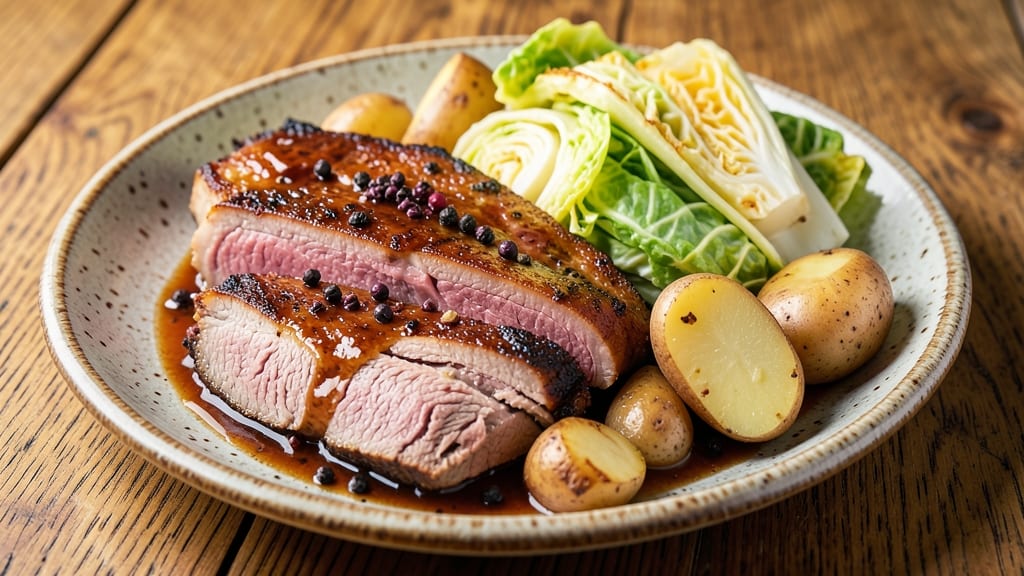
This authentic Irish corned beef and cabbage recipe delivers the hearty, slow-simmered flavors that define St. Patrick’s Day tradition. The key lies in curing the beef properly with juniper berries and bay leaves, then simmering it until fork-tender—just like your great-grandmother used to make.
I’ve perfected the method over years of testing, ensuring the meat stays moist while the cabbage absorbs all that savory, spiced broth.
What sets this recipe apart is the attention to detail in every step: from brining the beef for 4-5 days to achieve that signature saltiness, to boiling the cabbage just until it’s tender yet still holds its shape.
The crispy potatoes add a satisfying contrast to the rich, tender beef and slightly sweet cabbage. This isn’t just a meal—it’s a celebration of Irish heritage on your table.
By the time you serve this dish, your kitchen will smell like a cozy Dublin pub, and every bite will deliver layers of flavor: the deep, smoky notes of the corned beef, the earthy crunch of the cabbage, and the crispy, golden potatoes.
The slow-simmered broth reduces into a rich, aromatic sauce that ties everything together. This is the kind of meal that brings people together—whether for a festive occasion or a comforting family dinner.
Ready to master this classic? The instructions walk you through each step, from curing the beef to plating the perfect portion. It’s a labor of love, but the results are worth every minute—authentic, hearty, and impossible to resist. Let’s get started on creating a dish that tastes like home.
Ingredients for authentic irish corned beef and cabbage
Six ingredients transform into the heart of Irish tradition—rich, spiced beef and tender cabbage with crispy potatoes.
| Ingredient | Amount | Notes |
|---|---|---|
| Beef Brisket 🥩 | 4 lb | Whole packer cut, trimmed of fat |
| Cabbage 🥬 | 1 whole | Green or Savoy, about 2 lbs |
| Russet Potatoes 🥔 | 2 lb | Yukon Gold works too |
| Juniper Berries 🌿 | 1 tbsp | Crushed, from specialty spice shop |
| Bay Leaves 🍃 | 4 whole | Dried, standard size |
| Black Peppercorns 🌶️ | 1 tbsp | Coarsely crushed |
| Allspice Berries 🌶️ | 1 tsp | Crushed, from spice rack |
| Mustard Seeds 🌶️ | 1 tsp | Yellow, whole seeds |
| Salt 🧂 | 4 cups | Coarse kosher or pickling salt |
| Brown Sugar 🍯 | ½ cup | Light or dark |
| White Vinegar 🍶 | ¼ cup | White or apple cider |
| Water 💧 | 4 cups | For curing brine |
| Olive Oil 🫒 | 2 tbsp | For crispy potatoes |
| Butter 🧈 | ½ cup | Unsalted, for potatoes |
The brisket is non-negotiable here—look for the whole packer cut at your butcher or grocery store meat department. Costco or Whole Foods usually carry it pre-trimmed, which saves time. If you're buying a whole brisket, ask for it trimmed of the thick fat cap, but leave the silver skin on for moisture during cooking. For juniper berries, Penzeys or Williams Sonoma are reliable sources, but you can also find them in the spice aisle at Whole Foods. The bay leaves should be fragrant and dry—no moldy or crumbling leaves here. I always grab extra bay leaves because they're cheap and add that deep, herbal note that defines authentic corned beef.
No juniper berries? Skip them—this dish still works without, but you'll lose that piney, smoky depth. Running low on bay leaves? Dried thyme at half the amount will get you close, though it won't be the same. The mustard seeds are key for that subtle tang—if you can't find yellow, black mustard seeds work too. For the brine, I use pickling salt because it dissolves faster, but kosher works in a pinch. The potatoes? Russets or Yukon Golds are perfect—they crisp up beautifully. If you're short on time, parboil them before roasting to cut down on cooking time.
The cured beef keeps in the fridge for 5 days before cooking, but I usually make it 3-4 days ahead for maximum flavor. Store it in a sealed container with the brine to keep it moist. The cabbage stays fresh for 2 weeks in the fridge, and the potatoes keep for 1 month in a cool, dark place. Once cooked, the corned beef reheats beautifully—just warm it in the broth with a splash of water. The potatoes? Best eaten fresh, but you can reheat them in the oven at 375°F for 10-15 minutes if needed. This dish tastes even better the next day as the flavors meld together.
Why You'll Love This Recipe
- One-Pot Magic: I swear by this—just toss the brisket, cabbage, and potatoes into one pot with the spices, then walk away. The juniper berries and bay leaves do all the work while you sip tea or scroll through your phone. (Yes, even on a Tuesday night.)
- Flavor That Stays: That first bite of tender brisket with the cabbage’s slight bite and potatoes soaking up the broth? It’s like a warm hug for your taste buds. The slow simmer lets the juniper and bay leaves infuse deep, earthy notes—no fancy seasoning blends needed.
- Leftovers That Win: This dish actually improves the next day. The brisket gets even more fall-apart tender, and the cabbage softens into perfect texture for sandwiches. I meal prep it for the week—reheating turns into a lazy lunch or quick dinner. (My kids fight over the leftovers, and I don’t even joke.)
- Budget Feast: A single brisket feeds six for under $20, and the ingredients last for multiple meals. Cabbage and potatoes stretch forever, and juniper berries? A tiny bag goes a long way. Honestly, it’s the kind of recipe that makes me feel like I’m feeding a crowd without breaking the bank.
Step-by-step instructions for authentic Irish corned beef and cabbage
Here's the traditional method that delivers tender corned beef with perfectly crispy potatoes.
Prepare the Brisket Brine Overnight
In a large non-reactive container, combine the 4 lb beef brisket with the 4 cups salt, 0.5 cup brown sugar, 1 tbsp crushed juniper berries, 1 tbsp coarsely crushed black peppercorns, 1 tsp crushed allspice berries, 1 tsp mustard seeds, 4 whole bay leaves, and 0.25 cup white vinegar. The salt should completely dissolve when stirred.
Add the 4 cups water and gently submerge the brisket, pressing down if needed. Cover and refrigerate for 24 hours, turning the meat occasionally. This slow curing process creates that signature Irish flavor while tenderizing the meat. Don't skip this step—it's what makes the dish authentic. After curing, rinse the brisket under cold water and pat dry thoroughly with paper towels before proceeding.
Simmer the Brisket with Cabbage
In a large Dutch oven, combine the rinsed brisket, the whole cabbage (cut into 8 wedges), and enough fresh water to cover everything by about 2 inches. Bring to a boil over high heat, then immediately reduce to a gentle simmer. Cover partially and cook for 3 hours, adding water as needed to maintain the liquid level.
Here's the thing—you want the liquid to bubble gently but not boil vigorously. After 3 hours, remove the brisket and shred it using two forks. Return the shredded meat to the pot and continue simmering uncovered for another 30 minutes to allow the flavors to meld. The cabbage should be tender but still hold its shape, and the liquid should have a rich, aromatic depth. If it's too thin, simmer uncovered for an additional 10 minutes to reduce slightly.
Create Crispy Potato Topping
While the brisket simmers, heat a large skillet over medium heat and add the 2 tbsp olive oil. Peel and slice the 2 lb russet potatoes into ¼-inch thick rounds. Add the potatoes to the skillet in a single layer and cook undisturbed for 5 minutes until golden brown on the bottom. Flip carefully and cook another 5 minutes until the other side is golden.
Transfer the potatoes to a plate and set aside. In the same skillet, melt the 0.5 cup butter over medium-low heat. Add the cooked potatoes back to the skillet and toss gently to coat in the butter. Sprinkle with a pinch of salt and let them crisp for another 2 minutes until the butter is golden and the potatoes are perfectly crispy on all sides. This buttery potato topping is what makes this dish feel truly special.
Finish and Serve
Remove the brisket and cabbage from the simmering liquid and transfer to a serving platter. The potatoes should go on top, arranged in an even layer. Ladle the rich cooking liquid over everything, making sure the potatoes are well-coated. The potatoes will absorb some of the liquid, creating a delicious sauce while staying crispy.
Let the dish rest for 5 minutes before serving to allow the potatoes to absorb any remaining juices. This resting time also lets the flavors settle, giving you that perfect balance of tender beef, sweet cabbage, and crispy potatoes. Serve immediately with the extra cooking liquid spooned over the top—this is the gravy that ties everything together. The potatoes should be golden and crispy on the outside with a tender interior, while the beef remains juicy and flavorful.
Pro Tips For Making Authentic Irish Corned Beef And Cabbage
- CRANK THE HEAT FIRST: Your brisket needs a sear, not a slow simmer from the start. Get that pot screaming hot—think 12-15 minutes on medium-high—before adding the meat. I learned this the hard way after serving dry, flavorless beef because I played it safe with low heat. That crust? It’s what locks in all that juniper and bay magic.
- SAUTÉ THE CABBAGE: Don’t just toss raw cabbage into the pot—char those wedges first. Cut the cabbage into 8 wedges, toss them in a dry skillet, and cook until the edges brown (about 5 minutes). It adds depth that raw cabbage never will. Sounds weird, but it works: the caramelized edges cut through the richness of the beef.
- SALT THE POTATOES: Skip the salt in the water, but generously salt the potatoes before boiling. Use about 1 teaspoon per pound—more than you think, especially if your water tastes bland. My grandmother swore by this, and she was right: salty potatoes mean you don’t need to over-season the beef later.
- REST THE MEAT: This isn’t the prettiest method, but it’s the tastiest. After cooking, transfer the brisket to a cutting board and tent it with foil for 10-15 minutes. I know, I know—you’re hungry now—but resisting the urge to slice early keeps the meat from turning out dry and stringy. Your future self will thank you.
Best sauces and condiments for this recipe
Traditional Gravy
The rich, savory broth from simmering the corned beef is the soul of this dish. After removing the beef and cabbage, strain the cooking liquid through a fine-mesh sieve to remove any debris.
For extra depth, whisk in 1 tbsp cornstarch mixed with 2 tbsp cold water and simmer for 3-5 minutes until slightly thickened. I love adding a splash of apple cider vinegar (about 1 tsp) for brightness.
This gravy is best served warm, spooned generously over the corned beef and cabbage. 🍲
Dijon Mustard Sauce
For a tangy twist, blend ½ cup of the reserved cooking liquid with 2 tbsp Dijon mustard, 1 tbsp whole-grain mustard, 1 tbsp apple cider vinegar, 1 tsp honey, and a pinch of black pepper.
Warm the sauce gently in a small saucepan over low heat for 5 minutes, stirring until smooth. This sauce adds a sophisticated kick that pairs beautifully with the richness of the corned beef. Drizzle it over the potatoes or serve it on the side for dipping. 🌶️
Creamy Horseradish
Mix ¼ cup sour cream with 1 tbsp prepared horseradish cream (or freshly grated horseradish mixed with a pinch of sugar) and 1 tsp lemon juice. This creamy, spicy condiment cuts through the richness of the corned beef and adds a refreshing contrast.
Serve it chilled in a small bowl alongside the main dish. For a milder version, reduce the horseradish to ½ tbsp. The sharpness of the horseradish balances the sweetness of the cabbage perfectly. 🥔
Buttery Parsley Sauce
Melt 2 tbsp butter in a small saucepan over low heat, then stir in 2 tbsp all-purpose flour to make a roux. Slowly whisk in ½ cup milk (or reserved cooking liquid) until smooth.
Cook for 3-5 minutes until thickened, then stir in 2 tbsp chopped fresh parsley and a pinch of salt. This bright, herby sauce is perfect for drizzling over the crispy potatoes or mixing into the gravy. It adds a fresh, vibrant note that elevates the entire dish. 🌿
Pickled Red Onions
Quick-pickle 1 small red onion, thinly sliced, in ½ cup apple cider vinegar, 1 tbsp sugar, and ½ tsp salt. Let it sit for at least 30 minutes (or up to 2 hours for stronger flavor).
The tangy, crunchy onions add a bright pop of color and acidity that cuts through the richness of the corned beef. Sprinkle them over the top of the dish just before serving for a fresh, crunchy contrast. 🧅
Nutrition facts
Frequently asked questions
Why does authentic Irish corned beef need to cure for so long?
The 4-5 day curing process is essential for developing the signature Irish flavor profile. The salt and spices penetrate deeply into the meat, while the vinegar and juniper berries create that distinctive smoky depth. Skipping this step results in bland, salty beef that lacks the rich, complex taste of traditional Irish preparations. Think of it as a flavor infusion rather than just seasoning.
Can I use store-bought corned beef instead of making it from scratch?
Yes, but you'll miss the authentic experience! Store-bought versions often lack the depth of homemade curing. If you must use pre-cured beef, look for brands that include juniper berries and bay leaves in their spice blend. For best results, simmer it with extra spices (like 1 extra bay leaf and ½ tsp allspice) to compensate for the missing curing process.
How do I keep the cabbage from turning mushy?
Overcooking is the main culprit! The cabbage should be tender but still hold its shape—aim for 30-45 minutes of simmering time after adding it to the pot. Start checking for doneness after 30 minutes by piercing a wedge with a fork. For extra crispness, add the cabbage only during the final 1 hour of cooking the beef. The potatoes' crispy texture contrasts beautifully with slightly firmer cabbage.
What's the secret to crispy potatoes that stay crispy?
Three keys: thin slicing, high heat, and butter tossing. Cut potatoes to ¼-inch thickness and cook them in a single layer over medium-high heat until deeply golden. The butter toss at the end seals in moisture while creating a crispy exterior. For extra insurance, broil the potatoes for 2-3 minutes at the very end if they soften during serving.
Can I make this recipe without juniper berries?
While juniper berries add that classic Irish piney note, you can substitute with ½ tsp ground cloves or 1 tsp ground allspice for warmth. The dish will still be delicious—just slightly less complex. For best results, increase the bay leaves to 6 total to compensate for the missing juniper aroma. The allspice berries you're already using will help bridge the flavor gap.