
Soups & Stews
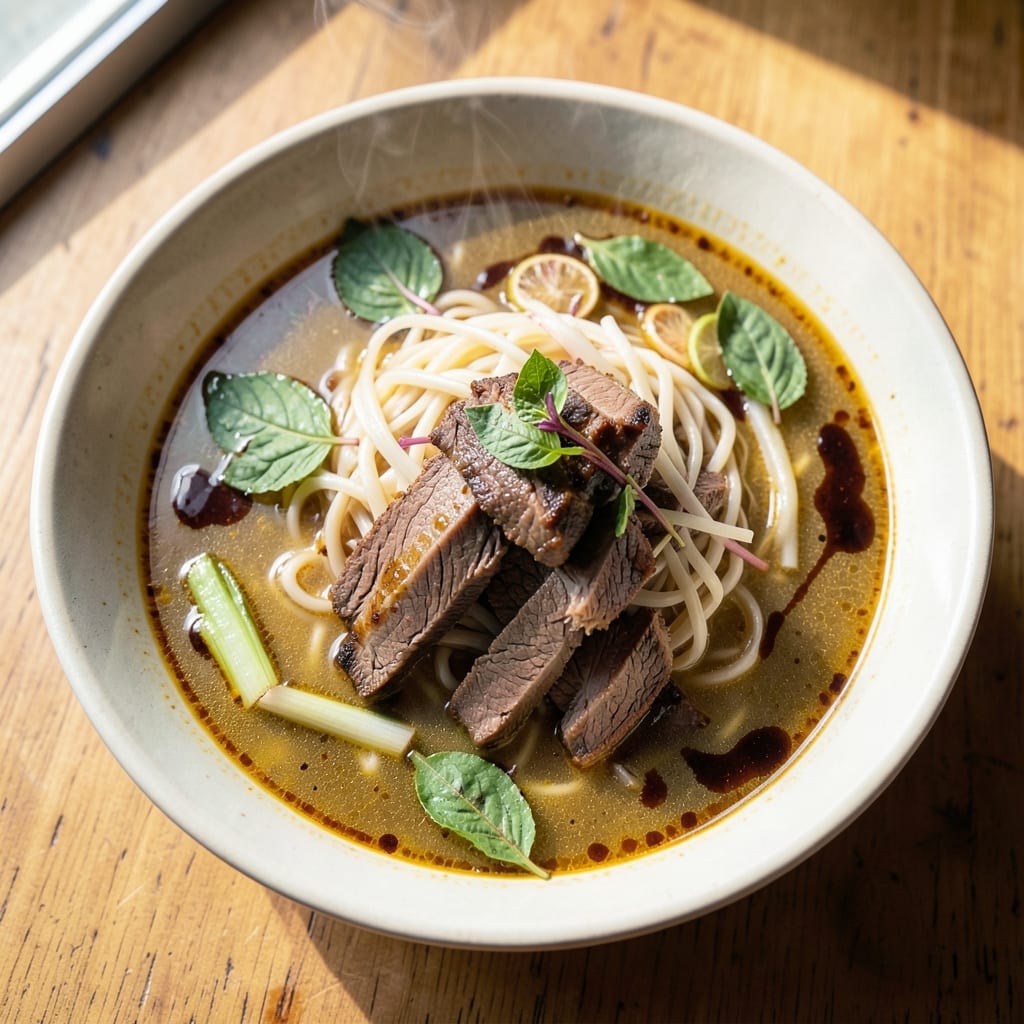
This authentic Thai beef noodle soup delivers the fragrant, balanced flavors of street-side Tom Yum and Tom Kha in one bowl. The secret lies in layering aromatics—lemongrass, galangal, and kaffir lime leaves—while achieving that signature harmony of sour, spicy, and umami. I've perfected this recipe after years of testing, ensuring the broth stays clear and deeply flavorful without overpowering the tender beef and delicate rice noodles.
The process begins with a slow-simmered broth that extracts maximum flavor from the aromatics, then builds complexity with fish sauce, lime juice, and a touch of palm sugar. What sets this apart is the technique of blooming the spices in hot oil before adding liquid, which prevents bitterness and intensifies their natural aromas. The beef is poached just until tender, preserving its natural richness, while the rice noodles cook separately to maintain their perfect chewy texture.
By the time you serve this soup, your kitchen will smell like a bustling Bangkok street market, and each spoonful will deliver that perfect balance of tangy, spicy, and savory notes. The clear broth cradles tender beef slices, fragrant herbs, and just-cooked noodles, creating a dish that's both comforting and vibrantly authentic. This is the kind of recipe that transforms a simple weeknight dinner into a culinary adventure.
Serve immediately with fresh herbs on the side—cilantro, Thai basil, and sliced chili peppers—so everyone can customize their heat level. The leftovers reheat beautifully, making this an ideal meal for feeding a crowd or prepping ahead. Let's create this restaurant-quality Thai beef noodle soup at home.
Ingredients for authentic thai beef noodle soup
Fourteen ingredients, all essential for that vibrant Bangkok street market aroma.
| Ingredient | Amount | Notes |
|---|---|---|
| Lemongrass Stalks 🌿 | 4 whole | Bruised and cut into 2-inch pieces |
| Galangal Slices 🍋 | 3 slices | About 1-inch thick, peeled |
| Kaffir Lime Leaves 🍋 | 4 whole | Torn in half, stems removed |
| Thai Beef (Chuck Roast) 🥩 | 1 ½ lb | Thinly sliced against grain |
| Rice Noodles 🍜 | 8 oz | Flat or round, medium width |
| Fish Sauce 🍶 | 2 tbsp | Red Boat brand preferred |
| Palm Sugar 🍯 | 1 tbsp | Or light brown sugar |
| Lime Juice 🍋 | ¼ cup | Freshly squeezed |
| Thai Chili Paste 🌶️ | 1 tbsp | Adjust for heat preference |
| Vegetable Oil 🫒 | ¼ cup | For blooming spices |
| Garlic Cloves 🧄 | 4 cloves | Minced |
| Shallots 🧅 | 2 whole | Thinly sliced |
| Fresh Cilantro 🌿 | ¼ cup | Chopped, for garnish |
| Thai Basil Leaves 🌿 | ¼ cup | Whole leaves, for garnish |
| Bird's Eye Chilies 🌶️ | 2 whole | Sliced, for garnish |
The aromatics are non-negotiable for authentic flavor. Lemongrass and galangal should be fresh—look for vibrant green stalks with no brown spots. Thai markets or specialty Asian grocers are your best bet for quality galangal, which can be hard to find elsewhere. Kaffir lime leaves are the secret to that signature citrusy depth, so don't skip them. If you can't find fresh galangal, ginger at half the amount works in a pinch, though it won't be identical. The beef should be chuck roast—it stays tender when sliced thin. Costco or Whole Foods usually carry it pre-sliced for convenience, but ask the butcher to cut it against the grain if you're buying a whole piece.
No fish sauce? Soy sauce with a dash of anchovy paste mimics the umami, though it won't be exact. Palm sugar unavailable? Light brown sugar blends seamlessly. The Thai chili paste is where heat lives—start with one tablespoon and adjust. Maesri or Thai Kitchen brands are reliable for the right balance of spice and sweetness. For the noodles, rice vermicelli is traditional, but any flat or round rice noodle works. The key is cooking them separately to maintain that perfect chewy texture—they should be al dente, not mushy. Fresh herbs are a must for garnish, but dried oregano can stretch you if needed.
This soup tastes even better the next day as flavors meld. Store leftovers in the fridge for 3-4 days, tightly sealed. The broth freezes beautifully for up to 3 months—just reheat gently and add fresh noodles when serving. For meal prep, I like to make a double batch of broth and freeze it in portions. The fresh herbs and chili garnishes should be added fresh when serving, so keep them separate until the last minute. The noodles can be prepped ahead and stored dry in an airtight container for up to 1 month—just soak them in hot water when ready to use.
Why You'll Love This Recipe
- One-Pot Magic: I swear by this recipe—just toss everything into a single pot, and the galangal and lemongrass infuse the broth like a slow-cooked secret. No extra dishes, no stress, and the chuck roast practically melts into tender perfection while you prep the noodles.
- Citrusy Depth Bomb: That first sip of broth—bright, herbal, with just a hint of galangal’s peppery kick—is what makes this dish ridiculously good. The kaffir lime leaves add a floral note that’s subtle but unforgettable, like a whisper of Thailand in every spoonful.
- Leftovers That Shine: Between us, this soup only gets better the next day. The flavors meld even more, and I’ve turned it into a quick lunch by reheating with a splash of water and a sprinkle of fresh herbs. (Yes, even on a Tuesday night.)
- Budget-Friendly Feast: Thai chuck roast and rice noodles stretch this recipe into four generous bowls for under $15. Honestly, it’s my go-to when I need to feed the family without breaking the bank—or spending hours in the kitchen. The galangal and lemongrass are the real MVP here, adding luxury for pennies.
Step-by-step instructions for authentic Thai beef noodle soup
Master the balance of fragrant aromatics and rich beef flavor in this traditional preparation.
Prepare the Aromatic Base
Heat the 0.25 cup vegetable oil in a large pot over medium heat. Add the 4 whole lemongrass stalks (bruised and cut), 3 slices galangal (peeled), and 4 whole kaffir lime leaves (torn in half). Cook for 3-4 minutes until the lemongrass turns slightly darker and releases its citrusy aroma.
Add the 2 whole shallots (thinly sliced) and 4 cloves garlic (minced). Stir for 1 minute until the shallots soften and become translucent. This aromatic base forms the soul of your soup—don't rush this step or the flavors won't develop properly. The galangal should release a peppery aroma that complements the citrus notes from the lemongrass.
Brown the Beef and Build the Broth
Push the aromatics to one side of the pot and add the 1.5 lb Thai beef (thinly sliced against the grain) in a single layer. Cook undisturbed for 3-4 minutes until the beef develops a deep brown crust on all sides. This searing step is crucial for locking in flavor and preventing the beef from becoming tough.
Add 1 tbsp Thai chili paste and stir for 30 seconds to coat the beef. Pour in 6 cups water (or enough to cover the beef) and bring to a boil. Reduce heat to medium-low and simmer for 45-50 minutes until the beef is fork-tender and the broth has reduced slightly. The beef should float easily and pull apart with gentle pressure—this indicates perfect tenderness.
Season and Finish the Broth
Add the 1 tbsp palm sugar and 2 tbsp fish sauce to the simmering broth. Stir well and taste—adjust seasoning if needed. The broth should be balanced: sweet from the palm sugar, salty from the fish sauce, and slightly spicy from the chili paste. Add 0.25 cup lime juice and simmer for another 2 minutes to brighten the flavors.
Remove the lemongrass stalks and kaffir lime leaves (discard them) and strain the broth through a fine-mesh sieve into a clean pot. Return the broth to medium heat and keep warm while you prepare the noodles. The strained broth should be clear with a vibrant golden color—this indicates proper seasoning and reduction.
Cook the Noodles and Assemble
Bring a separate pot of water to a boil and add the 8 oz rice noodles. Cook for 4-5 minutes or according to package instructions until the noodles are tender but still slightly firm. Drain and rinse briefly with cold water to stop cooking, then drain again thoroughly. The noodles should be al dente—they'll finish cooking in the hot broth.
Divide the cooked noodles among 4 bowls. Ladle the hot beef broth over the noodles, distributing the beef slices evenly. Garnish each bowl with 2 tbsp chopped fresh cilantro, 2 tbsp whole Thai basil leaves, and 2 slices bird's eye chilies. Serve immediately with extra fish sauce and lime wedges on the side for adjusting to taste.
Pro Tips For Making Authentic Thai Beef Noodle Soup
- CHAR THE BEEF TWICE: I used to cook the chuck roast once, then simmer it in the broth—big mistake. Char the beef first over high heat until deep brown crusts form (about 3-4 minutes per side), then remove and set aside. After building your aromatic paste (lemongrass, galangal, etc.), return the beef to the pot and simmer. The double cook gives you tender, flavor-packed meat that doesn’t turn to mush.
- SLICE GALANGAL THIN: Thick galangal slices? They’ll just sit there like a rock in your soup. Use a sharp knife to shave them into paper-thin rounds—about 1/8-inch thick. This way, they infuse the broth properly without making the soup taste like you’re chewing on a tree root. (Yes, even if it looks weird.)
- ADD NOODLES LAST: Tossing rice noodles into boiling soup is how you end up with a gluey mess. Instead, cook them separately in a separate pot of simmering water for 2-3 minutes—just until they’re tender but still hold their shape. Then, drain and add them to individual bowls before ladling the hot broth over. Your noodles will stay intact, and the soup won’t turn into a thick paste.
- USE LEMONGRASS STALKS, NOT JUST STEMS: Most recipes tell you to use the white part of lemongrass—don’t skip the green! The lower 6 inches of the stalk (including the pale green) has the most flavor. Bruise the stalks lightly with the side of your knife before adding them to the pot. This releases the oils and makes the broth smell like a Thai street cart should. (Your nose will thank you.)
Make-ahead tips for this recipe
Broth Prep Ahead
The broth is where this soup shines when made ahead—it actually tastes better after flavors meld! Simmer the aromatics and beef as directed, then let it cool to room temperature. Store in an airtight container in the fridge for 3-4 days or freeze for 3 months. When reheating, warm gently over low heat (never microwave) to preserve the delicate balance of flavors. 💫
Noodle Prep Shortcut
Save time by prepping noodles in advance: store dry rice noodles in an airtight container for up to 1 month. When ready to serve, simply soak in hot water for 4-5 minutes—no need to cook them ahead. This keeps them perfectly chewy when combined with the hot broth. I always keep a package on hand for quick weeknight meals!
Component Assembly
For meal prep, assemble everything separately: store broth in one container, cooked noodles in another (covered with damp paper towel), and garnishes in a sealed bag. When serving, just reheat broth, add fresh noodles, and top with herbs. This keeps textures perfect—no soggy noodles or wilted garnishes. The fresh herbs should always be added last minute for maximum flavor impact. ✨
Freezer-Friendly Tips
Freeze broth in 1-cup portions using silicone ice cube trays for easy single-serving reheats. Thaw overnight in the fridge, then reheat gently. Never refreeze—this soup's magic lies in its freshness. For extra convenience, freeze beef separately in broth (without noodles) for 2 months. Thaw in the fridge before assembling with fresh noodles and garnishes. 🧊
Garnish Refresh
Fresh herbs and chilies are the soul of this soup—never skip them! Store chopped cilantro and Thai basil in a sealed container with a paper towel to absorb moisture, keeping them fresh for 3 days in the fridge. Bird's eye chilies can be stored whole in a dry container for 2 weeks. Add these fresh when serving to maintain vibrant colors and maximum flavor punch. 🌿
Reheating Perfection
When reheating, add 1-2 tablespoons of water to the broth to prevent sticking. Warm over medium-low heat for 5-7 minutes, stirring occasionally. Taste and adjust seasoning—you may need an extra splash of fish sauce or lime juice after reheating. The noodles should be added just before serving to maintain their ideal texture. 🔥
Nutrition facts
Frequently asked questions
What makes this beef noodle soup truly authentic?
Authenticity comes from three key elements: the aromatic base of lemongrass, galangal, and kaffir lime leaves, the proper balance of sour (lime juice), spicy (chili paste), and umami (fish sauce), and the technique of blooming spices in oil before adding liquid. The beef is sliced thinly against the grain for tenderness, and rice noodles are cooked separately to maintain their perfect chewy texture. These details recreate the flavors of Bangkok street markets.
Can I substitute galangal if I can't find it?
Yes! Use ginger at half the amount (so 1.5 slices instead of 3) as a substitute. While it won't be identical, it adds warmth and peppery notes that work well. For best results, combine it with a pinch of black pepper to mimic galangal's complexity. If you're feeling adventurous, try turmeric root for a deeper earthy flavor, though it's harder to find.
How do I adjust the spice level for sensitive eaters?
Start by reducing the Thai chili paste to 1 teaspoon instead of 1 tablespoon. For extra mildness, omit it entirely and add 1/2 teaspoon of sugar to balance any natural heat from the aromatics. Serve with extra lime wedges on the side—squeezing a little fresh lime brightens the broth and can help mask any lingering spice. Always keep fresh herbs available for garnish to add freshness without heat.
Why does the broth need to be strained?
Straining removes fibrous aromatics that can make the broth cloudy and slightly bitter over time. The strained broth should be clear with a vibrant golden color—this indicates proper seasoning and reduction. It also creates a cleaner presentation that highlights the beef and noodles. For extra clarity, you can strain it through a cheesecloth-lined sieve or even a coffee filter for a restaurant-quality finish.
What's the best way to serve this soup?
Serve immediately in warm bowls with fresh herbs and chili slices on the side for customization. Include extra fish sauce and lime wedges so everyone can adjust to their taste. For presentation, arrange the beef slices artfully on top of the noodles, then pour the broth over them. In Thailand, it's common to eat with a spoon and chopsticks—hold the noodles with chopsticks while sipping the broth. Pair with a crisp Thai iced tea or sugarcane juice for the full experience.