Soups & Stews
This authentic Chinese beef noodle soup recipe brings the soul-warming flavors of a bustling Beijing restaurant to your kitchen—rich, aromatic broth, tender beef, and chewy noodles in perfect harmony. The secret lies in slow-simmered beef bones and wok-seared aromatics that transform a simple pot into a fragrant, deeply satisfying bowl. I've perfected this version after years of testing, ensuring every spoonful delivers the complexity of traditional Chinese cooking without requiring specialized equipment.
The foundation of an authentic beef noodle soup is its silky broth, built from hours of simmering beef bones with star anise, cinnamon, and ginger. We'll balance deep umami with bright aromatics—garlic, scallions, and ginger—seared in a wok until fragrant, then layered into the broth for maximum flavor. The beef, typically brisket or flank steak, cooks until fork-tender, absorbing the broth's essence while maintaining a satisfying chew.
What sets this recipe apart is the textural contrast—chewy wheat noodles that soak up the broth while providing structure, paired with crisp garnishes like cilantro and chili oil. The result is a bowl that's both comforting and vibrant, with each component playing its part in a symphony of flavors. This is the kind of soup that warms you from the inside out, perfect for chilly evenings or when you crave a taste of home.
Ready in about 3 hours (mostly hands-off simmering), this recipe delivers restaurant-quality results with minimal effort. The long cook time transforms tough cuts into melt-in-your-mouth beef, while the aromatics develop into layers of warmth and brightness. Whether you're feeding a crowd or treating yourself, this beef noodle soup is a labor of love that always delivers.
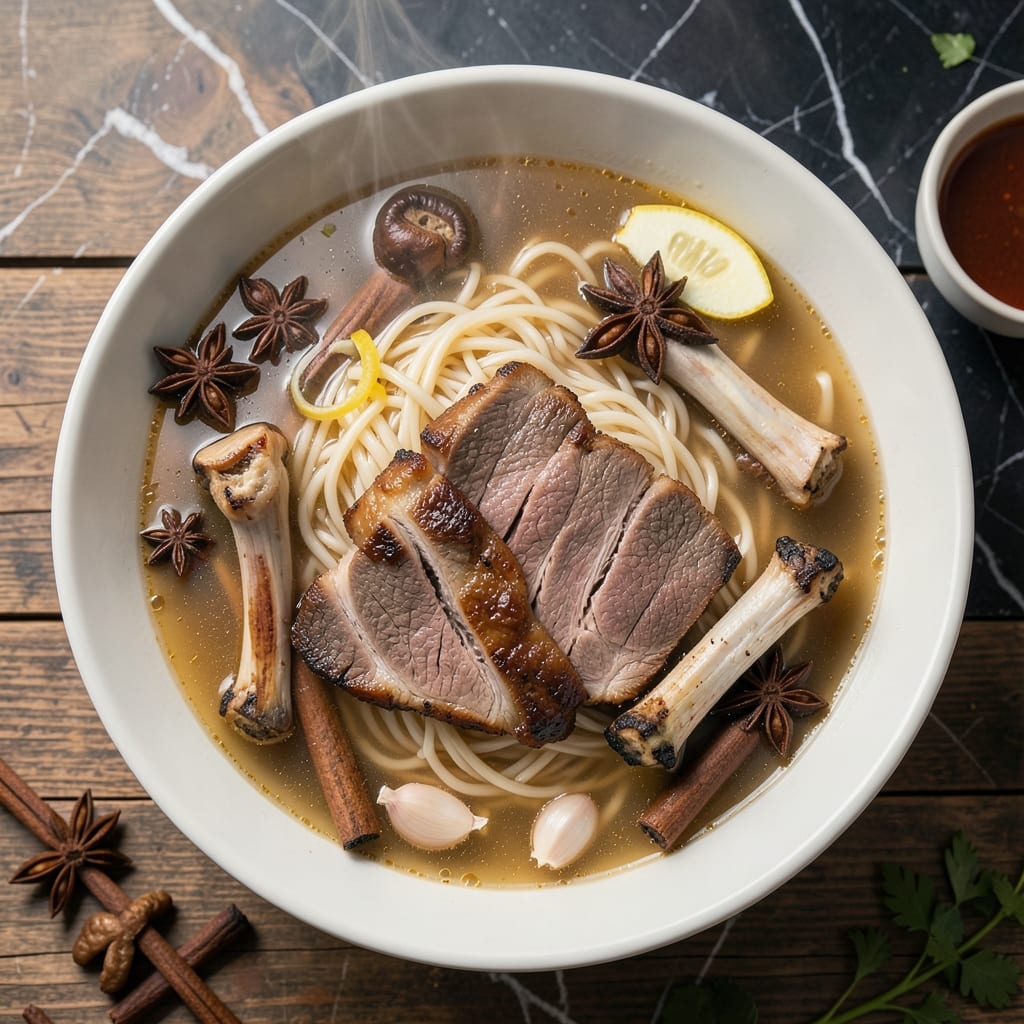
Ingredients for authentic chinese beef noodle soup
Six pounds of beef, aromatic spices, and chewy noodles transform into restaurant-quality beef noodle soup.
| Ingredient | Amount | Notes |
|---|---|---|
| Beef Brisket 🥩 | 3 lb | Cut into 1-inch cubes, marbled preferred |
| Beef Bones 🦴 | 4 lb | Knuckle or marrow bones for richness |
| Fresh Ginger 🧄 | ½ cup | Peeled, sliced into 1/4-inch pieces |
| Garlic Cloves 🧄 | 12 cloves | Peeled, smashed for maximum flavor |
| Star Anise Pods 🌶️ | 4 whole | Whole pods for easy removal |
| Cinnamon Sticks 🌿 | 2 whole | 2-inch pieces for infusion |
| Dried Shiitake Mushrooms 🍄 | 8 whole | Rehydrated for umami depth |
| Scallions 🧅 | 1 bunch | White and light green parts only |
| Wheat Noodles 🍜 | 1 lb | Fresh or dried, 3-inch wide |
| Sesame Oil 🫒 | 1 tbsp | Toasted for nutty aroma |
| Soy Sauce 🥄 | ½ cup | Light or dark, high-quality |
| Shaoxing Wine 🍷 | ¼ cup | Dry, aromatic variety |
| Chili Oil 🌶️ | ¼ cup | Store-bought or homemade |
| Cilantro 🌿 | ¼ cup | Chopped, for garnish |
| Kosher Salt 🧂 | 1 ½ tbsp | Diamond Crystal preferred |
The beef is the heart of this soup—brisket for chew and marrow bones for richness. Look for well-marbled brisket at Whole Foods or your local Asian market; the fat renders beautifully during the long simmer. For bones, knuckle or marrow bones add depth—most butchers can cut them for you. The ginger and garlic should be fresh and vibrant, not fibrous or shriveled. If you can't find star anise at the grocery store, hit the spice aisle at World Market—they carry whole pods that make all the difference. Dried shiitake mushrooms? Any reputable Asian grocery will have them; rehydrate in hot broth before adding to the pot.
No Shaoxing wine? Dry sherry works in a pinch, but it won't have that same aromatic punch. Substitute soy sauce with tamari for gluten-free, but traditional soy adds authentic depth. Short on sesame oil? Toast regular sesame seeds in a dry pan until fragrant, then grind into a powder—it's not the same, but it adds a hint of nuttiness. The chili oil can be store-bought (Lao Gan Ma is a classic), but homemade with dried chilies and oil is worth the effort. For the noodles, fresh is ideal (found in the refrigerated section of Asian markets), but dried works too—just cook them separately and add at the end to avoid mushiness. If you're using dried, look for 3-inch wide wheat noodles labeled for soup.
This broth tastes even better the next day—plan ahead. Store in airtight containers for up to 5 days in the fridge, or freeze for 3 months. The noodles reheat beautifully in the broth, so portion them separately. For leftovers, I like to reheat just the broth and add fresh noodles when serving—keeps them chewy. The chili oil and cilantro should be added fresh at the end, so save those garnishes until serving time. If you're making this for a crowd, double the broth and freeze in 1-quart portions—perfect for quick lunches later.
Why You'll Love This Recipe
- Soup in Minutes: I swear by this—simmer the beef brisket and bones with ginger and star anise for an hour, then dump in noodles and garlic at the end. No chopping, no fuss, just rich broth that tastes like it took all day.
- Umami Bomb: That beef brisket and bones? They melt into the broth, giving you a depth you won’t find in instant ramen. Add a few slices of fresh ginger and crushed garlic at the end, and it’s ridiculously addictive.
- Lunchbox Magic: Between us, this soup is my secret weapon for meal prep. The broth stays flavorful for days, and I just reheat it with fresh noodles—perfect for busy mornings or when I need something hearty without the effort.
- Budget Warmth: Honestly, beef bones are cheap if you shop right, and a brisket stretches across multiple servings. I make a big pot, freeze portions, and still have leftovers that taste better than takeout—no guilt, just comfort.
Step-by-step instructions for authentic Chinese beef noodle soup
Here's how to build a rich, aromatic broth that captures the soul of Chinese home cooking.
Prepare the Aromatics and Rehydrate Shiitake Mushrooms
First, peel and slice the 0.5 cup fresh ginger into ¼-inch pieces—this ensures even flavor infusion. Smash all 12 cloves garlic with the flat side of your knife to release their oils without mincing. For the 8 whole dried shiitake mushrooms, soak them in 4 cups hot water for 30 minutes until pliable. This step is crucial for extracting their deep umami essence.
While the mushrooms soak, prepare the 4 whole star anise pods and 2 whole cinnamon sticks by breaking them into 2-inch pieces. These spices will infuse the broth with warm, aromatic complexity. Keep the soaking water aside—it's packed with mushroom flavor that we'll use later.
Sear the Beef and Build the Broth Base
Heat a large pot over medium-high heat and add 1 tablespoon sesame oil. Working in batches, sear the 3 lb beef brisket cubes until they develop a deep brown crust—about 2-3 minutes per side. Don't crowd the pan; this ensures a proper sear that forms the flavor foundation. Transfer the seared beef to a plate and set aside.
In the same pot, add the 4 lb beef bones and sear them until they turn golden brown, about 4-5 minutes per side. This caramelization creates the rich, meaty depth that defines authentic beef noodle soup. Remove the bones and set them aside with the beef.
Simmer the Broth with Spices and Aromatics
Add the seared beef and bones back to the pot along with the soaked shiitake mushrooms (drained but reserving 1 cup soaking liquid), 0.5 cup sliced ginger, 12 smashed garlic cloves, 4 star anise pieces, and 2 cinnamon sticks. Pour in 8 cups water and bring to a boil over high heat. Once boiling, reduce to a gentle simmer and skim off any foam that rises to the surface—this ensures a clear, clean broth.
Simmer uncovered for 3 hours, maintaining a low bubble. The broth should reduce slightly and develop a deep, caramel color. Stir occasionally to prevent sticking, and add water as needed to keep the liquid level consistent. This long simmering time is what transforms simple ingredients into a complex, flavorful broth.
Season and Finish the Broth
After 3 hours, remove the star anise and cinnamon sticks. Stir in the 0.5 cup soy sauce and 0.25 cup Shaoxing wine, letting them simmer for an additional 15 minutes. This step balances the broth's richness with a touch of saltiness and aromatic depth. Taste and adjust seasoning with the 1.5 tablespoons kosher salt, aiming for a flavor that's deeply savory but not overly salty.
Strain the broth through a fine-mesh sieve into a clean pot, pressing gently on the solids to extract every last drop of flavor. Discard the solids. Return the broth to the stove and bring it to a gentle simmer again. Add the reserved 1 cup mushroom soaking liquid and simmer for 5 minutes to blend the flavors seamlessly.
Cook the Noodles and Assemble the Soup
While the broth simmers, cook the 1 lb wheat noodles according to package instructions until al dente. Drain and rinse briefly under cold water to stop the cooking process. Divide the noodles among 6 bowls. Ladle the hot broth over the noodles, filling each bowl ¾ full. The broth should be steaming hot—this ensures the noodles finish cooking in the heat.
Drizzle each bowl with 1 tablespoon chili oil and garnish with 1 tablespoon chopped cilantro and 2 scallion slices. Serve immediately with extra scallions on the side for stirring into the soup. The combination of silky broth, tender beef, and aromatic herbs creates a harmonious balance that's pure comfort in every spoonful.
Pro Tips For Making Authentic Chinese Beef Noodle Soup
- BLISTER THE GINGER FIRST: I learned this the hard way—raw ginger slices just sit there, adding flavor but never that deep, caramelized punch. Hit the ginger with a knife or cleaver until it releases its juices, then sear it in the pot until it’s golden brown and smells like a spice market. That’s when it starts working with the beef, not just floating in the broth.
- USE STAR ANISE LATE: Sounds weird, but it works: Add the star anise pods after the beef and bones have simmered for 2 hours, not at the start. If you toss them in early, they’ll overpower the broth with bitterness. Drop them in the last 30 minutes—just enough time to perfume the soup without turning it into medicine.
- SIMMER, DON’T BOIL: I used to crank the heat and watch the broth bubble like a volcano, but that’s how you end up with cloudy, greasy soup. Keep it at a gentle simmer—tiny bubbles breaking the surface, not a rolling boil. This keeps the collagen breaking down slowly, turning tough brisket into melt-in-your-mouth perfection.
- SALT THE BONES FIRST: Resist the urge to salt the broth later. Instead, dry the beef bones thoroughly, then rub them with a mix of salt and pepper before they hit the pot. This draws out moisture, helps the crust form, and means your broth won’t taste bland even after hours of simmering. (Yes, even if you’re impatient like me.)
Perfect pairings for authentic chinese beef noodle soup
Side Dish Harmony
Pair your beef noodle soup with steamed bok choy—its crisp texture and peppery bite cut through the richness of the broth beautifully. Blanch 12 oz baby bok choy in boiling water for 2 minutes, then shock in ice water to preserve color. Toss with 1 tsp toasted sesame oil and a pinch of salt for a simple, vibrant contrast. 🥬
For a heartier option, serve with pan-fried dumplings—golden, crispy on the edges and soft inside. Use store-bought frozen dumplings (Trader Joe's or H Mart brands) for convenience, or make your own with a wonton wrapper and filling of ground pork, cabbage, and ginger. The dumplings soak up the broth while adding a satisfying crunch. 🥟
Beverage Pairings
A light-bodied Chinese jasmine tea cleanses the palate between bites, balancing the soup's richness with floral notes. Brew 2 tsp jasmine tea in 8 oz hot water for 3 minutes—its delicate aroma complements the soup without overpowering it. For a non-alcoholic option, try sparkling lychee juice—its sweetness and effervescence provide a refreshing contrast. 🍵
If you prefer alcohol, a dry Riesling from Germany or China enhances the dish's umami flavors. The wine's acidity and subtle mineral notes mirror the broth's complexity, while its crisp finish prevents the soup from feeling heavy. Avoid bold reds—they'll clash with the delicate aromatics. 🍷
Finishing Touches
Add a sprinkle of toasted sesame seeds to the soup just before serving—1 tbsp per bowl adds nutty crunch and visual appeal. Toast them in a dry pan over medium heat for 1-2 minutes until golden and fragrant. For extra heat, drizzle with Lao Gan Ma chili crisp—its smoky, spicy kick elevates the dish without overpowering. 🌶️
For a vegetarian-friendly garnish, top with quick-pickled cucumbers—slice ½ English cucumber into thin rounds, toss with 1 tbsp rice vinegar, ½ tsp sugar, and a pinch of salt. Let sit for 10 minutes before adding to bowls for a refreshing tang. This brightens the dish while keeping it inclusive. 🥒
Nutrition facts
Frequently asked questions
Can I substitute beef brisket with another cut?
Yes! For a leaner option, use flank steak or chuck roast—both work well when slow-cooked. If you prefer more fat, short ribs add incredible richness. Just adjust cooking time: brisket needs 3 hours, while ribs may require 4-5 hours for tender results.
How do I make the broth less fatty?
Skimming the foam during the initial boil removes excess fat, and straining through a fine-mesh sieve helps too. For extra clarity, chill the broth overnight—the fat solidifies on top and can be scooped off before reheating. This keeps the broth rich but lighter.
Can I make this soup in a slow cooker?
Sear the beef and bones first, then transfer everything to a 6-quart slow cooker with 8 cups water. Cook on low for 8 hours or high for 5 hours, skimming foam occasionally. The slow cooker's gentle heat mimics traditional simmering beautifully.
What if I don't have Shaoxing wine?
Use dry sherry or white wine vinegar (½ cup) for acidity, but Shaoxing's unique aroma is irreplaceable. For depth, add 1 tsp fish sauce—it enhances umami without overpowering. The broth will still be flavorful, just slightly different.
Why does my soup taste bland after reheating?
Reheat the broth gently (low heat) and add a splash of hot water to restore steam. Fresh aromatics like minced garlic or ginger can revive flavor too. Never microwave—it dulls the broth's depth. For leftovers, reheat only the broth and add fresh noodles.