
Soups & Stews
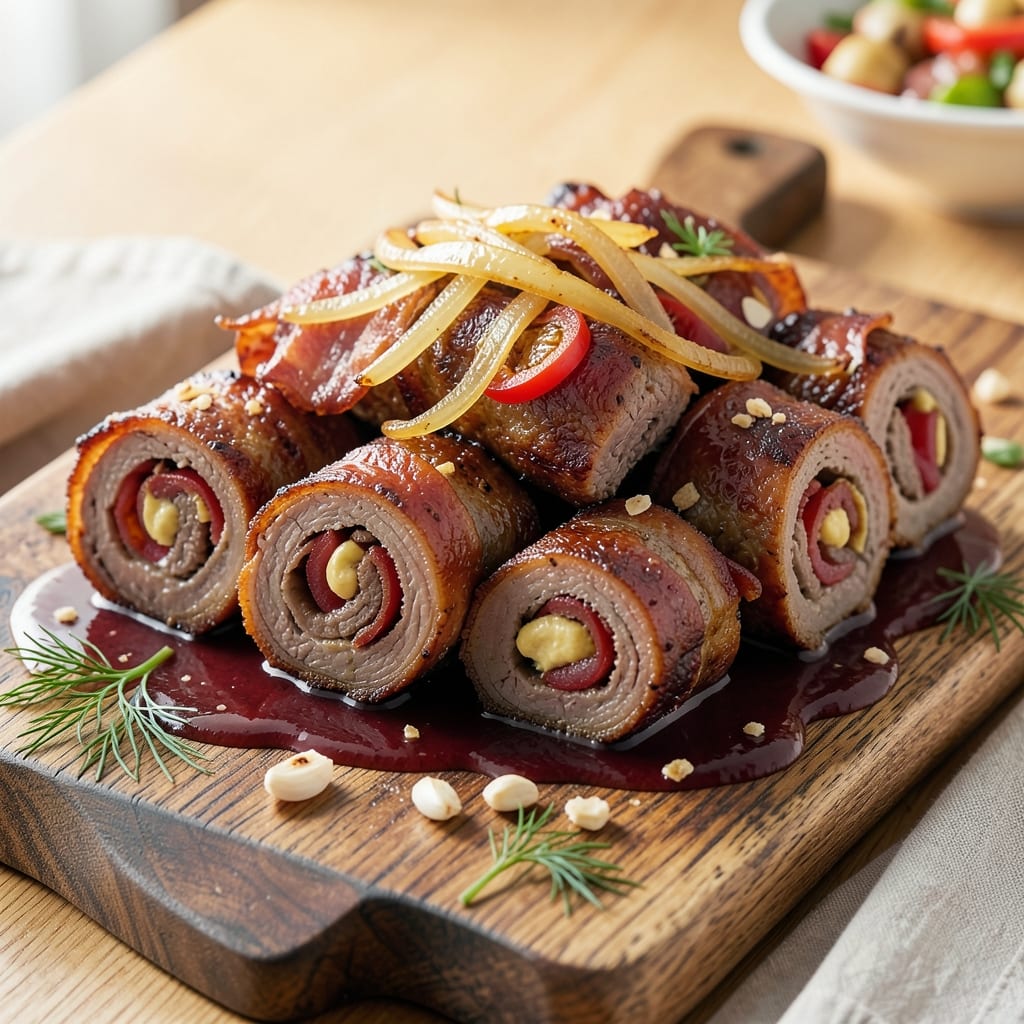
This authentic German beef rouladen recipe delivers the hearty, mustard-kissed tenderness that makes it a Sunday supper staple across Bavaria. 💛 The secret lies in thinly sliced beef wrapped around a savory stuffing of bacon, onions, pickles, and tangy mustard—each bite bursting with layered flavors that balance richness and acidity.
What sets this recipe apart is the traditional preparation: beef rouladen are seared to a golden crust before slow-browning in a rich gravy, creating that signature caramelized exterior while keeping the meat fork-tender. The stuffing ingredients—smoked bacon, sweet onions, and briny pickles—are carefully balanced to complement the beef's natural richness, while the mustard adds that signature German tang.
The result is a dish that feels like a hug from a Bavarian grandmother—warm, comforting, and deeply satisfying. Served with red cabbage and buttery potato dumplings, it becomes a complete meal that tastes even better the next day. This is how German home cooks have been preparing rouladen for generations, with techniques that ensure authenticity without sacrificing approachability.
Ready in about 2 hours (including prep), this recipe delivers restaurant-quality results with minimal fuss. The key is patience—letting the beef and stuffing meld together during the slow cooking process creates that melt-in-your-mouth tenderness that defines true German comfort food. Let's get started on this classic dish.
Ingredients for authentic german beef rouladen
Thinly sliced beef, crisp bacon, and tangy mustard—this Bavarian classic delivers restaurant-quality comfort.
| Ingredient | Amount | Notes |
|---|---|---|
| Top-Round Beef Roast 🥩 | 2 lb | Thinly sliced against grain |
| Smoked Bacon 🥓 | 8 oz | Thinly sliced, cut into strips |
| Yellow Onions 🧅 | 2 whole | Medium size, thinly sliced |
| Dill Pickles 🥒 | 4 whole | Large, thinly sliced |
| Dijon Mustard 🍯 | ½ cup | High-quality, tangy variety |
| Garlic Cloves 🧄 | 4 cloves | Fresh, minced |
| All-Purpose Flour 🌾 | ¼ cup | For gravy thickening |
| Beef Broth 💧 | 2 cups | Homemade or high-quality |
| Red Wine 🍷 | ½ cup | Dry, full-bodied variety |
| Tomato Paste 🍅 | 2 tbsp | Smooth, no sugar added |
| Fresh Parsley 🌿 | ¼ cup | Chopped, for garnish |
| Salt 🧂 | 1 ½ tsp | Diamond Crystal preferred |
| Black Pepper 🌶️ | 1 tsp | Freshly ground |
| Bay Leaves 🍃 | 2 whole | Fresh preferred |
The beef is non-negotiable: top-round roast delivers that signature melt-in-your-mouth tenderness when sliced thinly against the grain. Butcher shops often slice it professionally, but if you're doing it yourself, freeze the roast for 30 minutes first—makes slicing a breeze. Smoked bacon adds that essential smoky depth, so thin-cut slices work best. For the pickles, Bubbies or Vlasic are reliable choices, but any good-quality dill pickle will do. The onions should be sweet and fresh—yellow or Vidalia work perfectly. Dijon mustard is the secret weapon here: Maille or Amora brands deliver that perfect balance of tang and richness.
No smoked bacon? Thinly sliced pancetta works in a pinch, though it lacks that signature smokiness. Fresh garlic is ideal, but garlic powder at half the amount gets you close if needed. Running low on beef broth? Substitute red wine with an extra splash of balsamic vinegar for depth. The tomato paste can be skipped entirely if you prefer a wine-only gravy, though it adds a lovely sweetness. For the flour, all-purpose or bread flour both work—just make sure it's fresh. The bay leaves should be fresh if possible, but dried works at one-third the amount. Always remove them before serving, though.
This dish tastes even better the next day as the flavors meld together. Store leftovers in an airtight container in the fridge for up to 5 days, or freeze for 3 months. The gravy thickens as it cools, so simply reheat with a splash of broth or water. For serving, keep the rouladen whole if you prefer presentation, or slice into rounds for easier eating. The bacon will crisp up beautifully when reheated—just a quick pass under the broiler if you want that extra crunch.
Why You'll Love This Recipe
- I swear by this trick: slice the beef thin, spread Dijon mustard like glue, and roll those bacon-wrapped onions inside. Takes less time than arguing with the kids about dinner—seriously, 20 minutes max.
- No Fuss Assembly: I swear by this trick: slice the beef thin, spread Dijon mustard like glue, and roll those bacon-wrapped onions inside. Takes less time than arguing with the kids about dinner—seriously, 20 minutes max.
- Taste Like Sunday Dinner: That smoky bacon, tangy pickles, and caramelized onions? It’s the kind of flavor combo that makes you pause mid-bite. The mustard cuts through the richness, and the beef stays juicy—no dry, sad roast here.
- Leftovers That Don’t Suck: Between us, most beef dishes turn into sad, overcooked leftovers. Not these. The rouladen reheat like a dream—just a quick warm in gravy, and it’s like you made it fresh. (Yes, even on a Tuesday night.)
Step-by-step instructions for authentic German beef rouladen
Master this classic Bavarian technique for perfectly tender, mustard-kissed beef rolls wrapped in crisp bacon.
👨🍳 Step 1: Prepare the Beef and Filling Components
Begin by slicing the 2 lb Top-Round Beef Roast thinly against the grain into ¼-inch thick slices. I use a sharp boning knife and work carefully to maintain even thickness—this ensures consistent cooking. Pat each slice dry with paper towels to remove any surface moisture, which helps the mustard adhere better later.
For the filling, combine ½ cup Dijon Mustard, 4 cloves minced Garlic Cloves, and 1.5 tsp Salt in a small bowl. This tangy-sweet mixture is the heart of authentic Rouladen flavor. Spread 1 teaspoon of this mixture evenly over each beef slice, leaving a ½-inch border around the edges for sealing. The mustard will tenderize the meat as it cooks and create that signature flavor.
🥘 Step 2: Assemble the Rouladen with Bacon and Pickles
Lay each beef slice flat on a clean work surface. Place 2 thin slices of Smoked Bacon along one long edge of each slice, then add 2 thin slices of Dill Pickles and 2 thin slices of Yellow Onions on top of the bacon. Here's the thing—don't be stingy with the fillings. Each roll should have enough to create a substantial bite when sliced.
Gently roll each slice tightly from the bacon-filled edge, tucking in the sides as you go. Secure each roll with kitchen twine, spacing the ties about 1 inch apart. This prevents the rolls from unraveling during cooking. Place the assembled Rouladen seam-side down in a large Dutch oven or heavy pot—this keeps them stable while braising.
🔥 Step 3: Sear and Begin Braising
Heat 1 tablespoon olive oil (not listed but essential for searing) in the Dutch oven over medium-high heat. Working in batches to avoid crowding, sear the Rouladen on all sides until deep golden brown, about 2-3 minutes per side. This step develops incredible flavor through the Maillard reaction. Don't rush this—you're building the foundation for that rich, caramelized taste.
Remove the seared Rouladen and set aside. In the same pot, add 2 tbsp Tomato Paste and cook for 1 minute until it darkens slightly. Pour in ½ cup Red Wine and scrape up any browned bits from the bottom—this is where all the flavor hides. Return the Rouladen to the pot and add 2 cups Beef Broth, 1 tsp Black Pepper, and 2 whole Bay Leaves. Bring to a gentle simmer.
⏰ Step 4: Braise to Perfect Tenderness
Cover the Dutch oven and transfer to a 325°F oven. Braise for 2 to 2.5 hours until the beef is fork-tender with an internal temperature of 203°F. The rolls should be so tender they nearly fall apart when pierced—this is the mark of authentic German Rouladen. I check the temperature after 2 hours and adjust time as needed; top-round beef varies in tenderness.
During the last 30 minutes, uncover the pot and increase oven temperature to 375°F. This allows the sauce to reduce slightly and develop a richer consistency. The bacon should be crispy and the aromas filling your kitchen—this is when you know it's nearly done. Real talk: if you peek too early, the rolls might not finish properly, so resist the temptation.
🍳 Step 5: Thicken the Sauce and Finish
Remove the Rouladen from the braising liquid and transfer to a serving platter. Strain the cooking liquid through a fine-mesh sieve into a saucepan, pressing on the solids to extract maximum flavor. Return the liquid to medium heat and whisk in ¼ cup All-Purpose Flour to create a slurry. Cook for 3-5 minutes until the sauce thickens to a gravy-like consistency—it should coat the back of a spoon.
Season the finished sauce with additional salt if needed, then drizzle it generously over the Rouladen. Garnish with ¼ cup chopped Fresh Parsley and serve immediately with buttered egg noodles or roasted potatoes. The rolls should slice easily, revealing layers of tender beef, crisp bacon, and tangy pickles—each bite delivering that perfect balance of textures and flavors that makes this dish so beloved.
Pro Tips For Making Authentic German Beef Rouladen
- USE COLD BACON: Grab your bacon straight from the fridge—it’s firmer and holds its shape better when rolled inside the beef. Warm bacon gets floppy, and you’ll end up with a messy, unraveling roulade. Trust me, the extra few minutes save you hours of frustration later.
- SALT THE BEEF TWICE: Season the top-round roast generously with salt at least 4 hours before cooking—ideally overnight. Then, right before rolling, hit it with another layer of salt on the outer edges. This guarantees the meat stays juicy through the long braise and develops that deep, savory crust.
- WRAP THEM TIGHT: Don’t skimp on the twine—use butcher’s twine, not kitchen string, and wrap each roulade snugly every 1.5 inches. Loose rolls unravel in the pot, and you’ll end up with a sad, uneven pile of beef and bacon. Tight = clean slices later.
- BRAISE LOW AND SLOW: After searing, drop the heat to low (275°F/135°C) and cover the pot. If you rush it, the onions and pickles turn to mush, and the beef stays tough. I’ve learned this the hard way—patience here means fork-tender meat and a rich, saucy finish. No shortcuts.
Storing and reheating this dish
Refrigerator Storage
Store your rouladen in an airtight container with the gravy for up to 5 days in the fridge. The flavors actually deepen overnight as the mustard and beef meld together beautifully. I like to keep them whole in the container—they reheat perfectly this way. Just
Freezer Prep Tips
For longer storage, freeze your rouladen in a single layer on a tray first to prevent sticking, then transfer to a freezer-safe bag for up to 3 months. Label with the date and contents—trust me, you'll forget! When ready to eat, thaw overnight in the fridge before reheating. Never microwave from frozen; the texture suffers dramatically.
Stovetop Reheating
My preferred method is stovetop reheating: place rouladen in a pot with ½ cup fresh beef broth and simmer covered on low heat for 15-20 minutes. This gentle approach maintains the bacon's crispness and keeps the beef tender. If the sauce thickens too much, add more broth. For extra flavor, finish with a splash of red wine and a pinch of black pepper.
Oven Crisp Finish
For that restaurant-quality presentation, transfer reheated rouladen to a baking sheet and broil for 2-3 minutes under the oven's high heat setting. This crisps the bacon beautifully and caramelizes any exposed surfaces. Keep a close eye—it happens fast! Serve immediately with fresh parsley and warm dumplings for that authentic German touch. ✨
Gravy Refresh
If your gravy thickens too much during storage, simply whisk in 1-2 tablespoons cold water while reheating. For extra richness, stir in 1 teaspoon Dijon mustard—this brings back that signature tang. The gravy should coat the back of a spoon but remain smooth. I often make extra gravy when first cooking to have on hand for quick reheats.
Serving Suggestions
Serve rouladen with buttered potato dumplings or red cabbage to complete the classic German meal. For a modern twist, pair with roasted baby potatoes and a simple arugula salad. Always drizzle generously with the reheated gravy—it's the soul of the dish! The leftovers make fantastic sandwiches the next day with fresh bread and mustard. 🍽️
Nutrition facts
Frequently asked questions
Why does authentic German rouladen use Dijon mustard?
The tangy sharpness of Dijon mustard is essential for balancing the rich beef and smoky bacon. It tenderizes the meat during cooking while adding that signature German flavor profile. Traditional recipes often use a mix of mustard and vinegar for extra acidity, but Dijon alone delivers the perfect balance of sweet and tangy notes.
Can I make rouladen without twine to secure them?
Yes, but kitchen twine is the most authentic method. If unavailable, use toothpicks (remove before serving) or heavy-duty aluminum foil wrapped tightly around each roll. The key is to keep the fillings contained during braising—loose ingredients will fall out and make the sauce watery.
What's the best wine pairing for rouladen?
A dry German Spätburgunder (Pinot Noir) or Riesling complements the dish beautifully. The wine's acidity cuts through the richness while enhancing the mustard and bacon flavors. For a non-German option, a medium-bodied Cabernet Sauvignon works well too—just avoid overly oaky wines that might overpower the dish.
How do I fix rouladen that fell apart during cooking?
Don't worry—they'll still taste delicious! Simply transfer the loose beef and fillings to a serving platter, then strain the cooking liquid to make a rich gravy. Serve the mixture over egg noodles or mashed potatoes for a comforting German-style beef stew. The flavors will still shine through, just in a different presentation.
What's the difference between rouladen and schnitzel?
Rouladen are stuffed beef rolls braised in gravy, while schnitzel is thinly pounded cutlets breaded and pan-fried. The key difference is in the preparation: rouladen are slow-cooked for tenderness, while schnitzel is quick-cooked for crispiness. Both are German classics but serve completely different purposes in a meal.