
Main Courses
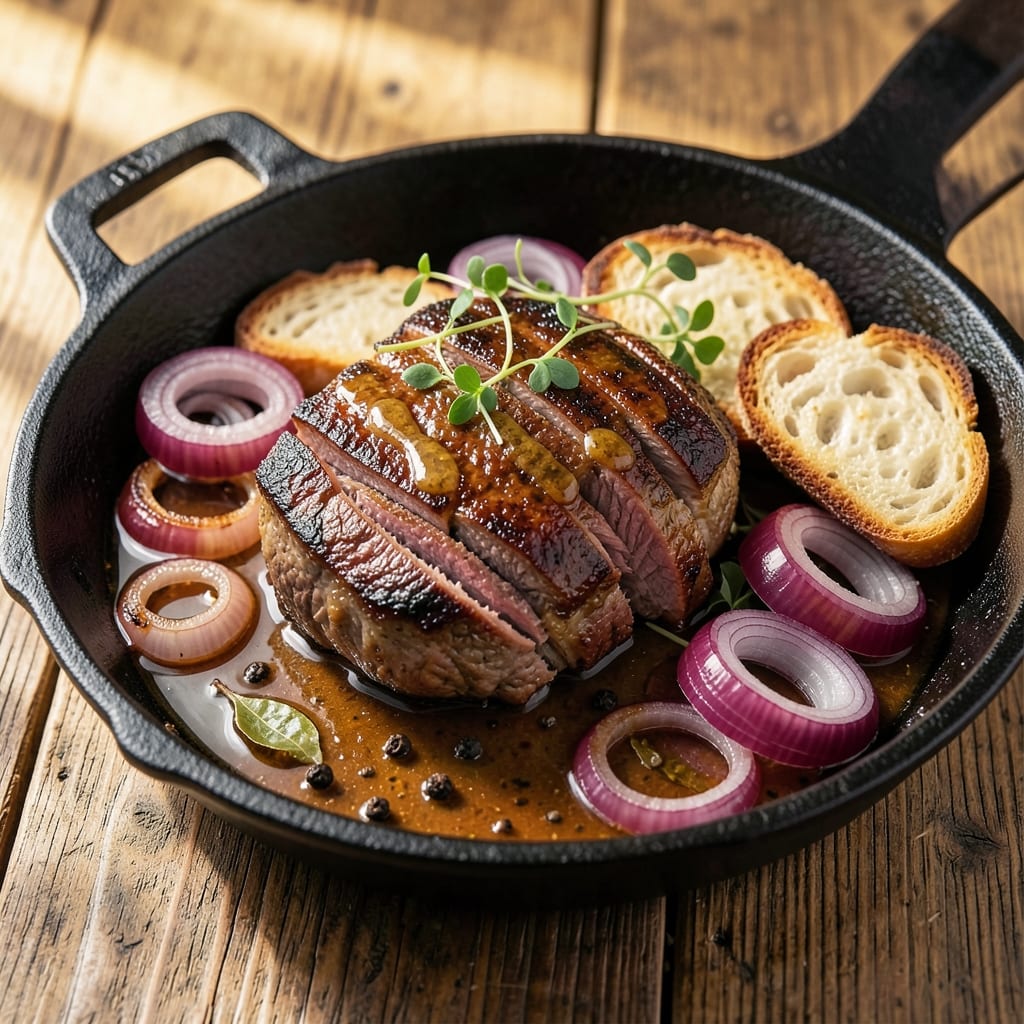
Authentic beef on weck brings the hearty flavors of Pennsylvania Dutch tradition to your table, where tender beef braises alongside crispy onions and hearty bread cubes in a rich, savory sauce. This dish isn’t just food—it’s a taste of history, born in German immigrant kitchens where slow-cooked meals fed families for generations. The secret lies in the balance of sweet and tangy flavors from the onions and vinegar, creating a dish that’s both comforting and deeply satisfying.
What sets this recipe apart is the crispy onions that add texture and depth, while the beef becomes fork-tender through slow roasting. The traditional weck—cubed bread—soaks up the flavorful gravy, turning every bite into a moment of nostalgia. This isn’t just a meal; it’s a celebration of heritage, perfect for gatherings or a cozy weeknight dinner when you crave something substantial and full of character.
The process is straightforward but rewarding: roast the beef until tender, caramelize the onions until golden, and let the flavors meld in a rich, tangy sauce. The result is a dish that’s hearty enough for a cold day but simple enough to make regularly. Serve it with mashed potatoes or sauerkraut to complete the experience, and you’ll understand why this recipe has been a staple for over a century.
Once you try this authentic beef on weck, you’ll see why it’s a beloved classic—rich, comforting, and impossible to resist. The crispy onions and tender beef create a perfect harmony of textures and flavors that make it a dish worth repeating. Let’s bring this tradition to life in your kitchen.
Ingredients for authentic beef on weck
The heart of this dish: tender beef, crispy onions, and rich gravy soaking into bread cubes.
| Ingredient | Amount | Notes |
|---|---|---|
| Beef Chuck Roast 🥩 | 3 lb | Boneless, well-marbled preferred |
| Yellow Onions 🧅 | 4 large | Yellow or red, sliced |
| Sourdough Bread 🍞 | 1 loaf | Stale or lightly toasted |
| White Vinegar 💧 | ½ cup | Distilled preferred |
| Beef Broth 💧 | 2 cups | Low-sodium preferred |
| Bay Leaves 🌿 | 2 whole | Dried, removed before serving |
| Black Peppercorns 🌶️ | 1 tbsp | Freshly cracked |
| Salt 🧂 | 2 tsp | Kosher or sea salt |
| All-Purpose Flour 🌾 | 2 tbsp | For thickening sauce |
| Butter 🧈 | 2 tbsp | Unsalted, for crisping onions |
| Garlic Cloves 🧄 | 4 cloves | Minced for flavor depth |
| Sugar 🍚 | 1 tbsp | Brown sugar enhances caramelization |
The beef is everything here. Chuck roast with good marbling breaks down beautifully—sirloin stays tough. Grab a pre-cut version from Costco or your butcher for convenience. For onions, yellow or red work best, and you'll need about 4 large ones. The sourdough bread should be stale or lightly toasted—day-old loaves from bakeries are perfect. If you can't find sourdough, rustic Italian bread works too, just cube it smaller for even cooking.
No white vinegar? Apple cider vinegar works in a pinch, though it adds a slight sweetness. Prefer less tang? Red wine vinegar at half the amount gives a milder flavor. The beef broth should be low-sodium—homemade or high-quality store-bought makes a difference. For the onions, butter is non-negotiable—it creates that signature crispy texture. If you're short on time, par-cook the onions before adding to the pot. The sugar? It's not just for sweetness—it helps caramelize the onions faster, giving them that deep, golden color.
This dish tastes even better the next day as flavors meld. Store leftovers in the fridge for 4-5 days or freeze for 3 months. For crispy onions, reheat them separately in a skillet with a little butter. The bread cubes soak up the gravy beautifully—portion them into containers so you can grab and go. The beef will be fork-tender, but if you're serving it to guests who prefer it rare, sear it first before braising.
Why You'll Love This Recipe
- One-Pot Magic: I swear by this—just toss the beef, onions, and broth in a pot, let it simmer, then shred that tender chuck with a fork. No fancy tools, no stress, and the vinegar cuts through the richness so effortlessly it feels like cheating.
- Sourdough Crust Game: That crispy, vinegar-brushed sourdough on top? It’s the secret weapon. The bread soaks up the juices while toasting to golden perfection—no need for extra sides, just pure, satisfying bites straight from the pan.
- Leftovers That Shine: Between us, the second day is often better. Shredded beef stays juicy, the bread stays sturdy, and I’ve turned cold slices into sandwiches or even a quick frittata. (Yes, even on a Tuesday night.)
- Budget Beef Stretch: A chuck roast and a loaf of sourdough feed my whole family for days. The broth reduces into a rich sauce, and the onions add depth without costing extra. Honestly, it’s the kind of meal that makes grocery day feel like a win.
Step-by-step instructions for German pub-style braised beef with crispy onions
Here's how to recreate that iconic German pub flavor—rich, tender beef and caramelized onions in one pot.
Sear the Beef Chuck Roast for Deep Flavor
Pat the 3 lb beef chuck roast dry with paper towels—this ensures a proper sear. Heat a Dutch oven over medium-high heat and add 1 tablespoon of the butter. Once the butter foams, add the beef and sear on all sides until deeply browned, about 4-5 minutes per side. You're building flavor here, so don't rush—those browned bits are pure gold.
Remove the beef from the pot and set it aside. The seared crust will develop into a rich fond that forms the base of your sauce. Here's the thing—if you see any dark, blackened bits, scrape them up with a wooden spoon and add them back to the pot. Those bits pack serious flavor punch.
Caramelize the Onions for Sweet Crispiness
In the same Dutch oven, add the remaining 1 tablespoon butter and reduce heat to medium. Add the 4 large yellow onions, sliced into even rounds, and sprinkle with 1 teaspoon of the salt and ½ teaspoon of the black peppercorns. Cook for 15 minutes, stirring occasionally, until the onions soften and begin to turn golden.
After 15 minutes, add the 1 tablespoon sugar and stir well. The sugar will help caramelize the onions beautifully. Continue cooking for another 10 minutes, stirring frequently, until the onions are deep golden brown and crispy at the edges. This is where you get that signature crunch that makes beef on weck special. If they stick, add a splash of water and scrape up any browned bits.
Build the Braising Liquid and Deglaze
Push the onions to one side of the pot and add the 4 minced garlic cloves to the empty space. Cook for 30 seconds until fragrant. Pour in the 0.5 cup white vinegar and scrape up all the browned bits from the bottom of the pot—this deglazing step captures all the meaty flavors you worked so hard to create.
Return the beef to the pot and add the 2 cups beef broth. The broth should just cover the beef—it should be about halfway up the roast. Add the 2 whole bay leaves and bring to a gentle simmer. Here's the key: you want small bubbles breaking the surface, but not a rolling boil. Cover the pot and reduce heat to low.
Braise Until Fork-Tender
Let the beef braise uncovered for 3 hours. This low-and-slow cooking method breaks down the tough connective tissue, transforming the chuck roast into tender, melt-in-your-mouth beef. After 3 hours, check the internal temperature with a meat thermometer—it should read 195°F. If it's not there yet, continue braising for another 30-60 minutes.
Real talk: don't peek at the beef during this time. Every time you lift the lid, you lose heat and moisture, which can turn your perfectly tender beef into something dry. Trust the process and let it cook undisturbed. The onions will continue to caramelize and develop deeper flavor during this time.
Thicken the Sauce and Serve with Crispy Bread
Once the beef is fork-tender, remove it from the pot and set it aside. Increase heat to medium and sprinkle the 2 tablespoons all-purpose flour over the onions and braising liquid. Stir well to combine and cook for 2-3 minutes until the sauce thickens slightly. You want it to coat the back of a spoon but still be loose enough to spoon over the beef.
Slice the beef against the grain into ¼-inch thick slices and arrange it on a platter. Spoon the onions and sauce over the top. Serve immediately with slices of the 1 loaf sourdough bread on the side—perfect for soaking up every last bit of that rich, flavorful sauce. The contrast of the crispy bread with the tender beef and sweet onions is what makes this dish truly special.
Pro Tips For Making Authentic Beef On Weck
- SEAR THE ROAST FIRST: I learned this the hard way—skipping the sear means flavorless broth. Pat the chuck roast completely dry, then hit it with high heat for 3-4 minutes per side until deep brown. That crust isn’t just for looks; it dissolves into the vinegar-broth mix and makes the whole dish taste richer.
- SWEAT ONIONS LOW AND SLOW: Sounds weird, but it works: cover those onions with a splash of vinegar before adding broth. This softens them faster and mellows their sharpness. Cook them on medium-low for 10-12 minutes, stirring occasionally, until they’re translucent but not browned—burnt onions ruin the balance.
- DON’T SKIP THE REST: After roasting, give the beef a solid 5-10 minutes under foil before slicing. I know, I know, but trust the process—this lets the juices redistribute so every bite stays tender. If you’re impatient and cut too soon, you’ll end up with dry, stringy meat, and nobody wants that.
- TOAST THE SOURDOUGH THICK: Thin slices of sourdough get soggy. Instead, cut the bread into ½-inch cubes, toss them in a dry pan, and toast until golden on all sides—about 8-10 minutes. The extra crispness soaks up the broth like a sponge, making each bite heartier. (Yes, even if you’re lazy, do this part.)
Common mistakes when making perfect results
Skipping the Sear
Skipping the sear on your beef chuck roast is one of the biggest mistakes you can make. That golden crust isn’t just for looks—it’s packed with flavor from the Maillard reaction, which creates deep, savory notes that form the foundation of your sauce. I’ve seen home cooks rush this step, and the result? A dish that tastes bland and one-dimensional. Take your time and sear each side until it’s deeply browned—about 4-5 minutes per side. This step is non-negotiable for authentic flavor. 🔥
Overcrowding the Pot
If you pile all your onions into the Dutch oven at once, they’ll steam instead of caramelize. The goal is to get those onions golden and crispy, not soggy and pale. Start with a single layer, spread them out evenly, and cook them in batches if needed. I’ve made this mistake myself—once, I ended up with onions that were mushy instead of sweet and crispy. Patience here pays off with that signature texture we all love. 🧅
Not Deglazing Properly
Deglazing is where you capture all those flavorful browned bits from the seared beef—those bits are pure umami gold. If you skip this step or don’t scrape hard enough, your sauce will taste flat and weak. After removing the beef, pour in that 0.5 cup white vinegar and use a wooden spoon to scrape up every last bit from the bottom of the pot. This is the secret to a rich, flavorful sauce that ties everything together. 💧
Peeking Too Often
I can’t stress this enough: don’t peek at your beef while it’s braising. Every time you lift the lid, you lose heat and moisture, which can turn your perfectly tender beef into something dry and tough. Trust the process—cover the pot and let it cook undisturbed for those 3 hours. If you’re worried, use a meat thermometer to check the internal temperature instead of lifting the lid. 🌡️
Using the Wrong Bread
The bread in beef on weck isn’t just any bread—it’s supposed to be sourdough, preferably stale or lightly toasted. Fresh bread will turn mushy and soggy in the sauce, while the right bread soaks it up perfectly. If you’re in a pinch, use day-old crusty bread or even Italian bread, but cube it smaller so it cooks evenly. The texture contrast is what makes this dish special, so don’t skip this step! 🍞
Rushing the Braising Time
Chuck roast needs time to become tender—3 hours minimum is the rule, not the exception. If you cut this short, you’ll end up with beef that’s still tough and chewy. The slow cooking breaks down the connective tissue, turning it into melt-in-your-mouth perfection. I’ve seen people try to speed this up with higher heat, and it always ends in disappointment. Let it braise, and you’ll be rewarded with beef that falls apart at the touch of a fork. ⏰
Nutrition facts
Frequently asked questions
What kind of beef works best for this recipe?
Use a well-marbled chuck roast for the best results—it's the traditional cut for beef on weck. The fat helps keep the meat tender during braising. Avoid leaner cuts like sirloin, as they won't become as fork-tender. A 3 lb roast serves about 6 people generously.
Can I make beef on weck in a slow cooker?
Yes! After searing the beef and caramelizing the onions on the stovetop, transfer everything to a slow cooker. Add the vinegar, broth, and bay leaves, then cook on low for 6-8 hours or high for 4-5 hours. The slow cooker method is perfect for hands-off cooking, though the flavor might be slightly less concentrated than Dutch oven braising.
What's the deal with the vinegar in this recipe?
The white vinegar adds a bright, tangy contrast to the rich beef and sweet onions. It also helps tenderize the meat and deglaze the pot to capture all those flavorful browned bits. If you're sensitive to vinegar's sharpness, you can reduce it to ¼ cup or substitute with apple cider vinegar for a milder taste.
How do I know when the beef is done?
Use a meat thermometer to check the internal temperature—it should reach 195°F for perfectly tender beef. The meat will easily pull apart with a fork when it's done. If you don't have a thermometer, cut into a small piece: the juices should run clear, not pink or bloody. The braising time is usually 3 hours, but this can vary based on your oven.
What are good side dishes to serve with beef on weck?
Traditional pairings include creamy mashed potatoes, tangy sauerkraut, or simple green beans. For a complete meal, serve with a crisp German rye bread on the side and a cold lager beer. The bread soaks up the delicious sauce while the beer cuts through the richness. Leftovers make great sandwiches the next day!