
Main Courses
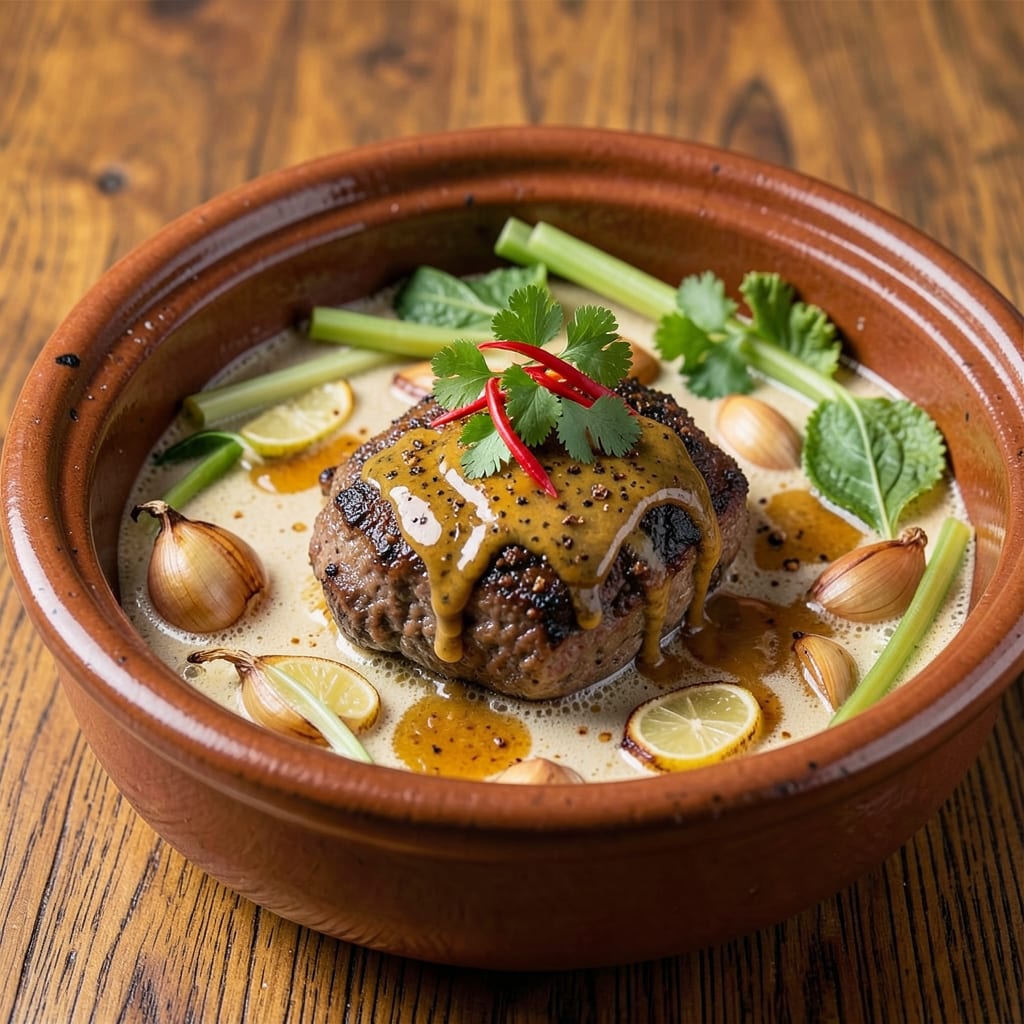
This authentic beef rendang recipe transports you to Indonesia's kitchens with its rich, slow-simmered spice symphony. 🌟 The secret lies in hours of gentle cooking, where tender beef transforms into melt-in-your-mouth bites bathed in caramelized coconut milk. I've perfected this traditional method to ensure every spice—cinnamon, lemongrass, galangal—shines through authentically.
The process begins with a fragrant paste of toasted spices, then simmers for hours until the coconut milk reduces into a thick, aromatic sauce. What makes this different is the patience required: letting the flavors meld and deepen over time. The result? A dish so complex and flavorful, it becomes the centerpiece of any meal.
By the time you're done, you'll have perfectly tender beef with a glossy, caramelized sauce that clings to every bite. The aroma alone will have everyone gathering around the table. Serve it with steamed jasmine rice and sambal for the full Indonesian experience.
This recipe is more than just a dish—it's a celebration of Indonesian cuisine. The slow cooking process ensures deep, layered flavors that store-bought versions can't match. Let's create something truly special in your kitchen.
Ingredients for authentic beef rendang
These authentic Indonesian spices and tender beef create a symphony of slow-simmered flavors.
| Ingredient | Amount | Notes |
|---|---|---|
| Beef Chuck Roast 🥩 | 3 lb | Cut into 1.5-inch cubes, trimmed of fat |
| Coconut Milk 🥥 | 2 cans | Full-fat, 13.5 oz each, no additives |
| Galangal 🌿 | 1 piece | Fresh, peeled and sliced (substitute ginger if unavailable) |
| Lemongrass 🌿 | 2 stalks | Fresh, bruised and cut into 2-inch pieces |
| Kaffir Lime Leaves 🍋 | 4 whole | Fresh, torn into pieces (substitute lime zest if unavailable) |
| Shallots 🧅 | 1 cup | Minced finely (about 8-10 shallots) |
| Garlic Cloves 🧄 | 8 cloves | Minced finely |
| Cinnamon Sticks 🌶️ | 2 whole | 2-inch pieces |
| Star Anise 🌶️ | 4 whole | Lightly crushed |
| Turmeric Powder 🌿 | 2 tbsp | Freshly ground preferred |
| Coriander Seeds 🌶️ | 1 tbsp | Toasted lightly for aroma |
| Cumin Seeds 🌶️ | 1 tbsp | Toasted lightly for aroma |
| White Peppercorns 🌶️ | 1 tbsp | Crushed coarsely |
| Salt 🧂 | 1 ½ tsp | Diamond Crystal preferred |
| Sugar 🍯 | 1 tbsp | Brown sugar for caramelization |
| Vegetable Oil 🫒 | 2 tbsp | For toasting spices |
The beef is the heart of this dish, so choose chuck roast—it stays tender through hours of simmering. Most grocery stores carry it, but if you're at Whole Foods, they often have pre-cubed versions that save time. Look for good marbling, but trim excess fat before cooking. For the coconut milk, full-fat is non-negotiable—the richness is essential. I always grab two cans of Thai Kitchen brand when I'm in a pinch, but authentic Indonesian brands like Djarum are worth seeking out if you have access. The galangal and kaffir lime leaves might require a trip to an Asian market—H Mart or 99 Ranch are my go-tos for these hard-to-find ingredients.
No galangal? Ginger works in a pinch, though it won't be identical. Fresh lemongrass is ideal, but if you can't find it, substitute lime zest plus a splash of lime juice. For the shallots, red onion works too, but minced finely for proper texture. The spices need to be toasted—don't skip this step. It deepens their flavor dramatically. If you're missing any whole spices like star anise or cinnamon, ground versions at half the amount can substitute, though the aroma won't be as complex. The sugar helps caramelize the sauce, but maple syrup works if you're avoiding refined sugar. For the peppercorns, if you only have black, toast them first to remove bitterness.
This rendang tastes even better the next day as the flavors meld further. Store leftovers in an airtight container in the fridge for up to 5 days. For longer storage, freeze portions for 3 months—the sauce actually improves with time. I like to portion mine into containers with a scoop of jasmine rice so lunches are ready to grab. The sauce thickens as it cools, so add a splash of water or coconut milk when reheating if it seems too stiff. The aromas alone will make your kitchen smell like a Jakarta street market—worth every minute of slow cooking.
Why You'll Love This Recipe
- One-Pot Magic: I swear by this—just toss everything into a single pot and let it do the work. No chopping boards covered in herbs, no last-minute scrambling for extra pans. That rich coconut milk and lemongrass steam right into the beef until it’s fall-apart tender, and honestly? The hardest part is waiting.
- Deep Umami Love: The galangal and kaffir lime leaves give it this layered depth—earthy, citrusy, with a slow-building heat that lingers. It’s not just spicy; it’s complex, like a hug from your favorite Indonesian auntie. (Yes, even if you’ve never been there.)
- Leftovers That Shine: This stuff tastes better the next day—no joke. I make a double batch on Sundays, and by Wednesday, it’s still the star of my lunch. Serve it cold with rice, reheat it in a pan, or even toss it into fried rice. It’s the ultimate lazy-day hero.
- Budget-Friendly Luxury: Beef chuck roast is forgiving and affordable, and the spices stretch far. A single batch feeds six, and the flavors only get richer as it simmers. Between us? This is how I trick myself into feeling fancy without breaking the bank. (Shhh.)
Step-by-step instructions for beef rendang
This traditional Indonesian masterpiece delivers deep, complex flavors through slow simmering.
🔥 Step 1: Toast the Spices for Maximum Aroma
Heat the 2 tablespoons vegetable oil in a heavy pot over medium heat. Add the 1 tablespoon coriander seeds and 1 tablespoon cumin seeds, toasting for 2 minutes until fragrant and lightly golden. Immediately add the 2 whole cinnamon sticks and 4 whole star anise, stirring constantly for 1 minute until they begin to sizzle and release their oils.
Remove from heat and add the 2 tablespoons turmeric powder, 1 tablespoon crushed white peppercorns, and 1.5 teaspoons salt, stirring to combine. This aromatic base forms the flavor foundation of authentic rendang. Let the spice mixture cool slightly while you prepare the remaining ingredients.
👨🍳 Step 2: Build the Flavor Base with Aromatics
Return the pot to medium heat and add the 1 cup finely minced shallots. Cook for 5-7 minutes until deeply golden brown, stirring frequently to prevent burning. This caramelization creates the rich, deep color characteristic of proper rendang.
Add the 8 minced garlic cloves, 1 piece sliced galangal, 2 stalks bruised lemongrass, and 4 torn kaffir lime leaves. Stir for 2 minutes until the garlic is fragrant and the galangal begins to soften. Here's the thing—these aromatics should meld together completely before adding the beef, ensuring maximum flavor extraction.
🥘 Step 3: Sear the Beef for Deep Flavor
Working in batches if needed, add the 3 lb beef chuck roast cubes to the pot, stirring to coat them thoroughly in the spice mixture. Increase heat to medium-high and sear the beef for 3-4 minutes until deeply browned on all sides. This step develops the Maillard reaction, creating that irresistible caramelized crust.
Don't rush this—proper searing ensures each bite delivers both tender meat and intense flavor. If the pot gets too crowded, work in two batches to prevent steaming rather than searing. The beef should release easily from the pot when done.
⏰ Step 4: Simmer in Coconut Milk Until Tender
Pour in the 2 cans coconut milk and add the 1 tablespoon brown sugar. Stir well to combine, then reduce heat to low. Bring to a gentle simmer, then cover and cook for 3 hours, stirring occasionally to prevent sticking. The sauce should reduce significantly, becoming thick and glossy.
This long cooking time transforms tough chuck roast into melt-in-your-mouth tenderness. Check the beef after 2 hours—if it's not fork-tender, continue cooking until it easily pulls apart. The sauce should coat the back of a spoon with a rich, caramelized consistency.
🍽️ Step 5: Reduce and Finish for Perfect Texture
Uncover the pot and increase heat to medium-high. Simmer vigorously for 20-30 minutes until the sauce reduces to a thick, glossy consistency that clings to the beef. The rendang should have a deep, caramelized color and a rich, aromatic smell that fills your kitchen.
Taste and adjust seasoning with additional salt if needed. Serve immediately with steamed jasmine rice to soak up every last drop of that incredible sauce. The beef should be fork-tender with a glossy, dark sauce that's neither dry nor watery—just perfectly balanced.
Pro Tips For Making Authentic Beef Rendang
- Brown the Beef First: Don’t skip the sear—get that beef chuck roast deep golden brown in batches before adding anything else. I learned this the hard way: skipping this step means flavorless, gray meat swimming in coconut milk. Use a heavy pot and let it sit undisturbed for 3-4 minutes per side. ---
- Slice the Galangal Thin: Galangal’s knobby, fibrous texture won’t soften like ginger—slice it paper-thin or grate it for even infusion. I used to toss in thick chunks and wondered why my rendang tasted underwhelming. Thin slices melt into the sauce without leaving chewy bits. ---
- Simmer Slow and Low: Rendang isn’t a race—keep the heat at a bare simmer (180°F/82°C) for those last 2-3 hours. After burning three batches with impatient high heat, I finally got the rich, caramelized sauce. Use the back burner and stir occasionally to prevent sticking. ---
- Strain the Coconut Milk: The creamier the better, but don’t ignore the leftover solids—strain the coconut milk through a fine-mesh sieve after blending spices. I was skeptical until I tried it: the strained milk thickens faster and leaves a smoother sauce. Save the pulp for another curry.
Dietary considerations for this recipe
Gluten-Free Adaptations
This rendang is naturally gluten-free, but always double-check your coconut milk and spice blends for hidden additives. I use Thai Kitchen brand coconut milk because it's certified gluten-free and free from additives. The galangal and kaffir lime leaves are also gluten-free, but if you're substituting ginger, ensure it's pure with no soy sauce or wheat fillers. For extra safety, I recommend toasting your spices in a dedicated gluten-free pan. 🌱
Vegetarian Substitutions
For a vegetarian version, swap the beef for firm tofu or jackfruit. I've had great success with extra-firm tofu cubes that I press and marinate in soy sauce for 30 minutes before adding to the pot. The tofu absorbs the spices beautifully and holds up well during the long simmer. For jackfruit, use young green jackfruit in brine drained and rinsed thoroughly. Both options require slightly less cooking time—about 2 hours instead of 3.
Dairy-Free Considerations
This recipe is already dairy-free, but if you're making it for someone with dairy sensitivities, verify all ingredients. The coconut milk is naturally dairy-free, and the spices contain no dairy. However, if you're using a store-bought spice blend, check for additives like whey. For extra richness, some cooks add a splash of coconut cream at the end, but it's optional. The authentic version relies solely on coconut milk for its velvety texture.
Low-Carb Options
To make this low-carb, serve it over cauliflower rice instead of traditional jasmine rice. I've found that freshly grated cauliflower works best—just sauté it in a little oil for 5 minutes until tender. The rendang's rich sauce pairs beautifully with the mild flavor of cauliflower. For extra protein, consider adding chicken thighs alongside the beef or using them as a complete substitute. The cooking time remains the same, but chicken requires about 15 minutes less simmering time.
Spice Sensitivity Adjustments
If you're sensitive to heat, reduce the white peppercorns to ½ tablespoon and skip the chili paste if you're adding it. For a milder version, I also recommend omitting the star anise and using just 1 cinnamon stick. The galangal can be replaced with extra ginger if you find it too intense. Taste the sauce before serving—authentic rendang should have a balanced warmth without being overwhelming. For extra cooling, serve with a side of cucumber slices or mango slices to refresh the palate.
Nutrition facts
Frequently asked questions
Why does authentic beef rendang require such long cooking time?
The slow simmering—3+ hours—is essential for developing deep, complex flavors. The spices infuse gradually, the beef becomes fork-tender, and the coconut milk reduces into a rich, caramelized sauce. This patience transforms tough chuck roast into melt-in-your-mouth bites with layers of aroma you can't achieve quickly.
Can I make rendang in an Instant Pot or slow cooker?
Yes! For an Instant Pot, sear the beef first, then cook on high pressure for 45 minutes followed by a 10-minute natural release. In a slow cooker, use low heat for 6-8 hours after searing. The texture may differ slightly, but the flavors remain authentic. The key is still the long cooking time—don't rush it!
What's the secret to getting that signature caramelized color?
Caramelize the shallots until deep golden brown (5-7 minutes) and reduce the sauce uncovered at the end (20-30 minutes). The sugar in the recipe helps, but patience is key—don't walk away! The sauce should coat the back of a spoon with a glossy, dark sheen. This isn't just color; it's flavor development.
How do I store and reheat beef rendang?
Store in an airtight container in the fridge for 5 days or freeze for 3 months. Reheat gently on the stove with 1-2 tablespoons water or coconut milk to restore the sauce's consistency. The flavors actually improve overnight as the spices meld further! Never microwave—it ruins the sauce's texture.
Which cut of beef works best for rendang?
Chuck roast is ideal—it's flavorful and stays tender during long cooking. Brisket or short ribs also work well. Avoid lean cuts like sirloin—they'll dry out. If you can't find chuck, beef shank is a great alternative, though it may need 15 minutes extra cooking time to become tender.