
Main Courses
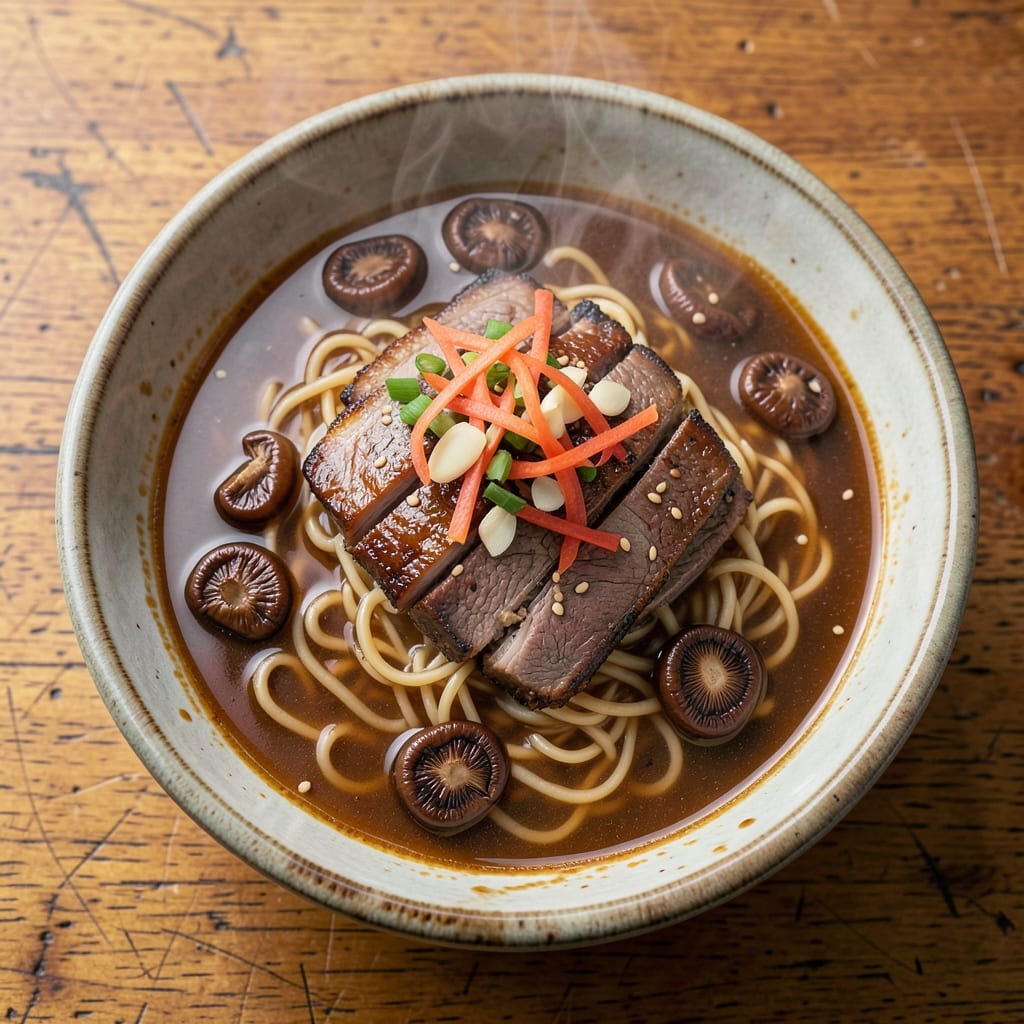
This authentic beef ramen recipe brings Tokyo's izakayas straight to your kitchen, where every bowl tells a story of slow-cooked chashu and rich tonkotsu broth. 🔥 The secret lies in braising beef brisket until it melts effortlessly, then slicing it paper-thin for that signature melt-in-your-mouth experience. I've spent years perfecting this technique, and the result is a ramen that rivals what you'd find in Japan's most celebrated spots.
The foundation starts with a deeply flavorful broth, simmered for hours with beef bones and aromatics until it reaches that perfect balance of richness and clarity. While the broth works its magic, the chashu becomes the star—slow-cooked until tender, then sliced against the grain for maximum tenderness. Fresh ramen noodles, cooked al dente, provide the perfect base to soak up every drop of that complex broth.
What sets this recipe apart is the attention to detail in every component: a silky soft-boiled egg, crisp nori, vibrant green onions, and a medley of toppings that add texture and freshness. The chili oil and sesame seeds finish the dish with a perfect balance of heat and aroma. This isn't just ramen—it's a culinary experience that transports you to Tokyo with every slurp.
Whether you're serving this for a special dinner or treating yourself to a homemade indulgence, the key is patience. The slow cooking transforms tough cuts into luxurious textures, and the assembly is where the magic happens. Let's bring this authentic ramen to life in your kitchen.
Ingredients for authentic beef ramen
Tokyo's izakayas in your kitchen—just these ingredients transform tough cuts into melt-in-your-mouth magic.
| Ingredient | Amount | Notes |
|---|---|---|
| Beef Brisket 🥩 | 2 lb | Flat cut, well-marbled |
| Beef Bones 🦴 | 3 lb | Marrow bones preferred |
| Fresh Ginger 🌿 | 2 tbsp | Grated, organic preferred |
| Garlic Cloves 🧄 | 12 cloves | Peeled, smashed slightly |
| Dried Shiitake Mushrooms 🍄 | 8 pieces | Rehydrated, stems removed |
| Ramen Noodles 🍜 | 2 packages | Fresh, springy variety |
| Eggs 🥚 | 4 whole | Fresh, for soft-boiling |
| Green Onions 🧅 | 4 whole | Thinly sliced, white and green |
| Nori Sheets 🍣 | 4 sheets | Toasted, cut into strips |
| Sesame Seeds 🌰 | 2 tbsp | Toasted lightly |
| Chili Oil 🌶️ | ¼ cup | Homemade or store-bought |
| Soy Sauce 🥫 | ½ cup | Japanese tamari preferred |
| Miso Paste 🧈 | ¼ cup | White or red miso |
| Sesame Oil 🫒 | 1 tbsp | Toasted, for aroma |
| Salt 🧂 | 2 tsp | Kosher, for seasoning |
The beef brisket is non-negotiable—look for well-marbled flat cuts at Whole Foods or your local Asian market. Marrow bones add depth, but any beef bones work. Costco often has them in bulk. Fresh ginger and garlic? Organic produce section has the best flavor punch. I double-check the shiitake mushrooms are dried, not fresh—Asian grocery stores carry them in bulk. For the noodles, fresh ramen from Trader Joe's is my go-to, but any springy brand works. The eggs should be fresh from the fridge—room temperature for perfect soft-boiling.
No fresh ginger? Substitute with 1 tbsp ginger paste, but fresh is better. Out of shiitake? Mushroom powder at half the amount works in a pinch. Tamari soy sauce unavailable? Regular soy sauce plus 1 tsp mirin gets you close. The miso paste? White miso for delicate flavor, red for deeper richness. Toasting sesame seeds? Dry pan for 1 minute until fragrant—game changer. Skip the chili oil? Sriracha plus a pinch of red pepper flakes adds heat without the oil.
Chashu keeps 3-4 days in the fridge, freezes for 3 months—portion into containers for easy reheating. Broth can be made ahead and frozen in 1-gallon batches. Nori sheets last 6 months unopened, but once opened, store in an airtight container. Sesame oil loses flavor fast—keep it in the fridge after opening. Fresh ginger lasts 2 weeks in the fridge, but freeze it after that to preserve flavor.
Why You'll Love This Recipe
- One-Pot Magic: I swear by this—simmer the brisket and bones together, and the broth builds itself. No separate pots, no constant stirring. Just dump, cover, and let it work while I chop veggies or scroll through my phone.
- Umami Bomb: That combo of dried shiitake and beef bones? It’s like a flavor explosion in a bowl. The ginger and garlic caramelize into something deep and savory, the kind of taste that makes you forget about "healthy eating" for a second.
- Weeknight to Party: Make a double batch on Sunday, and you’ve got dinner covered all week. Or impress guests by serving it in individual bowls with fresh herbs—suddenly, you’re the ramen whisperer at any gathering.
- Budget Hero: Brisket and bones stretch into gallons of broth, and shiitake mushrooms add luxury without breaking the bank. Leftovers? Even better—reheat the broth for quick noodles, or shred the brisket into tacos. Waste? None.
Step-by-step instructions for authentic beef ramen
Here's how to transform humble ingredients into Tokyo izakaya-style ramen—rich, smoky, and packed with umami.
🔥 Step 1: Build the Chashu and Bone Broth Foundation
Start by preparing the beef brisket for chashu. Trim excess fat from the 2 lb beef brisket, leaving about ¼-inch fat cap. Rub generously with the 2 tsp salt and 1 tbsp sesame oil, then wrap tightly in plastic wrap. Refrigerate for at least 4 hours—or overnight for deeper flavor penetration.
Meanwhile, roast the 3 lb beef bones in a 400°F oven for 30 minutes until deeply browned. This caramelization creates the broth's rich depth. Place bones in a large stockpot, cover with 12 cups cold water, and add the 12 smashed garlic cloves and 2 tbsp grated fresh ginger. Bring to a boil, skim off any foam, then reduce heat to low and simmer uncovered for 6 hours. The broth should reduce by half, intensifying its flavor.
🍳 Step 2: Slow-Cook the Chashu to Perfection
Remove the brisket from the fridge and pat dry. In a heavy Dutch oven, sear the brisket over medium-high heat for 3-4 minutes per side until deeply browned. Transfer to a plate and set aside. In the same pot, add 1 cup of the reserved bone broth and scrape up all those golden browned bits—this is where the magic happens.
Return the brisket to the pot, cover, and transfer to a 275°F oven. Cook for 3-4 hours until the internal temperature reaches 203°F. The chashu should be fork-tender with a beautiful pink smoke ring. Let it rest for 15 minutes before slicing thinly against the grain. This resting period ensures every bite stays juicy.
🥘 Step 3: Prepare the Miso-Chili Oil Base
While the chashu rests, rehydrate the 8 dried shiitake mushrooms in 2 cups hot water for 20 minutes. Strain, reserving the soaking liquid. In a small saucepan, combine the 0.25 cup miso paste, 0.5 cup soy sauce, and the reserved mushroom soaking liquid. Simmer gently for 5 minutes until smooth and slightly thickened.
In a separate bowl, whisk together the 0.25 cup chili oil, 1 tbsp sesame oil, and 1 tbsp of the miso-chili mixture. This creates the signature ramen oil that adds both heat and depth. The oil should be vibrant red with visible chili flecks. Keep warm until ready to use—this is the flavor bridge between the rich broth and delicate noodles.
🍲 Step 4: Assemble the Perfect Ramen Bowl
Bring a separate pot of water to boil and cook the 2 packages ramen noodles for 2 minutes less than package instructions—fresh noodles cook faster than dried. Drain and rinse briefly under cold water to stop cooking. Divide noodles among 4 bowls.
Pour the strained bone broth into the bowls, ladling about 1½ cups per serving. The broth should be steaming hot—this is crucial for the perfect texture. Add a generous portion of sliced chashu, 2 slices of soft-boiled eggs, and a handful of sliced green onions to each bowl. Drizzle with the prepared miso-chili oil and sprinkle with toasted sesame seeds.
🍽️ Step 5: Garnish and Serve Like a Pro
Just before serving, arrange the nori strips in elegant patterns on each bowl. The contrast of dark nori against the light broth creates visual appeal. Add a final sprinkle of toasted sesame seeds for texture and aroma. The combination of crispy nori, tender chashu, silky broth, and soft egg creates that perfect balance of textures and flavors.
Serve immediately with chopsticks and a small bowl of extra chili oil on the side. The first bite should deliver a symphony of flavors—salty, umami-rich broth, tender beef, and a subtle heat from the chili oil. This is ramen that transports you straight to Tokyo's izakayas, where every bowl tells a story.
Pro Tips For Making Authentic Beef Ramen
- BLANCH BONES FIRST: Skip the direct sear—give your beef bones a quick 5-minute boil to loosen dirt and impurities. I learned this the hard way after my first batch left a gritty sediment in the broth. Rinse them well afterward, or that sediment will haunt your soup.
- SMASH GINGER LIKE IT’S 1985: No julienne slices—flatten that ginger with the flat side of your knife until it’s paper-thin. This releases flavor faster and dissolves cleanly into the broth. (Yes, it looks like you’re prepping for a fight, but trust me.)
- LOW AND SLOW FOR BRISKET: Braise that beef brisket at 170°F (77°C) for at least 3 hours—don’t rush it. I used to crank the heat to save time, but the meat turned out chewy. Patience here makes the difference between fork-tender and "what even is this?"
- SOAK MUSHROOMS IN HOT WATER: Dried shiitakes need a 20-minute soak in hot (not cold) water to rehydrate properly. Cold water leaves them tough and underwhelming. Drain, then use the soaking liquid—it’s liquid umami gold. (Your future ramen will thank you.)
Flavor customization for this authentic beef ramen
Spice Level Control
Adjust the heat to your preference by modifying the chili oil ratio. For mild heat, reduce to 1 tbsp chili oil and add ½ tsp honey to balance. For extra spice, increase to ¼ cup chili oil and add 1 tsp crushed red pepper flakes. I like to keep mine on the medium side—just enough to wake up your palate without overwhelming the beef's richness. 🌶️
Umami Depth Boost
Enhance the broth's umami by adding 1 tbsp fish sauce or ½ tsp MSG to the simmering broth. For a vegetarian-friendly version, substitute with 1 tbsp soy sauce and 1 tsp mushroom powder. I've found that adding a splash of dashi stock (about ½ cup) elevates the flavor profile dramatically, especially if you're not using traditional Japanese ingredients. 💫
Sweet-Savory Balance
Add a touch of sweetness to complement the savory broth by incorporating 1 tbsp mirin or ½ tsp sugar into the miso-chili oil mixture. For a more pronounced sweet note, try ½ tsp of white miso paste in addition to the red. This adjustment creates a harmonious balance that mirrors the flavors found in many Tokyo-style ramen shops. Trust me, your taste buds will thank you!
Herbaceous Freshness
Incorporate fresh herbs like ½ cup chopped cilantro or 2 tbsp chopped Thai basil for a bright, aromatic touch. These herbs add a refreshing contrast to the rich broth and fatty chashu. I often garnish with 1 tbsp chopped chives or ½ cup baby spinach just before serving to keep the dish vibrant and full of life. 🌿
Texture Variations
For added texture, consider including ½ cup cooked corn kernels, ½ cup bean sprouts, or ¼ cup pickled ginger as toppings. These elements introduce crunch and tanginess that elevate the overall dining experience. I also love adding ¼ cup thinly sliced bamboo shoots for a subtle crunch and additional umami depth. The contrast in textures makes every bite exciting.
Regional Flavor Twists
Transform this dish into a Sapporo-style ramen by adding ½ cup corn and butter to the broth. For a Kyoto-inspired version, substitute the chili oil with 1 tbsp sesame paste and add 1 tbsp grated daikon radish for a refreshing twist. Each regional variation offers a unique take on the classic, allowing you to explore different dimensions of ramen flavors. 🗺️
Nutrition facts
Frequently asked questions
Why does authentic ramen broth need such a long simmer time?
The 6-hour simmer for beef bone broth is essential to develop deep umami flavors through collagen breakdown. This slow process transforms tough connective tissues into rich, gelatinous compounds that give ramen its signature silky texture. Skipping this step results in a thinner, less flavorful broth that lacks that restaurant-quality mouthfeel.
Can I make the chashu ahead of time?
The chashu keeps beautifully for 3-4 days in the fridge or 3 months frozen. Reheat gently in a skillet with a splash of broth to maintain moisture. Pro tip: Slice it before freezing for easy portioning—just thaw and slice straight from the freezer. This makes meal prep a breeze for busy weeks.
What's the best way to achieve that perfect chashu slice?
Slice against the grain at a 45-degree angle using a sharp knife for maximum tenderness. For paper-thin slices, freeze the chashu for 15 minutes first—this makes it easier to cut without tearing. The goal is ¼-inch thick slices that melt in your mouth. Practice makes perfect, but don't be discouraged if your first attempts aren't flawless.
Can I substitute beef brisket with another cut?
While brisket is ideal for its marbling, you can use chuck roast or short ribs in a pinch. Trim excess fat and increase cooking time by 30-60 minutes to ensure tenderness. Avoid lean cuts like sirloin—they won't develop the same rich flavor. For best results, stick with well-marbled cuts that can withstand long cooking times.
How do I prevent my ramen noodles from turning mushy?
Cook noodles for 2 minutes less than package instructions and rinse briefly under cold water to stop cooking immediately. Fresh noodles need even less time—start checking at 1 minute less. The key is al dente texture that holds up to the rich broth without becoming limp. Overcooking is the #1 reason for mushy noodles in homemade ramen.