
Soups & Stews
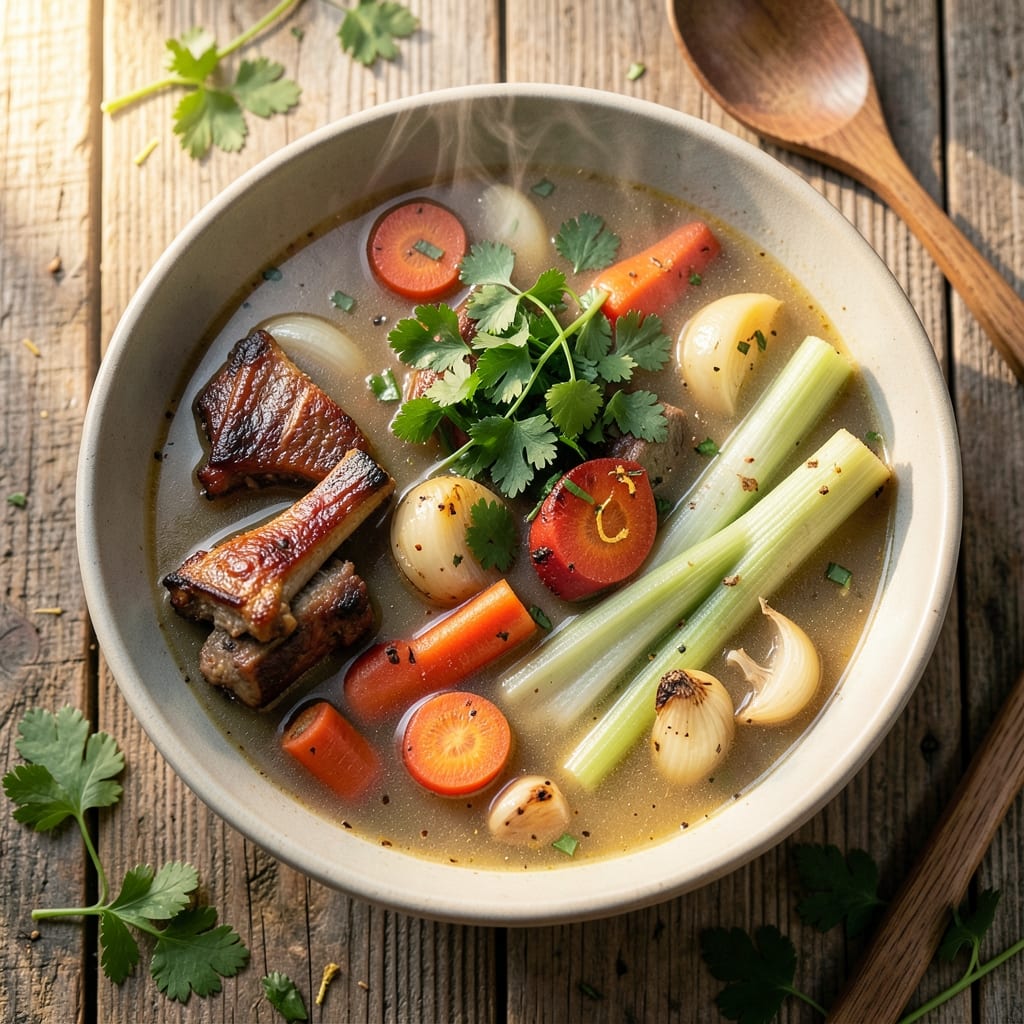
This beef bone broth vegetable soup transforms simple ingredients into a deeply nourishing meal that feels like a warm embrace on cold days. The secret lies in the homemade broth—simmered for hours to extract rich umami from bones, vegetables, and herbs—creating a flavor foundation that elevates every spoonful. I’ve perfected this recipe through years of testing, balancing tradition with modern shortcuts to deliver restaurant-quality results at home.
The beauty of this soup is in its two-part process: first, building the broth by slow-cooking beef bones with aromatic vegetables, then transforming it into a hearty soup with tender carrots, celery, and potatoes. No fancy techniques are needed—just patience and a few key steps to unlock deep, savory flavors that stay with you long after the last bite. The result is a soup that’s both comforting and sophisticated, perfect for cozy nights or sharing with loved ones.
What makes this recipe special is its versatility—use it as a light lunch, a healing meal, or a starter for a larger dinner. The broth can be made ahead and frozen, while the vegetables cook quickly when needed. Each bowl delivers a perfect balance of tender vegetables, rich broth, and subtle seasoning, making it a staple in my kitchen year-round. The aroma alone will have everyone gathering around the table.
Serve it with crusty bread to soak up every last drop of that golden broth, or pair it with a simple green salad for a complete meal. This soup isn’t just food—it’s a reminder that homemade always tastes better. Let’s get started on creating something truly nourishing.
Ingredients for beef bone broth vegetable soup
Six servings of deeply nourishing soup begin with these carefully chosen ingredients.
| Ingredient | Amount | Notes |
|---|---|---|
| Beef Bones 🦴 | 4 lb | Marrow and knuckle bones preferred |
| Yellow Onions 🧅 | 2 whole | Chopped, medium size |
| Carrots 🥕 | 4 whole | Medium, peeled, cut into chunks |
| Celery Stalks 🧄 | 4 whole | Cut into 2-inch pieces |
| Garlic Cloves 🧄 | 8 cloves | Smash slightly before adding |
| Fresh Parsley 🌿 | ½ cup | Stems removed, loosely packed |
| Fresh Thyme 🌿 | 2 sprigs | Or 1 tsp dried thyme |
| Bay Leaves 🍃 | 4 whole | Standard dried leaves |
| Apple Cider Vinegar 🍎 | 2 tbsp | For acidity balance |
| Sea Salt 🧂 | 1 ½ tbsp | Diamond Crystal preferred |
| Black Peppercorns 🌶️ | 1 tbsp | Coarsely crushed |
| Potatoes 🥔 | 2 lb | Russet or Yukon gold, cubed |
| Green Beans 🌱 | 1 lb | Trimmed, cut into 2-inch pieces |
| Olive Oil 🫒 | ¼ cup | Extra-virgin for richness |
| Fresh Dill 🌿 | ¼ cup | Chopped, for garnish |
The bones form the soul of this broth—marrow and knuckle bones yield the richest flavor. Look for organic or grass-fed bones at Whole Foods or your local butcher shop, where they often have them pre-cut for convenience. If using whole bones, roast them first at 425°F for 20 minutes to deepen the flavor. The vegetables—onions, carrots, and celery—should be fresh but not overly sweet; late summer harvest works best for balanced flavor. For the herbs, fresh thyme and parsley add complexity—dried will work but lacks depth.
No marrow bones? Beef shank or neck bones are excellent substitutes, though they require longer simmering. Running low on fresh herbs? Dried thyme at one-third the amount suffices, but fresh parsley is ideal for brightness. The vinegar is crucial—apple cider vinegar adds tang, but lemon juice works in a pinch. For the vegetables in the soup, green beans and potatoes can be swapped for zucchini or turnips if preferred. The olive oil matters here—extra-virgin adds fruity notes that complement the umami broth.
Broth keeps for 5 days refrigerated or 6 months frozen—portion into ice cube trays for easy use. The finished soup reheats beautifully, with flavors deepening overnight. Store in glass jars for best preservation. For meal prep, double the broth and freeze half; thaw and reheat as needed. The dill garnish is optional but adds a fresh finish—chop it just before serving to preserve its vibrant color.
Why You'll Love This Recipe
- Soup in a Flash: I swear, this comes together faster than takeout. Toss in the bones, chop the veggies (no knife skills needed—just rough dice), and let the broth do the work. Twenty minutes later, you’ve got a steaming pot of something that smells like home.
- Umami Bomb: That first sip? Pure flavor payoff. The beef bones melt into rich, savory broth while the onions, carrots, and celery build layers of sweetness—then the garlic? It’s the cherry on top, turning every spoonful into a little burst of comfort.
- Leftovers That Don’t Suck: Between us, most soups turn to sad mush after Day 2. Not this one. The broth thickens beautifully, and the veggies hold their texture. I’ve reheated this for breakfast, lunch, and dinner—no one ever complains.
- Budget Meal Magic: Honestly, this recipe makes me feel like a genius. Beef bones are cheap (especially if you ask the butcher for the good ones), and the veggies stretch into multiple servings. Feed four people for the cost of one sad salad. That’s a win.
Step-by-step instructions for beef bone broth vegetable soup
Transform raw bones and vegetables into deeply flavorful broth with this method.
Roast the Bones for Maximum Flavor
Preheat your oven to 425°F. Place the 4 lb beef bones on a rimmed baking sheet and roast for 30-40 minutes until they develop a deep brown color. This caramelization creates complex flavors that will infuse into your broth.
Turn the bones occasionally for even browning. You'll know they're ready when they smell rich and toasty. This step is non-negotiable—it's what transforms simple bones into flavor bombs for your soup.
Build the Broth Base with Aromatics
In a large stockpot, heat 0.25 cup olive oil over medium heat. Add the chopped 2 whole yellow onions, 4 whole carrots (cut into chunks), and 4 whole celery stalks (cut into 2-inch pieces). Sauté for 8-10 minutes until softened and fragrant.
Add the roasted bones, 8 cloves garlic cloves (smash slightly), 2 sprigs fresh thyme, and 4 whole bay leaves. Pour in 10 cups cold water (enough to cover bones by 2 inches) and bring to a boil. Once boiling, reduce heat to low and skim off any foam that rises to the surface.
Simmer the Broth for Deep Umami
Add 2 tbsp apple cider vinegar, 1.5 tbsp sea salt, and 1 tbsp black peppercorns (coarsely crushed). Partially cover the pot and simmer gently for 4-6 hours, maintaining a temperature between 180-200°F.
Check the broth occasionally and add water if needed to keep the bones covered. The longer it simmers, the richer the flavor becomes. You'll know it's ready when the broth takes on a deep amber color and the bones are tender enough to pull apart easily.
Add Vegetables for Hearty Texture
Once the broth is ready, remove the bones and strain through a fine-mesh sieve, pressing on the solids to extract maximum flavor. Return the broth to the pot and add the 2 lb potatoes (cubed) and 1 lb green beans (trimmed and cut into 2-inch pieces). Bring to a gentle simmer and cook for 15-20 minutes until the potatoes are tender.
The vegetables should be cooked just until fork-tender—they'll continue cooking slightly when you serve the soup. Taste and adjust seasoning with additional salt if needed. The broth should be rich and deeply flavorful, with the vegetables adding satisfying texture.
Finish and Serve with Fresh Herbs
Remove the pot from heat and stir in 0.5 cup fresh parsley (stems removed) and 0.25 cup fresh dill (chopped). Ladle the soup into bowls and garnish with additional fresh herbs if desired. Serve immediately while hot, with crusty bread to soak up every last drop of that umami-rich broth.
This soup tastes even better the next day as the flavors continue to meld. Store leftovers in the refrigerator for up to 5 days or freeze for up to 3 months. The homemade broth makes all the difference—it's the secret to restaurant-quality soup at home.
Pro Tips For Making Beef Bone Broth Vegetable Soup
- Char the Bones First: Blackened edges on beef bones aren’t a mistake—they’re flavor insurance. After browning onions, garlic, and veggies, pull the pot off heat, add bones, and spread them in a single layer. Let them sear undisturbed for 8–10 minutes until deeply browned in spots. This step unlocks the meaty depth that simmering alone can’t match.
- Cut Celery Lengthwise: Whole celery stalks float like buoys, leaving your broth watery and underflavored. Split them lengthwise into quarters before adding—this exposes more surface area to soak up flavor and breaks them down faster during the simmer. (Yes, it looks messy, but your soup will taste like it.)
- Simmer Low and Long: Bone broth needs patience—don’t rush it. After the initial boil, reduce heat to just below a simmer (barely any bubbles) and cover partially. Let it cook for at least 3–4 hours, ideally 6–8, with the lid slightly ajar. Skim foam off the top every 30 minutes, or you’ll end up with a cloudy, bitter broth.
- Roast Veggies Before Sautéing: I used to sweat onions and garlic like everyone else—now I roast them first. Toss chopped onions, carrots, and celery with olive oil, salt, and pepper, then roast at 400°F (200°C) for 20–25 minutes until caramelized. Sauté these pre-roasted veggies in your pot for 3–4 minutes—they’ll add a smoky sweetness that store-bought aromatics can’t compete with. (Your future self will notice the difference.)
Wine and beer pairings for these flavors
Red Wine Pairings
A bold Pinot Noir from Oregon or Burgundy is my go-to choice for this rich soup. Its earthy notes and subtle fruitiness complement the deep umami flavors of the beef broth without overpowering the delicate vegetables. Look for a wine with 12-14% alcohol and moderate tannins—something like Domaine Drouhin Oregon Pinot Noir ($25-$35) brings out the soup's savory depth while keeping it balanced. 🍷
White Wine Options
For a lighter option, a Chardonnay with minimal oak works beautifully. I love La Crema Sonoma Coast Chardonnay ($20-$28) for its crisp acidity and subtle vanilla undertones that harmonize with the broth's richness. Avoid heavy, buttery Chardonnays—they can clash with the soup's bright herbs. A dry Riesling from Germany also pairs surprisingly well, especially if you prefer something slightly sweet to contrast the savory broth.
Beer Pairings
A Belgian Witbier like Hoegaarden or Stella Artois cleanses the palate between spoonfuls of rich soup. The citrusy notes and effervescence cut through the broth's richness while complementing the fresh herbs. For something heartier, a German Helles Lager (like Weihenstephaner Original) provides a malty balance that stands up to the beefy flavors without competing.
Seasonal Considerations
In winter, I reach for a Syrah from Washington State—its dark fruit and spice notes mirror the soup's depth. For summer, switch to a Sauvignon Blanc with its bright acidity and herbal notes that echo the fresh dill and parsley. The key is matching the wine's intensity to the soup's seasonal preparation—lighter wines for summer versions, bolder for winter.
Non-Alcoholic Options
For a refreshing non-alcoholic pairing, try Fever-Tree Ginger Beer—its spicy kick balances the soup's richness. Or sip on San Pellegrino Aranciata, a blood orange soda that adds a citrusy brightness. Both options enhance the meal without overwhelming the broth's natural flavors. 💛
Nutrition facts
Frequently asked questions
Can I use chicken or turkey bones instead of beef?
The flavor profile changes dramatically—beef bones create that deep, rich umami that's hard to replicate. Chicken or turkey bones will give you a lighter broth better suited for lighter soups or stocks. If you're set on poultry, try adding a splash of soy sauce or miso paste to boost umami, but expect a different taste experience.
How do I know when the broth is ready?
Your broth is perfect when it reaches a deep amber color and the bones pull apart easily with a fork. The simmering time should be 4-6 hours, but don't rush it—longer simmering extracts more gelatin and flavor. Another test: if the broth gels slightly when chilled (like Jell-O), it's ready.
Can I make this soup in a slow cooker?
Roast the bones first, then transfer everything to your slow cooker and cook on low for 8-10 hours or high for 5-6 hours. The key is maintaining that gentle simmer—slow cookers can't control temperature precisely, so check occasionally to ensure it's not boiling vigorously. Add water as needed to keep bones covered.
What if I don't have time for a long simmer?
Use a pressure cooker! Instant Pot or electric pressure cookers can reduce the cooking time to 1.5-2 hours on high pressure. Just follow the same steps: roast bones, sauté aromatics, then pressure cook with all ingredients. The result will be nearly as rich, though slightly less gelatinous than traditional simmering.
Why did my broth turn cloudy?
Cloudiness usually means proteins and fats didn't fully render or the broth cooled too quickly. To fix this, skim off the foam during initial boiling, and always cool broth slowly in an ice bath. For future batches, add 1 tbsp apple cider vinegar or lemon juice to help clarify. If it's already cloudy, strain through a cheesecloth-lined sieve for a clearer result.