
Main Courses
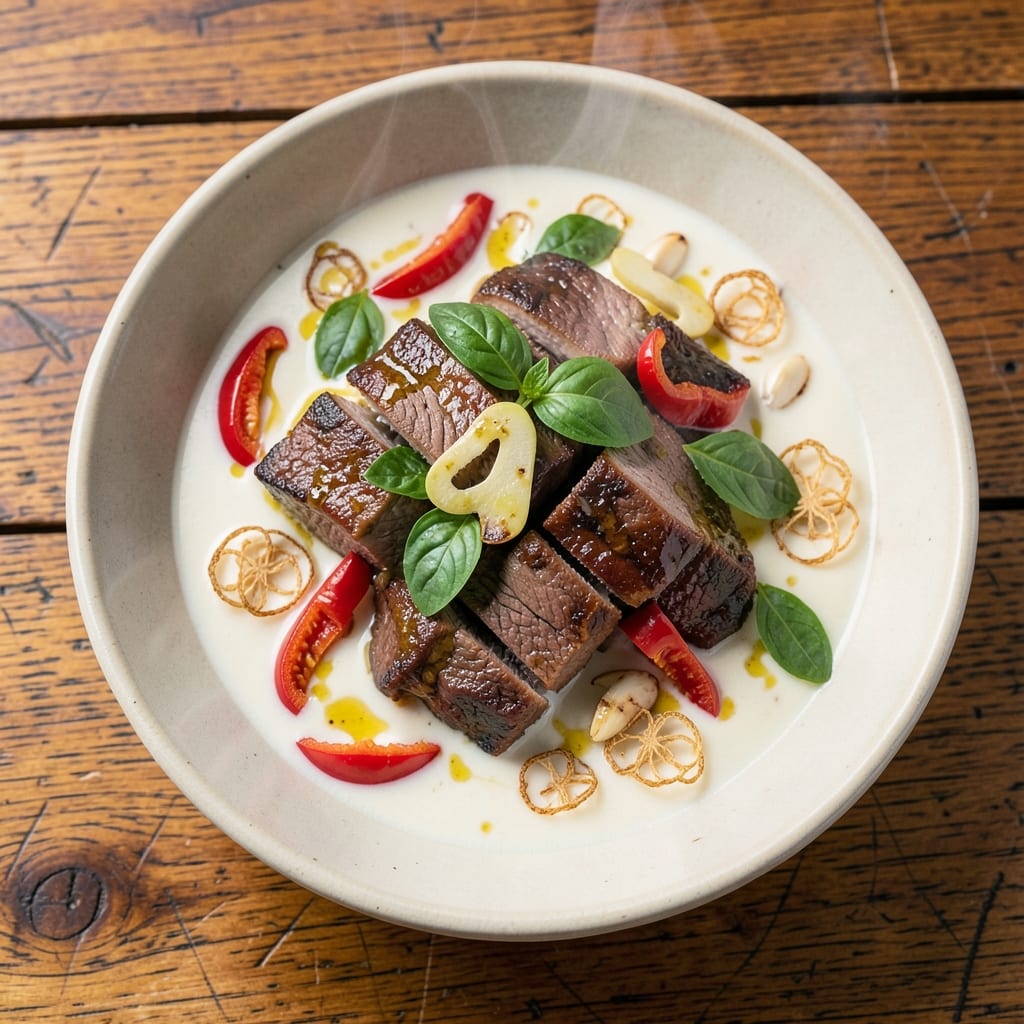
This Asian beef curry recipe delivers the fragrant coconut-chili harmony that makes restaurant versions so irresistible. 🌟 The secret lies in balancing sweet, spicy, and umami flavors through a slow-cooked sauce that tenderizes the beef while developing deep, complex notes. I've refined this technique over years of testing—each spice plays a precise role, from the aromatic ginger to the heat of chili pastes.
The process begins with properly searing the beef to lock in juices before building the sauce layer by layer. Coconut milk creates the creamy base, while fresh herbs and citrus brighten the final dish. What you'll end up with is restaurant-quality curry that's rich, aromatic, and perfectly balanced—where every spoonful delivers tender beef in a velvety, spice-infused sauce.
This recipe serves four generously, making it ideal for family dinners or meal prep. The slow simmering method ensures maximum flavor development, while the adaptable spice blend lets you adjust heat levels to taste. Pair with steamed jasmine rice or warm naan to complete the meal—each bite combines texture and flavor in perfect harmony.
Whether you're recreating a Thai green curry or an Indian-style beef curry, this method captures the essence of Asian comfort food. The key is patience—the longer it simmers, the more the flavors meld together. Let's create a curry that transports you to a bustling street market with every spoonful.
Ingredients for asian beef curry
Fragrant coconut milk, aromatic spices, and tender beef create this restaurant-style curry.
| Ingredient | Amount | Notes |
|---|---|---|
| Beef Chuck Roast 🥩 | 1 ½ lb | Cut into 1-inch cubes |
| Light Coconut Milk 🥥 | 1 can | 13.5 oz can, full-fat preferred |
| Red Curry Paste 🌶️ | 2 tbsp | Thai brand for authenticity |
| Green Curry Paste 🌿 | 1 tbsp | For balanced heat |
| Fresh Ginger 🌿 | 2 tbsp | Finely grated, aromatic |
| Garlic Cloves 🧄 | 4 cloves | Minced, aromatic base |
| Carrots 🥕 | 1 lb | Peeled, cut into chunks |
| Fresh Lemongrass 🌿 | 2 whole | Bruised stems, aromatic |
| Fresh Cilantro 🌿 | ¼ cup | Chopped, for garnish |
| Fresh Thai Basil 🌿 | ¼ cup | Or regular basil |
| Lime Juice 🍋 | 2 tbsp | Freshly squeezed |
| Fish Sauce 🍶 | 1 tbsp | For umami depth |
| Brown Sugar 🍚 | 2 tbsp | Balances heat |
| Vegetable Oil 🫒 | 2 tbsp | For searing beef |
| Salt 🧂 | 1 tsp | Kosher or sea salt |
The beef is non-negotiable—chuck roast delivers that melt-in-your-mouth texture after slow cooking. Costco or local butchers often carry pre-cubed chuck, but if you're buying a whole roast, ask for it to be cut into 1-inch pieces. For curry pastes, Maesri or Thai Kitchen brands are reliable, but any quality brand works. The coconut milk should be full-fat for that rich, velvety texture—no light versions here. Lemongrass is the aromatic backbone, so grab fresh stems at an Asian market if possible. If you can't find Thai basil, regular basil works in a pinch, though the flavor will be slightly different.
No fish sauce? Soy sauce or Worcestershire sauce can substitute, though the umami depth won't be identical. Short on brown sugar? Honey or maple syrup works, but the flavor profile shifts slightly. The carrots can be baby carrots if that's what's in your fridge—just peel them first. Fresh ginger and garlic are essential for that bright, aromatic base, but if you're in a bind, powdered ginger and garlic powder at half the amount will get you close. For the curry pastes, if you can't find both red and green, double the red paste and skip the green—it'll still be delicious.
This curry tastes even better the next day as the flavors meld together. Store leftovers in an airtight container in the fridge for up to 4-5 days. For longer storage, freeze portions for up to 3 months. I like to portion mine into single-serving containers so I can reheat just what I need. The sauce thickens as it cools, so add a splash of coconut milk or water when reheating if it's too thick. Garnish with fresh cilantro and Thai basil just before serving to keep those bright, fresh notes.
Why You'll Love This Recipe
- Two Pastes, Big Payoff: I’ll be real—mixing red and green curry paste sounds wild, but that smoky-sweet heat? Chef’s kiss. The ginger ties it all together with a zing that cuts through the richness of the coconut milk.
- Chuck Roast Magic: Honestly, this cut is my lazy-day hero—it stays tender even when I forget to sear it properly. Toss it in the curry, let it slow-cook, and you get melt-in-your-mouth beef with zero fuss.
- Leftovers That Don’t Suck: Between us, most curries turn into sad, watery meals the next day. Not this one. The coconut milk keeps it creamy, and the beef gets even more flavorful. I’ve reheated this for breakfast with rice—yes, really—and no one complained.
- One-Pot, Many Nights: Weeknight dinner? Date night? Meal prep for three? This curry handles it all. Serve it over rice, with naan, or even in a wrap—it’s that adaptable. (My daughter’s favorite? Cold curry rice bowls on Fridays.)
Step-by-step instructions for Asian beef curry
This method delivers deep, aromatic flavors through precise layering of spices and techniques.
🔥 Step 1: Sear the Beef for Rich Flavor Foundation
Heat the 2 tablespoons vegetable oil in a large Dutch oven over medium-high heat until shimmering. Working in batches to avoid crowding, add the 1.5 lb beef chuck roast cut into 1-inch cubes, searing each side for 2-3 minutes until deeply browned. This step creates the Maillard reaction that forms the flavor base.
Don't rush this process—you'll know it's ready when the beef releases easily from the pan and develops a rich, caramelized crust. Transfer the seared beef to a plate and set aside. If needed, add more oil to maintain the same heat level for subsequent batches.
🍳 Step 2: Build the Aromatic Curry Base
In the same Dutch oven, reduce heat to medium and add the 2 tablespoons red curry paste and 1 tablespoon green curry paste, stirring constantly for 1-2 minutes until fragrant. Add the 2 tablespoons finely grated fresh ginger and 4 minced garlic cloves, cooking for another 30 seconds until the raw aroma disappears.
Here's where the magic happens: Add the 2 bruised whole fresh lemongrass stems and cook for 1 minute to release their essential oils. The curry pastes should coat the bottom of the pan evenly—this ensures balanced flavor distribution throughout the dish.
🥘 Step 3: Simmer the Curry with Coconut Milk
Pour in the 1 can light coconut milk, scraping up any browned bits from the bottom of the pan. Add the 1 lb peeled carrots cut into chunks, 1 teaspoon salt, 1 tablespoon fish sauce, and 2 tablespoons brown sugar. Bring to a gentle simmer over medium-low heat for 10 minutes, stirring occasionally.
The sauce should thicken slightly as it reduces, but not so much that it separates. If it looks too thin, simmer uncovered for an additional 5 minutes to concentrate the flavors. The carrots should begin to soften but remain slightly firm—this ensures they hold their shape while still contributing sweetness to the curry.
🍳 Step 4: Finish with Acid and Herbs
Return the seared beef to the pot and simmer uncovered for 45-60 minutes over low heat, stirring occasionally, until the beef is fork-tender and the sauce has thickened to your desired consistency. This low-and-slow cooking ensures the beef becomes melt-in-your-mouth tender while absorbing all the aromatic flavors.
Stir in the 2 tablespoons lime juice and simmer for an additional 5 minutes. The acidity brightens the dish and balances the richness of the coconut milk. Remove the lemongrass stems before serving. Garnish with 0.25 cup chopped fresh cilantro and 0.25 cup fresh Thai basil just before serving to add freshness and visual appeal.
Pro Tips For Making Asian Beef Curry
- Bloom the Paste First: Toss your red or green curry paste into the pot with just 1 tablespoon of oil and let it sizzle for 3-4 minutes until fragrant—this unlocks the flavors instead of just dumping it in with the milk. I used to skip this, and the curry always tasted flat until I realized the paste needs time to wake up.
- Slice Ginger Thinly: Use a mandoline or sharp knife to shave ginger into paper-thin slices (no need to peel) and add them whole to the curry. They’ll infuse flavor without turning the sauce into mush—no more straining or bitter chunks. After burning my fingers peeling it the hard way, I switched to this lazy but foolproof method.
- Don’t Boil the Milk: Light coconut milk curdles like a diva when boiled—keep the heat medium-low and stir occasionally to prevent it from splitting. If it starts separating, immediately lower the heat and add a splash of cold water to temper it. I’ve lost three curries to this; now I watch the pot like a hawk.
- Brown the Beef First: Cut the chuck roast into 1.5-inch chunks, pat them dry, and sear them in batches until deeply browned before adding any liquid. This builds a crust that keeps the meat tender and rich, not soggy. Yes, it takes 10 extra minutes, but the difference is night and day—trust me, I’ve made the unseared version.
Wine and beer pairings for asian beef curry
Thai-Inspired White Wine
For this rich, coconut-based curry, a crisp Thai-inspired white wine like Meiomi Pinot Grigio or Sauvignon Blanc from New Zealand cuts through the creaminess beautifully. The bright acidity and citrus notes complement the lemongrass and lime in the dish, cleansing your palate with each sip. I reach for Sutter Home Sauvignon Blanc when I want that zesty contrast—it’s widely available and consistently reliable. 🍷
Malaysian Red Wine
If you prefer red wine, opt for a light-bodied Malaysian Syrah or Cabernet Franc, which balances the spice without overpowering the delicate flavors. The dark fruit notes in these wines harmonize with the caramelized beef and brown sugar in the curry. Bintang Merah Cabernet Franc is my go-to for this pairing—it’s smooth, affordable, and pairs surprisingly well with the coconut milk’s richness.
Craft Beer Pairings
A light lager like Asahi Super Dry or Sapporo works wonderfully with this curry, offering a clean, crisp finish that contrasts the creamy sauce. For something more adventurous, try a wheat beer with a hint of citrus, like Blue Moon Belgian White. The lemony notes enhance the lime juice in the curry, creating a refreshing balance. Avoid heavy IPAs—they’ll clash with the dish’s delicate aromatics. 🍺
Non-Alcoholic Options
For a refreshing non-alcoholic pairing, sparkling yuzu soda or ginger beer adds a bright, effervescent contrast to the rich curry. I love San Pellegrino Aranciata for its citrusy sweetness, which mirrors the lime and brown sugar in the dish. If you prefer something herbal, hibiscus iced tea with a squeeze of lime offers a floral, tangy complement that’s both refreshing and sophisticated.
Regional Adaptations
In Thailand, this curry is often paired with Thai iced tea or nam manao (a sweet coconut drink), which mirrors the dish’s coconut and spice profile. For an Indian-inspired twist, a mango lassi or masala chai adds a creamy, spiced contrast that enhances the beef’s depth. Each regional pairing reflects the curry’s cultural roots while keeping the meal cohesive and balanced.
Nutrition facts
Frequently asked questions
Can I substitute the beef with chicken or pork?
For chicken, use 1.5 lbs boneless thighs (dark meat stays juicier) and reduce cooking time to 30-40 minutes. Pork works well too—opt for pork shoulder and cook for 45-55 minutes until tender. The key is using a cut that benefits from slow cooking.
How do I adjust the spice level for kids or sensitive eaters?
Start by reducing the green curry paste to ½ tablespoon or omitting it entirely. Add 1 extra tablespoon of brown sugar to balance any remaining heat. For extra mildness, stir in 1 teaspoon of honey at the end to mellow flavors. Always taste as you go!
Can I make this curry in an Instant Pot?
Yes! Sear the beef first, then add all ingredients except coconut milk. Cook on high pressure for 20 minutes, then quick-release. Stir in coconut milk and simmer on sauté mode for 10 minutes to thicken. The Instant Pot cuts cooking time by about half while keeping flavors deep.
What's the best way to reheat leftovers?
Gently reheat on the stovetop over low heat with a splash of water or coconut milk to prevent drying. Avoid microwaving—it can make the sauce watery. For best results, reheat just until warmed through (3-5 minutes) and stir frequently. The flavors taste even better the next day!
Why did my curry sauce separate?
This happens when coconut milk isn't properly incorporated or overheated. Always stir gently when adding coconut milk, and never boil vigorously. For a quick fix, whisk in 1 tablespoon cornstarch mixed with 2 tbsp water and simmer 2 minutes until smooth. The key is patience—low heat prevents separation.