
Main Courses
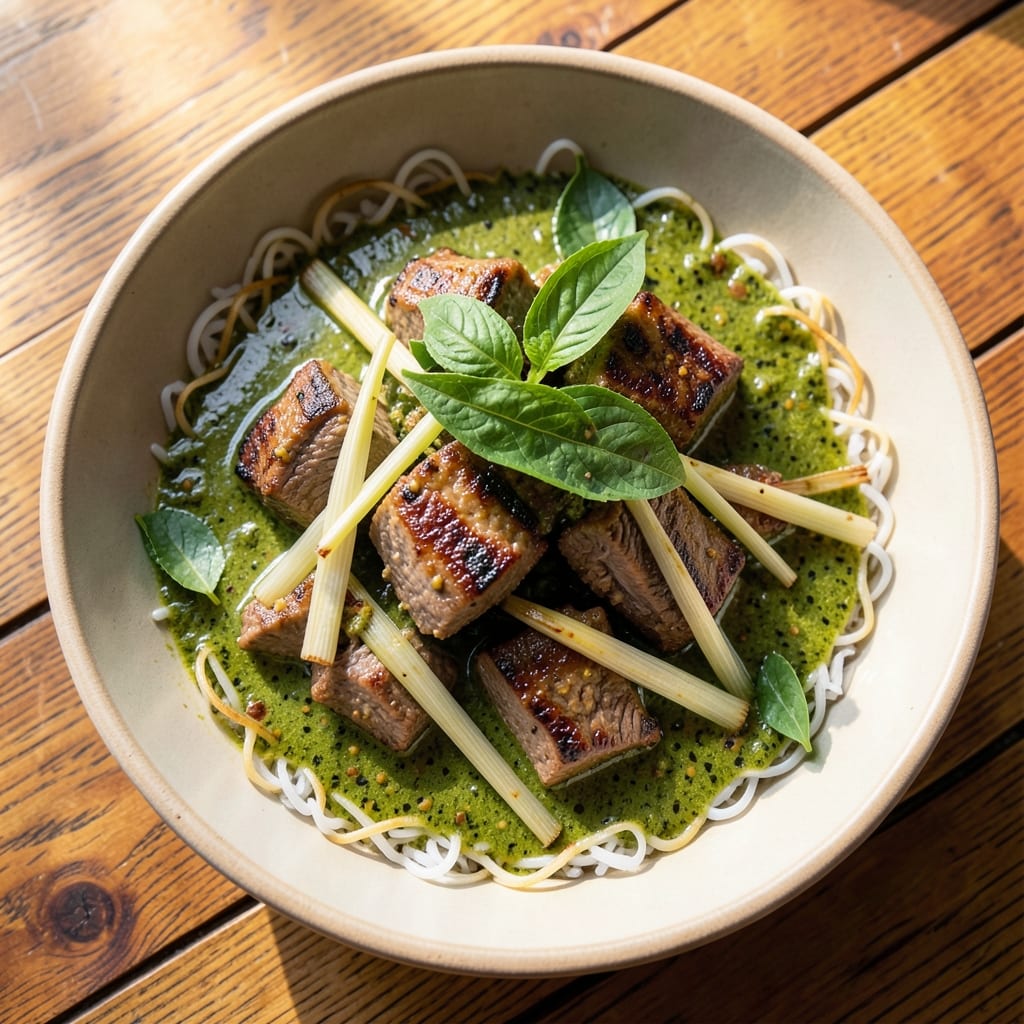
This authentic Thai green beef curry recipe delivers the perfect harmony of herbal heat and creamy coconut balance that defines street-side Thai cuisine. The secret lies in properly rendering the aromatic paste—green curry paste, galangal, lemongrass, and kaffir lime leaves—until it releases its deep, earthy fragrance before adding the beef. I've perfected this technique over years of testing, ensuring the flavors develop authentically rather than relying on shortcuts that compromise the dish's soul.
What sets this recipe apart is the careful balance of sweet, spicy, and sour elements that make Thai green curry unforgettable. The beef cooks slowly in coconut milk until tender, absorbing the complex flavors while maintaining its natural richness. Fresh Thai basil and cilantro add bright, herbal notes at the end, elevating the dish from ordinary to extraordinary. The result is a curry that's both comforting and vibrant, with layers of flavor that build with each bite.
By following traditional methods—like blooming the spices in hot oil and simmering the curry just until the sauce thickens—you'll achieve restaurant-quality results at home. The dish pairs beautifully with steamed jasmine rice, which soaks up every last drop of the fragrant sauce. Serve it with a side of cucumber salad to cut through the richness, and you'll have a meal that transports you straight to Bangkok.
This recipe is designed for those who appreciate depth of flavor and authenticity over convenience. The process requires patience, but the reward is a curry that's impossible to resist. Whether you're cooking for family or hosting dinner guests, this Thai green beef curry will leave everyone asking for seconds. Let's get started on creating something truly special.
Ingredients for authentic thai green beef curry
Authentic Thai flavors start with these essential ingredients—each playing a crucial role in the curry's complex harmony.
| Ingredient | Amount | Notes |
|---|---|---|
| Green Curry Paste 🌶️ | 2 tbsp | Authentic Thai brand preferred |
| Galangal 🍋 | 1 piece | Fresh, peeled, sliced thin |
| Lemongrass 🌿 | 1 whole | Lower part only, bruised |
| Kaffir Lime Leaves 🍋 | 4 whole | Fresh, torn into strips |
| Chuck Roast 🥩 | 1 ½ lb | Fat trimmed, cut into chunks |
| Coconut Milk 🥥 | 1 can | Full-fat, 13.5 oz can |
| Thai Eggplant 🍆 | 1 whole | Small, sliced into rounds |
| Green Bell Pepper 🌶️ | 1 whole | Medium, sliced into strips |
| Garlic Cloves 🧄 | 4 cloves | Minced, aromatic |
| Shallots 🧅 | 2 whole | Peeled, thinly sliced |
| Fish Sauce 🍶 | 1 tbsp | Red Boat brand preferred |
| Palm Sugar 🍯 | 2 tbsp | Or substitute brown sugar |
| Thai Basil Leaves 🌿 | ¼ cup | Fresh, torn by hand |
| Cilantro Leaves 🌿 | ¼ cup | Fresh, chopped |
| Vegetable Oil 🫒 | 2 tbsp | High smoke point |
The aromatic paste trio—galangal, lemongrass, and kaffir lime leaves—is non-negotiable for authenticity. Galangal (the ginger-like root) should be fresh and firm, with a citrusy aroma. Most Asian markets carry it, but if unavailable, ginger at half the amount works in a pinch. Lemongrass is the stalky, leafy part of a grass plant—use the lower 4-5 inches where the flavor is strongest. Kaffir lime leaves have a unique floral aroma; substitute lime zest if you can't find them, but the flavor won't be identical. For the curry paste, Maesri or Thai Kitchen brands are reliable choices, but any authentic Thai green curry paste will work. If you're feeling adventurous, make your own by blending fresh galangal, lemongrass, kaffir lime leaves, garlic, shallots, and green chiles.
The beef selection matters—chuck roast is ideal because it stays tender while absorbing flavors, unlike leaner cuts that can dry out. If you can't find Thai eggplant (which has a milder flavor than regular eggplant), substitute regular eggplant or zucchini. For the bell pepper, green is traditional, but red or yellow will work too. Fish sauce is essential for that umami depth—Red Boat brand is widely available and consistently high quality, but any reputable brand will do. Palm sugar adds just the right amount of sweetness; if you can't find it, brown sugar works perfectly. The Thai basil and cilantro should be fresh—no substitutions here. For the coconut milk, full-fat is a must—it creates that creamy texture that defines the dish. Light coconut milk won't give the same luxurious mouthfeel.
Fresh herbs like Thai basil and cilantro should be stored in airtight containers with a paper towel to absorb moisture—keeps them fresh for 5-7 days in the fridge. The curry paste and fish sauce can be stored in the pantry for up to 1 year once opened. For the beef, it's best used within 2 days of purchase, but you can freeze it for up to 3 months. The cooked curry reheats beautifully—simmer gently on the stove with a splash of water or coconut milk to restore its creamy texture. This dish actually tastes better the next day as the flavors meld together. Portion into containers for easy lunches, or freeze individual servings for up to 3 months. The eggplant and bell peppers can be prepped ahead and stored in the fridge for 3 days before cooking.
Why You'll Love This Recipe
- No Chopping Nightmare: I swear by this recipe because the prep is that simple—just slice the beef, crush the lemongrass, and toss in the pre-made green curry paste. The galangal and kaffir lime leaves add depth without requiring you to dice anything smaller than your pinky.
- Flavor That Stays With You: That first bite? It’s like a party in your mouth—bright, herbal, and just spicy enough to linger. The chuck roast gets fork-tender while soaking up the green curry’s grassy, citrusy punch, and the kaffir lime leaves give it this je ne sais quoi that makes it taste like a Bangkok street stall.
- Leftovers You’ll Crave: Between us, this curry tastes better the next day—yes, really. The flavors meld into this rich, velvety sauce that’s perfect for lunchboxes or reheating over rice. I make a double batch on Sundays just so I can eat it all week without cooking again.
- Budget-Friendly Luxury: Chuck roast is cheap, but it feels fancy when it’s slow-cooked until it falls apart in the coconut milk. The galangal and kaffir lime leaves might seem intimidating, but a little goes a long way—no need to break the bank for a restaurant-quality meal. Plus, it feeds four for under $15.
Step-by-step instructions for authentic Thai green beef curry
Master this traditional technique for vibrant, aromatic curry with perfectly balanced heat and richness.
Prepare the Aromatic Base
Heat the 2 tablespoons vegetable oil in a heavy-bottomed pot over medium heat. Add the 2 whole shallots and 4 cloves garlic cloves, cooking for 2-3 minutes until the shallots turn golden and fragrant. This foundational step develops the curry's depth.
Add the 2 tablespoons green curry paste, stirring constantly for 1-2 minutes until it releases its oils and becomes fragrant. The paste should coat the shallots and garlic completely—this prevents burning and ensures even flavor distribution. If the paste sticks, add 1 tablespoon water to help it blend smoothly.
Build the Herb and Spice Foundation
Add the 1 piece galangal (sliced thin), 1 whole lemongrass (bruised lower part), and 4 whole kaffir lime leaves (torn into strips). Stir for 1 minute until the galangal softens slightly and the lemongrass releases its citrusy aroma. These ingredients are the heart of authentic Thai green curry—their flavors need time to meld.
Pour in the 1 can coconut milk, stirring gently to combine. Let the mixture simmer for 3-4 minutes until it begins to thicken slightly. The coconut milk should be hot but not boiling—this prevents curdling. Here's the thing: if you see any oil separating, stir vigorously to re-emulsify it.
Cook the Beef Until Tender
Add the 1.5 lb chuck roast (cut into chunks) and stir to coat in the curry mixture. Increase heat to medium-high and bring to a gentle boil. Once boiling, reduce heat to low, cover, and simmer for 45-50 minutes until the beef is fork-tender.
Check for tenderness by piercing a chunk with a fork—it should slide in easily with minimal resistance. If the beef isn't tender after 50 minutes, add 2-3 tablespoons water to the pot and continue cooking. The beef should absorb the rich, herbal flavors while maintaining its texture.
Add Vegetables and Season
Add the 1 whole Thai eggplant (sliced into rounds) and 1 whole green bell pepper (sliced into strips) to the pot. Stir gently to distribute them evenly. Simmer uncovered for 8-10 minutes until the eggplant softens and the bell pepper becomes tender-crisp.
Add the 1 tablespoon fish sauce and 2 tablespoons palm sugar, stirring to dissolve the sugar completely. Taste the curry and adjust seasoning if needed—Thai green curry should balance sweet, sour, and spicy flavors. If the curry is too thick, add 2-3 tablespoons water to reach your desired consistency.
Finish and Garnish
Remove the pot from heat and stir in the 0.25 cup Thai basil leaves and 0.25 cup cilantro leaves. Let the curry sit for 2-3 minutes to allow the herbs to infuse. The basil should wilt slightly, releasing its aromatic oils into the curry.
Serve the curry immediately, garnished with additional Thai basil and cilantro if desired. Each spoonful should deliver a harmonious blend of herbal heat, coconut creaminess, and tender beef. For an authentic touch, serve with steamed jasmine rice to soak up the rich sauce.
Pro Tips For Making Authentic Thai Green Beef Curry
- Bloom the Paste First: Toss your green curry paste into the hot oil and let it sizzle for a full 30 seconds before adding anything else—this releases the oils and aromatics properly. I used to rush this, and the curry always tasted flat; now it hits like a proper Thai punch.
- Slice Galangal Thin: Galangal’s tough fibers need to break down, so slice it paper-thin (about 1/16-inch) and pound it lightly with the flat side of your knife. Skipping this step leaves you with chewy chunks that won’t meld into the sauce—trust me, your mouth will notice.
- Low and Slow for Chuck: Chuck roast needs time—simmer it covered at 175°F (80°C) for at least 2.5 hours, or until it’s fork-tender but not falling apart. I learned this the hard way after serving rubbery slices; patience here makes the difference between "meh" and "wow."
- Toast Kaffir Lime Leaves: Give those leaves a quick 10-second toast in the dry pan before adding liquid—it deepens their citrusy aroma without burning. Sounds weird, but it works: the curry gains a brighter, more complex flavor that store-bought pastes can’t replicate.
Creative variations of this dish
Spicy Thai-Style
For those who love heat, add 1-2 tablespoons of Thai chili paste (like Maesri) when you incorporate the coconut milk. This boosts the spice level while maintaining the dish’s herbal balance. I like to add it gradually—start with 1 tablespoon, taste, and adjust. For extra kick, toss in 1-2 sliced Thai chilies (bird’s eye chilies) with the vegetables. 🌶️
Creamy Coconut Variations
Swap full-fat coconut milk for light coconut milk if you prefer a lighter texture, though the richness will be less pronounced. For a richer, more decadent version, mix ½ can full-fat coconut milk with ½ can coconut cream—this creates a thicker, almost velvety sauce. I’ve found this works beautifully with chuck roast or even pork shoulder for a heartier dish.
Vegetarian Adaptation
Replace the beef with firm tofu (pressed and cubed) or mushrooms (like oyster or shiitake) for a vegetarian version. Tofu absorbs flavors well, so marinate it in 1 tablespoon soy sauce and 1 tablespoon lime juice for 15 minutes before adding it to the curry. For extra texture, add crispy fried shallots on top before serving. This keeps the dish authentic while making it plant-based.
Regional Twists
In Southern Thailand, green curry often includes dried shrimp or fermented fish sauce for deeper umami. Add 1 tablespoon of dried shrimp (soaked in warm water for 10 minutes) or an extra ½ tablespoon fish sauce for a more complex flavor. Northern Thai versions sometimes include kaffir lime zest and a touch of turmeric for earthiness—sprinkle ½ teaspoon turmeric into the oil at the start for a golden hue and subtle warmth.
Protein Swaps
For a seafood twist, use shrimp or scallops instead of beef. Add them in the last 5 minutes of cooking to avoid overcooking. If you prefer poultry, chicken thighs work well—they stay juicy and absorb the flavors beautifully. For a slow-cooker version, use chicken drumsticks and cook on low for 6-8 hours with the same ingredients. The result is tender, fall-off-the-bone meat with all the curry’s richness.
Sweet and Tangy Balance
Enhance the sweetness by adding 1 teaspoon of palm sugar or honey at the end, or boost the tang with 1 tablespoon of lime juice or 1 teaspoon of tamarind paste. For a sweet-spicy contrast, drizzle 1 teaspoon of chili jam (like Maesri) over the top before serving. This balances the heat with a fruity sweetness that’s irresistible. 💛
Nutrition facts
Frequently asked questions
Why does authentic Thai green curry use galangal instead of ginger?
Galangal has a unique citrusy, peppery flavor that's essential for authentic Thai green curry. While ginger adds warmth, galangal provides that distinctive herbal note that can't be replicated. If you're substituting, use ½ the amount of ginger—it won't be identical, but it'll help bridge the flavor gap.
Can I make this curry less spicy without losing authenticity?
Start by reducing the green curry paste to 1.5 tablespoons instead of 2. For extra mildness, remove the seeds from the chili peppers in the paste before using. You can also add a pinch of sugar (like ½ teaspoon palm sugar) to balance any residual heat.
How do I know when the beef is properly tender?
The beef should be fork-tender—pierce a chunk and it should separate easily with minimal resistance. If it's still slightly chewy after 50 minutes, add 2-3 tablespoons water and continue cooking. Chuck roast works best here because it stays moist while absorbing flavors.
What's the best way to store leftovers?
Let the curry cool completely, then store in an airtight container in the fridge for up to 4 days. Reheat gently on the stove with a splash of water or coconut milk to restore creaminess. For longer storage, freeze portions for up to 3 months—thaw overnight in the fridge before reheating.
Can I use regular lime leaves instead of kaffir lime leaves?
Regular lime leaves won't work—they lack the unique floral aroma of kaffir lime. If you can't find kaffir lime leaves, try substituting with lime zest (1 teaspoon) or extra lemongrass (½ stalk), but the flavor won't be identical. For best results, visit an Asian market where they're usually available fresh.