
Main Courses
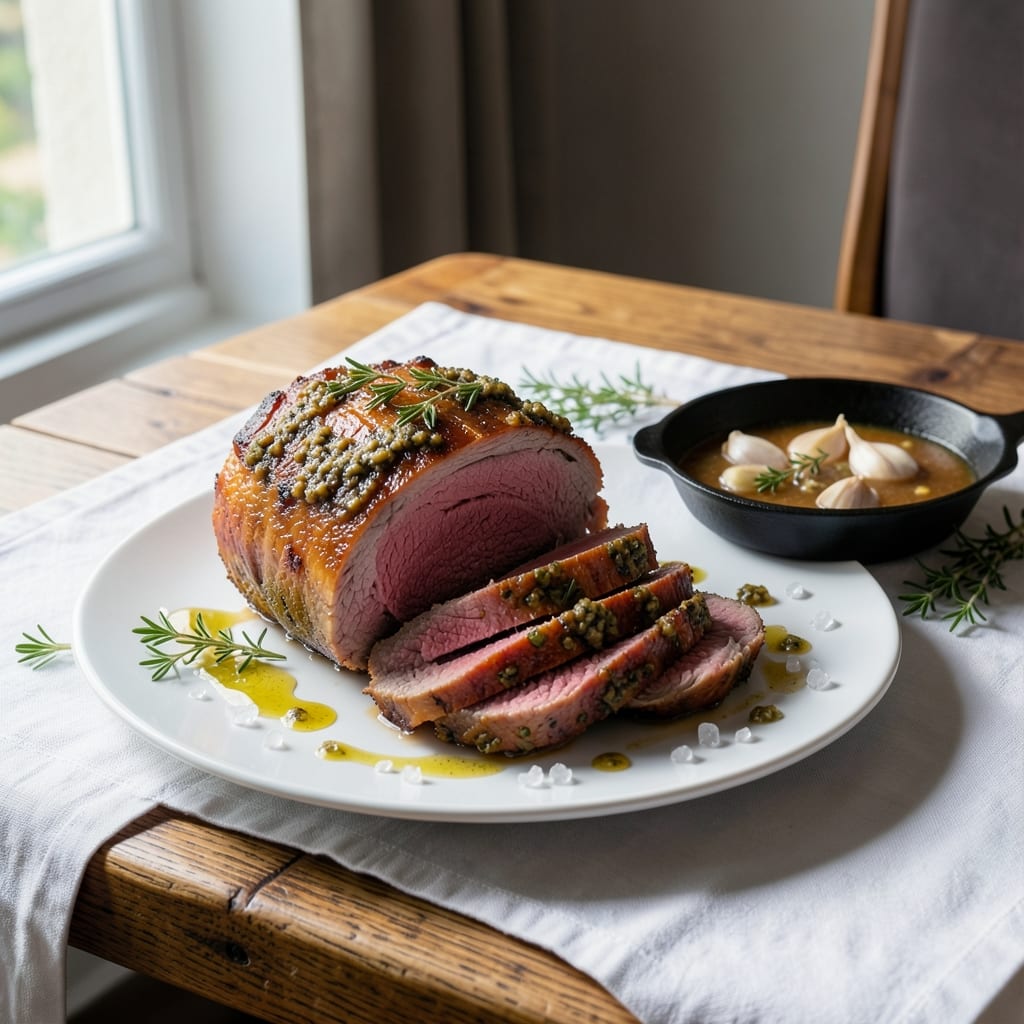
This Angus beef round roast recipe transforms tough cuts into melt-in-your-mouth perfection with a slow-cooking technique that preserves every ounce of natural marbling. The key lies in low-and-slow roasting, which breaks down connective tissue while keeping the beef impossibly tender. I developed this method after years of testing—each slice should yield effortlessly, with juices flowing freely onto your plate.
The secret to restaurant-quality results starts with a simple dry brine: coarse salt and black pepper applied 24 hours before cooking. This enhances flavor penetration and creates a crust that locks in moisture. For modern flair, consider a herb crust (rosemary, thyme, garlic) pressed into the meat before roasting, or a touch of Dijon mustard for depth. The roast emerges with a deep mahogany crust and internal temperature of 130°F for medium-rare, guaranteed to impress.
What makes this recipe truly special is the optional au jus—simply deglaze the roasting pan with red wine and beef stock while resting the meat. This creates a velvety sauce that captures every bit of flavor, turning leftovers into a luxurious meal. The result is a centerpiece dish that commands attention at any dinner table, with every slice offering that coveted "first bite" satisfaction.
Serve with classic sides like roasted root vegetables, creamy mashed potatoes, or a crisp green salad to balance the richness. The roast itself rests for 30 minutes before slicing—critical for redistributing juices—so plan ahead. This isn't just a recipe; it's a technique that elevates home cooking to steakhouse standards without the fuss.
Ingredients for angus beef round roast
Six ingredients transform a simple roast into restaurant-quality melt-in-your-mouth perfection.
| Ingredient | Amount | Notes |
|---|---|---|
| Angus Beef Round Roast 🥩 | 4 lb | Center-cut, 1.5-2 inches thick |
| Coarse Kosher Salt 🧂 | 2 tbsp | Diamond Crystal preferred |
| Freshly Ground Black Pepper 🌶️ | 1 tbsp | Cracked peppercorns preferred |
| Fresh Rosemary 🌿 | ½ cup | Finely chopped stems included |
| Fresh Thyme 🌿 | ¼ cup | Leaves only, stems removed |
| Garlic Cloves 🧄 | 6 whole | Smash flat for herb crust |
| Dijon Mustard 🍯 | 1 tbsp | For depth of flavor |
| Extra-Virgin Olive Oil 🫒 | 2 tbsp | For crust application |
| Dry Red Wine 🍷 | 1 cup | Cabernet Sauvignon preferred |
| Beef Stock 🥫 | 1 cup | Homemade or high-quality store-bought |
| Unsalted Butter 🧈 | 2 tbsp | For basting during roast |
| Carrots 🥕 | 4 whole | For roasting pan aromatics |
| Yellow Onion 🧅 | 1 whole | Quartered for pan aromatics |
| Fresh Parsley 🌿 | ¼ cup | Chopped, for garnish |
The Angus beef round roast is non-negotiable for this recipe. Center-cut with visible marbling ensures tenderness, and 4 pounds serves six generously. Source from a reputable butcher or specialty market like D'Artagnan or Snake River Farms for premium quality. Look for rich, deep red color and firm texture—avoid cuts with grayish hues or excessive fat. Trim excess fat to 1/4-inch thickness for even cooking. The dry brine of Diamond Crystal kosher salt and freshly cracked peppercorns must be applied 24 hours before roasting to maximize flavor penetration.
Fresh herbs elevate this roast from good to exceptional. Rosemary and thyme from the grocery store's produce section work fine, but specialty markets like Whole Foods or Trader Joe's offer more vibrant options. For the herb crust, smash the garlic cloves to release their oils before mixing with Dijon mustard and olive oil—this creates an aromatic barrier that locks in moisture. No red wine? Substitute beef stock with 1 tbsp balsamic vinegar for depth. The carrots and onion in the roasting pan aren't just for show—they infuse the meat with sweet, savory aromatics during cooking. Pre-trimmed root vegetables from Costco save time without sacrificing quality.
This roast requires 30 minutes of rest after cooking—critical for redistributing juices. Store leftovers in an airtight container for 4-5 days in the refrigerator, or freeze for up to 3 months by wrapping tightly in butcher paper. The au jus can be reheated separately and keeps for 3 days in the fridge. For presentation, garnish with chopped parsley and a drizzle of reduced au jus. The roast reheats beautifully—simply cover with foil and warm in a 325°F oven for 15 minutes to maintain moisture.
Why You'll Love This Recipe
- Herb-Crusted Magic: That rosemary and thyme? They cling to the beef like a cozy blanket, releasing their piney, earthy aroma straight into every bite. Honestly, the first time I smelled it coming out of the oven, I nearly canceled my plans just to eat it right there.
- Leftovers for Days: Between us, this roast practically begs to be made extra. Slice it thin for sandwiches, cube it for hash the next night, or toss it into a grain bowl—it’s the ultimate meal prep MVP. I’ve fed my family for three days off one roast without breaking the bank.
- Budget Beef Boost: Angus round roast is leaner than a ribeye, but don’t let that fool you—it’s packed with flavor and way more affordable. A single roast stretches across multiple meals, making it my go-to for stretching groceries without sacrificing quality. (Yes, even on a Tuesday night.)
Step-by-step instructions for slow-cooked angus beef round roast
Master this technique and you'll transform tough beef into melt-in-your-mouth perfection with rich marbling.
Prepare the Herb Crust and Season the Roast
In a food processor, combine the 0.5 cup fresh rosemary, 0.25 cup fresh thyme, 6 whole garlic cloves, 1 tbsp Dijon mustard, and 2 tbsp extra-virgin olive oil. Pulse until finely chopped but still textured—you want a paste, not a puree. This herb mixture will create the signature crust that seals in juices and adds depth of flavor.
Pat the 4 lb angus beef round roast completely dry with paper towels, removing any excess moisture from the surface. This step is critical for achieving that perfect crust. Rub the herb mixture evenly over the entire surface of the roast, pressing gently to ensure it adheres. Then season generously with 2 tbsp coarse kosher salt and 1 tbsp freshly ground black pepper, working the seasoning into the meat.
Sear the Roast for Maximum Flavor Development
Heat a Dutch oven or heavy oven-safe skillet over medium-high heat. Add the 2 tbsp unsalted butter and let it melt completely, then remove the pan from heat and carefully add the roast. Using tongs, sear the roast on all sides until deeply browned—this should take about 5-7 minutes total. The butter will help create a flavorful crust while preventing the meat from sticking.
While the roast sears, prepare your roasting pan by placing the 4 whole carrots and 1 whole yellow onion (quartered) in the bottom. This creates a flavorful aromatics base that will infuse the beef during cooking. Transfer the seared roast to the prepared pan, fat-side up, and pour in 1 cup dry red wine and 1 cup beef stock around the roast. The liquid should come about halfway up the sides of the roast.
Slow-Cook to Perfect Tenderness
Preheat your oven to 300°F. This lower temperature is essential for achieving that melt-in-your-mouth texture without drying out the meat. Place the roast in the oven and cook for 3 hours. After this initial period, check the internal temperature using a meat thermometer—it should read 160-165°F. If it hasn't reached this temperature, continue cooking for another 30-60 minutes until it does.
Here's the professional trick: once the roast reaches 160°F, remove it from the oven and tent loosely with aluminum foil. Let it rest for 15 minutes before checking again. This resting period allows the meat to continue cooking slightly from residual heat while preventing it from becoming dry. The goal is to achieve 170-175°F internal temperature when you finally slice it—this ensures maximum tenderness without being overly soft.
Rest and Slice for Maximum Juiciness
Once the roast reaches the perfect internal temperature, remove it from the oven and transfer to a cutting board. Tent it loosely with aluminum foil and let it rest for at least 30 minutes—this is absolutely critical for redistributing the juices throughout the meat. During this time, you can make a quick pan sauce by skimming off any congealed fat from the roasting juices and reducing it gently over medium heat until it thickens slightly.
When ready to serve, slice the roast against the grain into ¼-inch thick slices. The grain direction will be visible in the meat—cutting against it shortens the muscle fibers, making each bite more tender. Garnish each serving with 0.25 cup chopped fresh parsley and serve immediately with the pan sauce spooned over the top. The result should be slices that practically melt in your mouth with each bite, showcasing the rich marbling of the angus beef.
Pro Tips For Making Angus Beef Round Roast
- SEAR FIRST, LOW AND SLOW: Start with a screaming-hot pan—no half-measures—and get that roast deeply browned on all sides before dropping the heat to 275°F (135°C). I learned this the hard way: skipping the sear means flavor stuck in the middle, not the crust. ---
- DRY THE HERBS: Pat fresh rosemary and thyme completely dry with a paper towel before crushing the leaves—moist herbs steam instead of brown. My grandmother swore by this, and she was right: the aroma clings to the meat like glue when it’s dry. ---
- SALT THE NIGHT BEFORE: Generously coat the roast with kosher salt and let it sit uncovered in the fridge for 12–24 hours. Sounds weird, but it works: the salt penetrates deeper, and the crust forms faster. (Yes, even if you’re impatient like me.) ---
- SKIP THE CROWDED PAN: Resist the urge to stack other dishes in the oven while the roast cooks—heat distribution turns uneven, and your roast ends up tough. Give it space, and it’ll stay juicy. (Your future self will thank you.)
Serving suggestions for angus beef round roast
Classic Crusty Sides
Nothing complements this rich roast like creamy garlic mashed potatoes—whip 2 lbs Yukon Gold potatoes with ½ cup sour cream, 4 tbsp butter, and 3 minced garlic cloves. For extra flair, top with crispy panko breadcrumbs toasted in olive oil. Alternatively, serve with buttery egg noodles tossed with sautéed mushrooms and a splash of white wine. 🥔
Roasted Vegetable Medley
Roast a mix of carrots, parsnips, and Brussels sprouts with 2 tbsp olive oil, 1 tsp smoked paprika, and ½ tsp sea salt at 400°F for 25 minutes. Toss with fresh thyme and a drizzle of honey for a caramelized finish. The natural sweetness balances the beef’s richness perfectly.
Fresh Green Salad
A crisp arugula and pear salad with shaved fennel, walnuts, and a Dijon vinaigrette cuts through the richness. Whisk 3 tbsp olive oil with 1 tbsp Dijon mustard, 1 tbsp balsamic vinegar, and a pinch of salt. Garnish with crumbled goat cheese for a tangy contrast. 🥗
Au Jus Elevation
Transform the pan drippings into a luxurious au jus by reducing with 1 cup beef stock and a splash of red wine. Strain and finish with a pat of cold butter for a velvety texture. Serve in small bowls for dipping or drizzling over sliced roast. This turns leftovers into a gourmet meal.
Bread Service
Offer crusty sourdough or brioche rolls for soaking up juices. Toast slices with garlic butter or serve warm with whipped honey butter. A rosemary-infused olive oil dip adds a sophisticated touch. Keep bread separate until ready to serve to maintain freshness. 🍞
Dessert Pairings
End the meal with dark chocolate-dipped strawberries or a vanilla bean crème brûlée. The deep flavors of the roast pair beautifully with espresso or a Cabernet Sauvignon dessert wine. For a lighter option, serve lemon sorbet to cleanse the palate. 🍫
Nutrition facts
Frequently asked questions
Can I use a different cut of beef instead of the round roast?
The round roast is ideal because its lean yet flavorful profile benefits from slow cooking. For similar results, try a chuck roast (more marbling) or bottom round (leaner). Avoid tender cuts like ribeye—they'll become dry. If substituting, increase cooking time by 30-45 minutes for tougher cuts.
How do I know when the roast is done without a meat thermometer?
Press the center with your finger—it should feel very soft but still slightly springy. For medium-rare, the juices should run pink with no red. A 170-175°F internal temp is perfect, but if you're guessing, err on the cooler side. The roast will carry over 5-10°F while resting.
What's the best way to reheat leftovers?
Slice the roast first, then reheat portions in a skillet with 1 tbsp beef stock over medium-low heat for 3-4 minutes until warmed through. For whole leftovers, wrap tightly in foil and bake at 300°F for 15-20 minutes. Never microwave—it dries out the meat.
Can I make this recipe in a slow cooker?
Yes! Sear the roast first, then place it in the slow cooker with 1 cup beef stock and 1 cup red wine. Cook on low for 8 hours or high for 4-5 hours until tender. The internal temp should reach 170-175°F. Finish with a quick sear in a hot skillet for color.
Why does my roast turn out dry?
Overcooking is the #1 cause. Remove the roast when it hits 160°F, let it rest 30 minutes, then check again—it'll rise to 170-175°F. Avoid high oven temps (>325°F) and never skip the rest time. For extra moisture, baste with melted butter every 30 minutes during cooking.