
Main Courses
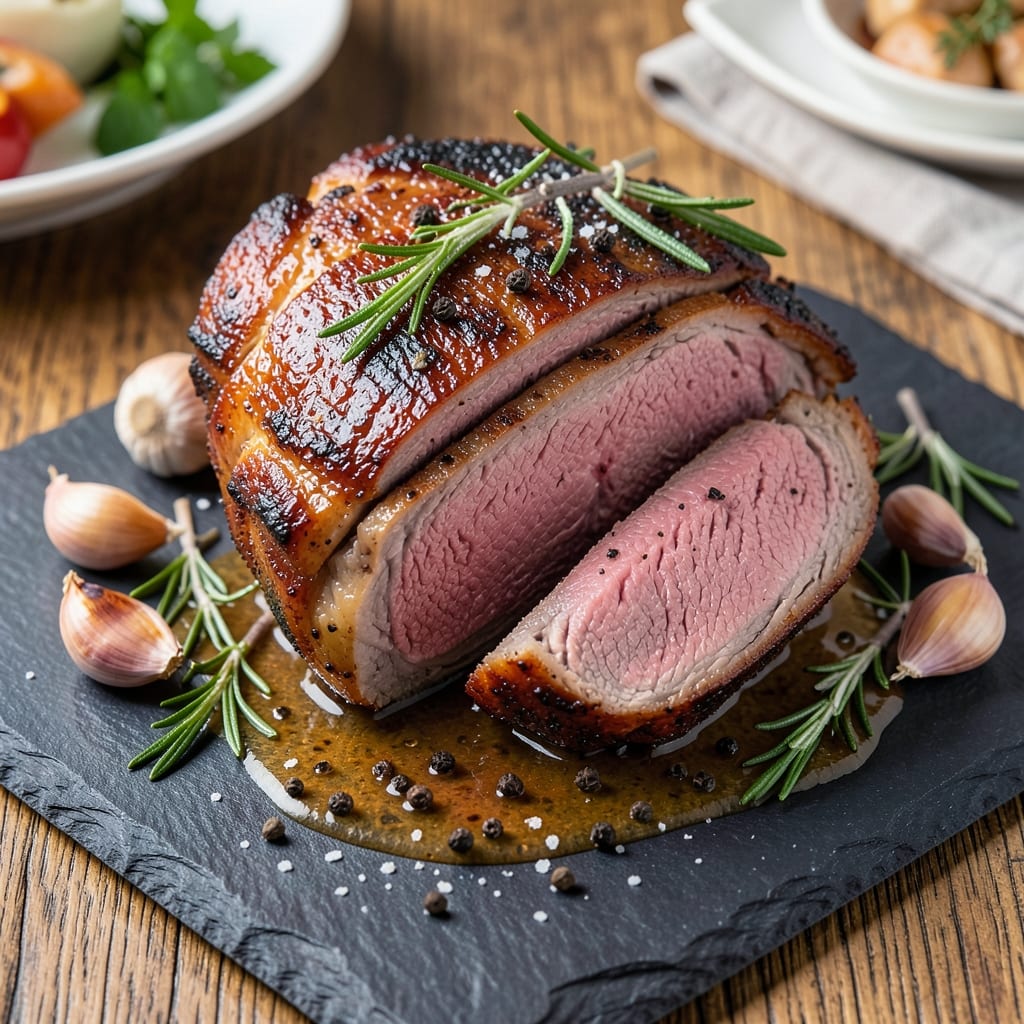
This Angus beef bottom round roast recipe delivers restaurant-quality results with a dry-brined crust and melt-in-your-mouth tenderness. The secret lies in a simple dry brine that enhances flavor while creating a golden, caramelized exterior. I’ve perfected this method over years of testing, ensuring every bite offers rich, buttery threads and a perfect medium-rare center.
What sets this recipe apart is the balance of traditional techniques and modern efficiency. A dry brine overnight transforms tougher cuts into succulent perfection, while a high-heat sear locks in juices before finishing in the oven. The result? A roast with a crispy crust, tender interior, and depth of flavor that rivals steakhouse-quality cuts.
This method works beautifully for gatherings or weeknight dinners—just adjust the cook time based on your preferred doneness. The roast pairs effortlessly with red wine reductions, roasted root vegetables, or a simple crusty bread. Whether you’re cooking for family or impressing guests, this recipe delivers a foolproof, show-stopping centerpiece.
Ready in about 3 hours (including prep and resting), this roast requires minimal effort but maximum impact. The key is patience—letting the dry brine work its magic and resting the meat properly. Trust me, the results are worth every minute. Let’s get started!
Ingredients for angus beef bottom round roast
Four pounds of premium Angus beef and a handful of quality ingredients transform into a restaurant-worthy centerpiece.
| Ingredient | Amount | Notes |
|---|---|---|
| Angus Beef Bottom Round Roast 🥩 | 4 lb | Center-cut preferred for tenderness |
| Kosher Salt 🧂 | 2 tbsp | Diamond Crystal preferred for purity |
| Freshly Ground Black Pepper 🌶️ | 1 tbsp | Cracked peppercorns preferred |
| Garlic Cloves 🧄 | 8 cloves | Smashed for maximum flavor infusion |
| Fresh Rosemary 🌿 | ½ oz | Spring sprigs, stems removed |
| Fresh Thyme 🌿 | ½ oz | Spring sprigs, stems removed |
| Extra-Virgin Olive Oil 🫒 | 2 tbsp | For high-heat searing |
| Unsalted Butter 🧈 | ½ cup | Cold, cubed for basting |
| Red Wine Reduction 🍷 | ½ cup | Cabernet Sauvignon preferred |
| Yellow Onion 🧅 | 1 whole | Sliced for serving suggestion |
| Carrots 🥕 | 1 lb | Whole, for roasting |
| Crusty Bread 🍞 | 1 loaf | For serving suggestion |
| Red Wine 🍷 | 1 bottle | 750ml for pairing suggestion |
The Angus beef bottom round is non-negotiable here—look for USDA Prime with visible marbling from Whole Foods or your trusted butcher. A 4-pound center-cut roast (about 1.5 inches thick) ensures even cooking. If you can't find bottom round, top round works but requires longer resting. The kosher salt should be Diamond Crystal—it dissolves more easily than Morton's. For the herbs, fresh is essential—dried won't deliver the same aromatic punch. I always buy rosemary and thyme in small bunches from the grocery store's fresh herb section and use them within 3 days for peak flavor.
No extra-virgin olive oil? Avocado oil works just as well for high-heat searing—it has a higher smoke point. Short on butter? Ghee adds richness without burning. The red wine reduction can be substituted with beef stock reduced by half, though you'll lose some depth. For the garlic, roasted cloves (tossed in olive oil at 400°F for 10 minutes) add sweetness that pairs beautifully with the crust. The crusty bread suggestion is purely for serving—any baguette or sourdough will do. If you're serving a crowd, double the wine pairing to one bottle per 2-3 people.
The dry-brined roast keeps 3-4 days in the fridge, wrapped tightly in butcher paper. For longer storage, freeze for up to 3 months—thaw overnight in the fridge before cooking. The red wine reduction can be made ahead and reheated gently before drizzling. I always portion the roast into individual servings before freezing, making it perfect for meal prep. The roasted carrots and onions (not in the main recipe) can be prepped in advance and reheated with a splash of broth for serving.
Why You'll Love This Recipe
- Minimal Prep, Maximum Impact: I swear by this roast because it’s that simple—just a few slashes in the meat, a sprinkle of salt and pepper, and crushed garlic cloves tucked into the slits. No fancy marinades, no stressing over prep. Fifteen minutes of hands-on time, and the rest is just letting the oven do the work while you sip wine or fold laundry.
- Herb-Crusted Perfection: Between us, the rosemary and garlic make this roast dangerously good. The crust gets wonderfully crispy, while the inside stays juicy and tender—like a steakhouse cut but way more forgiving. I’ll be real: my husband asks for this even when I’m serving chicken.
- Weeknight Hero: This roast is my go-to when I need something impressive but low-effort. It feeds six without breaking the bank, and the leftovers? They’re even better cold for sandwiches the next day. Honestly, I’ve served it at family dinners, potlucks, and lazy Sundays—it never fails.
- Budget-Friendly Luxury: Bottom round is affordable, but it tastes like a high-end cut when you treat it right. The salt, pepper, and rosemary elevate it without costing extra, and a single roast stretches across meals. I’ve made it for date nights and game days—proof that fancy flavors don’t need a fancy price tag.
Step-by-step instructions for dry-brined Angus beef bottom round roast
Transform tough cuts into melt-in-your-mouth perfection with this precise dry-brining technique.
Prepare and Dry-Brine the Roast
Remove the 4 lb Angus Beef Bottom Round Roast from packaging and pat it completely dry with paper towels. This step is non-negotiable—moisture on the surface prevents proper crust formation. Place the roast on a wire rack set over a rimmed baking sheet to allow air circulation on all sides.
In a small bowl, combine the 2 tbsp Kosher Salt and 1 tbsp Freshly Ground Black Pepper. Rub this mixture evenly over the entire surface of the roast, pressing firmly so the seasoning adheres. For maximum flavor penetration, I like to make small incisions in the surface with a sharp knife—just deep enough to create a textured surface without cutting into the meat. Place the roast uncovered on the middle rack of your refrigerator for 24 hours. This dry-brine process creates an intense crust while tenderizing the meat from within.
Sear and Sauté Aromatics
Remove the roast from the refrigerator 1 hour before cooking to bring it to room temperature. Preheat your oven to 425°F. Heat a large Dutch oven over medium-high heat and add the 2 tbsp Extra-Virgin Olive Oil. Once the oil shimmers, carefully add the roast to the pan, placing it fat-side down. Sear undisturbed for 5 minutes until a deep golden-brown crust forms. Flip and sear the other side for another 5 minutes. Transfer the roast to a plate and set aside.
In the same Dutch oven, add the 8 smashed garlic cloves, 0.5 oz Fresh Rosemary, and 0.5 oz Fresh Thyme. Sauté for 1 minute until fragrant, then add the 1 whole Yellow Onion, sliced into wedges. Cook for another 3 minutes until the onions begin to caramelize. Remove the aromatics with a slotted spoon and set aside with the roast.
Roast with Butter and Wine Reduction
Return the Dutch oven to the stovetop and reduce heat to medium. Add the 0.5 cup Unsalted Butter and let it melt completely, scraping up any browned bits from the bottom of the pan. Carefully pour in the 0.5 cup Red Wine Reduction, stirring to combine. Return the roast to the Dutch oven, fat-side up, along with the sautéed aromatics. Transfer the entire pot to your preheated 425°F oven.
Roast for 30 minutes, then reduce the oven temperature to 325°F. Continue roasting for an additional 2 to 2.5 hours, or until the internal temperature reaches 195°F (measured with a meat thermometer in the thickest part of the roast). The meat should be fork-tender with a deep mahogany crust. During the last 30 minutes of cooking, baste the roast with its pan juices every 20 minutes to build flavor and moisture.
Rest and Slice for Maximum Tenderness
Remove the roast from the oven and transfer it to a cutting board. Tent loosely with aluminum foil and let it rest for 30 minutes. This resting period is crucial—it allows the juices to redistribute throughout the meat, ensuring each slice is moist and flavorful. While the roast rests, place the 1 lb Carrots on a separate baking sheet, drizzle with a little olive oil, and roast at 400°F for 25 minutes until tender and caramelized.
Slice the roast against the grain into ½-inch thick slices. The meat should pull apart easily with minimal resistance, revealing a rich, beefy interior with buttery threads. Serve immediately with the roasted carrots, the sautéed aromatics from the pan, and the 1 loaf Crusty Bread for mopping up the delicious pan juices. Pair with the 1 bottle Red Wine for an elevated dining experience.
Pro Tips For Making Angus Beef Bottom Round Roast
- Sear High, Then Slow: Start with a screaming-hot pan—bottom round needs that crust to lock in flavor. After the initial sear, drop the heat to 275°F (135°C) and let it cook low and slow; rushing this step turns tender meat into shoe leather. (Yes, even if you’re impatient like me.) ---
- Salt the Night Before: Bottom round soaks up salt like a sponge. Toss it with 1-2 teaspoons kosher salt per pound and let it sit uncovered in the fridge overnight. This seasons deep and keeps it from drying out—no last-minute guesswork. ---
- Skip the Overcrowded Pan: I learned this the hard way—piling garlic and rosemary on top of the roast steams them instead of browning. Scatter the garlic cloves loosely around the pan (not on the meat) and add rosemary sprigs on the sides. Let them crisp separately later if needed. ---
- Test with a Thermometer: Bottom round is forgiving, but a meat thermometer is non-negotiable. Pull it at 130°F (54°C) for medium-rare—resting will carry it to 135°F (57°C). Stabbing with a fork? That’s how you end up with a sad, dry center. (Your future self will thank you.)
Serving suggestions for angus beef bottom round roast
Classic Wine Pairings
This rich, buttery roast deserves a bold red wine that complements its depth. I always reach for a Cabernet Sauvignon from Napa Valley—its dark fruit notes and tannins mirror the roast's intensity. For something lighter, a Merlot with its velvety texture provides perfect balance. Avoid heavy Syrah or bold Zinfandel, as they can overpower the dish's delicate crust. 🍷
Vegetable Companions
Roasted carrots and parsnips with a drizzle of honey and thyme create a sweet-savory contrast that enhances the beef's richness. Toss them in 2 tbsp olive oil, 1 tsp brown sugar, and ½ tsp smoked paprika before roasting at 400°F for 25 minutes. For a heartier option, try creamy mashed potatoes with roasted garlic and a touch of sour cream.
Sauce Elevations
Drizzle the sliced roast with red wine reduction (from the recipe) for an instant restaurant-quality finish. For extra decadence, add 1 tbsp brandy to the reduction while simmering. Alternatively, a horseradish cream sauce—made with ½ cup sour cream, 1 tbsp prepared horseradish, and 1 tsp lemon juice—adds a sharp kick that cuts through the beef's richness. 💛
Bread Service
Serve with crusty baguette slices toasted in the roast's pan drippings for maximum flavor. For a gourmet touch, spread garlic-herb butter on the bread before toasting. If you're feeling fancy, offer watercress salad with a Dijon vinaigrette—its peppery bite refreshes the palate between rich bites of beef.
Dessert Harmony
Balance the meal's richness with a dark chocolate dessert like chocolate-dipped strawberries or espresso tiramisu. The bitterness of dark chocolate (70% or higher) complements the beef's depth without overwhelming it. A simple vanilla bean ice cream with a drizzle of balsamic glaze also works beautifully for a lighter finish.
Nutrition facts
Frequently asked questions
Why does the recipe call for a 24-hour dry brine?
The 24-hour dry brine transforms tough bottom round into melt-in-your-mouth perfection. The salt penetrates deeply, breaking down muscle fibers while creating an ultra-crispy crust. This method also enhances natural beef flavors—no need for extra seasoning after brining! Skip it, and you'll miss that restaurant-quality texture.
Can I cook this roast to medium-rare instead of well-done?
For medium-rare (130-135°F), reduce the final oven temperature to 275°F and cook until the internal temp hits 125°F. Let it rest 10-15 minutes longer—this carryover cooking ensures perfect doneness. The crust will still form beautifully, but the center stays juicy and tender.
What if my roast doesn't have much marbling?
Even leaner cuts work—just add 1 tbsp olive oil to the dry brine mix and increase resting time to 45 minutes after roasting. For extra moisture, baste with beef broth instead of butter during the last hour. The dry brine still tenderizes, but the oil helps compensate for lower fat content.
How do I adjust for a smaller/larger roast?
Use this ratio: 1 hour per pound at 325°F after the initial sear. A 3 lb roast needs ~3 hours total, while a 5 lb roast takes ~5 hours. Always check internal temp—195°F for fork-tender results. The crust forms faster on smaller roasts, so sear at 450°F instead of 425°F for better color.
What's the best way to reheat leftovers?
Slice leftovers and reheat in a 350°F oven for 15-20 minutes with a splash of beef broth. For quick reheating, use a skillet with 1 tbsp butter over medium heat for 2-3 minutes per side. Never microwave—it turns beef tough. Store in an airtight container for up to 4 days.