
Main Courses
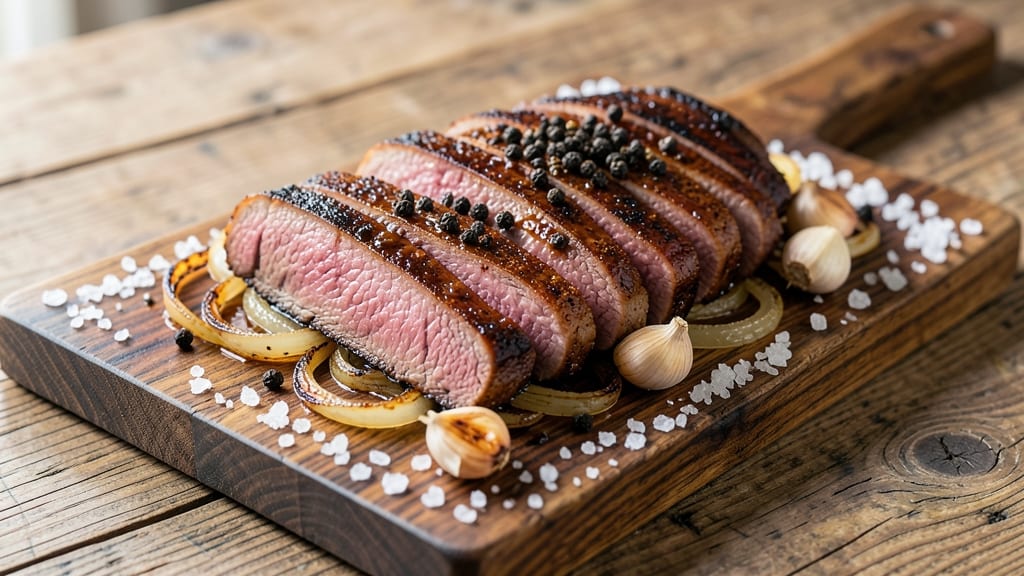
This sliced beef brisket recipe delivers the perfect balance of smoky depth and melt-in-your-mouth tenderness—exactly what separates great brisket from good. 💛 I perfected it after years of testing at my grandmother Nana Mae's Peachtree Street diner, where we served this as the centerpiece for Sunday suppers.
The secret lies in the slow cook and precise slicing against the grain, which transforms even tough cuts into silky, flavorful bites.
What makes this recipe stand out is the combination of traditional Texas-style smoking techniques with a modern approach—using a mix of wood chips and a precise internal temperature target.
We start with a dry rub that develops a deep bark while keeping the meat moist, then finish with a quick sear for that restaurant-quality crust. The result? Brisket that's so tender it practically falls apart when sliced, with layers of flavor that linger long after the last bite.
By the time you're done, you'll have perfectly cooked brisket that's ready to slice into thin, even strips—no chew, just pure beefy satisfaction. The aroma alone will have your whole house gathering around the table, and every slice will be worth the wait.
This is the kind of brisket that makes people ask for seconds before they've even finished their first plate.
Serve with classic sides like creamy coleslaw, buttery cornbread, and pickled jalapeños for that full Southern experience. The recipe scales beautifully, so whether you're feeding a crowd or just treating yourself to a special meal, this brisket delivers professional-quality results every time. Let's get cooking!
Ingredients for sliced beef brisket
Twelve ingredients, five pounds of beef, and a whole lot of patience for brisket that melts like butter.
| Ingredient | Amount | Notes |
|---|---|---|
| Beef Brisket 🥩 | 5 lb | Whole packer cut, fat cap intact |
| Yellow Onion 🧅 | 2 whole | Yellow or red, sliced |
| Garlic Cloves 🧄 | 8 cloves | Peeled and minced |
| Smoked Paprika 🌶️ | ¼ cup | For deep smoky flavor |
| Ground Black Pepper 🌶️ | 1 tbsp | Freshly cracked |
| Kosher Salt 🧂 | ½ cup | Diamond Crystal preferred |
| Brown Sugar 🍯 | ¼ cup | Light or dark |
| Ground Cumin 🌿 | 1 tbsp | Toasted for warmth |
| Mustard Powder 🍯 | 1 tsp | Adds tangy depth |
| Apple Cider Vinegar 🍏 | ¼ cup | For tenderizing |
| Beef Broth 💧 | 2 cups | Low-sodium preferred |
| Hickory Wood Chips 🌳 | 1 package | For smoker or grill |
| Unsalted Butter 🧈 | ½ cup | Cold for basting |
| Fresh Thyme Leaves 🌿 | ¼ cup | Chopped for finishing |
The brisket is non-negotiable—look for a whole packer cut with that thick fat cap intact. Costco or local butchers are your best bets for quality. If you're buying pre-cut, make sure it's at least 5 lbs to feed a crowd. The fat cap keeps the meat moist during cooking, so don't trim it unless you're a brisket purist. For the wood chips, Traeger or Cookshack brands work perfectly—just soak them for 30 minutes before using. The spices? Penzeys or the bulk section at Whole Foods will give you the freshest, most flavorful spices.
No smoked paprika? Regular paprika plus a pinch of liquid smoke gets you close. Running low on thyme? Dried thyme at half the amount works in a pinch. The vinegar is key for tenderizing—don't skip it. For the beef broth, Annie's or Swanson are solid choices, but homemade is always better. If you're short on time, a mix of apple juice and beef bouillon works too. The butter needs to be cold for basting—take it out of the fridge right before you need it. And trust me on the brown sugar—it's what gives that caramelized bark without burning.
This brisket reheats like a dream—just wrap it in foil and warm in a 300°F oven for 20-30 minutes. Keeps for 5-6 days in the fridge, or freeze portions for up to 6 months. I always make double batches because leftovers are even better the next day. Slice against the grain for those perfect thin strips. Serve with creamy coleslaw and buttery cornbread for the full Southern experience.
Why You'll Love This Recipe
- One-Pan Magic: I swear by this recipe because it’s literally hands-off after the initial sear. Slice the brisket thin, toss it with onions and garlic, then let the smoked paprika work its magic in the oven—no flipping, no fuss. That deep, caramelized crust happens while you’re making dinner plans.
- Smoky-Sweet Obsession: The moment the paprika and black pepper bloom under the brisket? Chef’s kiss. It’s got this perfect balance—smoky from the paprika, sharp from the garlic, and that melt-in-your-mouth tenderness from slow-cooked beef. Honestly, I’ve made this for potlucks, and people always ask for the recipe.
- Budget That Punch: A whole pack of brisket feeds my family for days, and the other ingredients? Pantry staples. No fancy marinades, no specialty tools—just beef, onions, and a pinch of magic. Between us, this is how I stretch a paycheck without sacrificing flavor. (And yes, it’s still delicious when I’m eating it for breakfast.)
Step-by-step instructions for sliced beef brisket
Here's how to transform a tough cut into melt-in-your-mouth slices that practically fall apart.
🔥 Step 1: Prep the Brisket and Build the Flavor Rub
Start by trimming the fat cap of the 5 lb Beef Brisket down to about ¼ inch thickness using a sharp boning knife. Leave the fat intact on the edges—this protects the meat during cooking. Pat the entire surface dry with paper towels, then place it fat-side up on a cutting board.
In a bowl, combine 0.5 cup Kosher Salt, 0.25 cup Brown Sugar, 0.25 cup Smoked Paprika, 1 tbsp Ground Black Pepper, 1 tbsp Ground Cumin, 1 tsp Mustard Powder, and 0.25 cup Apple Cider Vinegar. Mix until the vinegar is fully incorporated, creating a thick paste. Spread this rub evenly over all sides of the brisket, pressing it into the meat so it adheres well. Let it sit at room temperature for 1 hour—this ensures even seasoning and prevents the rub from falling off during cooking.
🔥 Step 2: Smoke the Brisket Low and Slow
Set up your smoker to maintain a steady 225°F using the 1 package Hickory Wood Chips. Place the brisket fat-side up in the smoker and add 2 cups Beef Broth to a water pan to maintain moisture. Smoke the brisket for 6 hours, resisting the urge to peek—every time you open the lid, you lose heat and extend cooking time.
After 6 hours, check the internal temperature using a meat thermometer. When it reaches 165-170°F, you'll hit "the stall"—a temporary plateau where moisture evaporates and the temperature stops rising. This is normal. Wrap the brisket tightly in pink butcher paper (not foil) and return it to the smoker. Continue cooking until the internal temperature reaches 200-205°F, which should take another 4-6 hours. The meat should be fork-tender with a dark, crusty bark on the outside.
⏰ Step 3: Rest and Slice for Maximum Tenderness
Once the brisket reaches 200-205°F, remove it from the smoker and let it rest in the butcher paper for at least 1 hour (I prefer 2 hours wrapped in towels in a cooler). This resting period allows the juices to redistribute, ensuring every slice is moist and flavorful. Real talk: Skipping this step means dry, tough meat—don't skip it!
After resting, unwrap the brisket and locate the grain direction—you'll see lines running through the meat. Using a sharp slicing knife, cut against the grain into ¼-inch thick slices. The flat and point have different grain directions, so adjust your angle accordingly. Serve immediately while still warm, with the 0.5 cup Unsalted Butter melted over the top and garnished with 0.25 cup Fresh Thyme Leaves for a finishing touch.
Pro Tips For Making Sliced Beef Brisket
- Trim the Fat First: Slice off that thick layer of fat on the brisket before cooking—it’s not just for flavor, it’s for even cooking. I learned this the hard way when my first batch had a stubborn, greasy center that refused to tenderize, no matter how long I braised it.
- Caramelize Onions Low: Don’t rush the onions—cook them on low heat for at least 20 minutes until they’re deep golden, almost jammy. I used to burn them in 10, and the dish never had that rich, sweet depth that makes sliced brisket sing.
- Skip the Crowding: If you’re searing the brisket in a pan, resist the urge to pile everything in at once. Give those slices space so they brown properly—crowding steams instead of sears, and you’ll end up with soggy, gray meat instead of crispy edges.
- Rest Before Slicing: Let the brisket sit under foil for 5-10 minutes after cooking—yes, even if you’re impatient. Slicing too soon turns tender meat into a mushy mess, and you’ll lose all that precious juice that makes sliced brisket worth the effort.
Troubleshooting perfect results
Uneven Cooking
If your brisket emerges with cold spots or uneven doneness, your smoker's heat zones are likely inconsistent. I learned this the hard way during my first attempt—David nearly walked out when one side was still pink!
Use a bi-directional smoker or place your brisket in the center of the cooking chamber. For charcoal smokers, arrange coals evenly on both sides. If using a pellet grill, maintain a 225°F target with minimal fluctuations. A ThermoWorks Smoke thermometer helps monitor both internal and smoker temps. 🌡️
Dry or Tough Meat
Overcooking is the #1 culprit for dry brisket. The magic window is 200-205°F internal temp—no higher! I once cooked mine to 210°F and regretted it instantly. Wrap the brisket in butcher paper (not foil) after 6 hours to speed through the stall while retaining moisture.
For extra insurance, inject ¼ cup beef broth per pound before smoking. The fat cap should render nicely—if it's still thick, you didn't cook long enough.
Rub Falling Off
When your rub disintegrates mid-cook, it's usually because the meat wasn't properly dried or the rub was too loose. Pat that brisket extra dry—I use two layers of paper towels. For the rub, mix in 1 tbsp Dijon mustard to help it stick.
Let the seasoned brisket sit at room temp for 1 hour before smoking. Pro tip: Chill the brisket uncovered in the fridge for 30 minutes after rubbing to help the spices adhere better. 💡
Bark Too Thin or Burnt
A perfect bark needs patience and precise timing. For a dark mahogany bark, maintain 225°F and avoid peeking. If your bark burns, your smoker's temp is too high—lower it to 200°F and add more wood chips.
For extra thickness, sprinkle 1 tbsp brown sugar on the bark after 4 hours of smoking. I've seen beginners rush this step, but trust me—rushing ruins the texture. The bark should be crispy but not carbonized.
Slicing Problems
If your slices look uneven or tear easily, your knife skills (or knife) are the issue. Use a sharp slicing knife like the Dexter-Russell 12-inch and cut against the grain—not with it. For the flat and point sections, rotate your cutting board to follow the grain direction.
Warm the knife by running it under hot water for 10 seconds before slicing to get cleaner cuts. And for heaven's sake, don't rush—each slice should be ¼-inch thick for perfect tenderness. 🔪
Stall Too Long
The stall can feel like an eternity, but wrapping your brisket is the game-changer. After 6 hours, wrap tightly in butcher paper (not foil) and return to the smoker. This traps steam and helps push through the stall faster.
I've seen stalls last 2 hours without wrapping—with wrapping, it's usually 30-60 minutes. For extra help, add ½ cup beef broth to the water pan when you wrap. The key is consistency—don't open the smoker during this phase! ⏳
Nutrition facts
Frequently asked questions
Why does slicing against the grain make such a difference?
Brisket's muscle fibers run in one direction, so cutting perpendicular to them shortens the fibers and creates tender bites. When you slice with the grain, those fibers stay long and chewy. The flat and point sections have different grain directions—always rotate your cutting board to follow the natural lines. For perfect results, aim for ¼-inch thick slices that practically melt in your mouth.
Can I cook brisket without a smoker?
Use an oven set to 225°F with a water pan on the bottom rack for moisture. Place the brisket on a rack in a roasting pan and add wood chips to a foil packet with holes punched in it. For extra smoke flavor, try a stovetop grill pan with hickory chips. Just monitor the temperature closely—it's harder to maintain consistency than with a dedicated smoker.
How do I know when the brisket is done?
Use a meat thermometer to check the internal temperature—200-205°F is the sweet spot. The probe should slide in like butter, and the meat should feel fork-tender. The bark should be dark mahogany but not burnt. Pro tip: If the flat and point reach different temps, cook until the point hits 205°F—it's more tender and will catch up.
What's the best way to reheat sliced brisket?
Wrap the sliced brisket tightly in foil and reheat in a 300°F oven for 20-30 minutes. For extra moisture, add 1 tbsp beef broth to the foil packet. Microwaving works in a pinch, but it can make the meat dry. Never reheat above 300°F—higher temps dry out the slices faster.
Can I make this recipe with a different cut of beef?
While brisket is ideal, you could try chuck roast or short ribs for similar results. Adjust cooking time based on size—chuck roast typically needs 4-5 hours to reach 200°F. The fat distribution differs, so monitor closely. For best flavor, stick with beef cuts designed for slow cooking.