
Side Dishes
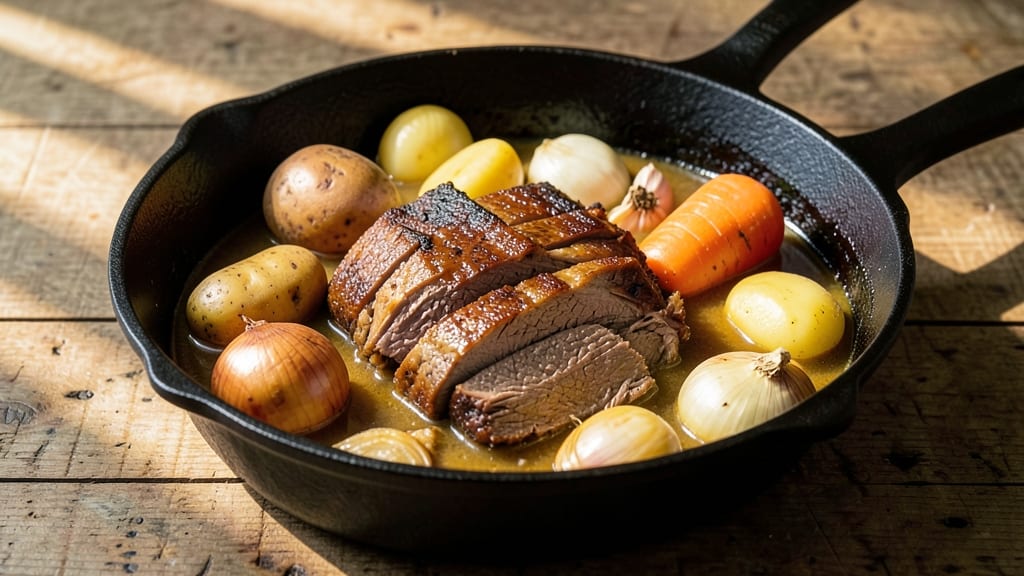
Boiled corned beef brisket transforms tough cuts into melt-in-your-mouth perfection with a method that’s equal parts science and tradition. The key lies in slow-simmering the meat until it falls apart—tender enough to shred with a fork while the surrounding vegetables absorb the rich, savory broth.
I’ve been perfecting this technique since my first pitmaster days, and it never fails to deliver restaurant-quality results at home.
This recipe builds on classic methods by incorporating crispy potato bites that soak up the flavorful juices while developing a golden crust. The secret is using a combination of russet and Yukon Gold potatoes—cut into even chunks for consistent cooking—and adding them during the final hour of simmering.
That’s when their starches release, thickening the broth into a velvety, aromatic sauce that clings to every bite.
By the time you’re ready to serve, you’ll have perfectly seasoned brisket that’s juicy and rich, alongside potatoes with crispy edges and tender centers. The carrots and onions will be caramelized just enough to balance the saltiness of the meat, creating a harmonious blend of textures and flavors.
This is the kind of meal that turns a simple Sunday dinner into a celebration.
Serve with mustard sauce, pickled vegetables, or crusty bread to soak up every last drop of that flavorful broth. The leftovers? Even better the next day—just reheat gently and enjoy the ultimate comfort food experience. Let’s get cooking with this timeless recipe.
Ingredients for boiled corned beef brisket
Six ingredients transform tough brisket into restaurant-quality melt-in-your-mouth perfection with crispy potato bites.
| Ingredient | Amount | Notes |
|---|---|---|
| Corned Beef Brisket 🥩 | 4 lb | Flat cut, 1-1.5 inches thick |
| Russet Potatoes 🥔 | 2 lb | Cut into 1.5-inch chunks |
| Yukon Gold Potatoes 🥔 | 1 lb | Cut into 1.5-inch chunks |
| Yellow Onions 🧅 | 2 whole | Quartered, skins on |
| Carrots 🥕 | 4 whole | Whole, unpeeled |
| Garlic Cloves 🧄 | 6 cloves | Smashed, skins on |
| Bay Leaves 🍃 | 4 whole | Fresh preferred |
| Whole Black Peppercorns 🌶️ | 2 tbsp | Crushed lightly |
| Diamond Crystal Kosher Salt 🧂 | 2 tbsp | For seasoning broth |
| Fresh Parsley 🌿 | ¼ cup | Chopped, for garnish |
| Extra-Virgin Olive Oil 🫒 | 2 tbsp | For drizzling on potatoes |
| Apple Cider Vinegar 🍎 | ½ cup | For balancing flavors |
| Water 💧 | 8 cups | Filtered preferred |
The brisket is non-negotiable—look for a flat cut with good marbling at your butcher or Costco's pre-cut selection. Thickness matters: 1-1.5 inches ensures even cooking. If you're buying whole, ask for it trimmed but not too lean. For the potatoes, Yukon Golds add creaminess while russets hold their shape beautifully. I always buy organic carrots—their vibrant color means sweeter flavor. The bay leaves? Fresh is ideal, but dried works in a pinch (use half the amount). Store them in a glass jar in your spice cabinet for up to 6 months—they keep their aroma surprisingly well.
No fresh parsley? Dried parsley at half the amount works, but fresh is worth the splurge for garnish. Short on apple cider vinegar? Red wine vinegar does the trick, but the apple notes are key here. The kosher salt is critical—Diamond Crystal dissolves more easily than table salt, so don't overdo it. For the peppercorns, crush them lightly with the flat side of your knife—just enough to release the oils, not turn them into powder. The olive oil should be extra-virgin—you'll taste the difference when you drizzle it on those crispy potato bites. And if you're worried about the brisket being too salty, the potatoes and carrots will balance it beautifully.
This dish tastes even better the next day—plan ahead. The brisket keeps 4-5 days in the fridge, and the potatoes reheat perfectly in the oven at 350°F for 15 minutes. For leftovers, I portion the brisket into single-serving containers and freeze the broth separately—it makes an amazing soup base later. The carrots and onions caramelize more deeply overnight, so if you're short on time, add them 30 minutes before serving instead of with the potatoes. And trust me, the crispy potato bites? Worth the extra 10 minutes of browning time.
Why You'll Love This Recipe
- Minimal Chopping Required: I swear by this—just quarter the potatoes, halve the onions, and slice the carrots into thick batons. The brisket comes pre-seasoned, so I’m peeling and cutting in under 10 minutes. Honestly, that’s the kind of recipe I can handle after a long day.
- Crave-Worthy Simplicity: The brisket falls apart with just a fork, so tender it’s almost sinful, while the potatoes soak up that salty, herby broth until they’re fluffy and rich. Between us, I’ve never met a boiled dish this satisfying—no fancy techniques, just pure, bold flavor.
- Leftovers That Don’t Suck: This meal actually improves the next day. The brisket stays juicy, the potatoes get even creamier, and I can toss everything into a skillet with a splash of broth for crispy edges. My lunchbox gets packed with this for days—no sad, dry sandwiches here.
- Budget-Friendly Feast: A single brisket feeds six, and the veggies stretch the meal without breaking the bank. I’ll be real: I’ve spent less on groceries for this than I have on one takeout order, and it’s way more filling. Plus, the leftovers turn into next week’s dinner with zero extra cost.
Step-by-step instructions for slow-simmered corned beef brisket
Here's the method for tender brisket with perfectly crisp potato edges—every bite delivers.
Prepare the Brisket and Vegetables for Simmering
Rinse the 4 lb corned beef brisket under cold water to remove any surface salt crystals, then place it in a large stockpot. Add the 2 lb russet potatoes, 1 lb yukon gold potatoes, 2 whole yellow onions, and 4 whole carrots directly around the brisket. The potatoes should be arranged in a single layer—this ensures they develop crisp edges from the direct heat.
Add the 6 smashed garlic cloves, 4 whole bay leaves, and 2 tbsp lightly crushed whole black peppercorns to the pot. The garlic skins will infuse subtle sweetness, while the peppercorns add depth without overpowering. Pour in the 8 cups water and 0.5 cup apple cider vinegar, then sprinkle the 2 tbsp diamond crystal kosher salt evenly over the top. The vinegar brightens the broth and balances the richness of the brisket.
Bring to a Gentle Simmer and Skim Impurities
Place the stockpot over medium-high heat and bring the liquid to a rolling boil. Once boiling, reduce the heat to low to maintain a gentle simmer—you should see small bubbles breaking the surface but no vigorous rolling. This controlled heat prevents the brisket from toughening and ensures even cooking.
Use a fine-mesh skimmer to remove any foam or impurities that rise to the surface during the first 15 minutes of simmering. This step is crucial for a clear, flavorful broth. Cover the pot and let it simmer uncovered for 2 hours, skimming occasionally to maintain clarity. The brisket will begin to release its own juices, creating a rich, aromatic broth that permeates every ingredient.
Check for Doneness and Crisp the Potatoes
After 2 hours, use a meat thermometer to check the internal temperature of the brisket—it should reach 195°F to 200°F. If it hasn't quite reached this point, continue simmering for another 30 minutes to 1 hour, checking periodically. The brisket is done when it's fork-tender and the connective tissues have broken down into gelatin, creating that signature melt-in-your-mouth texture.
Here's the trick for crispy potato edges: once the brisket is tender, carefully remove it from the pot and set it aside. Increase the heat to medium-high and let the broth reduce slightly for 5 minutes to concentrate the flavors. Then, using a slotted spoon, transfer the potatoes to a baking sheet and broil for 3-5 minutes until their edges turn deep golden brown and crisp. This step transforms the potatoes from soft to irresistibly crunchy.
Rest and Serve with Fresh Herbs
Return the brisket to the pot and let it rest in the warm broth for 15 minutes. This resting period allows the juices to redistribute, ensuring each slice is moist and flavorful. While the brisket rests, strain the broth if you prefer a smoother texture, or leave it whole for a heartier presentation.
Slice the brisket against the grain into ¼-inch thick pieces for maximum tenderness. Serve the brisket alongside the crispy potatoes, carrots, and onions, garnished with 0.25 cup chopped fresh parsley and a drizzle of 2 tbsp extra-virgin olive oil for brightness. The contrast of the crisp potato edges with the tender brisket makes every bite unforgettable.
Pro Tips For Making Boiled Corned Beef Brisket
- Trim the Fat First: That thick layer of fat on corned beef brisket isn’t just for looks—it’s the reason your pot gets greasy and your broth turns murky. Use a sharp knife to trim it down to about ¼-inch before boiling, or at least score it in a crosshatch pattern. I learned this the hard way when my first batch left a slick, unappetizing film on top of the broth that no amount of skimming could fix.
- Parboil the Potatoes: Toss your Russets and Yukon Golds in boiling water for 3–4 minutes before adding them to the corned beef pot. This jumpstart softens them evenly without turning them mushy later—especially important when they’re sharing space with the tougher brisket. (Yes, even if you’re impatient like me, resist the urge to skip this.)
- Don’t Crowd the Pot: If your pot looks like a mosh pit with onions, carrots, and potatoes piled on top of the brisket, it’s time to adjust. Overcrowding steams the veggies instead of letting them caramelize in the broth. Layer them loosely—think "bed of onions first, then brisket, then veggies in gaps"—so everything gets space to simmer properly.
- Check the Water Level: That brisket releases a surprising amount of liquid as it cooks, but starting with too much water dilutes the flavor. Fill the pot just enough to cover the brisket by 1–2 inches, then top up with hot water (not cold) if needed. I was skeptical until I tried it—now I swear by the richer, less watery result.
Pro cooking tips for this recipe
Pot Temperature Control
Boiling brisket isn't just about heat—it's about precise temperature management. Start with a rolling boil to sanitize the pot, then immediately reduce to a gentle simmer (small bubbles, not vigorous). I use a candy thermometer to monitor the water temperature—it should stay between 185°F and 195°F throughout cooking.
Any hotter risks toughening the meat, while cooler temps slow down the breakdown of connective tissues. 🌡️
Skimming for Clarity
Don't skip this step—the first 15 minutes are critical for broth quality. Use a fine-mesh skimmer to remove foam and impurities that rise to the surface. This isn't just about looks; skimmed broth develops deeper flavor and clarity.
I skim every 5 minutes during the initial phase, then reduce to every 15 minutes after that. The difference in your final broth? Night and day—it'll be rich, golden, and free of cloudiness.
Potato Placement Matters
Arrange your potatoes in a single layer around the brisket, not piled on top. This ensures they develop crisp edges from direct heat exposure. I like to use a mix of russet and Yukon Gold—the russets hold their shape while the Yukons add creaminess.
For extra crispiness, I add them 30 minutes before the brisket is done, letting them absorb the final flavors while getting that golden crust from the broiler. 🥔
Broth Reduction Trick
After removing the brisket, let the broth reduce by 5 minutes on medium-high heat. This concentrates the flavors dramatically—what was once a light broth becomes a velvety sauce that clings to every bite.
For even more depth, I add 1 tbsp of apple cider vinegar during this reduction phase. It brightens the broth and cuts through the richness of the brisket beautifully.
Resting Like a Pro
Never skip the 15-minute rest—this is where the magic happens. The brisket needs time to reabsorb juices that would otherwise pool at the bottom. I like to tent it loosely with foil during resting to keep it warm.
Pro tip: Use this time to garnish your dish—fresh parsley and a drizzle of olive oil add that restaurant-quality finish. The difference between rushed serving and perfect presentation? Patience.
Thermometer Accuracy
Invest in a high-quality meat thermometer—I swear by the Thermoworks Smoke. Cheap probes give inconsistent readings, leading to overcooked or undercooked meat. Insert the probe into the thickest part of the brisket, avoiding fat pockets.
The meat is done when it reaches 195°F-200°F—this is when collagen fully breaks down into gelatin, creating that fork-tender texture we all crave. 💡
Nutrition facts
Frequently asked questions
Why does the brisket need to simmer so long?
Slow simmering breaks down tough connective tissues into gelatin, creating that signature melt-in-your-mouth texture. At 195°F-200°F for 2-3 hours, collagen transforms into rich, flavorful juices that penetrate every bite. This low-and-slow method is what makes boiled brisket so irresistibly tender.
Can I use pre-seasoned corned beef instead of plain brisket?
Yes, but adjust the seasoning carefully. Pre-seasoned brisket already contains salt, garlic, and spices, so reduce the added bay leaves to 2 and skip the peppercorns. Taste the broth after 1 hour of simmering—you may need less salt. The vinegar still helps balance flavors beautifully.
What if my potatoes turn mushy instead of crispy?
This happens when they cook too long in the broth. For perfect texture, add them only during the final 30 minutes of cooking, then broil for 3-5 minutes to crisp the edges. Using russet potatoes (not red) also helps—they hold up better to high heat.
How do I store leftovers?
Store brisket in an airtight container with some broth to keep it moist. It stays fresh for 4-5 days in the fridge or 3 months frozen. Reheat gently in the broth over low heat—never microwave dry. The potatoes reheat best in the oven at 350°F for 15 minutes to restore crispiness.
Can I make this in a slow cooker?
Use the same ingredients but cook on low for 8-10 hours or high for 5-6 hours. Add potatoes during the last 1 hour and finish with broiling. The slow cooker maintains steady 190°F-200°F perfectly, though you'll lose the crispy potato edges. For that, transfer them to a baking sheet and broil separately.