Sauces & Condiments
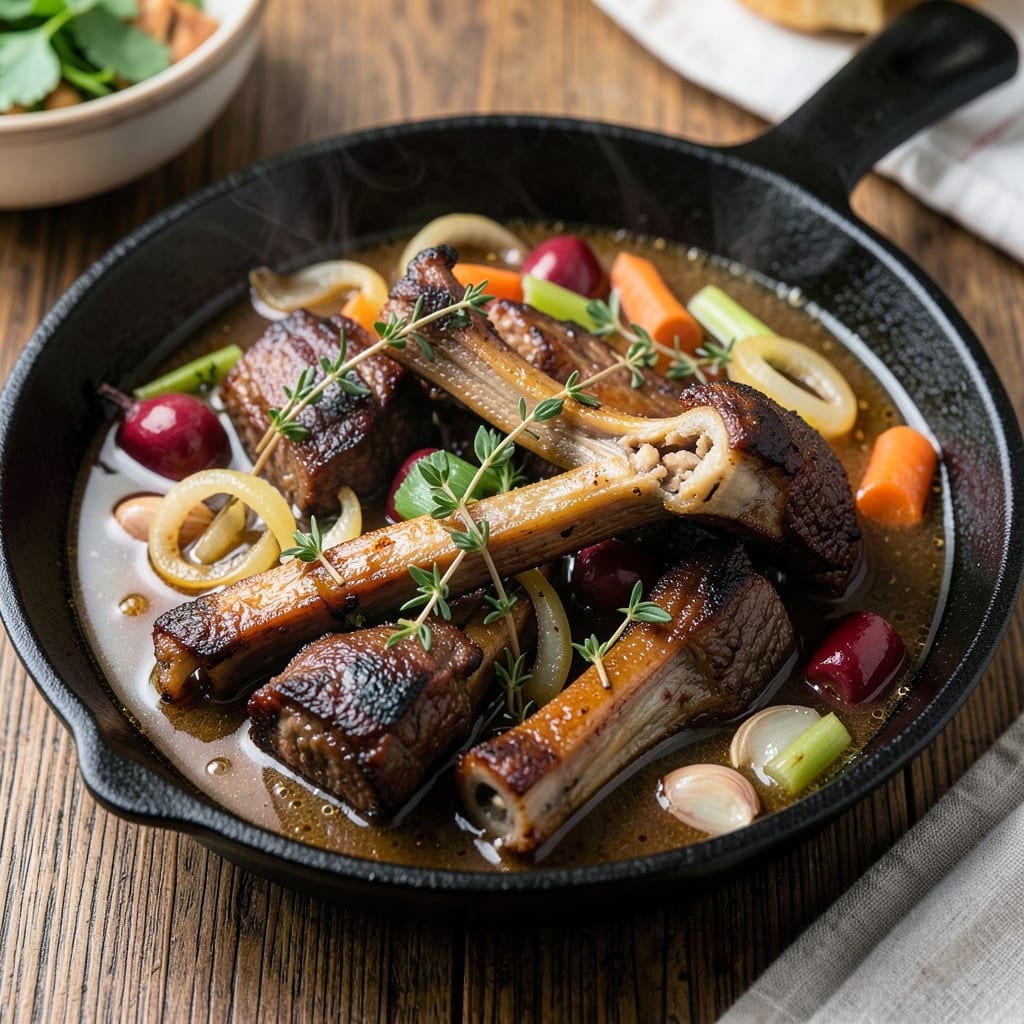
This au jus recipe with beef bones transforms humble leftover bones into a deeply flavorful, restaurant-quality sauce that elevates any beef dish. The secret lies in roasting the bones first—this caramelizes their natural sugars, creating a rich, umami-packed foundation that no store-bought broth can match. What starts as a simple simmer becomes a velvety, golden sauce with just the right balance of saltiness and depth.
The process is straightforward but requires patience: bones roast until deeply browned, then simmer for hours with aromatic vegetables and herbs, releasing collagen that thickens the broth naturally. No fancy equipment is needed—just a large pot, time, and attention to balance. The result? A sauce so rich it turns simple beef into a showstopper, with just the right consistency to coat every bite without overpowering.
This au jus isn’t just for dipping—it’s the star of your plate. Use it to glaze roasted beef, drizzle over mashed potatoes, or serve as a luxurious accompaniment to steak. The beauty of this recipe is its versatility: it freezes beautifully for future use, and the flavor only deepens over time. Perfect for meal prep or impressing guests, this sauce delivers professional-level results with minimal effort.
For an even richer finish, reduce the sauce by simmering uncovered for 10-15 minutes, or thicken it slightly with a cornstarch slurry if needed. The choice is yours—whether you prefer it silky and unctuous or slightly reduced for maximum intensity. Either way, you’ll never buy au jus again.
Ingredients for au jus recipe with beef bones
These bones and pantry staples create a sauce that turns simple beef into a restaurant-worthy experience.
| Ingredient | Amount | Notes |
|---|---|---|
| Beef Bones 🦴 | 3 lb | Knuckle or marrow bones preferred |
| Yellow Onion 🧅 | 1 whole | Quartered, skin on for color |
| Carrot 🥕 | 2 whole | Cut into 1-inch chunks |
| Celery Stalk 🌿 | 2 whole | Cut into 1-inch pieces |
| Garlic Cloves 🧄 | 6 cloves | Smashed for deeper flavor |
| Fresh Thyme 🌿 | 2 sprigs | Or 1 tsp dried thyme |
| Fresh Parsley 🌿 | ¼ cup | Chopped, for finishing |
| Red Wine 🍷 | 2 cups | Bold dry variety like Cabernet |
| Beef Stock 🍲 | 4 cups | Homemade preferred, low-sodium |
| Tomato Paste 🍅 | 2 tbsp | For depth, not sweetness |
| Olive Oil 🫒 | ½ cup | High smoke point preferred |
| Salt 🧂 | 1 ½ tsp | Diamond Crystal preferred |
| Black Peppercorns 🌶️ | 1 tsp | Freshly cracked preferred |
| Cornstarch 🌾 | 1 tbsp | For optional thickening |
The bones are everything here—knuckle or marrow bones give the richest flavor, but any beef bones work in a pinch. Costco or butcher shops are your best bets for quality bones, though the grocery store meat section usually has them too. Look for bones with good marrow content—they'll be heavier and have more natural fat. If you can't find beef bones, pork trotter bones work as a substitute, though the flavor will be slightly different. Roast them until deeply browned for maximum caramelization, which builds that umami foundation. Fresh herbs like thyme and parsley add brightness, but dried herbs work at one-third the amount if that's what you've got.
Red wine is non-negotiable for depth, but beef broth with a splash of balsamic works if you're avoiding alcohol. The tomato paste might seem like overkill, but it adds a subtle sweetness that balances the acidity. Trader Joe's tomato paste in the squeeze tube is perfect—no waste, and it keeps for months. For the beef stock, homemade is ideal, but low-sodium store-bought in a pinch. If you're making this ahead, the sauce actually improves the next day as flavors meld. The cornstarch is optional—only use it if you want a thicker consistency, but the natural collagen release from the bones usually gives you a silky texture without it.
This sauce keeps for 5 days in the fridge, but it's even better after a day or two as flavors deepen. For longer storage, freeze in ice cube trays—perfect for adding richness to future dishes. Reheat gently on the stove, skimming off any excess fat that rises to the top. The sauce is incredibly versatile—drizzle over steak, use as a glaze for roasted vegetables, or even mix into mashed potatoes for extra decadence. If you make a big batch, portion it into containers so you always have restaurant-quality au jus on hand.
Why You'll Love This Recipe
- Here’s what sold me: this au jus keeps for days in the fridge, and it only gets better. Use it to deglaze pans, drizzle over sandwiches, or toss with noodles. (Yes, even on a Tuesday night.)
- No Chopping Chaos: I swear by this—just rough-chop the onion, carrot, and celery (no fancy dice needed) and toss them in with the bones. The garlic? Smash it with the flat side of your knife for maximum flavor without extra effort.
- Umami Bomb: That beef bone broth isn’t just tasty—it’s ridiculously rich. The marrow melts into the sauce, turning it into this deep, savory elixir that makes everything—roast potatoes, mashed potatoes, even toast—taste like a restaurant dish.
- Leftovers That Shine: Here’s what sold me: this au jus keeps for days in the fridge, and it only gets better. Use it to deglaze pans, drizzle over sandwiches, or toss with noodles. (Yes, even on a Tuesday night.)
Step-by-step instructions for bone-braised au jus
This one-pot method extracts maximum flavor from beef bones while building a velvety sauce with depth.
Sear the Bones for Rich Foundation
Heat a Dutch oven over medium-high heat until very hot. Add the 3 lb beef bones in a single layer and sear undisturbed for 8-10 minutes until deeply browned on all sides. This caramelization creates the sauce's fundamental flavor.
Real talk: Don't rush this step. You want bones so dark they're almost black in spots. Once browned, remove bones and set aside. Wipe out the Dutch oven with paper towels to remove any loose debris—this keeps your sauce clear.
Build the Aromatic Base
In the same Dutch oven, add the 0.5 cup olive oil and heat over medium heat. Add the quartered yellow onion, 2 whole carrot cut into chunks, and 2 whole celery stalk cut into pieces. Cook for 8-10 minutes until softened and golden.
Here's the thing—you're not just cooking vegetables here. You're developing their natural sugars to deepen the sauce's complexity. When they're tender and starting to caramelize, add the 6 cloves garlic cloves (smashed) and 2 sprigs fresh thyme. Cook for another 2 minutes just until fragrant.
Deglaze and Simmer the Base
Return the seared bones to the pot. Stir in the 2 tbsp tomato paste and cook for 1 minute to toast slightly. Pour in the 2 cups red wine and scrape up all those browned bits from the bottom—this is where all the flavor hides.
Bring to a simmer, then add the 4 cups beef stock and 1.5 tsp salt. The liquid should just cover the bones. Partially cover the Dutch oven and simmer gently for 2 hours until the bones are fork-tender and the sauce has reduced by about 25%.
Finish with Herbs and Seasoning
Remove the bones and strain the sauce through a fine-mesh sieve into a clean pot. Discard the solids. Return the sauce to medium heat and add the 1 tsp black peppercorns (cracked) and 0.25 cup fresh parsley (chopped). Simmer for 5 minutes to infuse the flavors.
Taste and adjust seasoning—you might need a pinch more salt or pepper. The sauce should be rich but balanced, with wine's acidity cutting through the meaty depth. Here's where it gets fun: if you want it thicker, whisk in the 1 tbsp cornstarch mixed with 2 tablespoons cold water and simmer for 2-3 minutes until it reaches your desired consistency.
Serve with Style
Return the bones to the sauce and let them soak for 10 minutes to reabsorb some of the flavor. Serve the au jus warm with the bones for dramatic presentation, or pour it over sliced roast beef for that classic restaurant experience.
Pro tip: The sauce will continue thickening as it cools. If you're making this ahead, reheat gently and adjust consistency with a splash of beef stock if needed. This au jus keeps beautifully in the fridge for 5 days—perfect for meal prep or impressing guests at a moment's notice.
Pro Tips For Making Au Jus Recipe With Beef Bones
- BLANCH BONES FIRST: Toss your beef bones in a 400°F (200°C) oven for 15-20 minutes before simmering—this loosens the marrow and renders fat, so your au jus doesn’t turn into greasy soup. I learned this the hard way after straining out a pot of cloudy, unappetizing broth.
- CHOP VEGETABLES UNIFORM: Dice onion, carrot, and celery into matching ½-inch pieces—no tiny celery slivers or giant onion chunks. Even cooking means no bitter, over-browned bits ruining your flavor base. (Yes, it takes 5 extra minutes, but your au jus will taste like it.)
- SIMMER, DON’T BOIL: Keep the liquid at a gentle bubble—barely moving the surface—after the first 30 minutes. Boiling scorches the vegetables and turns your au jus bitter. I used to ignore this and ended up with a sad, muddy liquid. (Aim for 90°F/32°C if you’re fancy with a thermometer.)
- STRAIN TWICE: Use a fine-mesh strainer first to catch big bits, then a cheesecloth-lined sieve for the second pass. The second strain makes all the difference—your au jus will look restaurant-worthy, not like it was made in a college dorm. (Lazy? Just double-strain with one colander and a clean towel.)
Regional styles of this au jus recipe with beef bones
Classic French Style
In France, au jus is all about elegance and simplicity. The traditional method uses beef marrow bones simmered with red wine, shallots, and a touch of cognac for depth. I like adding a bay leaf and a pinch of fennel seeds to the base—this gives that classic French bistro flavor. The key difference? French au jus is often finished with a light cornstarch slurry for a silky texture, and it's served in a soup plate with the bones arranged artistically. 🍷
American Steakhouse Twist
American steakhouses take au jus to bold new heights by adding tomato paste and Worcestershire sauce to the base. This creates a deeper, slightly tangy flavor that pairs perfectly with New York strip steaks. I've seen top chefs use black pepper-infused oil in the searing process for an extra kick. The American version is often thicker—almost like a light gravy—thanks to longer simmering times. Don't forget the peppercorns crushed directly into the sauce at the end! 🌶️
German Bratwurst Approach
German au jus, or Bratensauce, focuses on dark beer and juniper berries instead of wine. The bones are often smoked briefly before simmering to add a subtle charred flavor. I've made this version with pilsner beer and a splash of apple cider vinegar for brightness. The Germans also love adding caramelized onions to the sauce for sweetness. This style is perfect for serving with bratwurst or pork roasts—the beer cuts through the richness beautifully. 🍺
Italian Osso Buco Style
In Italy, au jus becomes sugo when paired with cross-cut veal shanks. The bones are simmered with white wine, gremolata (lemon zest, garlic, parsley), and a touch of saffron for color. I've adapted this by adding a splash of white wine to the base and finishing with fresh parsley and lemon juice. The Italian version is lighter but still deeply flavorful—ideal for dipping polenta or crusty bread. The gremolata adds that signature Italian brightness. 🌿
Modern Fusion Variations
For something unexpected, try a smoky chipotle au jus by adding 1-2 chipotle peppers in adobo to the simmering liquid. This works amazingly with grilled flank steak. Another fusion favorite? A miso-glazed au jus where I stir in 1 tbsp white miso paste at the end for umami depth. These modern twists keep the traditional technique while adding exciting new flavors—perfect for adventurous cooks. ✨
Nutrition facts
Frequently asked questions
Can I use chicken or pork bones instead of beef?
Beef bones are ideal for their rich, meaty flavor, but you can adapt this recipe! For pork, use pork trotter bones or pork knuckle bones—they’ll give a slightly sweeter, more delicate sauce. Chicken bones (like backs or necks) will create a lighter, more poultry-forward broth. Just extend the simmering time to 3-4 hours for chicken to extract maximum flavor. The wine and tomato paste will still work, but adjust seasoning—chicken-based sauces often need more acidity.
How do I make this au jus without alcohol?
No problem! Replace the 2 cups red wine with 2 cups beef stock plus 2 tablespoons balsamic vinegar or 1 tablespoon red wine vinegar for acidity. For depth, add 1 teaspoon soy sauce or 1/2 teaspoon smoked paprika. The sauce will still develop rich flavors—just focus on long simmering (2-3 hours) to build umami. The tomato paste and herbs will carry the show!
Why did my au jus turn cloudy or greasy?
Cloudiness usually means the sauce didn’t simmer long enough to break down collagen (aim for 2+ hours). For grease, skim the fat off the surface before serving—it naturally rises to the top. To prevent this, try straining the broth through a cheesecloth-lined sieve after simmering. If the sauce is too thin, reduce it uncovered for 10-15 minutes or whisk in a cornstarch slurry (1 tbsp cornstarch + 2 tbsp water).
Can I make this au jus in a slow cooker?
Sear the bones in a Dutch oven first (critical for flavor), then transfer everything to a 6-quart slow cooker. Cook on low for 6-8 hours or high for 4-5 hours, skimming fat occasionally. The slow cooker’s gentle heat helps collagen dissolve naturally. For best results, finish by straining and reducing the sauce on the stovetop to concentrate flavors. The texture will be slightly thinner but deeply flavorful.
How do I use leftover au jus?
This versatile sauce is a game-changer! Drizzle it over grilled steaks, roasted vegetables, or mashed potatoes for instant richness. Use it as a glaze for seared scallops or chicken thighs by reducing it further. Freeze in ice cube trays to add depth to future dishes—thaw and reheat gently. For extra decadence, mix it into beef stroganoff or risotto for a restaurant-worthy twist. The possibilities are endless!