
Soups & Stews
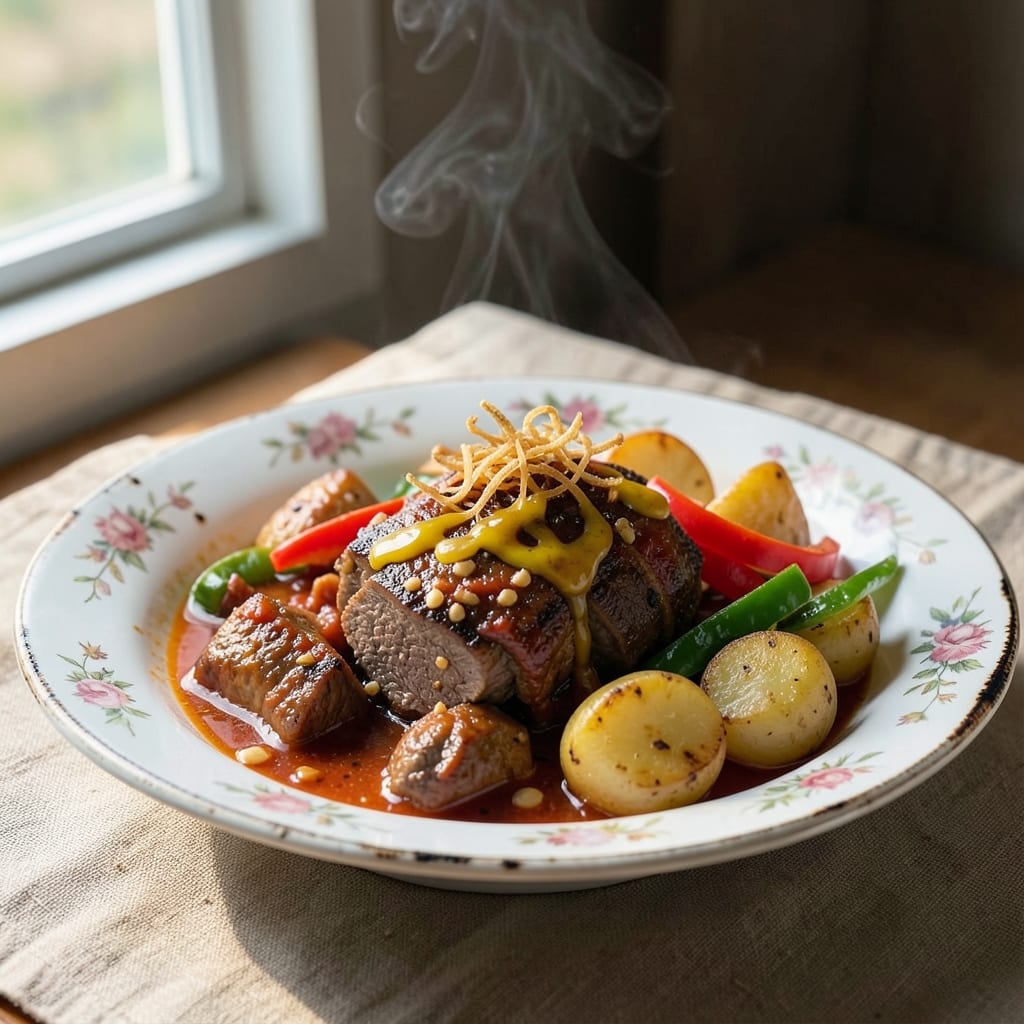
This beef afritada pinoy recipe delivers the comforting, creamy tomato-basil stew that defines Filipino home cooking. 💛 The secret lies in slow-browning beef until deeply caramelized, then simmering it in a rich tomato sauce infused with soy sauce, calamansi, and fresh basil—creating a perfect balance of tangy, sweet, and savory flavors that melt into tender beef and vegetables.
The beauty of this dish is its simplicity: just a handful of ingredients transform into a restaurant-quality meal that pairs perfectly with steamed rice. I’ve perfected the technique to ensure the sauce remains velvety without breaking, while the beef stays fork-tender and the vegetables retain their crispness. No fancy equipment is needed—just a heavy pot and patience for the flavors to develop.
What you’ll end up with is a steaming bowl of creamy, aromatic stew where the beef practically falls apart at the touch of a fork. The sauce coats every bite, blending the bright acidity of calamansi with the earthy depth of soy sauce and the freshness of basil. This is the kind of dish that tastes even better the next day, making it ideal for meal prep or a cozy family dinner.
Serve it with buttery steamed rice to soak up every last drop of that luscious sauce. For extra flair, garnish with fresh basil leaves and a sprinkle of black pepper. Let’s make this classic Filipino comfort food—tender beef and all.
Ingredients for beef afritada pinoy
Just 15 ingredients transform into this creamy, comforting Filipino classic—tender beef and vibrant vegetables bathed in rich tomato-basil sauce.
| Ingredient | Amount | Notes |
|---|---|---|
| Beef Chuck Roast 🥩 | 1 ½ lb | Cut into 1.5-inch cubes |
| All-Purpose Flour 🌾 | ½ cup | For dredging beef |
| Large Eggs 🥚 | 2 whole | Beaten for coating |
| Vegetable Oil 🫒 | ½ cup | For browning beef |
| Canned Tomato Sauce 🍅 | 2 cups | San Marzano preferred |
| Calamansi Juice 🍋 | ¼ cup | Or substitute lime juice |
| Soy Sauce 🥄 | ¼ cup | Regular or light soy |
| Carrots 🥕 | 2 medium | Peeled and sliced into rounds |
| Potatoes 🥔 | 2 medium | Peeled and quartered |
| Green Bell Pepper 🧅 | 1 whole | Sliced into strips |
| Fresh Basil Leaves 🌿 | ½ cup | Packed, stems removed |
| Garlic Cloves 🧄 | 4 cloves | Minced for sauce |
| Onion 🧅 | 1 medium | Thinly sliced |
| Salt 🧂 | 1 ½ tsp | Kosher or sea salt |
| Black Peppercorns 🌶️ | ½ tsp | Freshly ground |
The beef is everything here. Chuck roast delivers that melt-in-your-mouth texture—sirloin or ribeye stays too firm. Cut it into even 1.5-inch cubes for consistent cooking. For the best flavor, brown the beef thoroughly in batches before removing it from the pot. This develops the deep, caramelized base that makes the sauce sing. Most grocery stores carry chuck roast, but Filipino markets often have it pre-cut for stews. Look for good marbling if buying whole.
No calamansi? Lime juice works perfectly—just double the amount. Fresh basil is ideal, but dried oregano at half the quantity gets you close in a pinch. The tomato sauce can be homemade (blend canned tomatoes, garlic, and olive oil) or store-bought—San Marzano is my go-to for that sweet, rich flavor. For the potatoes, Russet or Yukon Gold hold up best to long simmering. The carrots can be baby carrots if that's what's in your fridge, but regular carrots add better texture. If you're short on time, frozen bell peppers work fine—just thaw and drain them first.
This stew tastes even better the next day as the flavors meld. Keeps for 4-5 days in the fridge, or 3 months frozen. I like to make a double batch—one for dinner, one for leftovers. Store in airtight containers with a layer of sauce on top to preserve moisture. Reheat gently on low heat, stirring occasionally. The sauce will thicken as it cools, so add a splash of water or broth if it seems too stiff when reheating.
Why You'll Love This Recipe
- Five-Ingredient Magic: I swear by this—just beef, flour, eggs, oil, and tomato sauce. That’s it. The flour and egg batter give it that perfect golden crust, while the tomato sauce simmers into a rich, tangy sauce that clings to every bite like it’s been there forever.
- Sauce That Sticks: Between us, the secret’s in the simmer. The tomato sauce caramelizes against the beef, turning it into a glossy, slightly sweet glaze that makes even the toughest chuck roast melt in your mouth. Honestly, I’ve tried fancier cuts, but this? This is where the flavor lives.
- Lunchbox Hero: Here’s what sold me—this reheats like a dream. Pack it for work, toss it in a bento, or serve it cold the next day. The sauce stays thick and the beef stays tender, so it’s my go-to for meal prep when I’m too tired to think past Tuesday.
- Budget Win: A whole chuck roast for a family of four? Check. Eggs and flour cost pennies. The canned tomato sauce? That’s the only splurge, and it stretches across three meals easy. I’ll be real: this is how I feed my crew without breaking the bank.
Step-by-step instructions for beef afritada pinoy recipe
Here's how to create this rich, creamy tomato-basil stew with perfectly tender beef every time.
👨🍳 Step 1: Prepare the Beef for Browning
Cut the 1.5 lb Beef Chuck Roast into 1.5-inch cubes for even cooking. Place the cubes in a bowl and add the 0.5 cup All-Purpose Flour, tossing to coat evenly. In a separate bowl, beat the 2 whole Large Eggs until frothy. Dip each flour-coated beef cube into the eggs, allowing excess to drip off, then return to the flour-coated bowl and toss gently to create a light crust.
Heat the 0.5 cup Vegetable Oil in a large, heavy-bottomed pot over medium-high heat until shimmering. Working in batches to avoid crowding, add the coated beef cubes and brown on all sides for 2-3 minutes per batch until golden brown. This step develops deep flavor and ensures tender beef. Transfer the browned beef to a plate and set aside, leaving the oil in the pot.
🍳 Step 2: Build the Flavorful Sauce Base
Reduce the heat to medium and add the 1 medium Onion, 4 cloves Garlic Cloves, 2 medium Carrots, 2 medium Potatoes, and 1 whole Green Bell Pepper to the pot. Stir for 3-4 minutes until the vegetables soften slightly and the garlic becomes fragrant. Pour in the 2 cups Canned Tomato Sauce, 0.25 cup Soy Sauce, and 0.25 cup Calamansi Juice, stirring to combine.
Bring the mixture to a gentle simmer, then add the browned beef back into the pot. Sprinkle with the 1.5 tsp Salt and 0.5 tsp Black Peppercorns. The sauce should coat the beef and vegetables completely. Here's the thing—don't stir constantly. Let it bubble gently for 5 minutes to allow the flavors to meld and the beef to begin tenderizing.
⏰ Step 3: Simmer Until Tender and Creamy
Once the mixture reaches a gentle simmer, reduce the heat to low and cover the pot with a lid. Let it cook for 45-50 minutes, stirring occasionally, until the beef is fork-tender. You'll know it's ready when the beef easily pulls apart with minimal resistance and the sauce has thickened slightly. If the sauce reduces too quickly, add 2-3 tablespoons of water to maintain the creamy consistency.
I like to check the beef's tenderness at the 30-minute mark—this prevents overcooking. The potatoes and carrots should also be soft but still hold their shape. The sauce should be rich and velvety, not watery. If it's too thick, add a splash of water or reserved pasta water to reach the perfect creamy texture.
🥘 Step 4: Finish with Fresh Basil and Adjust Seasoning
Remove the lid and increase the heat to medium-low. Stir in the 0.5 cup Fresh Basil Leaves, packing them in tightly to release their aromatic oils. Simmer for an additional 5-7 minutes, allowing the basil to infuse its fresh flavor into the stew. Taste the sauce and adjust the seasoning if needed—add a pinch more salt or a splash of Calamansi Juice for brightness if necessary.
Garnish with additional fresh basil leaves before serving. The stew should have a harmonious balance of tangy tomato, savory soy, and the bright, herbal notes of basil. Serve immediately over steamed rice to soak up every last drop of that creamy, flavorful sauce.
Pro Tips For Making Beef Afritada Pinoy
- SEAR THE BEEF HARD: The Chuck Roast needs a deep, dark crust to hold up in the tomato sauce—don’t skimp on the oil. Heat your pan until it’s smoking hot, then sear the beef in batches for 3-4 minutes per side. I learned this the hard way: rushing the sear means the meat turns mushy later.
- USE COLD WATER FOR BATTER: Dip the seared beef into cold water for 10 seconds before dredging in flour. The cold water tightens the surface, so the egg-and-flour coating sticks like glue. Skip this, and you’ll end up with half the batter falling off mid-fry.
- SIMMER LOW AND SLOW: After adding the tomato sauce, drop the heat to a gentle simmer—not a rolling boil. Afritada needs time to meld flavors, not burn. Cover the pot and let it bubble quietly for at least 1.5 hours. I used to rush it, and the sauce always tasted thin and underdeveloped.
- DEGLAZE WITH A SPLASH OF WINE: After browning the beef, don’t just add water to the pan—grab a small splash of dry white wine or even soy sauce. It cuts through the fond (those sticky bits) and adds depth. No wine? A splash of vinegar works in a pinch, but the acidity will need balancing.
Essential equipment for this dish
Heavy-Bottomed Pot
A 5-6 quart Dutch oven or heavy-bottomed stockpot is your best friend for this recipe. The thick base distributes heat evenly, preventing hot spots that can burn the sauce or cook the beef unevenly. I use my All-Clad Stainless Steel Dutch Oven—it’s durable and retains heat beautifully. If you don’t have one, a cast iron skillet works too, but it may require more attention to prevent scorching. 🔥
Sharp Knife Set
Invest in a high-quality chef’s knife (like the Victorinox Fibrox or Wüsthof) for chopping onions, garlic, and slicing vegetables evenly. Precise cuts ensure the veggies cook uniformly and add to the dish’s presentation. A sharp paring knife also helps with peeling carrots and potatoes efficiently. Don’t skimp here—dull knives make prep frustrating and uneven.
Measuring Tools
Accurate measurements matter, especially for the soy sauce and calamansi juice, which balance the dish’s flavors. Use a stainless steel measuring cup set (like OXO Good Grips) for liquids and a digital kitchen scale for the beef if you’re unsure about portioning. I also keep a small squeeze bottle for the calamansi juice—it makes measuring and adding the tangy citrus easier without overdoing it.
Wooden Spoon
A long-handled wooden spoon (I love the Ozeri Wooden Spoon) is essential for stirring the sauce without scratching your pot. Wood gently scrapes the bottom, preventing burnt bits that can make the sauce bitter. Avoid metal spoons—they can react with acidic ingredients like tomato sauce over time. 🌿
Fine-Mesh Strainer
If you’re using fresh basil, a fine-mesh strainer helps remove stems and debris from the leaves before adding them to the stew. I use a collapsible silicone strainer (like EZ Clean Strainer) because it’s easy to clean and store. This step ensures your sauce stays smooth and free of unwanted texture. Skip it if you’re using dried basil, but fresh is worth the effort!
Instant-Read Thermometer
While not mandatory, an instant-read thermometer (like the Thermoworks ThermoPop) helps gauge the beef’s doneness. Aim for an internal temp of 195–205°F for fork-tender results. It’s a small investment that takes the guesswork out of cooking—no more overcooked or undercooked beef. Plus, it’s handy for other recipes too! ⚡
Nutrition facts
Frequently asked questions about beef afritada
Can I substitute calamansi juice with something else?
Yes! If you can't find calamansi, use lime juice or lemon juice instead. For the best results, double the amount (so 0.5 cup instead of 0.25 cup) since these citrus varieties are less acidic. The tangy brightness is key to balancing the rich tomato and soy flavors.
Why does my sauce turn out watery?
Watery sauce usually means the beef wasn't browned enough or the liquid wasn't reduced properly. Always brown the beef thoroughly in batches, then simmer uncovered for 5 minutes before adding the lid. If needed, remove the lid for the last 10 minutes of cooking to thicken the sauce naturally. A splash of cornstarch slurry (mix 1 tsp cornstarch with 2 tbsp water) can also help thicken it quickly.
Can I make this recipe without tomatoes?
While tomatoes are traditional, you can create a tomato-free version using coconut milk (1 cup) and soy sauce (increase to 0.5 cup) for depth. Add 1 tbsp tomato paste for color if you're avoiding tomatoes completely. The dish will have a creamier texture but still maintain that savory-sweet Filipino balance. The potatoes and carrots will absorb the flavors beautifully.
How do I keep the beef tender?
The secret is in the browning and timing. Always cut the beef into 1.5-inch cubes and brown thoroughly in batches. Use a heavy pot and simmer on low heat for 45-50 minutes with the lid on. Check tenderness at the 30-minute mark—if it's not falling apart, add 2-3 tablespoons of water to keep it moist. Never rush this step! The longer it cooks gently, the more tender it becomes.
What are the best sides to serve with this?
This rich stew pairs perfectly with steamed white rice (the classic choice!) or garlic fried rice for extra texture. For a lighter option, try sautéed green beans or roasted eggplant. A simple mango salad adds freshness to cut through the richness. The key is balancing the hearty stew with something light and crisp.