
Soups & Stews
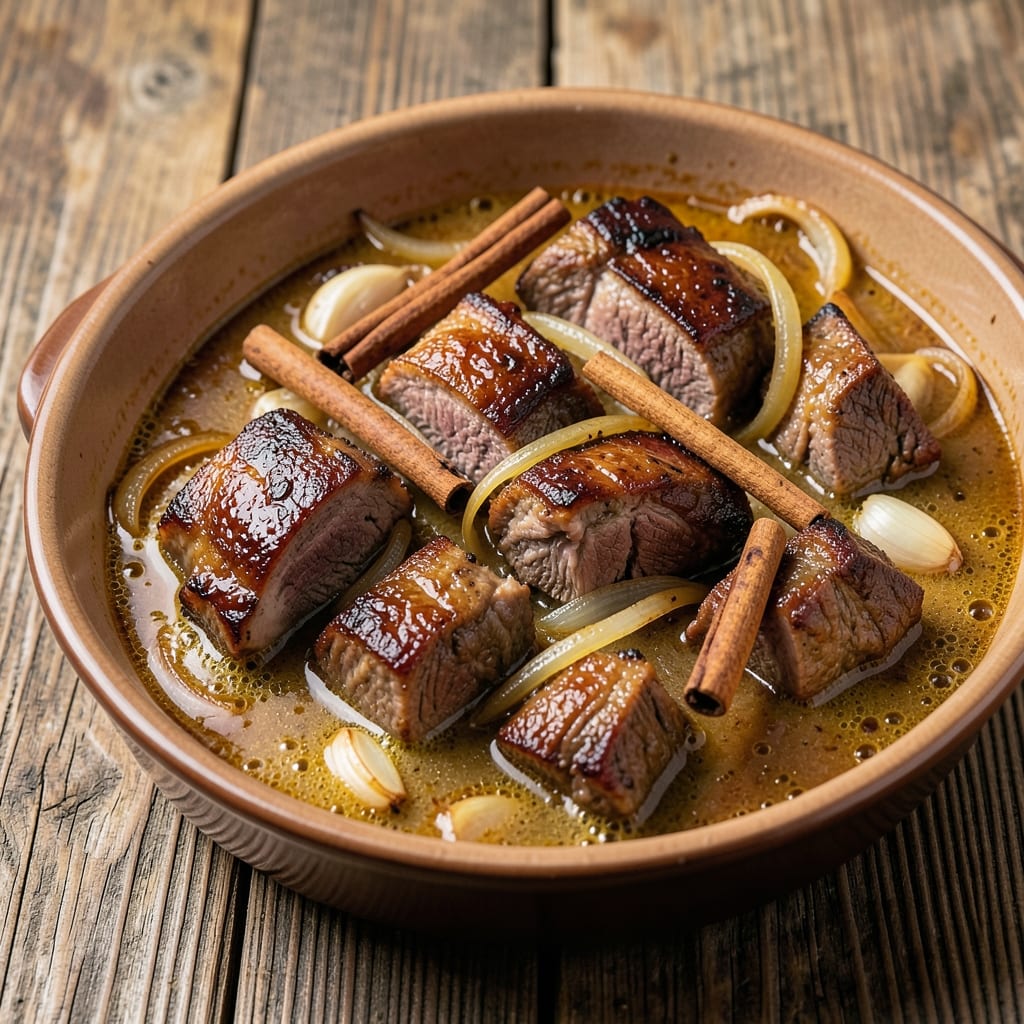
This Portuguese beef à casa recipe brings the heart of a Lisbon kitchen to your pot, where tender beef simmers in a fragrant blend of cinnamon, white wine, and slow-cooked aromatics until it practically falls apart. The secret lies in patience—letting the spices meld into the meat over hours, creating a stew so rich it feels like a hug in a bowl. I first discovered this dish at a family gathering in the Algarve, where the host insisted it was "the only way to eat beef properly."
The magic starts with a deep sear of the beef, locking in flavor before it braises in a fragrant broth of onions, garlic, and bay leaf. A splash of Portuguese white wine deglazes the pot, while cinnamon and cloves add warmth that lingers long after the last bite. Unlike quick stews, this one rewards time—every hour softens the beef and deepens the sauce until it's velvety and irresistible.
What you'll end up with is a stew that's both rustic and refined: tender beef chunks swimming in a sauce thickened with natural reduction, where every spoonful carries layers of caramelized onions, spiced wine, and the faintest hint of cinnamon. The potatoes, if you choose to add them, soak up the flavor like a sponge, turning into creamy, buttery pillows. This is comfort food at its finest—simple enough for weeknights but impressive enough for guests.
Serve it with crusty bread to mop up every last drop of that aromatic sauce, or pair it with a simple green salad to balance the richness. The best part? It tastes even better the next day, making it the perfect make-ahead meal for busy families or cozy nights in. Let's get cooking—this stew is about to become your new favorite.
Ingredients for beef a casa portuguese
Six ingredients make this Portuguese stew unforgettable—especially the cinnamon and wine.
| Ingredient | Amount | Notes |
|---|---|---|
| Beef Chuck Roast 🥩 | 3 lb | Cut into 1.5-inch chunks |
| Yellow Onions 🧅 | 2 whole | Thickly sliced, about 4 cups |
| Garlic Cloves 🧄 | 6 cloves | Smashed, not minced |
| Portuguese White Wine 🍷 | 1 cup | Dry variety like Vinho Verde |
| Beef Broth 💧 | 3 cups | Low-sodium preferred |
| Cinnamon Sticks 🌿 | 2 whole | 2-inch pieces, not powder |
| Ground Cloves 🌶️ | ½ tsp | Freshly ground preferred |
| Bay Leaves 🌿 | 2 whole | Dried, standard size |
| Russet Potatoes 🥔 | 2 lb | Cut into 2-inch chunks |
| Olive Oil 🫒 | ¼ cup | Extra-virgin for searing |
| Salt 🧂 | 1 ½ tsp | Kosher or sea salt |
| Black Pepper 🌶️ | 1 tsp | Freshly cracked |
| Fresh Parsley 🌿 | ¼ cup | Chopped, for garnish |
The beef is everything here. Chuck roast is your best bet—it stays tender while others turn tough. Grab it from the butcher counter if possible (they'll cut it for you), or look for pre-cubed beef stew meat at Whole Foods or Trader Joe's. The potatoes? Russets hold up best to long cooking—they'll turn creamy without falling apart. For the wine, any dry Portuguese white works, but if you're in the States, Vinho Verde (yes, the same stuff you drink as a spritzer) is perfect. The key is using real spices: whole cinnamon sticks and ground cloves add depth that powdered versions can't match.
No Portuguese white wine? Dry Sauvignon Blanc or Pinot Grigio works in a pinch—just avoid anything too sweet. Running low on beef broth? Water plus 1 tbsp soy sauce gets you close. The bay leaves? Dried is fine, but fresh has a brighter flavor if you've got them. For the potatoes, Yukon Golds are great too—they'll be slightly less starchy but still delicious. And if you're feeling fancy, add a splash of orange juice at the end for brightness (trust me, it's amazing).
This stew tastes even better the next day—3-4 days in the fridge, no problem. Freeze portions for up to 3 months if you're planning ahead. I always make a double batch: one for dinner, one for leftovers. The sauce thickens as it sits, so add a splash of water or broth when reheating if it gets too stiff. Serve with crusty bread to soak up every last drop—Portuguese pão de alho if you can find it, or a good sourdough.
Why You'll Love This Recipe
- One-Pot Magic: I swear by this recipe when I’m too tired to deal with multiple pans. The chuck roast simmers right in the same pot with onions and garlic, so cleanup is basically just rinsing one dish—no fuss, no stress.
- Wine-Infused Richness: That splash of Portuguese white wine? It’s not just for show—it tenderizes the beef while adding a bright, almost citrusy depth that cuts through the richness. Honestly, the first bite makes me want to take another.
- Weeknight to Weekend: I make this for lazy Tuesday dinners, but it’s also my go-to for hosting—just double the batch. The leftovers reheat beautifully, and the flavor only gets better the next day, so it’s my secret weapon for feeding crowds without slaving away.
- Budget-Friendly Feast: A chuck roast stretches for days, and the onions, garlic, and wine are pantry staples. Between us, this is how I feed my family hearty meals without breaking the bank—plus, the broth makes the whole house smell like a Portuguese feast.
Step-by-step instructions for slow-simmered cinnamon and wine stew
Here's how to create this comforting Portuguese classic with rich flavors and tender meat.
Sear the Beef Chuck Roast for Deep Flavor
Heat the 0.25 cup olive oil in a large Dutch oven over medium-high heat. Add the 3 lb beef chuck roast cut into 1.5-inch chunks and sear on all sides for 5-6 minutes until deeply browned. You want that beautiful crust—it's the foundation of your stew's flavor. Work in batches if needed to avoid crowding the pan.
Once browned, remove the beef and set it aside. You'll notice the oil will be rich and aromatic from the searing process. This step creates the Maillard reaction, which gives your stew its deep, caramelized taste. Don't skip it—this is where the magic begins.
Build the Aromatic Base with Onions and Spices
In the same Dutch oven, add the 2 whole yellow onions thickly sliced. Cook over medium heat for 8-10 minutes until softened and beginning to caramelize. You'll see them turn golden brown at the edges—that's your cue they're ready. Stir occasionally to prevent burning.
Add the 6 smashed garlic cloves, 2 whole cinnamon sticks cut into 2-inch pieces, 0.5 tsp ground cloves, 2 whole bay leaves, 1.5 tsp salt, and 1 tsp black pepper. Stir everything together and cook for 2 minutes until fragrant. The spices should release their aroma—this is where the Portuguese warmth comes through. The cinnamon and cloves might seem unusual, but they're traditional in this dish and create that signature Portuguese comfort flavor.
Deglaze and Simmer with Wine and Broth
Pour in the 1 cup Portuguese white wine and scrape up any browned bits from the bottom of the pot with a wooden spoon. These bits are packed with flavor—don't miss them. Let the wine simmer for 3-4 minutes until it reduces by half and becomes slightly syrupy.
Add the 3 cups beef broth and return the seared beef to the pot. Bring everything to a gentle boil, then reduce heat to low and cover partially. Let it simmer for 2 hours, stirring occasionally. You want a slow, steady simmer—not a rolling boil. This long cooking time is essential for tenderizing the beef and developing the rich, complex flavors.
Add Potatoes and Finish Cooking
After 2 hours, add the 2 lb russet potatoes cut into 2-inch chunks. Stir gently to submerge them in the liquid. Return to a simmer and cook uncovered for another 45-60 minutes until the potatoes are fork-tender and the beef is fork-tender as well.
Here's where you'll see the magic happen—the potatoes should absorb some of the liquid while still maintaining their shape. The stew should be thick and rich, with the beef falling apart easily. Taste and adjust seasoning if needed. The potatoes should be tender enough to pierce with a fork but still hold their shape.
Garnish and Serve Warm
Remove the cinnamon sticks and bay leaves before serving. Stir in the 0.25 cup chopped fresh parsley just before serving to add a touch of freshness that brightens the rich flavors. The parsley should be evenly distributed throughout the stew.
Serve the stew hot, ladling it over crusty bread or rice. Each bite should deliver tender beef, flavorful potatoes, and that perfect balance of spices. This dish tastes even better the next day as the flavors continue to meld. Leftovers keep well in the refrigerator for up to 4 days, and the flavors actually improve with time.
Pro Tips For Making Beef A Casa Portuguese
- SEAR THE CHUCK ROAST FIRST: The beef chuck roast needs a deep, caramelized crust to hold up through hours of slow cooking—don’t skip the initial sear. Sear it on high heat for 4-5 minutes per side until it’s dark brown, then reduce heat to medium and add your onions and garlic. (Yes, even if you’re impatient like me, resist the urge to rush this—it’s the flavor foundation.)
- USE THE WHOLE ONION: Don’t peel and chop those outer onion layers—they’re tough but add depth to the sauce. Toss the whole onion (peeled, halved, and charred skin-side down first) into the pot with the roast. By the end, it’ll dissolve into the broth, but those caramelized bits make the sauce richer. (I used to waste them, then realized they’re the unsung heroes.)
- DEGLAZE WITH WINE IMMEDIATELY: After searing the meat and onions, pour in that Portuguese white wine right away—don’t let the onions stick. The alcohol will sizzle and lift all those browned bits off the bottom, turning them into a velvety sauce. (This is the step where lazy cooks usually skip, and the dish suffers for it.)
- SIMMER LOW AND SLOW: This isn’t a race—cover the pot and simmer on low heat (or 300°F in the oven) for at least 2.5 hours, stirring occasionally. The meat needs time to break down; rushing it makes the broth watery and the beef tough. (I learned this the hard way after serving dry, overcooked beef to guests.)
Essential equipment for this recipe
Dutch Oven Essentials
A heavy-duty Dutch oven is non-negotiable for this recipe. I swear by my Le Creuset 6-quart Dutch oven—it retains heat beautifully and has that perfect tight-fitting lid for slow simmering. If you're on a budget, the Lodge 5.5-quart cast iron Dutch oven works just as well and develops a fantastic seasoning over time. The key is choosing one with a thick base (at least ¼ inch) to prevent hot spots during searing. 🔥
Precision Thermometer
While this recipe doesn't require exact temperatures, a meat thermometer helps ensure your beef reaches 195°F for perfect tenderness. I recommend the Thermoworks ThermoPop—it's affordable, accurate, and has a handy probe that stays put. Insert it into the thickest piece of beef during the final hour of cooking. If you don't have one, use the fork test: the beef should be fork-tender but not falling apart prematurely.
Wooden Spoon & Spatula
For stirring and deglazing, a wooden spoon is ideal—it won't scratch your Dutch oven and won't react with acidic ingredients like metal utensils. My go-to is a long-handled wooden spoon (about 12 inches) from OXO Good Grips. For flipping beef chunks during searing, a heat-resistant silicone spatula (like OXO Good Grips) is perfect—it's flexible enough to lift meat without tearing it. 🌟
Knife & Cutting Board
Invest in a sharp chef's knife (I use an 8-inch Wüsthof) and a cutting board with a non-slip base to keep everything stable. For the beef, cut into 1.5-inch chunks—this size ensures even cooking and easy serving. For the potatoes, a serrated knife (like Victorinox) helps with clean cuts through their skins. A sharp knife is safer and makes prep faster—dull knives require more force and can slip.
Measuring Tools
Precision matters with spices and liquids. Use a stainless steel measuring spoon set (like OXO Good Grips) for accurate measurements of ground cloves and black pepper. For liquids, a liquid measuring cup with clear markings ensures you add exactly 1 cup of wine and 3 cups of broth. I also keep a kitchen scale handy for weighing beef if I'm unsure about the 3 lb requirement—it's worth the $20 for consistency.
Optional: Pressure Cooker
For a faster version, a 6-quart pressure cooker (like Instant Pot) cuts cooking time to 90 minutes while keeping flavors rich. Use the "Sauté" function to sear the beef first, then add all ingredients and cook on "High Pressure" for 60 minutes. Release pressure naturally, then finish with the potatoes on "Sauté" mode for 15 minutes. The texture will be slightly different but still incredibly tender. ⚡
Nutrition facts
Frequently asked questions
Can I substitute chuck roast with another beef cut?
Yes! For best results, use beef short ribs or chuck shoulder—both stay tender when braised. Avoid lean cuts like sirloin or flank steak, as they'll turn tough. If using short ribs, reduce cooking time by 20-30 minutes since they're already marbled with fat for flavor.
Why does this recipe use cinnamon and cloves?
These spices are traditional in Portuguese home cooking, adding warmth and depth without overpowering. The cinnamon sticks infuse the broth with subtle sweetness, while cloves provide an earthy note. Many Portuguese stews use these spices—think of them as the "secret hug" in every bite!
Can I make this in a slow cooker?
Brown the beef first in a skillet, then transfer everything to a 6-quart slow cooker. Cook on low for 8 hours or high for 5-6 hours, adding potatoes in the last 1-2 hours. The slow cooker's gentle heat ensures tender beef without drying it out.
What if I don't have Portuguese white wine?
Use a dry Sauvignon Blanc or Pinot Grigio—avoid sweet wines like Riesling. For a non-alcoholic version, substitute with apple cider vinegar + water (1:1 ratio) and 1 tsp sugar to balance acidity. The key is acidity to cut through the richness.
How do I fix beef that's still tough after cooking?
If the beef isn't fork-tender, it likely didn't cook long enough. Extend simmering by 30-60 minutes (covered) with ½ cup extra broth**. For immediate fixes, shred the tough pieces and stir them back into the stew—they'll absorb flavor and soften.