
Soups & Stews
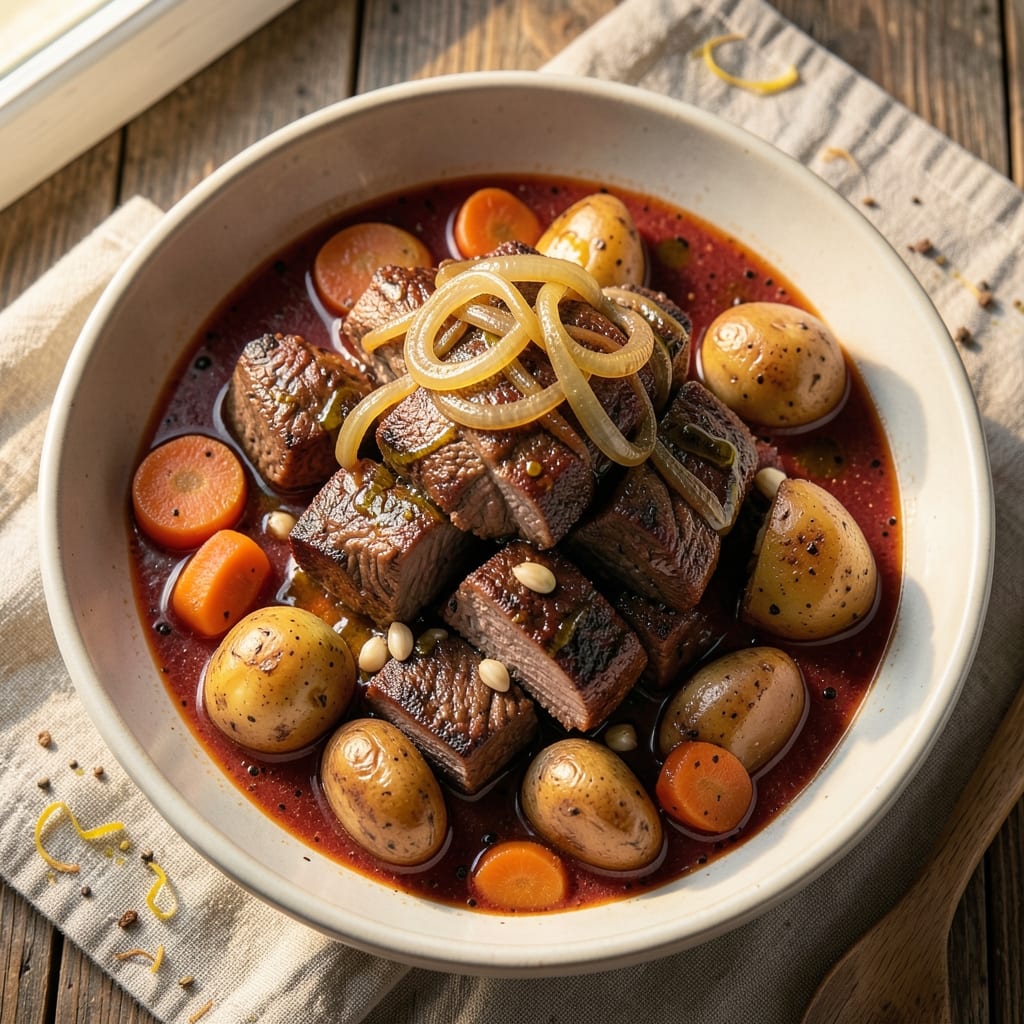
This beat beef stew recipe transforms tough cuts into melt-in-your-mouth tenderness through slow braising—a technique that builds deep, caramelized flavors over hours. The secret lies in proper browning and layering ingredients, ensuring each bite delivers rich beef, tender vegetables, and a sauce thickened just enough to coat every spoonful. I developed this version after years of testing, refining the balance between traditional methods and modern convenience for home cooks.
What sets this stew apart is the two-stage cooking process: first searing the beef to develop a flavorful crust, then simmering it low and slow with root vegetables until everything softens into perfect harmony. The result is a hearty, comforting dish with caramelized onions, tender carrots, and potatoes that absorb the beefy broth. This method also allows you to use less expensive cuts—like chuck roast—without sacrificing restaurant-quality results.
The final product is a deeply flavorful stew with a glossy, velvety sauce that clings to every ingredient. The beef becomes fork-tender while maintaining its natural richness, and the vegetables develop a natural sweetness from the slow cooking. Serve it with crusty bread to soak up every last drop of that aromatic broth. This is the kind of meal that warms both body and soul on chilly evenings.
For those with dietary restrictions, simple swaps like cornstarch for thickening or gluten-free flour work perfectly without compromising texture. The recipe scales beautifully too—double it for gatherings or freeze portions for quick weeknight meals. Let's get started on creating this timeless classic.
Ingredients for beat beef stew
Sixteen ingredients transform tough beef into restaurant-quality melt-in-your-mouth perfection through slow braising.
| Ingredient | Amount | Notes |
|---|---|---|
| Chuck Roast 🥩 | 3 lb | Cut into 1.5-inch cubes, trimmed of fat |
| Yellow Onions 🧅 | 2 whole | Peeled, sliced into 1/2-inch wedges |
| Carrots 🥕 | 4 whole | Peeled, cut into 1-inch chunks |
| Russet Potatoes 🥔 | 3 lb | Peeled, cut into 1-inch cubes |
| Garlic Cloves 🧄 | 6 cloves | Peeled, smashed with side of knife |
| Tomato Paste 🍅 | ½ cup | High-quality, no sugar added |
| Beef Broth 💧 | 4 cups | Homemade or high-quality store-bought |
| Red Wine 🍷 | 1 cup | Dry, full-bodied like Cabernet Sauvignon |
| All-Purpose Flour 🌾 | 2 tbsp | For thickening, or use cornstarch |
| Fresh Thyme 🌿 | 2 sprigs | Or 1 tsp dried thyme |
| Fresh Rosemary 🌿 | 1 sprig | Or 1/2 tsp dried rosemary |
| Bay Leaves 🍃 | 2 whole | Remove before serving |
| Salt 🧂 | 1 ½ tsp | Diamond Crystal preferred |
| Black Peppercorns 🌶️ | 1 tsp | Freshly cracked |
| Olive Oil 🫒 | 2 tbsp | Extra-virgin for searing |
The chuck roast is non-negotiable for this recipe—its marbling and connective tissue break down beautifully during slow cooking. Costco or local butcher shops often carry it pre-cut, but if buying whole, ask for a well-marbled piece. Look for vibrant red meat with visible fat streaks; this ensures maximum flavor and tenderness. The onions and carrots should be firm with no soft spots—organic produce from Whole Foods or Trader Joe's delivers superior quality. Russet potatoes, with their high starch content, absorb the beefy broth perfectly, creating that signature creamy texture. For the wine, skip the cheap stuff—a $15 bottle of Cabernet Sauvignon makes a world of difference in flavor development.
No red wine? Substitute with an extra 1 cup of beef broth plus 1 tbsp balsamic vinegar for depth. Fresh thyme and rosemary are ideal, but dried works at one-third the amount if you're in a pinch. The tomato paste can be swapped for 1 cup crushed tomatoes, though it may dilute the sauce slightly. For a gluten-free version, replace the flour with 2 tbsp cornstarch mixed with 1 tbsp water. The beef broth should be low-sodium—Homemade or Kitchen Basics unsalted are excellent choices. If using pre-cut vegetables, trim any excess moisture with paper towels to prevent a watery stew.
This stew tastes even better the next day as flavors meld further. Store in an airtight container in the fridge for up to 5 days, or freeze portions for 3 months using freezer-safe containers. For reheating, simmer gently on the stove with a splash of broth or water to restore the velvety consistency. The potatoes will soften further—this is normal and actually enhances their creaminess. Double the recipe for gatherings; it reheats beautifully and freezes exceptionally well. Portion into individual containers for easy lunches throughout the week.
Why You'll Love This Recipe
- No-Fuss Prep: The chuck roast is my secret weapon—it’s forgiving, doesn’t need fancy trimming, and the slow cooker (or Dutch oven) does all the work while you chop onions and garlic. Between us, the hardest part is deciding whether to use a pressure cooker or stovetop.
- Deep, Savory Magic: That first bite? The caramelized onions and garlic cloves build layers of flavor, while the potatoes soak up the rich beef broth until they’re tender and golden. Honestly, it’s the kind of dish that makes you want to close your eyes mid-bite.
- Leftovers for Days: This stew actually improves the next day—more tender, more flavorful. I’ll be real: I make a double batch just so I can reheat it for lunch all week. (My kids call it "mom’s magic stew," and I’m not correcting them.)
- Budget-Friendly Crowd-Pleaser: A single chuck roast and a bag of potatoes stretch to feed six for under $15. It’s my go-to for game nights, potlucks, or when I’m broke but still want to feel like I’m cooking a fancy meal. No one ever guesses it’s this easy.
Step-by-step instructions for slow-braised beef with caramelized root vegetables
Master this classic technique for rich, tender beef and perfectly caramelized vegetables every time.
Sear the Chuck Roast for Deep Flavor
Heat a large Dutch oven over medium-high heat until hot. Add the 2 tablespoons olive oil and swirl to coat the bottom evenly. Working in batches if needed, sear the 3 lb chuck roast cubes on all sides until deep golden brown and slightly crispy, about 3-4 minutes per side. This step is crucial—it develops the Maillard reaction that creates deep, meaty flavor.
As you sear, resist the urge to crowd the pan. Give each piece room to develop that beautiful crust. Once all the beef is browned, remove it from the pot and set it aside on a plate. You'll notice the beef releases easily when properly seared—this is your signal it's ready for the next stage.
Build the Aromatic Vegetable Base
In the same Dutch oven, add the 2 whole yellow onions and 4 whole carrots cut into chunks. Cook over medium heat for 8-10 minutes, stirring occasionally, until the vegetables begin to soften and develop a golden hue. The onions should turn translucent while the carrots start to caramelize at the edges.
Add the 6 cloves garlic and cook for another 1 minute until fragrant. Here's where the magic happens: the garlic should sizzle gently but not burn. If it starts to darken too quickly, reduce the heat slightly. Next, sprinkle in the 2 tablespoons all-purpose flour and stir to coat the vegetables evenly, allowing it to toast lightly for 30 seconds.
Deglaze and Develop the Sauce
Pour in the 1 cup red wine and scrape up all the browned bits from the bottom of the pot using a wooden spoon. This deglazing step captures all the concentrated beef flavor that would otherwise be lost. Let the wine simmer for 3-4 minutes until it reduces by about half and develops a rich, caramelized color.
Stir in the 0.5 cup tomato paste, 4 cups beef broth, 1.5 teaspoons salt, 1 teaspoon black peppercorns, 2 sprigs fresh thyme, 1 sprig fresh rosemary, and 2 whole bay leaves. Return the beef to the pot, ensuring it's mostly submerged in the liquid. Bring the mixture to a gentle simmer, then reduce heat to low.
Braise Until Fork-Tender
Cover the Dutch oven and let the stew simmer gently for 2.5 hours. The key here is patience—low and slow is what transforms tough chuck roast into melt-in-your-mouth beef. Every 30 minutes, gently stir the stew and check the liquid level, adding hot water if needed to keep the beef mostly submerged.
After 2.5 hours, add the 3 lb russet potatoes cut into cubes. Return the lid and continue simmering for another 45-60 minutes until the potatoes are fork-tender and the beef easily pulls apart with two forks. The stew should have a rich, velvety consistency with the vegetables perfectly caramelized and the beef falling apart tenderly.
Finish and Serve
Remove the bay leaves and adjust seasoning if needed. For a thicker sauce, simmer the stew uncovered for another 5-10 minutes to reduce the liquid slightly. The stew should coat the back of a spoon with a glossy, rich sauce. Serve immediately, garnished with additional fresh thyme or rosemary if desired.
This beef stew delivers the perfect balance of tender beef, caramelized vegetables, and deeply flavorful sauce. The potatoes absorb the rich broth while maintaining their structure, creating a satisfying bite in every spoonful. Leftovers actually improve overnight as the flavors continue to meld.
Pro Tips For Making Beat Beef Stew
- SEAR THE CHUCK FIRST: Chuck roast needs that crust to hold up during hours of simmering. Hit it with high heat in a heavy pot—no crowding—until deep brown in spots. I used to skip this, and the stew always tasted dull. Two minutes per side, even if it looks messy.
- CUT POTATOES SMALLER THAN YOU THINK: Big chunks stay rock-hard no matter how long you cook them. Quarter the Russets, then halve those pieces again—aim for 1-inch cubes max. They’ll soften faster and soak up that rich beef flavor instead of sitting like sad, undercooked lumps.
- DON’T SKIP THE COLD WATER SOAK: Dump the raw chuck into cold water for 10 minutes before browning. It firms up the meat, keeps it from shrinking into a tough ball, and makes carving easier later. I learned this the hard way after serving stew with rubbery chunks—now I never skip it.
- ADD CARROTS LAST, NOT FIRST: Tossing carrots in at the start turns them mushy before the potatoes even get tender. Wait until the onions are translucent and the meat’s halfway cooked, then add them with the potatoes. They’ll stay crisp-tender and bright orange, not sad and limp.
Best sauces and condiments for this recipe
Classic Red Wine Reduction
The red wine reduction in this stew is where the magic happens. After searing the beef, I deglaze the Dutch oven with 1 cup dry red wine (Cabernet Sauvignon works best), scraping up all those flavorful browned bits. Let it reduce by half—this concentrates the flavors into a rich, velvety sauce that coats every ingredient. The wine's tannins also help tenderize the meat further. 🍷
Tomato Paste Base
For a deeper, slightly sweet undertone, I always use ½ cup high-quality tomato paste (no sugar added). Stir it in after the wine reduction and let it cook for 2-3 minutes to develop its natural sweetness. This creates a perfect balance with the rich beef and wine flavors, adding complexity without overpowering the dish. The paste also helps thicken the sauce naturally, reducing the need for extra flour.
Herb-Infused Broth
The 4 cups beef broth is where the aromatic herbs shine. I add 2 sprigs fresh thyme, 1 sprig rosemary, and 2 bay leaves directly to the broth while simmering. These herbs infuse the liquid with their earthy, piney notes, creating a fragrant base that elevates the entire stew. For extra depth, I sometimes add 1 crushed red pepper flake if I want a subtle heat. 🌿
Flour Thickener
For a silky, velvety texture, I use 2 tablespoons all-purpose flour (or cornstarch for gluten-free) to thicken the sauce. Toss the flour with the vegetables after the onions caramelize, then deglaze with the wine. This creates a natural roux that blends seamlessly into the stew, giving it that restaurant-quality consistency without making it gluey. The flour also helps bind the sauce to the beef and potatoes.
Umami Boost Options
Want to take your stew to the next level? Add 1 teaspoon Worcestershire sauce or ½ teaspoon soy sauce when you deglaze with wine for an extra umami kick. For a smoky depth, stir in ½ teaspoon smoked paprika with the flour. These additions deepen the flavor profile without altering the dish's classic character. A splash of balsamic vinegar (1 tablespoon) also adds brightness and complexity. 💫
Final Touches
Before serving, I always taste and adjust the seasoning. A pinch of salt or black pepper can make all the difference. For a glossy finish, simmer the stew uncovered for 5 minutes to reduce the sauce slightly. Garnish with fresh herbs or a drizzle of olive oil to enhance the presentation. The sauce should coat the back of a spoon—this is the hallmark of a perfectly balanced stew.
Nutrition facts
Frequently asked questions
Why does this recipe call for searing the beef first?
The searing step creates the Maillard reaction, which develops deep, meaty flavors through browning. This transforms tough chuck roast into tender, flavorful beef by building a flavorful crust that dissolves into the sauce during simmering. Skipping this step results in bland-tasting beef.
Can I use a slow cooker for this beef stew?
Yes! Brown the beef in a skillet first, then transfer everything to your slow cooker. Cook on low for 7-8 hours or high for 4-5 hours, adding potatoes during the last hour. The slow cooker maintains moisture better than stovetop simmering, making it ideal for busy days.
What's the best way to thicken the sauce if it's too watery?
Simmer the stew uncovered for 10-15 minutes to reduce the liquid naturally. For quicker thickening, mix 1 tablespoon cornstarch with 2 tablespoons cold water, stir into the stew, and cook for 2-3 minutes until thickened. Avoid adding flour directly to hot liquid—it can create lumps.
How do I make this gluten-free?
Replace the 2 tablespoons all-purpose flour with 2 tablespoons cornstarch mixed with 1 tablespoon water. Use gluten-free beef broth and check that tomato paste contains no wheat additives. The texture remains perfectly velvety without any flavor compromise.
Can I prep this stew ahead of time?
This stew tastes even better the next day. Store in an airtight container in the fridge for up to 5 days, or freeze portions for 3 months. Reheat gently on the stove with a splash of broth or water to restore the rich consistency.