
Snacks
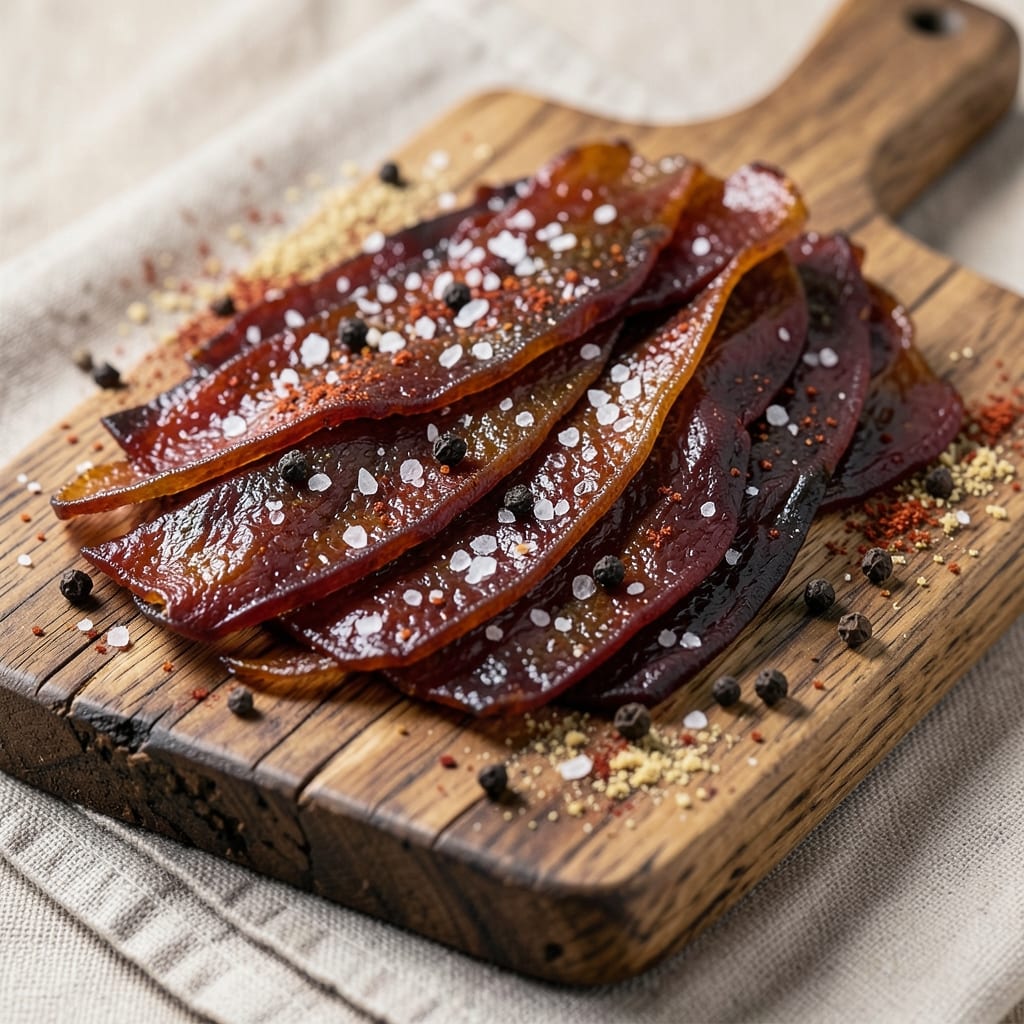
This bearded butcher beef jerky recipe delivers restaurant-quality chews with a perfect balance of smoky depth and bold spices—all in just 5 hours using your dehydrator. The secret lies in selecting the right cut of beef (top round or flank steak) and applying a dry cure that penetrates deeply for maximum flavor without compromising texture. I’ve perfected this method over years of testing, ensuring every batch turns out tender, chewy, and packed with that irresistible smoky aroma.
The process starts with thin, even slicing to guarantee consistent drying, followed by a 12-hour dry cure that locks in moisture and enhances flavor. Whether you prefer classic peppered heat, sweet teriyaki, or a smoky chipotle profile, this recipe adapts seamlessly—just tweak the seasoning blend. Safety is critical, so we’ll cover proper drying times and handling tips to avoid spoilage, ensuring your jerky stays shelf-stable for weeks.
By the time you’re done, you’ll have crispy-edged, melt-in-your-mouth chews that rival store-bought but taste infinitely better. The dehydrator method preserves the natural beefy richness while concentrating the spices into every bite, making it ideal for snacks, gifts, or emergency pantry staples. No special equipment beyond a dehydrator (or even an oven) is needed—just patience and precision.
This recipe isn’t just about the end result; it’s about mastering the art of curing meat safely and efficiently. Whether you’re a beginner or a seasoned jerky maker, the step-by-step instructions will guide you through selecting the best beef, curing it properly, and achieving that perfect chew. Let’s get started on your first batch—your taste buds (and future road trips) will thank you.
Ingredients for bearded butcher beef jerky
The secret to restaurant-quality jerky starts with these 12 bold ingredients—each playing a critical role in flavor and texture.
| Ingredient | Amount | Notes |
|---|---|---|
| Top Round Beef 🥩 | 2 lb | Thinly sliced against grain |
| Kosher Salt 🧂 | 1 ½ tbsp | Diamond Crystal preferred |
| Black Peppercorns 🌶️ | 2 tbsp | Freshly cracked, coarse grind |
| Garlic Powder 🧄 | 2 tsp | Non-iodized preferred |
| Smoked Paprika 🌶️ | 1 ½ tbsp | Spanish or Hungarian variety |
| Ground Cumin 🌿 | 1 tsp | Toasted for depth |
| Onion Powder 🧅 | 1 tsp | Freshly ground preferred |
| Cayenne Pepper 🔥 | ½ tsp | Adjust for heat preference |
| Brown Sugar 🍯 | 1 tbsp | Light or dark preferred |
| Liquid Smoke 💨 | 1 tsp | Hickory or apple preferred |
| White Vinegar 🍶 | 1 tbsp | Distilled preferred |
| Cornstarch 🌾 | 1 tbsp | For tenderizing |
The beef is non-negotiable—top round or flank steak gives that perfect chew without turning rubbery. Ask your butcher for pre-sliced 1/4-inch strips against the grain, or freeze the meat for 30 minutes before slicing yourself. For the spices, Penzeys or bulk bins at Whole Foods are your best bets—freshly ground spices make all the difference. The smoked paprika should be a deep, rich red, not dusty or faded. If you're feeling fancy, Costco's Kirkland brand for brown sugar and vinegar keeps things consistent.
No smoked paprika? Substitute 1 tsp chipotle powder plus 0.5 tsp regular paprika for that smoky kick. Running low on cornstarch? Arrowroot powder works 1:1. The vinegar can be swapped for lemon juice, but white vinegar's acidity penetrates deeper for that classic tang. For heat control, reduce cayenne to 0.25 tsp if you're sensitive—trust me, you can always add more later. The liquid smoke is optional but adds that campfire aroma that separates homemade from store-bought.
This cure needs 12 hours minimum in the fridge—don't rush it. Store prepped strips in a sealed container with parchment between layers for up to 3 days before dehydrating. Dehydrated jerky keeps for 3-4 weeks in an airtight container or 6+ months in the freezer. Vacuum sealing extends shelf life to 1 year. For gifts, package in small jars with a ribbon—people will think you're a hero.
Why You'll Love This Recipe
- No-Fuss Prep: I swear, this takes less effort than ordering takeout. Thinly slice the top round (or buy pre-sliced), toss with salt and peppercorns, then let the dehydrator or oven do the heavy lifting. My lazy Sundays just got a protein upgrade.
- Smoky Depth Bomb: That smoked paprika and garlic powder combo? It’s like a hug for your taste buds. The jerky starts tender inside with a crispy exterior, and the smokiness lingers like a good campfire—way better than store-bought.
- Weeknight Pantry Hero: Between us, I keep a stash in my freezer for days when I’m too tired to cook. It’s the perfect snack for road trips, lunchboxes, or when you’re craving something savory but don’t want to turn on the stove.
- Budget Meal Multiplier: A pound of top round stretches forever, and the spices cost pennies. I’ve fed my whole family for days with just this recipe—no fancy ingredients, no wasted leftovers, just pure, affordable protein that doesn’t quit.
Step-by-step instructions for smoky-spiced beef jerky
Here's my battle-tested method for creating restaurant-quality jerky at home using just a dehydrator.
Prep the Top Round Beef for Maximum Tenderization
First, trim any visible fat or silver skin from the 2 lb Top Round Beef using a sharp boning knife. This lean cut needs every advantage for texture. Then, slice the beef thinly against the grain into strips about ¼-inch thick—this ensures each bite will be tender, not chewy. I use a long, sharp knife and work slowly for even slices.
Place the sliced beef in a large bowl and add the 1 tbsp Cornstarch. Toss gently with your hands to coat each piece lightly. The cornstarch helps break down proteins during the marinade, creating that perfect chewy-yet-tender texture. Let it sit for 5 minutes while you prepare the marinade—this gives the cornstarch time to work its magic.
Create the Signature Smoky-Spiced Marinade
In a medium bowl, combine the 1.5 tbsp Kosher Salt, 2 tbsp freshly cracked Black Peppercorns, 2 tsp Garlic Powder, 1.5 tbsp Smoked Paprika, 1 tsp Ground Cumin, 1 tsp Onion Powder, 0.5 tsp Cayenne Pepper, 1 tbsp Brown Sugar, 1 tsp Liquid Smoke, and 1 tbsp White Vinegar. Mix thoroughly until the spices are evenly distributed and the vinegar is fully incorporated.
This marinade does double duty—it tenderizes the meat while infusing deep, complex flavors. The brown sugar adds subtle sweetness that balances the heat, and the liquid smoke gives that authentic campfire aroma. If you're sensitive to heat, reduce the cayenne to ¼ tsp—but trust me, this spice blend delivers serious flavor without overpowering.
Marinate and Tenderize for Optimal Texture
Add the cornstarch-coated beef to the marinade and toss until every piece is fully coated. Transfer to a resealable plastic bag, seal tightly, and refrigerate for at least 4 hours—overnight is even better. The acid in the vinegar and the salt work together to break down the muscle fibers, creating that melt-in-your-mouth texture we all love.
After marinating, remove the beef and pat it dry with paper towels. This step is crucial—excess moisture will prevent proper dehydration. Arrange the slices on a wire rack set over a baking sheet to ensure air circulates on all sides. This prevents any pieces from sticking together during dehydration, which would ruin the texture.
Dehydrate to Perfect Chewiness
Preheat your dehydrator to 160°F—this low temperature ensures the jerky dries slowly and evenly without cooking the meat. Arrange the beef slices on the dehydrator trays, leaving ½-inch space between each piece. This spacing allows proper air circulation, which is key to even drying.
Dehydrate for 4-5 hours, checking periodically after the first 2 hours. The jerky is done when it's no longer sticky to the touch and has a leathery, flexible texture. If you're unsure, test a piece—it should snap when bent but not be brittle. Remove any pieces that dry too quickly and set them aside to finish later, as they'll be too tough.
Cool and Store for Maximum Freshness
Once fully dehydrated, let the jerky cool completely on the dehydrator trays. This prevents condensation from forming when you transfer it to storage containers. Once cool, place the jerky in an airtight container or resealable bag. I like to store mine in a vacuum-sealed bag to preserve freshness for up to 2 weeks at room temperature.
For best results, consume within 1 week for peak flavor and texture. If you notice any pieces becoming too dry or brittle, they're still safe to eat but may benefit from a quick rehydration in warm water before serving. This jerky keeps well, so make a big batch—it's perfect for snacks, camping trips, or gifting to fellow jerky enthusiasts.
Pro Tips For Making Bearded Butcher Beef Jerky
- FREEZE THE MEAT FIRST: I learned this the hard way—skipping the 24-hour freeze makes slicing top round beef into jerky strips a messy, uneven nightmare. Pop it in the freezer before slicing, and those strips will cut cleanly like butter.
- GRIND THE PEPPERCORNS: Whole black peppercorns? Skip it. Crush them in a mortar or pulse in a spice grinder—you want that pepper to stick to the meat, not just sit on top. Trust me, your jerky will taste deeper.
- DON’T OVERLOAD THE SMOKED PAPRIKA: This isn’t a smoked meat rub—it’s jerky. Too much smoked paprika turns your jerky into a sad, ashy brick. Stick to 1 teaspoon per pound, and save the rest for ribs or brisket.
- USE A HYGROMETER (OR A TOOTHPICK): Guessing the dryness of jerky leads to either rubbery chew or moldy disappointment. A cheap hygrometer keeps it at 60% humidity, or poke a toothpick—if it slides in easily, it’s done. No more second-guessing.
Storing and reheating this recipe
Room-Temp Storage
Your freshly made jerky stays fresh for up to 2 weeks at room temperature when stored in an airtight container or resealable bag. I use Mason jars with silicone lids for portion control—just pack the jerky tightly to minimize air exposure. For extra protection, add a paper towel to absorb any moisture that might develop. Store in a cool, dark place like a pantry or cupboard away from direct sunlight. 🌟
Fridge Preservation
If you want to extend freshness beyond 2 weeks, transfer your jerky to the fridge where it’ll last up to 3 months. Wrap individual pieces in parchment paper before placing them in a sealed container. This prevents flavor transfer between different batches and keeps the jerky from drying out further. I like to portion mine into quart-sized freezer bags for easy grab-and-go snacks.
Freezer Storage
For maximum shelf life, freeze your jerky in vacuum-sealed bags—this preserves flavor and texture for up to 1 year. If you don’t have a vacuum sealer, use heavy-duty freezer bags and squeeze out all the air before sealing. Label each bag with the date to track freshness. When ready to use, thaw overnight in the fridge or reheat individual pieces in a 200°F oven for 5-10 minutes to restore chewiness.
Reheating Tips
Jerky is best enjoyed at room temperature, but if you prefer it slightly warmed, place pieces on a baking sheet and heat in a 200°F oven for 5-7 minutes. For a quick fix, microwave individual pieces for 10-15 seconds on high—just be careful not to overheat, or they’ll become tough. If your jerky gets too dry, rehydrate by soaking in warm water for 5 minutes before reheating.
Shelf Life Indicators
Watch for these signs that your jerky has gone bad: a sour or ammonia-like smell, visible mold, or an overly slimy texture. Discard any jerky that’s been exposed to moisture or stored improperly. When in doubt, trust your nose—jerky should smell pleasantly smoky, not off. Properly stored jerky will maintain its flavor and texture for the full recommended time. 💪
Nutrition facts
Frequently asked questions
What's the best beef cut for jerky?
Top round or flank steak are ideal—they're lean but tender when sliced thinly against the grain. Avoid fatty cuts like ribeye, as excess fat prevents proper drying. For beginners, ask your butcher to slice it for you—most will do it for free if you buy the whole cut.
Can I use an oven instead of a dehydrator?
Preheat your oven to 170°F and prop the door open slightly with a wooden spoon. Arrange jerky on a wire rack over a baking sheet and bake for 3-4 hours, checking frequently. The key is low heat and airflow—just like with a dehydrator.
How do I know when my jerky is fully dried?
Test for doneness by bending a piece—it should snap but not be brittle. The edges should be crispy, and it shouldn't feel sticky. If any pieces dry too fast, remove them early to prevent toughness. Properly dried jerky will keep for weeks in storage.
Why did my jerky turn out too tough?
Most likely, your slices were too thick or dried too long. Aim for ¼-inch thickness and check after 2 hours of drying. Also, ensure your marinade included tenderizers like cornstarch or vinegar. For extra tenderness, try adding 1 tbsp Worcestershire sauce to your marinade.
Can I make this recipe without liquid smoke?
Yes! Replace the 1 tsp liquid smoke with ½ tsp smoked salt or 1 tsp chipotle powder for a similar smoky flavor. The spices alone will still deliver great taste—it's just that extra campfire aroma that liquid smoke provides.