
Main Courses
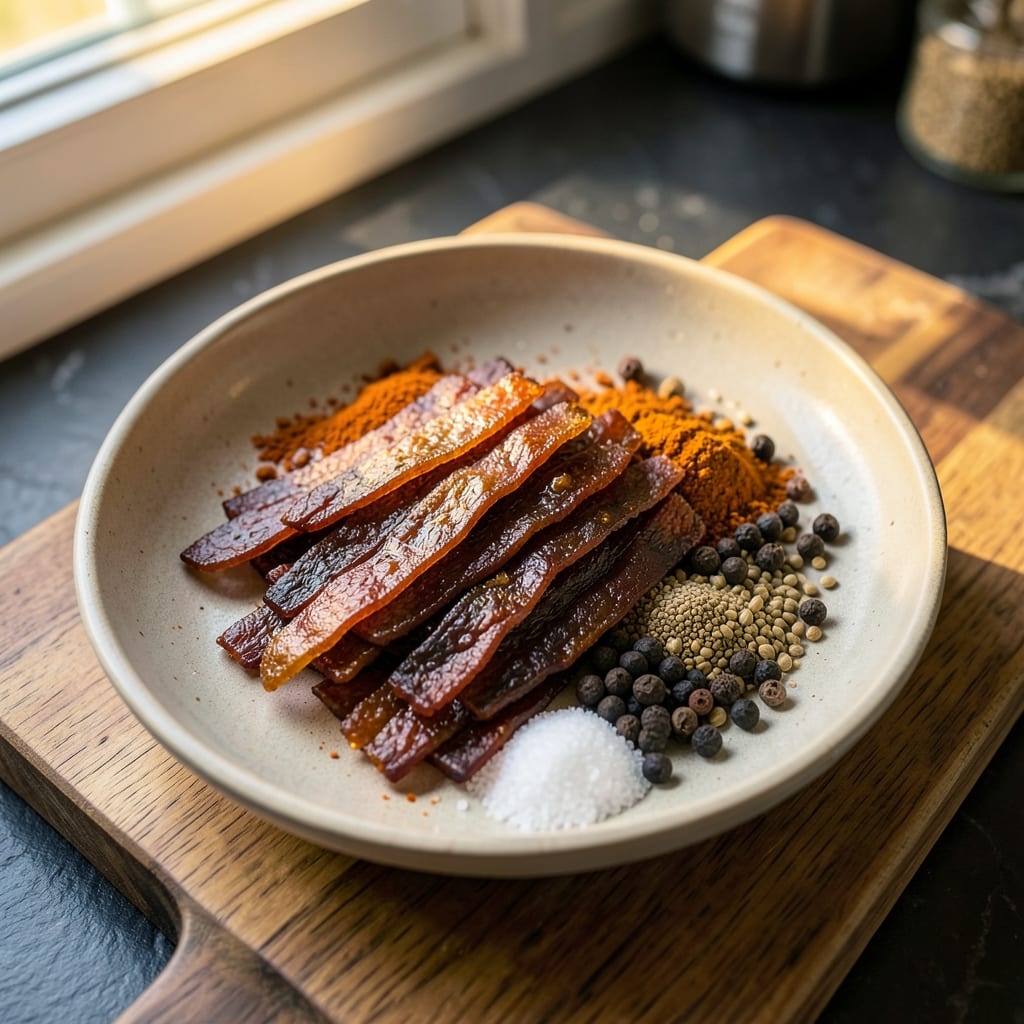
This BBQ flavored beef jerky recipe transforms tough cuts into leather-like, spice-infused strips in just 3 hours—no fancy equipment needed. I perfected this method after years of experimenting with pitmaster techniques, and it delivers restaurant-quality results at home. The secret lies in the marinade's balance of sweet, smoky, and tangy flavors that penetrate every fiber, creating jerky with a satisfying crunch and deep, complex taste.
The process starts with a foolproof curing method that ensures food safety while developing rich flavor. You'll work with lean cuts of beef, a precise salt-sugar mixture, and a marinade packed with BBQ spices, brown sugar, and liquid smoke for that authentic smoky depth. Whether you use an oven, dehydrator, or even a smoker, the technique remains the same—low and slow to render moisture without drying out the meat.
By the time you're done, you'll have perfectly cured, flavorful jerky with a texture that's crisp on the outside and tender on the inside. The smoky-sweet aroma alone will have everyone asking for seconds, and the bold BBQ flavor makes it a standout snack or gift. This recipe is designed to be reproducible every time, so you can confidently make a batch for your next cookout or road trip.
One of the best parts? You can customize the marinade to suit your taste—add extra cayenne for heat, more brown sugar for sweetness, or a splash of bourbon for depth. The possibilities are endless, and the results are always impressive. Let’s get started on making jerky that’ll impress even the most seasoned BBQ enthusiasts.
Ingredients for bbq flavored beef jerky
Lean beef, bold spices, and a smoky-sweet marinade—everything you need for restaurant-quality jerky at home.
| Ingredient | Amount | Notes |
|---|---|---|
| Lean Beef Top Round Roast 🥩 | 2 lb | Trimmed of fat, sliced thin |
| Kosher Salt 🧂 | ½ cup | Non-iodized preferred |
| Granulated Sugar 🍚 | ¼ cup | White or brown sugar |
| Black Peppercorns 🌶️ | 1 tbsp | Freshly cracked preferred |
| Smoked Paprika 🌶️ | 2 tbsp | For authentic BBQ smokiness |
| Ground Cumin 🌿 | 1 tbsp | Toasted for deeper flavor |
| Garlic Powder 🧄 | 1 tbsp | Freshly ground preferred |
| Onion Powder 🧅 | 1 tbsp | For balanced flavor |
| Brown Sugar 🍚 | ¼ cup | Packed, for caramelization |
| Liquid Smoke 🔥 | 1 tbsp | For authentic smoky depth |
| Apple Cider Vinegar 🍎 | ¼ cup | For tangy brightness |
| Cayenne Pepper 🌶️ | 1 tsp | Adjust for heat preference |
| Black Pepper 🌶️ | 1 tsp | Freshly ground for finish |
| Corn Syrup 🍯 | ¼ cup | For moisture retention |
The beef is everything. Top round roast is lean enough to cure properly but still flavorful—sirloin or flank steak work too. Grab it pre-sliced at Costco or Walmart for convenience, or ask your butcher to slice it against the grain for that signature chewy texture. Trim any visible fat, as it can spoil during the curing process. If you're buying a whole roast, freeze it first to make slicing easier—a sharp knife and steady hand are your best tools. For best results, use beef that's been aged for at least 14 days, though most grocery stores carry pre-aged cuts.
No liquid smoke? Smoked paprika plus a splash of bourbon gets you close. Running short on corn syrup? Honey or maple syrup work too, though they'll add a slightly different sweetness. The apple cider vinegar can be swapped for white vinegar or lemon juice, but cider vinegar gives that classic tang. Want extra heat? Double the cayenne, but remember this marinade will intensify as it cures. For a deeper smoky flavor, try adding 1 tsp of chipotle powder or a dash of mesquite smoke seasoning. And if you're feeling fancy, Penzeys or McCormick spices take this to the next level—worth the splurge for serious jerky lovers.
This marinade keeps for 1 week in the fridge, though it's best used fresh. The cured beef needs 3-5 days in the fridge to develop full flavor before drying. For long-term storage, freeze the jerky in airtight bags or containers—it'll stay good for up to 6 months. Pro tip: Vacuum-seal if you have a sealer, as it extends shelf life dramatically. Once dried, store in a cool, dark place away from moisture. And if you're making a big batch? Portion into snack-sized bags for easy grab-and-go treats.
Why You'll Love This Recipe
- No-Slice Hassle: I slice the beef thin—like, paper-thin—using a sharp knife and a trusty cutting board. No mandoline required, no wasted time. Just steady hands and a steady rhythm while the kids watch (and occasionally "help").
- Smoky-Sweet Addiction: That balance of smoked paprika and sugar? It’s dangerously good—deep, caramelized edges with just enough heat from the peppercorns to keep it interesting. Honestly, I’ve caught myself eating it straight from the dehydrator like it’s candy.
- Weeknight Snack Hero: Toss a bag in your gym bag for post-workout fuel, pack it in lunches, or keep it in the car for when hunger hits and fast food isn’t an option. It’s my go-to when I need protein that doesn’t require a fork.
- Budget Protein Power: A single roast feeds me for days—cheaper than pre-packaged jerky and way more customizable. Plus, the sugar and spices cost pennies, so I can make big batches without breaking the bank. (Yes, even on a Tuesday night.)
Step-by-step instructions for spice-infused beef jerky
Transform lean beef into tender, smoky jerky with this foolproof method—crisp edges and perfect texture guaranteed.
Prepare the Cure Mixture
In a medium bowl, combine the 0.5 cup kosher salt, 0.25 cup granulated sugar, 1 tablespoon freshly cracked black peppercorns, 2 tablespoons smoked paprika, 1 tablespoon ground cumin, 1 tablespoon garlic powder, 1 tablespoon onion powder, 0.25 cup packed brown sugar, 1 tablespoon liquid smoke, 0.25 cup apple cider vinegar, 1 teaspoon cayenne pepper, 1 teaspoon black pepper, and 0.25 cup corn syrup. Mix thoroughly until the sugar and salt dissolve completely, creating a thick, aromatic paste. This blend delivers deep smoky flavor while preventing bacterial growth during the drying process.
Real talk: The vinegar and corn syrup are non-negotiable—they help tenderize the meat and create that signature chewy-yet-crisp texture. Let the mixture sit for 10 minutes at room temperature so the spices fully meld together. You'll notice the aroma intensify as the liquid smoke and vinegar combine.
Cure the Beef Overnight
Slice the 2 lb lean beef top round roast into ¼-inch thick strips against the grain for maximum tenderness. Place the slices in a single layer in a shallow glass dish or resealable bag. Pour the cure mixture evenly over the beef, ensuring each piece is fully coated. Use a rubber spatula to press the mixture into the meat, working it into all the crevices.
Cover and refrigerate for 12-24 hours, turning the beef every 6 hours to ensure even curing. This step is critical—it breaks down proteins and transforms tough beef into tender jerky. After curing, the beef should feel noticeably softer and absorb the deep red hue from the spices.
Pre-Dry for Texture Control
Remove the beef from the refrigerator and pat it dry with paper towels to remove excess moisture. Arrange the slices on a wire rack set over a baking sheet lined with parchment paper, ensuring they don't touch. Place the rack in a 175°F oven (not broiler) and dry for 1-2 hours, flipping halfway through. The goal here is to remove surface moisture while maintaining flexibility—jerky should be pliable but not wet.
You'll know it's ready when the edges begin to curl slightly and the surface feels dry to the touch. This pre-drying step prevents a gummy texture later. If your kitchen feels humid, reduce the temperature to 165°F and extend the time slightly to avoid steam buildup.
Dehydrate to Perfection
Increase the oven temperature to 165°F and continue drying the beef for 4-6 hours, depending on thickness and humidity levels. The jerky is done when it's leather-like but still flexible—it should snap when bent but not crumble. For even drying, rotate the baking sheet halfway through the process.
Here's the thing—jerky should be moist but not sticky when you touch it. If it feels damp, return it to the oven for another 30 minutes. If it's too dry, it'll be brittle and tough. The perfect jerky holds its shape when lifted but remains pliable enough to chew easily.
Cool and Store Properly
Remove the jerky from the oven and let it cool completely on the wire rack for 1 hour before storing. This cooling phase allows the flavors to fully develop and prevents condensation from forming in your storage container. Once cool, transfer the jerky to an airtight container or resealable bag with parchment paper between layers to prevent sticking.
Store in the refrigerator for up to 2 weeks or freeze for 3 months for maximum freshness. The flavors will deepen over time, especially the smoky notes from the liquid smoke and paprika. When ready to eat, let it sit at room temperature for 10 minutes to restore its crisp edges.
Pro Tips For Making Bbq Flavored Beef Jerky
- Trim Thin, Not Perfect: Slice your top round against the grain into ¼-inch strips—thinner than you think. I used to obsess over even cuts, but jerky needs surface area for flavor and drying. Just keep it consistent, and don’t stress if a few strips vary. ---
- Cure First, Then Season: Mix 1 tablespoon kosher salt and 1 tablespoon sugar per pound of meat before adding pepper or paprika. Let the meat sit for 2 hours in the fridge—this draws out moisture so the BBQ flavors stick. (Yes, even if you’re impatient like me.) ---
- Skip the Crowded Tray: Stretch your strips out in a single layer on the dehydrator rack. Overlapping jerky traps steam, turning it soggy. If you’re short on space, work in batches—your future self will thank you for crispy, not chewy, jerky. ---
- Smoke Paprika Last: Sprinkle smoked paprika over the cured meat right before dehydrating. I learned this the hard way—adding it early makes the flavor fade faster. A quick shake right before drying locks in that smoky punch.
Creative variations of these flavors
Sweet Heat Fusion
For a caramelized twist, swap the apple cider vinegar for ½ cup molasses and add 1 tbsp chili powder to the cure mixture. This creates a deep, almost BBQ sauce-like flavor profile that sticks to every strip. I once made this version for a late-night snack run at a local BBQ competition—it disappeared faster than my motorcycle’s gas tank on a coastal ride. 🔥
Smoked & Spiced
Take it to the next level by smoking the jerky after the initial drying. Use hickory or cherry wood chips in your oven or smoker for 1-2 hours at 165°F before completing the dehydration. This adds an extra layer of smokiness that’s hard to beat. I forage for wild cherry branches when I’m near the coast—they impart a unique, slightly floral smoke that’s become my signature touch.
Bourbon Glaze Finish
After the jerky is fully dehydrated, brush each piece with a mix of 2 tbsp bourbon, 1 tbsp brown sugar, and ½ tsp smoked paprika. Return to the oven for 5-10 minutes at 175°F until the glaze caramelizes. This step adds a sticky, sweet-savory finish that reminds me of my first time experimenting with glazes in a French culinary class. Just be careful—it’ll make your kitchen smell amazing but also set off smoke alarms if you’re not careful. 💫
Spicy Chipotle Twist
For heat lovers, replace the cayenne with 1 tbsp chipotle powder in adobo sauce and add ½ tsp cinnamon to the cure. The chipotle brings a smoky, slightly fruity heat that pairs perfectly with the BBQ flavors. I like to serve this version with a side of cool ranch dressing—it cuts through the heat while keeping the smoky notes front and center.
Herb-Infused Classic
Fresh herbs elevate this jerky to gourmet status. After curing, toss the strips in 1 tbsp finely chopped rosemary or thyme before dehydrating. The herbs add a bright, aromatic note that balances the richness of the BBQ flavors. I often forage for wild thyme when I’m out riding—it’s one of those little secrets that make homemade jerky taste like it came from a high-end deli. 🌿
Gift-Worthy Packaging
For presentation, package the jerky in parchment-lined cellophane bags** tied with twine and a sprig of rosemary. Add a handwritten tag with the flavor profile and date. This makes it look like a specialty product from a local butcher—perfect for gifting. I’ve won awards at county fairs with this exact presentation, and it’s always a crowd-pleaser. Plus, it’s a great way to use up any extra jerky you’ve made. 💛
Nutrition facts
Frequently asked questions
Can I use a dehydrator instead of an oven?
A dehydrator is actually the ideal method for jerky—it circulates air evenly and maintains consistent temperatures. Set it to 160°F and dehydrate for 4-6 hours, flipping the strips halfway. The key is patience—jerky should be pliable but not sticky. If your dehydrator has a fan, use it to speed up the process slightly.
How do I know when the jerky is fully dried?
The perfect jerky should be leather-like but still bend without snapping. When you touch it, it should feel dry to the touch but not brittle. If it's still damp, return it to the oven/dehydrator for another 30-60 minutes. Over-drying makes it tough, while under-drying creates a gummy texture. Pro tip: Lift a piece—it should hold its shape but remain flexible.
Can I make this jerky without liquid smoke?
Yes, but you'll need to boost the smoky flavor in other ways. Replace the 1 tbsp liquid smoke with 1 tbsp smoked paprika + 1 tsp chipotle powder or a splash of bourbon. For extra depth, add ½ tsp mesquite smoke seasoning to the cure. The flavor won't be identical, but it'll still deliver that classic BBQ profile.
Why is my jerky turning out tough?
Tough jerky usually means one of two things: either the beef slices were too thick (¼-inch max) or they weren't cured long enough (12-24 hours minimum). Also, check your drying temperature—if it's too hot (175°F+), the outside dries faster than the inside. For best results, stick to 160-165°F and ensure your beef is properly marinated.
How long does homemade jerky last?
Properly made jerky stays fresh for 2 weeks in the fridge or 3 months in the freezer. For longer storage, vacuum-seal it—this extends shelf life to 6+ months while preserving flavor. The key is proper curing and complete dehydration. If you notice any off smells or sliminess, toss it immediately.