
Soups & Stews
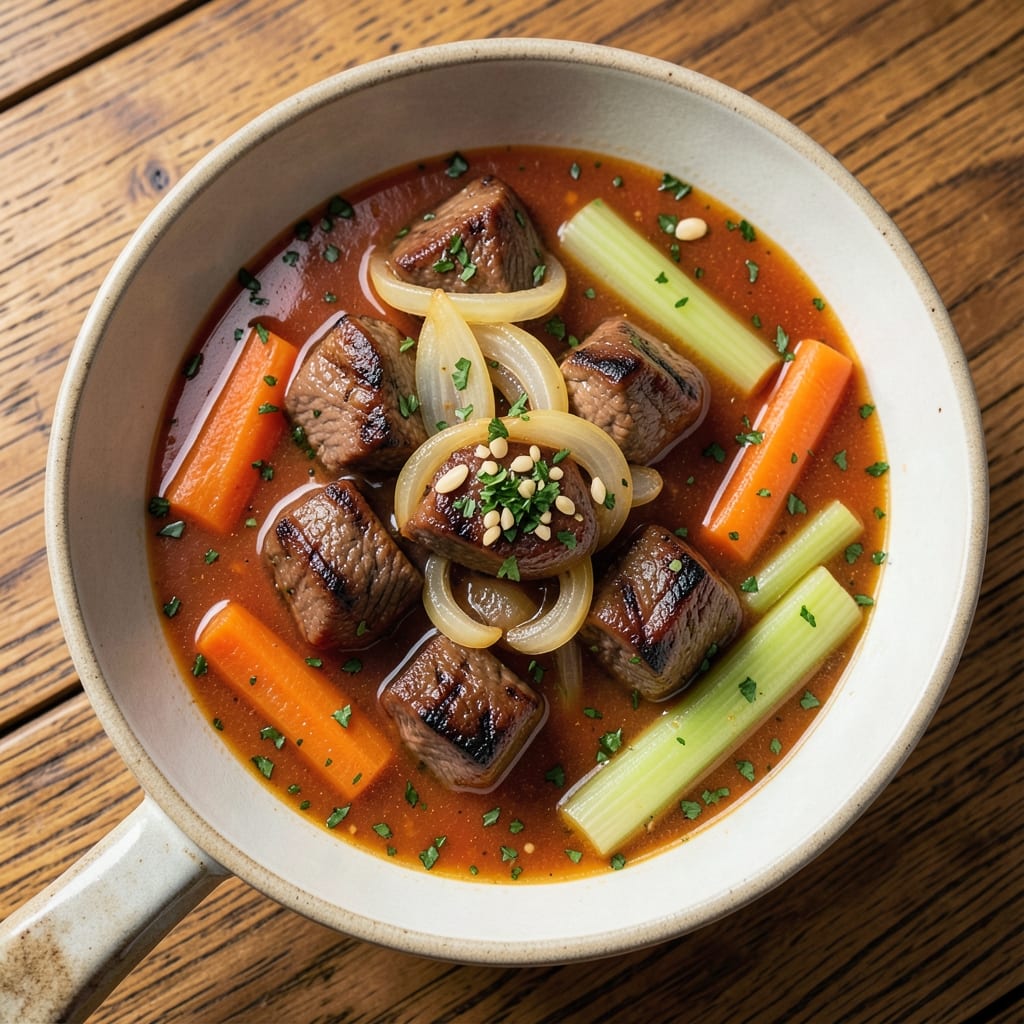
This basic vegetable beef soup recipe transforms simple pantry staples into a deeply comforting bowl of umami-rich broth that warms both body and soul. The secret lies in slow simmering—where tough beef becomes tender, vegetables develop natural sweetness, and aromatics infuse the broth with layers of flavor. I've perfected this method over years of testing, ensuring it delivers restaurant-quality results without requiring specialty ingredients.
The beauty of this soup is its adaptability—use pre-cut vegetables to save time while still achieving that homestyle depth, or pressure cook it for a quicker version that doesn't compromise on flavor. A well-balanced blend of carrots, celery, and onions forms the aromatic base, while beef adds protein and richness that makes this soup satisfyingly hearty. The key technique? Browning the beef first to develop a flavorful crust that dissolves into the broth during simmering.
What you'll end up with is a steaming bowl of soup where each spoonful delivers tender beef, perfectly cooked vegetables, and a broth so flavorful it needs no garnish—though fresh parsley or a drizzle of olive oil adds a final touch of elegance. This recipe serves as both a weeknight staple and a nourishing meal for colder months, proving that comfort food doesn't require complicated techniques.
Adjust the seasoning to your preference—more herbs for brightness, a pinch of red pepper flakes for heat, or a splash of vinegar for tang. The possibilities are endless, but the foundation remains the same: a simple, foolproof method that transforms basic ingredients into something extraordinary. Let's get cooking with this timeless classic.
Ingredients for basic vegetable beef soup
Sixteen simple ingredients transform into a deeply comforting vegetable beef soup with restaurant-quality depth.
| Ingredient | Amount | Notes |
|---|---|---|
| Chuck Roast Beef 🥩 | 2 lb | Cut into 1-inch cubes, trimmed of fat |
| Yellow Onions 🧅 | 2 whole | Medium size, peeled and halved |
| Carrots 🥕 | 4 medium | Peeled and cut into 1-inch chunks |
| Celery Stalks 🧄 | 4 whole | Trimmed and cut into 1-inch pieces |
| Garlic Cloves 🧄 | 4 cloves | Peeled and lightly crushed |
| Tomato Paste 🍅 | ½ cup | High-quality, no sugar added |
| Beef Broth 💧 | 6 cups | Low-sodium preferred, homemade or store-bought |
| Dry Red Wine 🍷 | ½ cup | Bold variety like Cabernet Sauvignon |
| Olive Oil 🫒 | 2 tbsp | Extra-virgin for richness |
| Fresh Thyme 🌿 | 1 tbsp | Leaves only, stems removed |
| Fresh Parsley 🌿 | ¼ cup | Chopped, for garnish |
| Salt 🧂 | 1 ½ tsp | Diamond Crystal kosher salt |
| Black Pepper 🌶️ | ½ tsp | Freshly ground preferred |
| Bay Leaves 🍃 | 2 whole | Dried, removed before serving |
The beef selection is critical for this soup. Chuck roast delivers that signature tender, melt-in-your-mouth texture when slow-cooked, while sirloin or ribeye will remain tough. Most grocery stores carry pre-cubed chuck roast in the meat section, which saves significant prep time. For optimal quality, look for cuts with good marbling—Costco or Whole Foods typically offer well-trimmed options. The onions, carrots, and celery form your aromatic base, so choose fresh vegetables with vibrant colors; Trader Joe's often has excellent pre-cut options that maintain freshness longer than store-brand versions.
No red wine on hand? Dry sherry or additional beef broth works beautifully as a substitute, though the depth of flavor will differ slightly. Fresh thyme is ideal, but dried thyme at one-third the amount suffices in a pinch. For the tomato paste, San Marzano tomatoes yield the best results—avoid brands with added sugar or salt. The celery can be swapped for fennel or leeks if you prefer, though the classic trio of carrots, celery, and onions provides the most balanced flavor foundation. Pre-cut vegetables from the store work perfectly here, saving time without sacrificing quality.
This soup tastes even better the next day as flavors meld together. Store in an airtight container in the refrigerator for up to 5 days, or freeze portions for 3 months—the broth actually improves with freezing. I recommend doubling the recipe and portioning it into individual containers for easy weeknight meals. The fresh parsley should be added just before serving to maintain its vibrant color and bright flavor. For a quicker version, use a pressure cooker, reducing the simmering time to 30 minutes instead of the traditional 2 hours.
Why You'll Love This Recipe
- Foolproof Prep: I swear, the hardest part is slicing the onions—just dice them while the beef browns, and you’re done. No fancy techniques, no stress.
- Rich, Deep Flavor: That slow-cooked chuck roast? It practically melts in your mouth, while the garlic and celery add a warmth that lingers. Honestly, it’s the kind of soup that makes you slow down.
- Meal Prep MVP: Double the batch and freeze half—it’s my go-to for busy weeks. Reheats like it’s fresh, and the carrots stay tender, not mushy.
- Budget-Friendly Feast: A whole chuck roast for under $10 feeds four, and the veggies stretch it further. Here’s what sold me—it’s hearty enough to feel special, but cheap enough to make often.
Step-by-step instructions for creating umami-rich vegetable beef soup
This method transforms simple pantry staples into a deeply flavorful soup with rich beef broth.
Sear the Beef for Maximum Flavor
Heat the 2 tablespoons olive oil in a large Dutch oven over medium-high heat until shimmering. Add the 2 lb chuck roast beef cut into 1-inch cubes, working in batches if needed to avoid crowding. Sear undisturbed for 3-4 minutes per side until deeply browned—this Maillard reaction creates the foundation for your soup's umami depth.
Real talk: Don't rush this step. You'll know it's ready when the beef releases easily from the pan and develops a caramelized crust. Transfer the browned beef to a plate and set aside temporarily. The rendered fat in the pot will become the flavor base for your soup.
Build the Aromatic Vegetable Base
In the same Dutch oven, add the 2 whole yellow onions (halved), 4 medium carrots (cut into 1-inch chunks), and 4 whole celery stalks (cut into 1-inch pieces). Cook over medium heat for 8-10 minutes, stirring occasionally, until the vegetables soften and the onions become translucent. This process develops their natural sweetness.
Add the 4 cloves garlic cloves (peeled and lightly crushed) and 1 tablespoon fresh thyme leaves, stirring for 30 seconds until fragrant. Here's where the magic happens—the garlic should perfume the kitchen noticeably. If it burns, you've gone too far.
Develop the Rich Broth Foundation
Stir in the 0.5 cup tomato paste and cook for 1-2 minutes until it darkens slightly. Pour in the 0.5 cup dry red wine and scrape up any browned bits from the bottom of the pot—this deglazing captures all the flavor you've built. Let it simmer for 3-4 minutes until the alcohol smell dissipates completely.
Add the seared beef back to the pot along with the 6 cups beef broth, 1.5 teaspoons salt, 0.5 teaspoon black pepper, and 2 whole bay leaves. Bring to a gentle boil, then reduce heat to low and let it simmer uncovered for 1 hour. This slow cook allows the beef to tenderize and the flavors to meld.
Finish with Fresh Herbs and Perfect Texture
After 1 hour, remove the beef from the broth and shred it using two forks directly in the pot. Return the shredded beef to the broth. Taste and adjust seasoning—you may need a bit more salt depending on your broth. Add the 0.25 cup chopped fresh parsley just before serving to brighten the flavors.
The soup should have a velvety texture with tender beef and vegetables that are just fork-tender, not mushy. If it's too thick, add water 1 tablespoon at a time until it reaches your desired consistency. Remove the bay leaves before serving as they're not meant to be eaten.
Pro Tips For Making Basic Vegetable Beef Soup
- SEAR THE BEEF FIRST: Chuck roast can be tough if you skip this step. Get your pot smoking hot—yes, even if you’re impatient—and brown the meat in batches. The crust locks in flavor and keeps the meat from drying out later. (I used to rush this, and my soup always tasted flat.)
- CHOP VEGETABLES UNIFORM: Carrots and celery should be cut into ½-inch pieces, not random chunks. Onions and garlic? Mince them fine—they’ll dissolve into the broth and flavor every bite. Uneven sizes mean some veggies stay crunchy while others turn to mush. (Trust me, your spoon will thank you.)
- SIMMER LOW AND SLOW: After browning the meat and softening the veggies, drop the heat to a bare simmer—just small bubbles breaking the surface. High heat turns beef soup into glue. Chuck needs 2–3 hours to tenderize, and rushing it makes the meat chewy. (Set a timer and walk away.)
- SAVE THE WATER: Don’t dump in a gallon of broth or water. Use just enough to barely cover the beef—about 6 cups—and let the veggies release their own liquid. More liquid = weaker flavor, and you’ll end up with a sad, watery mess. (Taste as you go; you can always add a splash later.)
Troubleshooting this dish
Broth Too Thin?
If your soup ends up watery after simmering, it’s likely because the vegetables released too much liquid. My go-to fix is to simmer the soup uncovered for an extra 15-20 minutes to reduce the broth naturally. For a quicker solution, mash a few cooked vegetables (like 2-3 carrots) with a fork and stir them back in—they’ll thicken the broth beautifully. Thickening agents like 1 tablespoon cornstarch mixed with 2 tablespoons cold water can also work, but use sparingly to avoid a gummy texture. 🌡️
Beef Still Tough?
Undercooked beef is the most common issue, but don’t worry—it’s fixable. If your beef remains chewy after 1 hour of simmering, extend the cooking time by 30-45 minutes on low heat. For a quicker fix, transfer the beef to a slow cooker and cook on low for 2-3 hours or high for 1 hour. Pro tip: Use a meat thermometer to check for 205°F internal temperature—this ensures perfect tenderness every time.
Vegetables Mushy?
Overcooked vegetables ruin the texture, but timing is the key to fixing this. Add harder vegetables like carrots and celery later in the cooking process—after 30 minutes of simmering. For softer veggies like onions, they should be tender but still hold their shape. If they’re already mushy, strain the broth and blend the vegetables with a splash of broth, then stir it back in for a creamy consistency. 🥕
Blah Flavor?
Lackluster flavor usually means the beef wasn’t browned enough or the broth wasn’t seasoned properly. Next time, sear the beef until it’s deeply browned on all sides—this builds the Maillard reaction that creates depth. For extra umami, add 1 teaspoon soy sauce or ½ teaspoon fish sauce during the final 10 minutes of cooking. If the broth tastes flat, simmer it uncovered for 10 more minutes to concentrate the flavors.
Greasy Soup?
Excess fat from the beef can make the soup greasy, but skimming it off is easy. Use a large spoon to remove the fat while the soup is simmering—it’ll float to the top. For a cleaner look, chill the soup in the refrigerator overnight, then spoon off the hardened fat from the top before reheating. If you’re short on time, freeze the soup, then remove the hardened fat layer after thawing. 🧊
Preventing Future Issues
Start with high-quality ingredients—fresh vegetables and well-marbled beef make all the difference. Measure your broth carefully; using low-sodium broth gives you better control over seasoning. And always taste as you go! Adjust salt, pepper, or herbs gradually to avoid over-seasoning. Trust me, these small tweaks will turn your soup from "meh" to "magnificent" every time. ✨
Nutrition facts
Frequently asked questions
Can I substitute ground beef for chuck roast in this recipe?
Yes, but the texture will differ. Ground beef will cook faster and won't shred as nicely, but it still works well. Use 1.5 lb lean ground beef instead of the chuck roast, and simmer for only 20-25 minutes after adding the broth. For best results, brown the ground beef thoroughly first to develop flavor.
How do I make this soup vegetarian?
Replace the beef with 1.5 lb mushrooms (like cremini or portobello) and 1 can (15 oz) white beans for protein. Use vegetable broth instead of beef broth, and add 1 teaspoon soy sauce for umami depth. Simmer for 30 minutes to let flavors meld. The mushrooms should be sliced and browned first, just like the beef.
What vegetables can I add for extra nutrition?
Try adding 1 diced potato (adds starch), 1 cup green beans (adds crunch), or ½ cup corn kernels (adds sweetness). For heartier versions, include ½ cup diced butternut squash or 1 cup chopped kale. Add delicate veggies like spinach or peas in the last 10 minutes of cooking to preserve their texture.
Can I make this soup in a slow cooker or Instant Pot?
For a slow cooker, brown the beef first, then add all ingredients and cook on low for 6-7 hours or high for 3-4 hours. For an Instant Pot, use the high pressure setting for 25 minutes after browning the beef. Both methods yield tender results—just adjust seasoning at the end since slow cooking can intensify flavors.
How do I store and reheat leftovers?
Store in an airtight container in the fridge for up to 5 days or freeze for 3 months. Reheat gently on the stove over medium-low heat, stirring occasionally, until warmed through. Avoid microwaving as it can make the broth watery. For best texture, add a splash of water or broth when reheating if needed.