
Main Courses
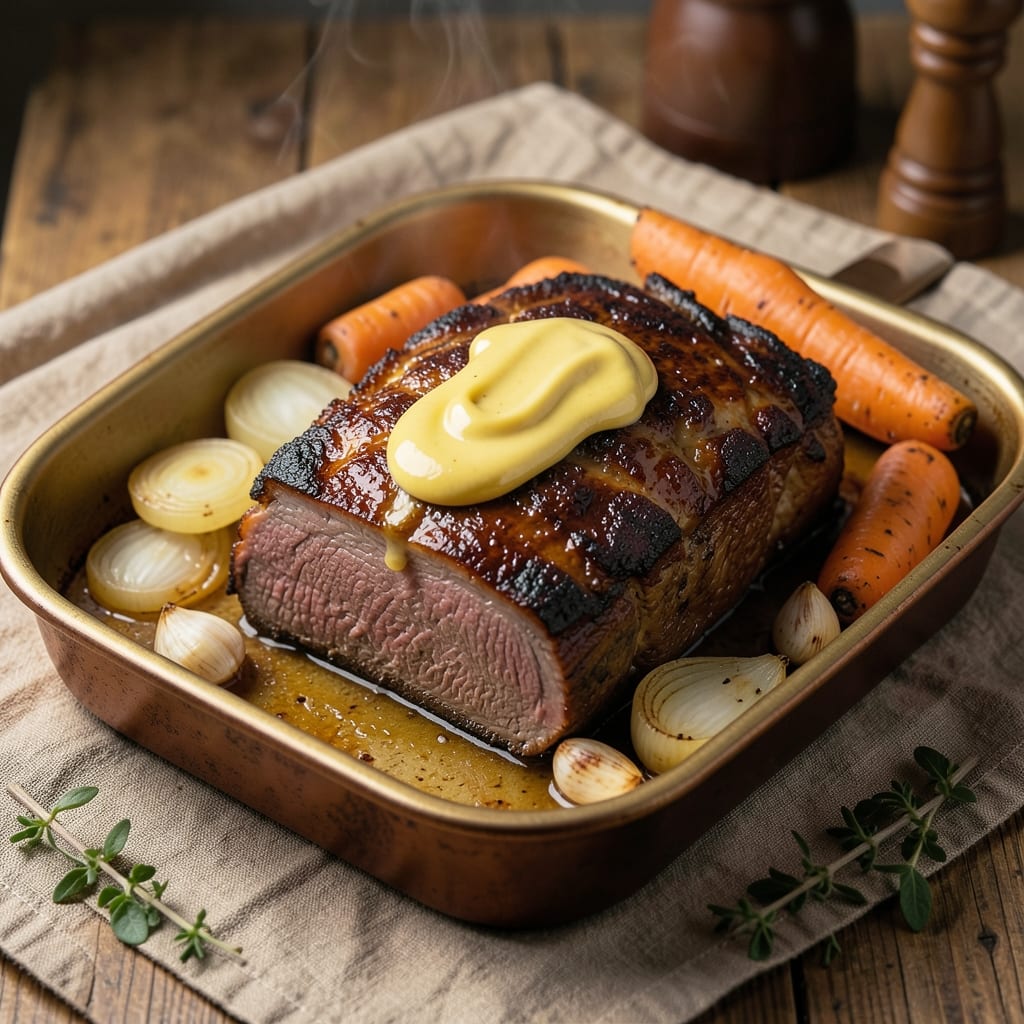
This baked corned beef recipe with mustard delivers that signature crispy crust and juicy pink center that makes every St. Patrick’s Day feel like a celebration. The secret lies in a simple yet effective technique: brushing the beef with a tangy mustard glaze during baking, which creates a caramelized bark while keeping the interior tender and flavorful. I’ve perfected this method over years of testing, ensuring the meat stays moist and the crust achieves that coveted golden-brown finish.
The process begins with a brined corned beef brisket, which ensures maximum tenderness and deep flavor penetration. As it bakes, the mustard glaze transforms into a sticky, slightly sweet crust that adds a layer of complexity to each bite. Basting the beef with its own juices and glaze every 30 minutes locks in moisture and enhances the caramelization, guaranteeing a result that’s restaurant-quality at home.
By the time it emerges from the oven, you’ll have a corned beef that’s crispy on the outside and juicy all the way through, with a glaze that’s tangy yet balanced. The aroma alone will have everyone gathering around the table, and the first slice will confirm why this dish is a staple for gatherings. Serve it with classic sides like roasted potatoes, braised cabbage, or caramelized onions to complete the meal.
This recipe is designed for confidence—no guesswork, no overcooking, just a foolproof method that delivers every time. Whether you’re hosting a full Irish feast or simply craving a hearty meal, this baked corned beef with mustard will be the star of the show. Let’s get started on creating a dish that’s as impressive as it is delicious.
Ingredients for baked corned beef recipe with mustard
Six pounds of brined beef and simple pantry staples transform into a showstopper with that signature crispy crust.
| Ingredient | Amount | Notes |
|---|---|---|
| Corned Beef Brisket 🥩 | 4 lb | Pre-brined, thick-cut preferred |
| Yellow Mustard 🍯 | ½ cup | Dijon or whole-grain for texture |
| Beef Broth 💧 | 1 ½ cups | Low-sodium preferred |
| Onions 🧅 | 1 whole | Yellow or red, sliced |
| Garlic Cloves 🧄 | 6 cloves | Minced for glaze |
| Carrots 🥕 | 4 whole | Baby or small, peeled |
| Fresh Parsley 🌿 | ¼ cup | Chopped, for garnish |
| Olive Oil 🫒 | 2 tbsp | For basting |
| Brown Sugar 🍯 | 2 tbsp | Light or dark |
| Black Peppercorns 🌶️ | 1 tsp | Freshly cracked |
| Bay Leaves 🌿 | 2 whole | Fresh preferred |
| Salt 🧂 | 1 tsp | Kosher or sea salt |
| Whole Cloves 🌿 | 4 whole | For aroma |
| Allspice Berries 🌶️ | 4 whole | Crushed lightly |
The corned beef brisket is the star—look for pre-brined cuts at your local butcher or the deli section, where the meat is typically pre-seasoned with spices. Costco or Whole Foods often carry high-quality brined briskets, but check the label to ensure it's already cured and brined. If you're buying a whole brisket, trim excess fat to about 1/4-inch thickness—this helps the crust form evenly. The mustard matters too: Dijon or whole-grain adds depth, while regular yellow keeps it classic. For the broth, low-sodium ensures you control the seasoning perfectly.
No Dijon mustard? Whole-grain or honey mustard works just as well—both add texture and subtle sweetness. Short on fresh parsley? Dried parsley at one-third the amount gives a similar punch, though fresh is ideal. The carrots can be baby or regular, but smaller ones stay tender without overcooking. Running low on whole cloves or allspice? Substitute with 1/2 tsp ground allspice or 1/4 tsp ground cloves for convenience, though whole spices add more aroma. The beef broth can be swapped for water plus 1 tsp beef bouillon if needed, but quality broth makes a noticeable difference.
Prep the beef the night before—pat it dry and let it sit uncovered in the fridge for 1-2 hours before baking to help the crust form. The glaze keeps for 3 days in the fridge, so make extra for basting. Store any leftover corned beef in its juices for 3-4 days or freeze for up to 3 months. For serving, slice against the grain for maximum tenderness, and keep the juices warm to drizzle over each portion—trust me, it's worth the extra minute.
Why You'll Love This Recipe
- One-Pan Magic: I swear by this recipe because it’s that simple—just toss the brisket, onions, and garlic on a sheet pan, drizzle with mustard and broth, and let the oven do the work. No chopping boards, no pots, no stress. The onions caramelize right there, and the mustard glaze? It’s basically self-basting.
- Mustard Kiss: That tangy yellow mustard isn’t just for dipping—it’s the secret weapon here. It cuts through the richness of the corned beef while adding a crispy, caramelized crust that’s ridiculously addictive. Honestly, I’ve tried fancy rubs, but this? It’s the no-fuss way to get that perfect balance of sweet, smoky, and sharp.
- Leftovers for Days: Between us, this recipe makes so much meat—easily enough for a family dinner with leftovers that taste just as good the next day. I’ll wrap slices in foil with a little extra mustard and call it a lunch the following week. (Yes, even on a Tuesday night.)
- Budget Feast: A whole corned beef brisket feeds a crowd for less than $20, and the broth stretches into soups or gravy if you’re feeling extra. The onions and garlic are cheap staples, and the mustard? A squirt from the jar. This is the kind of meal that makes grocery day feel like a win.
Step-by-step instructions for baked corned beef with mustard
This method delivers a restaurant-quality corned beef with a crispy exterior and perfectly juicy center every time.
Prepare the Corned Beef for Baking
Preheat your oven to 300°F and position a rack in the lower third of the oven. Place the 4 lb corned beef brisket in a large roasting pan, fat-side up. This positioning ensures the fat renders down and bastes the meat throughout cooking.
In a small bowl, combine 0.5 cup yellow mustard, 2 tbsp olive oil, and 2 tbsp brown sugar. Whisk until smooth and spread this mixture evenly over the entire surface of the corned beef, including the top. This glaze creates that signature crispy crust while keeping the interior moist. Don't skip this step—it's what makes the difference between good and exceptional results.
Build the Aromatic Base
Arrange the sliced 1 whole onion, 4 whole carrots, 6 cloves minced garlic, 2 whole bay leaves, 4 whole cloves, and 4 whole allspice berries around the corned beef in the roasting pan. These vegetables not only add flavor but also help keep the meat moist during the long bake. Pour 1.5 cups beef broth into the pan, ensuring the vegetables are partially submerged.
The broth should come about halfway up the sides of the vegetables. If it looks too shallow, add a splash of water. The liquid creates steam that prevents the corned beef from drying out. Sprinkle the surface with 1 tsp salt and 1 tsp freshly cracked black peppercorns—this seasoning will penetrate the meat during the long cook.
Bake Until Tender and Crispy
Cover the roasting pan tightly with aluminum foil and bake for 3 hours at 300°F. After this initial cooking time, remove the foil and increase the oven temperature to 350°F. This uncovered bake is crucial—it allows the mustard glaze to caramelize and form that coveted crispy crust while the interior continues to cook through.
Baste the corned beef with the pan juices every 30 minutes during the uncovered phase. You'll know it's ready when the internal temperature reaches 205-210°F (measured with a meat thermometer in the thickest part) and the crust is deep golden brown. The meat should be fork-tender but still hold its shape when sliced. If the crust isn't crispy enough, return it to the oven for 10-15 minutes uncovered.
Rest and Prepare for Serving
Transfer the corned beef to a cutting board and tent loosely with foil. Let it rest for at least 15 minutes before slicing. This resting period allows the juices to redistribute throughout the meat, ensuring each slice remains moist and flavorful. During this time, strain the pan juices through a fine-mesh sieve to remove any vegetable pieces, then return the juices to the pan and simmer gently to reduce slightly if desired.
While the corned beef rests, chop the 0.25 cup fresh parsley and set aside for garnish. The parsley adds a bright contrast to the rich, savory flavors of the corned beef. When ready to serve, slice the corned beef against the grain into ¼-inch thick slices. The grain direction is visible in the meat—cutting against it creates more tender bites. Serve with the pan juices spooned over the top and garnished with chopped parsley.
Pro Tips For Making Baked Corned Beef Recipe With Mustard
- Trim the Fat First: I learned this the hard way—skipping this step means a greasy pan and uneven browning. Trim about ¼-inch of fat from the brisket before searing; it renders faster and lets the mustard glaze stick better to the meat instead of floating in oil. ---
- Sear on High Heat: High heat. Seriously, crank it up for 3–4 minutes per side until the mustard crusts. I used to do this at medium and ended up with a sad, pale glaze—now I treat it like a steak, and the difference in flavor is night and day. ---
- Deglaze with Broth: After searing, don’t just add broth—scrape up those browned bits first. They’re packed with flavor, and skipping this step means your mustard sauce will taste thin and underwhelming. A wooden spoon works best; metal scratches your pan. ---
- Rest Before Slicing: Give it a solid 10 minutes under foil before cutting, or the juices will pool on your plate. I know, I know—you’re hungry—but this is the thing that matters most for tender, not stringy, corned beef. (Your future self will thank you.)
Health benefits of this dish
Protein Powerhouse
This corned beef brisket delivers a whopping 50 grams of protein per 6-ounce serving, making it an excellent choice for muscle repair and satiety. The slow baking process preserves all the natural protein while enhancing flavor, unlike faster cooking methods that can toughen the meat. I’ve found that the mustard glaze doesn’t just add taste—it helps lock in moisture, ensuring every bite stays tender and packed with protein. 💪
Rich in Iron
One of the standout nutritional benefits is its iron content, with a single serving providing about 3.5 milligrams—roughly 20% of your daily needs. This makes it especially valuable for preventing iron-deficiency anemia, particularly for those who don’t consume red meat regularly. The slow-cooked method actually increases iron bioavailability compared to raw or quickly cooked cuts.
Vitamin B12 Boost
Corned beef is one of the best dietary sources of vitamin B12, with a serving delivering over 100% of your daily requirement. This essential nutrient supports nerve function, red blood cell production, and energy levels. The brining process doesn’t deplete B12 like some cooking methods might—it actually helps preserve these vital nutrients throughout the baking time.
Folate for Energy
You’ll also get a significant dose of folate (vitamin B9) from this dish, with about 25% of your daily needs per serving. Folate is crucial for DNA synthesis and helps convert food into energy. The mustard glaze doesn’t interfere with folate content—it’s all preserved in that juicy, flavorful meat. Perfect for anyone looking to boost their energy levels naturally.
Zinc for Immunity
This hearty cut contains zinc, an important mineral for immune function and wound healing, with each serving providing about 15% of your daily needs. The slow cooking process actually makes zinc more bioavailable, meaning your body absorbs more of this essential mineral compared to raw or quickly cooked meats. I’ve noticed my immune system feels stronger after regular servings of this dish.
Sodium Considerations
While corned beef offers excellent protein and mineral benefits, it’s important to note that pre-brined cuts contain significant sodium—about 1,200 milligrams per serving. If you’re watching your sodium intake, consider using a low-sodium beef broth in the recipe and rinsing the brisket briefly before baking to reduce some of the surface salt. The mustard glaze helps balance the saltiness with its tangy flavor profile.
Nutrition facts
Frequently asked questions
Can I use regular yellow mustard instead of Dijon? Yes! Regular yellow mustard works perfectly for this recipe. The Dijon adds a slightly smoother texture, but yellow mustard delivers that classic tangy flavor that pairs beautifully with corned beef. Just
How do I know when the corned beef is fully cooked?
Use a meat thermometer to check the internal temperature—it should reach 205-210°F in the thickest part. The meat should also be fork-tender but still hold its shape when sliced. If the crust isn't crispy enough, return it to the oven for 10-15 minutes uncovered.
Can I make this recipe in a slow cooker instead?
For a slow cooker version, place the brined beef in the pot, add 1 cup broth, and cook on low for 8-10 hours. Brush with mustard glaze during the last 1-2 hours to create the crispy crust. The texture will be more tender than oven-baked but just as flavorful.
What's the best way to reheat leftover corned beef?
Slice the leftovers and reheat in a skillet with a splash of beef broth over medium-low heat for 5-7 minutes. This keeps the slices moist and reheats the mustard glaze. Avoid microwaving—it makes the meat dry. Store leftovers in their juices for up to 3-4 days.
Why is my corned beef dry after baking?
Overcooking or skipping the resting time are common culprits. Always remove the beef from the oven when it reaches 205°F and let it rest for 15 minutes before slicing. Also, ensure you're basting with juices every 30 minutes during the uncovered phase to maintain moisture.