Main Courses
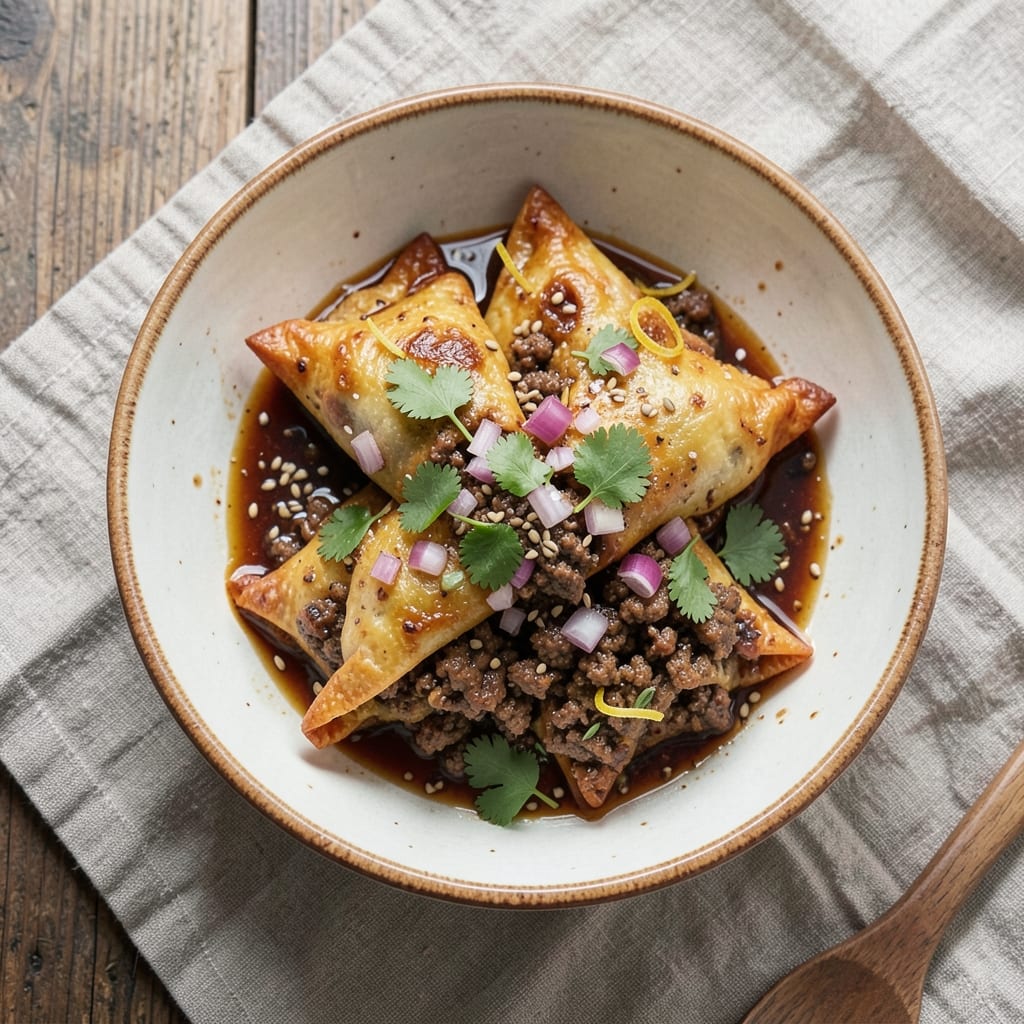
This baked beef samosa recipe delivers the perfect balance of crispy golden pastry and juicy spiced filling without a single drop of oil. The secret lies in a well-spiced beef mixture that stays moist while baking, encased in a flaky, buttery pastry that achieves that coveted restaurant-style crunch. I've perfected this method over countless batches, ensuring every bite delivers the satisfying contrast of textures and flavors that make samosas irresistible.
The process begins with tenderizing and cooking the beef in a fragrant blend of garam masala, cumin, and coriander, then carefully shaping it into compact fillings that won't leak during baking. The pastry gets its signature crispiness from a precise combination of butter and flour, brushed generously before baking. What you'll end up with is samosas that look and taste like they came from a street-side cart, but with the convenience of an oven-baked method.
These samosas are perfect for meal prep—make a batch ahead and reheat until golden and crispy again. The filling stays moist and flavorful, while the pastry maintains its satisfying crunch. Serve with mint chutney or tamarind sauce for dipping, and you've got a restaurant-quality meal that's easy to prepare at home.
The beauty of this recipe is its versatility—use it for weeknight dinners, potlucks, or as an appetizer that disappears quickly. Each samosa delivers that perfect combination of textures and flavors, making it a crowd-pleaser every time. Here's how to make them perfectly every time.
Ingredients for baked beef samosa
Twelve ingredients to transform simple beef and flour into restaurant-style samosas.
| Ingredient | Amount | Notes |
|---|---|---|
| Ground Beef (Chuck) 🥩 | 2 lb | Lean ground beef, 80/20 preferred |
| All-Purpose Flour 🌾 | 4 cups | For pastry, sifted for lightness |
| Unsalted Butter (Cold) 🧈 | 1 cup | Cut into small cubes for pastry |
| Garam Masala 🌶️ | 2 tbsp | Freshly ground for authentic flavor |
| Ground Cumin 🌿 | 1 tbsp | Toasted for deeper aroma |
| Ground Coriander 🌿 | 1 tbsp | Freshly ground preferred |
| Fresh Ginger (Grated) 🌿 | ½ cup | Finely grated, skin removed |
| Small Yellow Onions 🧅 | 2 whole | Finely chopped, 1 cup total |
| Green Chilies 🌶️ | 2 whole | Finely chopped, adjust to taste |
| Salt 🧂 | 1 ½ tsp | Diamond Crystal preferred |
| Ice Water 💧 | ½ cup | For pastry dough |
| Fresh Mint Leaves 🌿 | ¼ cup | Chopped, for garnish |
| Lemon Juice 🍋 | 1 tbsp | Freshly squeezed |
The beef is non-negotiable—chuck roast ground gives that melt-in-your-mouth texture. Costco or local butchers usually have the best prices for bulk ground beef. For the spices, Penzeys or bulk bins at Indian grocery stores are your best bet—they keep their aroma way better than supermarket jars. Fresh ginger and mint? Farmers markets have the brightest, most flavorful stuff, but the grocery store works in a pinch. Just make sure the ginger isn't shriveled and the mint leaves are vibrant green. The pastry's secret is cold butter cubes—don't skip chilling them, or you'll end up with a tough pastry instead of that perfect flaky layer.
No garam masala? Mix 1 tsp each of cinnamon, cardamom, cloves, and black pepper—it's not identical, but it'll get you close. Running low on fresh ginger? Substitute 1/4 tsp ground ginger, but you'll lose that bright, zesty kick. The onions can be swapped for 1 cup onion powder if you're in a rush, though fresh is always better. Trader Joe's has pre-grated ginger if you hate peeling, and their frozen mint works great for garnish. For the pastry, if you can't find all-purpose flour, bread flour works too—just add 1 tbsp cornstarch to match the protein content. The lemon juice is key for brightness—don't use bottled if you can help it.
Make the filling ahead and refrigerate for up to 2 days—the flavors meld beautifully. The pastry dough keeps for 3 days wrapped in plastic, but it's best used fresh. Once assembled, these samosas can be baked immediately or frozen for 2 months. To reheat from frozen, bake straight from frozen at 375°F for 25-30 minutes. The pastry loses crispiness when reheated, so bake fresh for the best texture. Store baked samosas in an airtight container with parchment paper between layers—they stay crispy for 3 days at room temperature.
Why You'll Love This Recipe
- No Fuss Filling: I swear by this trick—just brown the ground beef with cumin and garam masala, then mix it into cold butter until it’s like a rich, crumbly paste. No chopping, no frying, no stress. The dough comes together in minutes with flour and water, and the whole thing bakes in one tray. (Yes, even on a Tuesday night.)
- Spice Without Chaos: That garam masala and cumin? They work magic here. The beef stays juicy but packs a warm, earthy punch, while the butter makes every bite feel indulgent. It’s not overpowering—just deeply satisfying, like a hug from a spice cabinet. Honestly, my kids ask for seconds before I even finish serving.
- Party or Pantry: These samosas are my go-to for game day, potlucks, or when I need to feed a crowd without slaving away. Bake a big batch, store them in the freezer, and reheat whenever. They’re great cold too—pack them in lunchboxes or snack on them straight from the fridge. (My daughter’s school teacher keeps asking for the recipe.)
- Budget Bites: Ground chuck and flour stretch a long way, and the cold butter keeps costs down while adding richness. No fancy ingredients, no takeout bills—just hearty, crispy bites that feel like a treat. I’ve made these for under $2 per serving, and they disappear faster than my willpower on a Friday. Not the prettiest, but the taste makes up for it.
Step-by-step instructions for baked beef samosa
Here's how to create perfectly crispy samosas with a juicy, aromatic beef filling—every bite delivers that perfect texture contrast.
Prepare the Spiced Beef Filling
In a large skillet, heat 2 tablespoons of oil over medium-high heat. Add the 2 whole small yellow onions (finely chopped) and cook for 5-6 minutes until they turn translucent and begin to caramelize slightly. This is where all the flavor develops—don't rush this step.
Add the 2 whole green chilies (finely chopped) and the 0.5 cup freshly grated ginger, cooking for another 2 minutes until the chilies soften and the ginger becomes fragrant. Now add the 2 lb ground beef (chuck), breaking it up with a wooden spoon until it loses its raw color and begins to brown.
Stir in the 1.5 tsp salt, 2 tbsp garam masala, 1 tbsp ground cumin, and 1 tbsp ground coriander. Cook for 8-10 minutes until the beef is fully cooked through and the spices have toasted slightly. The filling should be moist but not wet—if it's too dry, add 1 tablespoon of water and cook for another minute. Let it cool completely before filling the pastry.
Make the Samosa Pastry Dough
In a large mixing bowl, combine the 4 cups all-purpose flour and 1.5 tsp salt. Cut in the 1 cup cold unsalted butter (cut into small cubes) using a pastry cutter or your fingers until the mixture resembles coarse crumbs with pea-sized butter pieces remaining. This is crucial for achieving that signature flaky, crispy texture.
Gradually add the 0.5 cup ice water (this is key—using cold water prevents the dough from becoming too soft) and mix gently until the dough just comes together. Be careful not to overwork it—just combine until it forms a shaggy mass. Turn it out onto a lightly floured surface and knead lightly for 2-3 minutes until smooth.
Wrap the dough in plastic wrap and refrigerate for at least 30 minutes (or up to 2 hours). This resting period allows the gluten to relax, making it easier to roll out thin and even layers. The colder dough also helps create those crispy, flaky layers when baked.
Roll and Fill the Samosas
Preheat your oven to 375°F and line two baking sheets with parchment paper. On a lightly floured surface, roll out the chilled dough to about 1/16-inch thickness. Cut circles using a 4-inch round cutter (you should get about 12 circles from the dough).
Place 1 tablespoon of the cooled beef filling in the center of each circle. Fold one corner over the filling, then fold in the sides to form a triangle. Seal the edges by pressing firmly with your fingers or using a fork to crimp. The goal is to create a tight seal that won't leak during baking—this ensures your samosas stay crispy on the outside and juicy inside.
Bake to Golden Perfection
Place the assembled samosas on the prepared baking sheets, leaving about 1 inch of space between each. Brush the tops lightly with 1 tablespoon lemon juice (this helps create a beautiful golden color and adds a bright contrast to the rich filling). Bake for 20-25 minutes until they're deep golden brown and crispy.
For extra crispiness, transfer the samosas to a wire rack and let them cool for 5 minutes. Just before serving, garnish with the 0.25 cup chopped fresh mint leaves. The contrast of the cool mint against the warm, spiced beef is what makes these samosas truly special. Serve immediately while they're still crispy—these won't last long!
Pro Tips For Making Baked Beef Samosa
- Pre-Cook the Beef: Brown the ground chuck in a skillet first—it deepens the flavor and prevents a bland filling. Use medium-high heat until it loses its raw color, then drain excess fat before mixing with spices. (Yes, even if you’re impatient like me, this step makes a real difference.) ---
- Chill the Butter: Cold butter in the dough is non-negotiable for flaky layers. Cut it into tiny cubes and pulse with flour in a food processor until it resembles coarse crumbs—this guarantees a crisp crust. (I learned this the hard way after greasy, soggy samosas.) ---
- Don’t Overfill the Cups: Pack the beef mixture tightly but leave a ½-inch gap at the top—overstuffing causes bursts and uneven baking. Press the dough edges firmly to seal, or filling will leak out like a sad, greasy mess. ---
- Bake at 375°F, Not Higher: A hot oven burns the dough before the filling cooks through. 375°F gives a golden crust while keeping the beef juicy—any hotter, and you’ll end up with charred shells. (My first batch at 425°F looked impressive but tasted like ash.)
Troubleshooting this recipe
Pastry Too Tough
If your samosa pastry turns out tough instead of crispy, it's likely from overworking the dough or using warm butter. I've found that cold butter cubes are non-negotiable—never let them soften before mixing. Also, handle the dough as little as possible after kneading. For extra flakiness, chill the dough for at least 30 minutes before rolling, and roll it 1/16-inch thick or thinner for maximum crispiness. 💫
Filling Leaking
Leaky fillings usually mean the pastry wasn't sealed properly or the filling was too wet. First, ensure you're using 1 tablespoon of cooled filling per samosa—overfilling creates pressure. Seal edges tightly by pressing firmly with your fingers or using a fork to crimp. For extra insurance, brush the sealed edges with a little egg wash before baking. If the filling is still too wet, spread it on a baking sheet and chill for 30 minutes to firm up slightly. 🌶️
Undercooked Beef
Ground beef can easily become dry or undercooked if rushed. Cook it in a single layer over medium-high heat until it reaches 165°F internal temperature. Break it up with a wooden spoon to ensure even cooking. For extra moisture, add 1 tablespoon of water or beef broth during the last minute of cooking. I always let the filling cool completely before assembling—this prevents steam from making the pastry soggy. ✨
Pale Pastry
A pale pastry means it didn't brown properly, often from insufficient heat or moisture. Brush the tops with 1 tablespoon lemon juice before baking to enhance browning. For deeper color, bake at 375°F on the middle rack—this ensures even heat distribution. If your oven runs hot, reduce to 350°F and check after 20 minutes. A light spray of water before baking can also help create a crispy crust. 🔥
Soggy Bottoms
Soggy bottoms happen when moisture escapes from the filling during baking. To prevent this, chill the assembled samosas for 15 minutes before baking to firm up the filling. Bake on a parchment-lined tray to allow steam to escape, and avoid overcrowding the pan. For extra crispiness, bake for 1-2 minutes longer than needed, then transfer to a wire rack to cool. 💡
Uneven Rolling
If your pastry circles aren't even, the dough likely wasn't chilled enough before rolling. Always work with cold dough and re-chill it for 10 minutes if it starts to warm up. Use a rolling pin and roll in one direction to avoid stretching the gluten. For perfect circles, use a 4-inch round cutter and dust your surface with flour to prevent sticking. 💪
Nutrition facts
Frequently asked questions
Can I use ground turkey or chicken instead of beef?
Yes, but the texture will differ slightly. Ground turkey or chicken works well, though it tends to be leaner and can dry out faster. For best results, use 85/15 ground turkey and add 1 tablespoon of water or broth during cooking. Chicken requires even more moisture—consider adding 1/4 cup yogurt or cream to the filling to keep it juicy. The baking time remains the same.
How do I make these samosas extra crispy?
For maximum crispiness, roll the pastry 1/16-inch thick or thinner, and chill the assembled samosas for 15 minutes before baking. Brush the tops with 1 tablespoon lemon juice before baking to enhance browning. Bake on a parchment-lined tray and avoid overcrowding. Finish by baking for 1-2 extra minutes until golden, then transfer to a wire rack to cool.
Can I freeze baked samosas?
Yes, but they won't be as crispy after reheating. Freeze fully baked samosas in a single layer on a tray, then transfer to a freezer bag. To reheat, bake at 375°F for 10-12 minutes until heated through. For best texture, bake fresh samosas whenever possible. The filling stays flavorful and moist even after freezing, but the pastry will soften slightly.
What's the best way to serve these samosas?
Serve warm with traditional accompaniments like mint chutney or tamarind sauce for dipping. They pair beautifully with a side of raita (yogurt dip) or a fresh cucumber salad. For a complete meal, serve with basmati rice or a light dal (lentil soup). These samosas are also perfect for parties—just arrange them on a platter with toothpicks for easy serving.
Why does my pastry turn out greasy?
Greasy pastry usually means the butter wasn't incorporated properly or the dough was overworked. Cut the butter into the flour until it resembles coarse crumbs with pea-sized pieces remaining. Avoid over-kneading, and chill the dough for at least 30 minutes before rolling. If the dough feels too sticky, add 1 tablespoon more flour, but don't overdo it—too much flour makes the pastry tough.