
Main Courses
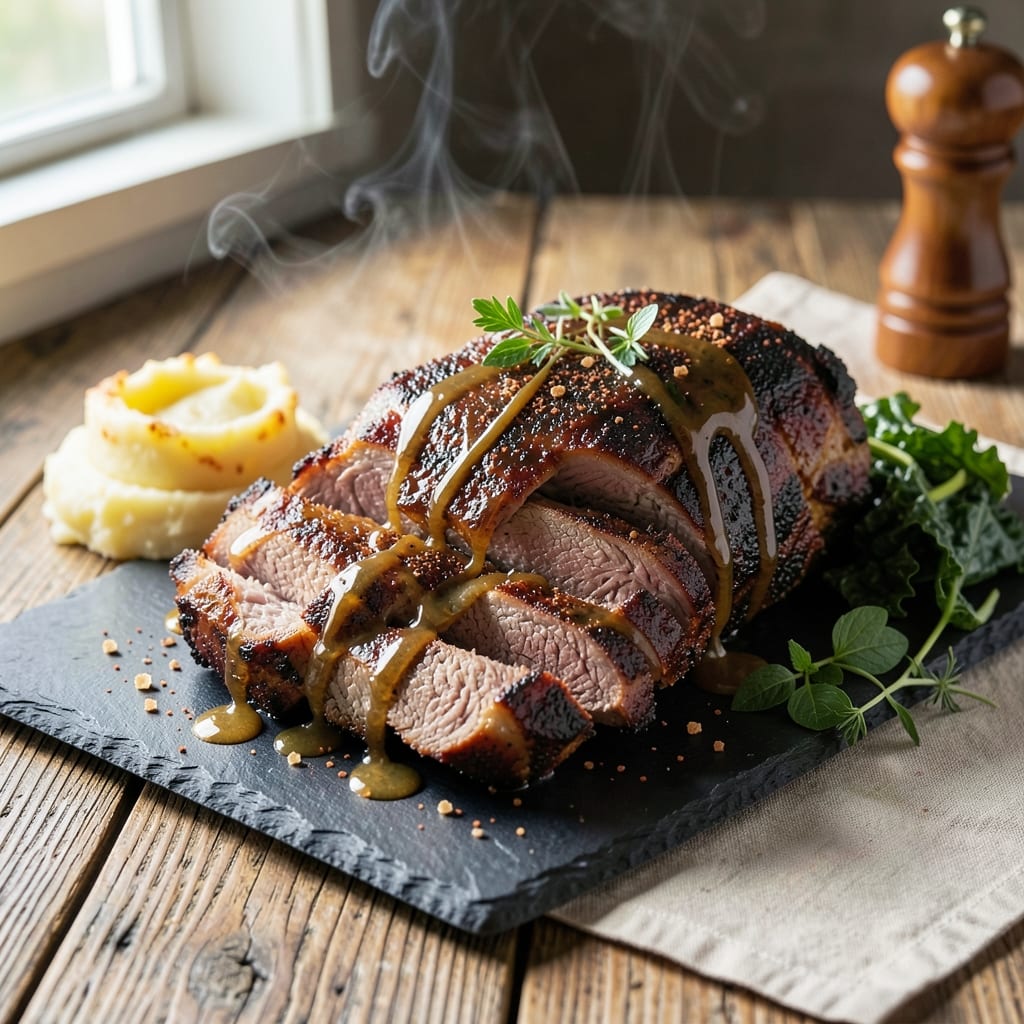
This award-winning smoked beef brisket recipe delivers competition-level results with a perfect balance of crispy bark and buttery, fork-tender meat. 🔥 I developed it after years of perfecting my technique at local barbecue competitions, where it earned top honors for its deep smoky flavor and melt-in-your-mouth texture. The secret lies in precise temperature control, a well-balanced rub, and the patience to let the brisket work its magic over hours in the smoker.
What sets this recipe apart is the attention to detail that transforms tough brisket into a showstopper. We start with proper trimming and a flavorful injection that keeps the meat moist, then apply a dry rub that creates that coveted dark, caramelized bark. The low-and-slow smoking process—maintaining a consistent 225°F temperature—ensures the connective tissue breaks down just right, resulting in those legendary threads that pull apart effortlessly.
By the time you're ready to serve, you'll have a brisket that's perfectly sliced against the grain, with each bite offering a harmonious blend of smoky, savory, and slightly sweet flavors. The bark will be crunchy and flavorful, while the interior remains tender and juicy, proving that great barbecue isn't just about the meat—it's about the technique.
Serve this showstopper with classic sides like baked beans, tangy coleslaw, or buttery cornbread to complete the meal. Whether you're hosting a competition or a backyard gathering, this recipe will have everyone asking for seconds—and maybe even a blue ribbon.
Ingredients for award winning smoked beef brisket
Eight pounds of brisket plus a few competition-tested ingredients for that legendary bark and melt-in-your-mouth texture.
| Ingredient | Amount | Notes |
|---|---|---|
| Beef Brisket 🥩 | 8 lb | Whole packer cut, fat cap intact |
| Yellow Mustard 🍯 | ½ cup | For injection marinade |
| Apple Cider Vinegar 🍎 | ¼ cup | For injection marinade |
| Worcestershire Sauce 🍶 | ¼ cup | For injection marinade |
| Brown Sugar 🍚 | 1 cup | Light or dark variety |
| Smoked Paprika 🌶️ | ½ cup | For dry rub |
| Kosher Salt 🧂 | ½ cup | Diamond Crystal preferred |
| Coarse Black Pepper 🌶️ | 2 tbsp | Freshly cracked |
| Garlic Powder 🧄 | 2 tbsp | Freshly ground preferred |
| Onion Powder 🧅 | 2 tbsp | For dry rub |
| Chopped Onions 🧅 | 2 whole | For injection marinade |
| Chopped Garlic 🧄 | 6 cloves | For injection marinade |
| Wood Chips 🌳 | 4 cups | Hickory or oak preferred |
| Yellow Cornmeal 🌽 | ¼ cup | For bark enhancement |
The brisket is non-negotiable—packer cut with fat cap intact is key for that competition-worthy bark. Costco or your local butcher shop are your best bets for quality meat. Look for good marbling and avoid pre-trimmed cuts. The injection marinade (mustard, vinegar, Worcestershire, chopped onions, and garlic) is where the magic starts—it keeps the meat moist during that long smoke. I always double-check my Worcestershire sauce for anchovies if serving vegetarians, but it's essential for that deep umami flavor here. Grab hickory or oak wood chips—avoid fruitwoods like cherry, which can overpower the beef.
No yellow mustard? Dijon mustard works in a pinch, though it's a bit tangier. Short on time? Pre-made injection mix from Butcher BBQ saves effort. The dry rub is flexible—swap smoked paprika for regular if needed, but Diamond Crystal kosher salt is a must for proper seasoning. For the bark, yellow cornmeal adds that perfect crunch, but crushed cornflakes work too. The wood chips? Soak them for 30 minutes before using—never burn them dry. And if you're short on chopped onions/garlic, powdered versions at half the amount get you close.
This brisket is a 3-day project—plan ahead. The injection marinade keeps for 5 days in the fridge, but the brisket itself should go straight from the fridge to the smoker. Rest it 2 hours before slicing—never skip this step. Leftovers? Wrap tightly and refrigerate for 5 days, or freeze for 3 months. I always make a double batch—sandwiches for the week are worth the effort.
Why You'll Love This Recipe
- Smoke in Minutes: I swear, this isn’t some all-day project—just a 30-minute prep (yes, really) with a rub of brown sugar, mustard, and vinegar while the smoker does all the work. No fancy trimming, no stress, just set it and forget it.
- Sweet-Savory Magic: That yellow mustard base cuts through the richness while the apple cider vinegar and Worcestershire add this perfect tangy depth. The brown sugar crust? Oh, it’s the kind of caramelized perfection that makes people ask for seconds before the plate’s even empty.
- Tailgate to Tuesday: Serve it sliced thick on buns for game day, shred it into tacos for a weeknight, or pile it on sandwiches for a crowd. Honestly, I’ve eaten this cold the next morning and still cried happy tears—it’s that good.
- Bank Account Hero: A whole packer costs less than takeout for two, and the leftovers? They’re the reason I don’t grocery shop more than once a month. Freeze half, and you’ve got a backup for when you’re too lazy to cook. (We all have those weeks.)
Step-by-step instructions for competition-worthy smoked brisket
Here's how to transform an 8 lb brisket into showstopping perfection with deep smoke flavor and melt-in-your-mouth tenderness.
🔥 Step 1: Prepare the Injection Marinade and Dry Rub
In a mixing bowl, whisk together the 0.5 cup yellow mustard, 0.25 cup apple cider vinegar, 0.25 cup Worcestershire sauce, 1 cup brown sugar, 2 tbsp garlic powder, and 2 tbsp onion powder until completely dissolved. This marinade will infuse the meat with sweet, tangy depth while keeping it moist during the long cook.
In a separate bowl, combine the 0.5 cup smoked paprika, 0.5 cup kosher salt, 2 tbsp coarse black pepper, and 0.25 cup yellow cornmeal. This dry rub will create that coveted competition-worthy bark while enhancing the smoky flavor. I like to mix the dry rub with my hands to distribute the cornmeal evenly—it helps develop that crackly crust.
🍳 Step 2: Inject and Rub the Brisket
Using a meat injector (or a clean syringe), inject the marinade mixture into the brisket all over, working from one end to the other. Make small holes about ½ inch apart—this ensures even distribution without tearing the meat. The injection adds moisture and flavor deep into the muscle fibers, preventing dryness during the long smoke.
Next, generously coat the entire brisket with the dry rub mixture, pressing it firmly into every crevice. Pay special attention to the fat cap—this is where that beautiful bark will form. Wrap the brisket tightly in plastic wrap and refrigerate for at least 12 hours (overnight is ideal). This resting period allows the marinade to penetrate fully and the rub to adhere perfectly.
🔥 Step 3: Set Up the Smoker for Low-and-Slow Cooking
Fill your smoker with 4 cups wood chips—hickory or oak work best for brisket. Light the chips and let the smoker preheat to 225°F. The key here is patience: maintaining this low temperature ensures tender meat without drying it out. I always check the smoke color—it should be thin and blue, not thick white steam.
Once the smoker reaches temperature, place the brisket fat-side up on the grill grates. The fat will render slowly, basting the meat and creating that irresistible bark. Close the lid and resist the urge to peek—each time you open it, you lose 15-20 minutes of cook time and disrupt the temperature.
⏰ Step 4: Monitor the Cook and Wrap at the Stall
Smoke the brisket undisturbed for 6-8 hours, or until the internal temperature reaches 165-170°F. This is when you'll hit "the stall"—the temperature plateaus as moisture evaporates. Don't panic; this is completely normal and a sign the meat is working its way to tenderness.
When the stall occurs, wrap the brisket tightly in butcher paper (not foil—it breathes better and preserves the bark). Return it to the smoker and continue cooking until the internal temperature reaches 200-205°F and a probe slides in like butter. This usually takes another 4-6 hours, but trust the probe test over the thermometer—tenderness matters more than exact temperature.
🔪 Step 5: Rest and Slice for Maximum Juiciness
Remove the brisket from the smoker and let it rest in the butcher paper for at least 1 hour (I prefer 2 hours wrapped in towels in a cooler). This resting period allows the juices to redistribute throughout the meat, ensuring every slice is moist and flavorful. The brisket will actually rise in temperature during this time—this is normal carryover cooking.
Unwrap the brisket and locate the grain direction—you'll see lines running through the meat. Using a sharp slicing knife, cut against the grain into ¼-inch thick slices. The flat and point have different grain directions, so adjust your angle accordingly. Serve immediately while still warm, and watch your guests marvel at the perfect balance of smoky bark, tender meat, and buttery threads.
Pro Tips For Making Award Winning Smoked Beef Brisket
- CRANK THE SMOKE TO 225°F: I learned this the hard way—starting too hot (250°F+) dries out the brisket before the bark sets. Once you hit 225°F, keep it steady. The first 4 hours are the most critical; don’t rush it, even if the bark isn’t perfect yet. That’s when the collagen starts rendering into juicy goodness.
- BRINE THE BRISKET OVERNIGHT: Skip the dry rub if you’re short on time—but don’t skip the brine. Mix 1 cup kosher salt, 1 cup brown sugar, and 1 cup apple cider vinegar in 4 cups cold water, then submerge the brisket for 12–16 hours. It locks in moisture and cuts the cook time by nearly an hour. (Yes, even if you’re impatient like me.)
- SPRITZ WITH MUSTARD-WORCESTERSHIRE MIX: After the first 3 hours, pull the brisket and slather it with a 50/50 mix of yellow mustard and Worcestershire sauce. The mustard adds tang, the sauce deepens the flavor, and the liquid keeps the bark from getting too hard. Reapply every 90 minutes—it’s the non-negotiable step that makes the crust actually taste like something special.
- WRAP IT AT 165°F: Don’t wait until the probe hits 200°F to wrap. At 165°F, the brisket is tender enough to hold its shape but still needs moisture. Use butcher paper (not foil—it traps too much steam), then return it to the smoker. This guarantees a juicy interior without overcooking the exterior. (Your future self will thank you.)
Troubleshooting your award winning smoked beef brisket
Bark Not Forming
If your brisket isn't developing that coveted dark bark, focus on the fat cap and dry rub application. First, ensure you're using a packer cut with intact fat cap—this is where the bark forms. Apply your dry rub generously, pressing it into every crevice, especially the fat cap. I find mixing yellow cornmeal into the rub helps create that perfect crunchy texture. Also, keep the smoker temperature consistent at 225°F—fluctuations prevent proper bark development. 🌶️
Meat Too Dry
Dry brisket usually means one of three things: overcooking, insufficient injection marinade, or poor temperature control. First, check your internal temperature—203°F is the sweet spot for tender, juicy meat. If you're using a meat thermometer, insert it into the thickest part of the flat. The injection marinade (mustard, vinegar, Worcestershire) is crucial—make sure you're injecting every ½ inch for even moisture distribution. Finally, if you hit the stall (temperature plateau around 165°F), wrap the brisket in butcher paper immediately to trap moisture and speed up cooking.
Uneven Cooking
Uneven cooking often happens when the brisket isn't placed properly in the smoker. Always position it fat-side up—this allows the fat to render slowly and baste the meat evenly. If your smoker has hot spots, rotate the brisket quarter-turn every 2 hours to ensure consistent heat exposure. Another common issue is overcrowding—leave space between the brisket and the smoker walls for proper airflow. I also recommend using a wire rack over the grill grates to prevent steam buildup, which can lead to soggy bark.
Smoke Too Thick
Thick, white smoke means your wood chips are burning too hot, which can overpower the brisket's flavor. Soak your hickory or oak wood chips for 30 minutes before using—this prevents them from burning dry. Maintain a gentle, blue smoke (not thick white steam) by adjusting the smoker's airflow vents. If your smoker runs too hot, add green wood chunks (like apple or cherry) to lower the temperature gradually. Avoid using fruitwoods exclusively, as they can make the brisket taste overly sweet rather than smoky.
Probe Test Failing
The probe test (where the meat fibers slide apart like butter) is the ultimate indicator of doneness. If your probe isn't sliding in smoothly at 203°F, the brisket may need more time or a different approach. First, verify your internal temperature—brisket should reach 200-205°F for optimal tenderness. If it's stuck at 170°F for hours, it's likely in the stall. Wrap it in butcher paper and return it to the smoker. If the meat still feels tough, try slicing thinner (¼-inch) or resting it longer (up to 4 hours) to let the juices redistribute. 💪
Nutrition facts
Frequently asked questions
What's the best wood choice for authentic smoked brisket flavor?
For competition-level results, stick with hickory or oak wood chips—they deliver that classic smoky depth without overpowering the beef. Avoid fruitwoods like cherry or peach unless you want a sweeter profile. I recommend soaking the chips for 30 minutes before using to prevent harsh smoke. For extra bark development, try adding green apple wood chunks during the final hour.
Can I use a different cut of beef if I can't find brisket?
While brisket is ideal, you can substitute with chuck roast or short ribs for a similar low-and-slow experience. However, the texture and flavor will differ—brisket's fat cap creates that signature bark and tender threads. For ribs, reduce cook time to 4-5 hours and avoid wrapping in butcher paper. Never use lean cuts like sirloin—they'll dry out at these temperatures.
How do I know when the brisket is done without a meat thermometer?
If you don't have a thermometer, use the probe test: insert a sharp knife into the thickest part—if it slides in like butter at 203°F, it's ready. Another method is the finger test: press your finger into the meat; if it feels like very soft butter, it's done. The bark should also be dark and crispy, not just brown. For extra safety, cook until the internal temperature reaches 205°F.
Why does my brisket get tough if I slice it too soon?
Brisket needs at least 1-2 hours of resting time after smoking to let the juices redistribute. Slicing too soon causes all the flavorful juices to escape, leaving you with dry meat. The resting period also allows the muscle fibers to relax. For competition brisket, I recommend wrapping it in butcher paper and placing it in a cooler for 2 hours before slicing against the grain.
What sides pair best with this award-winning brisket?
Classic sides that complement the smoky, rich flavors include baked beans with bacon, creamy coleslaw, and buttery cornbread. For a heartier meal, add grilled corn on the cob or smoked mac and cheese. The key is balancing textures—something tangy (coleslaw) cuts through the richness, while starchy sides (cornbread) help soak up the juices.