
Main Courses
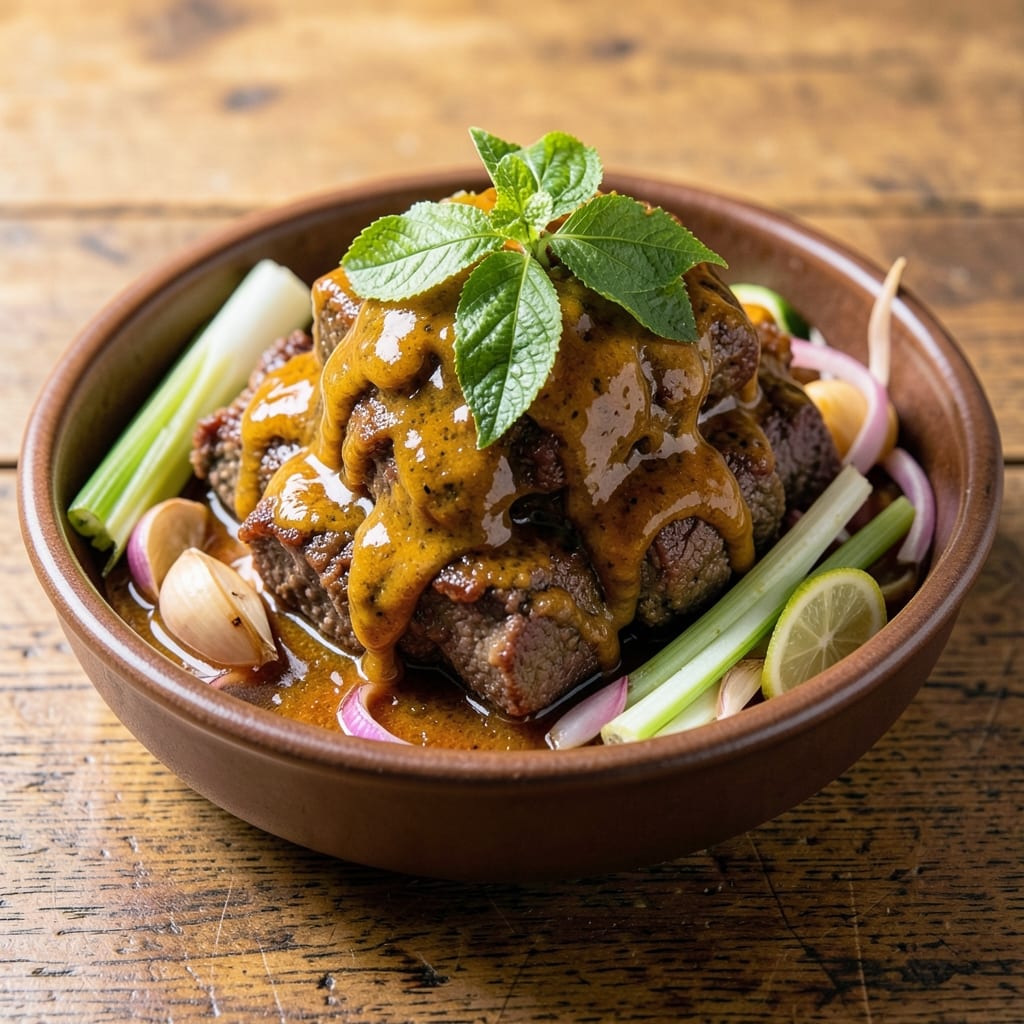
This authentic Malaysian beef rendang recipe brings the rich, aromatic soul of West Sumatra to your kitchen with its signature slow-cooked coconut-spice perfection. 🔥 The secret lies in the intricate spice paste—layered with lemongrass, galangal, and kaffir lime—that transforms tough beef into melt-in-your-mouth tenderness over hours of simmering. What makes this dish truly special is the balance: sweet, spicy, and deeply savory, all while maintaining the traditional method that's been perfected for generations.
The process begins with a vibrant red spice paste that forms the flavor foundation, then simmers for hours in rich coconut milk until the beef becomes fork-tender and the sauce reduces to a thick, fragrant glaze. This isn't just a recipe—it's an experience that requires patience and attention to detail, but the reward is a dish that's worth every minute of slow cooking. The aroma alone will fill your home with the essence of Malaysian cuisine, creating a meal that's both comforting and impressive.
What you'll achieve is restaurant-quality rendang with perfectly tender beef, caramelized edges, and a sauce that's rich yet balanced—sweet from the coconut, spicy from the chili, and aromatic from the complex spice blend. The slow cooking process ensures the meat stays juicy while developing deep, layered flavors that define this iconic dish. Serve it with steamed jasmine rice and sambal for the complete experience.
This recipe delivers on authenticity by staying true to traditional techniques while making it accessible for home cooks. The key is in the preparation: proper spice paste blending, precise temperature control, and that crucial slow simmer. Whether you're cooking for a special occasion or simply craving the flavors of Malaysia, this rendang will transport your taste buds—and your dinner guests—straight to the heart of Southeast Asia.
Ingredients for authentic malaysian beef rendang
The heart of this rendang lies in its aromatic spice blend and tender beef—where tradition meets slow-cooked perfection.
| Ingredient | Amount | Notes |
|---|---|---|
| Beef Chuck Roast 🥩 | 2 lb | Cut into 1.5-inch cubes, marbled |
| Fresh Lemongrass 🌿 | 3 whole | Outer leaves trimmed, bottom inch only |
| Galangal 🥕 | 1 piece | About 3 inches long, peeled |
| Kaffir Lime Leaves 🍋 | 4 whole | Stems removed, leaves torn |
| Shallots 🧅 | 8 whole | Peeled, roughly chopped |
| Garlic Cloves 🧄 | 8 cloves | Peeled, roughly chopped |
| Red Chili Peppers 🌶️ | 3 whole | Bird's eye or Thai, seeds removed |
| Turmeric Powder 🌿 | 1 tbsp | Freshly ground preferred |
| Coriander Seeds 🌶️ | 1 tbsp | Toasted lightly for aroma |
| Cumin Seeds 🌶️ | 1 tbsp | Toasted lightly for aroma |
| Coconut Milk 🥥 | 2 cans | Full-fat, 13.5 oz each |
| Coconut Cream 🥥 | 1 can | 13.5 oz, for thickening |
| Palm Sugar 🍯 | ½ cup | Or substitute brown sugar |
| Tamari or Soy Sauce 🥄 | 2 tbsp | Gluten-free preferred |
| Lime Juice 🍋 | 2 tbsp | Freshly squeezed |
| Salt 🧂 | 1 ½ tsp | Diamond Crystal preferred |
| Olive Oil 🫒 | 2 tbsp | For searing beef |
The beef is non-negotiable—chuck roast with good marbling breaks down beautifully during the long cook. Costco or Whole Foods usually carry it pre-cubed, but if buying whole, ask your butcher to cut it into 1.5-inch pieces. Lemongrass and galangal are the soul of this dish, so don't skimp. Asian markets have the freshest galangal, and if you can't find it, substitute with ginger (though it won't be identical). For kaffir lime leaves, check the refrigerated section at Trader Joe's—they're often sold in packs there. The shallots and garlic should be vibrant, not dried out, and the chili peppers should be bright red, not wilted.
No lemongrass? Substitute with 2 tbsp lime zest plus 1 tbsp lime juice, but you'll lose some depth. Galangal missing? Use 1 tbsp fresh ginger plus 1 tsp galangal powder if available. The coconut milk cans should be full-fat—no light versions here. For palm sugar, brown sugar works in a pinch, but the flavor won't be quite the same. Toasting the coriander and cumin seeds (dry pan, 1 minute) unlocks their aroma—don't skip this step. The turmeric should be vibrant yellow; if it's dull, toast it lightly first. And if you're short on time, pre-made red curry paste (like Maesri) can replace the fresh spice blend, though it'll lack the authentic depth.
This rendang tastes even better the next day as the flavors meld. Store in an airtight container in the fridge for up to 5 days, or freeze portions for 3 months. The sauce thickens as it cools, so add a splash of water or coconut milk when reheating. For serving, keep a few kaffir lime leaves and chili peppers on the table—guests can add heat or aroma to their bowls. The beef will be fork-tender, but if you prefer it more shredded, simmer it uncovered for the last 10 minutes to reduce the sauce further.
Why You'll Love This Recipe
- One-Pot Magic: I swear by this—just toss everything in one pot and let it do the work. The beef practically falls apart on its own, and the lemongrass and galangal infuse so deeply, you won’t believe how little effort it takes.
- Deep, Complex Heat: That slow-cooked richness? Unmatched. The shallots caramelize into sweet layers while the kaffir lime leaves add a citrusy brightness—it’s smoky, spicy, and just sweet enough to make you reach for seconds.
- Leftovers That Shine: Between us, this dish gets better the next day. I’ve reheated portions for lunch with rice, stuffed it in wraps, or even tossed it into noodles—always hits the spot without extra work.
- Budget-Friendly Feast: A big cut of beef stretches for a crowd, and the aromatics (lemongrass, galangal) are cheap but pack serious flavor. Honestly, it’s my go-to for gatherings—everyone clears their plates, and I spend less than I would on takeout.
Step-by-step instructions for authentic Malaysian beef rendang
This slow-cooked masterpiece delivers rich, aromatic layers that define Malaysian comfort food.
🔥 Step 1: Sear the Beef for Deep Flavor
Heat a heavy pot or Dutch oven over medium-high heat and add the 2 tablespoons olive oil. Working in batches (don't overcrowd), sear the 2 lb beef chuck roast cubes until deeply browned on all sides—about 3-4 minutes per batch. This caramelization builds the foundation for your rendang's complex flavor.
As you sear, listen for that satisfying sizzle—the sound of Maillard reactions creating umami depth. Transfer the beef to a plate and set aside. Real talk: if your pot gets too crowded, the beef will steam instead of sear. That's why I do it in batches.
👨🍳 Step 2: Toast the Spice Base
In the same pot, add the 8 whole shallots, 8 cloves garlic cloves, 3 whole red chili peppers, and the 1 tbsp toasted coriander seeds and 1 tbsp toasted cumin seeds. Cook over medium heat for 5-6 minutes until the shallots turn golden and the spices release their aromatic oils.
Here's the thing—those toasted seeds should smell like a spice market explosion. If they're not sizzling and popping, increase the heat slightly. Add the 1 piece galangal and 3 whole fresh lemongrass (bottom inch only) and cook for another 2 minutes until fragrant.
🥘 Step 3: Develop the Spice Paste
Add the 1 tbsp turmeric powder, 1.5 tsp salt, and 2 tbsp tamari or soy sauce. Stir vigorously for 1 minute until the spices form a thick paste. This is your flavor foundation—don't skip this step. The paste should coat the bottom of the pot completely.
Now pour in 1 cup of water and scrape up all those browned bits from the bottom. This deglazing captures all that concentrated flavor. Let it simmer for 3-4 minutes until the liquid reduces by half and the spices meld into a rich, fragrant paste.
🔥 Step 4: Slow-Cook in Coconut Milk
Return the seared beef to the pot. Add the 2 cans coconut milk (reserve ½ cup for later), 1 can coconut cream, and 0.5 cup palm sugar. Stir gently to combine, then bring to a gentle simmer. Here's where patience pays off—cover and reduce heat to low.
Simmer for 2.5-3 hours, stirring occasionally, until the beef is fork-tender and the sauce has thickened significantly. The magic happens in this slow cooking—the coconut milk breaks down, creating that signature rich, velvety texture. You'll know it's ready when the beef falls apart easily and the sauce coats the back of a spoon.
⏰ Step 5: Finish and Rest
Uncover the pot and increase heat to medium-high. Add the reserved ½ cup coconut milk and 2 tbsp lime juice. Stir in the 4 whole kaffir lime leaves (torn) and simmer for 10-15 minutes until the sauce thickens to a glossy consistency. The lime juice brightens the dish and cuts through the richness.
Remove from heat and let the rendang rest for 15 minutes. This resting period allows all the flavors to meld completely. Serve with steamed jasmine rice to soak up that incredible sauce—each bite should deliver tender beef, complex spice layers, and coconut richness in perfect harmony.
Pro Tips For Making Authentic Malaysian Beef Rendang
- CRACK THE GALANGAL: Blanch your galangal slices in boiling water for 30 seconds first—this softens the tough fibers and lets the flavor melt into the sauce instead of turning it bitter. I learned this the hard way after a rendang tasted like chewing on a rubber band.
- SLOW THE HELL DOWN: After the initial sear, drop the heat to the lowest setting your pot will handle—even if it means simmering for 6 hours instead of 4. The magic happens in the slow, steady breakdown of collagen, not the rush to finish. (Yes, even if you’re impatient like me.)
- STOP CHOPPING SHALLOTS: Use a food processor for the shallots—pulse them into a rough paste, not a fine powder. This keeps the texture balanced and prevents the sauce from turning into a gluey mess. I used to chop them by hand, and the result was always too watery.
- SKEWER THE LEMONGRASS: Cut the lemongrass stalks into 2-inch chunks and pound them lightly with the flat side of your knife before adding to the pot. This releases more oil and aroma, giving your rendang that deep, citrusy backbone without overpowering the beef. (Your future self will notice the difference.)
Dietary considerations for this dish
Vegetarian Adaptation
For a vegetarian version, swap the beef for 2 lbs extra-firm tofu or 1.5 lbs king oyster mushrooms (for meaty texture). Press tofu blocks for 30 minutes to remove excess water, then cube and pan-fry until golden. The mushrooms should be sliced into thick rounds to mimic beef texture. Simmer the tofu or mushrooms for 1.5 hours instead of beef, as they cook faster. 🌱
Gluten-Free Options
This recipe is naturally gluten-free, but always double-check your tamari or soy sauce label for hidden gluten. Use a certified gluten-free brand like San-J Tamari to ensure safety. The coconut milk, spices, and other ingredients are inherently gluten-free, making this a safe bet for those with celiac disease or gluten sensitivities.
Spice Sensitivity
Adjust the heat by removing seeds from 2 of the 3 red chili peppers for mild heat, or use 1 Thai chili instead for a milder kick. For a completely mild version, substitute with 1 tbsp mild paprika and ½ tsp cayenne (reduce total spice paste by 1 tbsp to balance flavors). Always taste the spice paste before adding beef to adjust.
Dairy-Free Confirmation
This recipe is fully dairy-free—no butter, cream, or cheese is used. The richness comes entirely from coconut milk and beef fat. For extra creaminess, add 2 tbsp coconut yogurt at the end for serving, but it's not required. The dish remains rich and satisfying without any dairy components. ✨
Low-Sodium Adjustments
Reduce the 1.5 tsp salt to ½ tsp and use low-sodium tamari (like Kikkoman Low Sodium). Add extra ½ cup water during simmering to compensate for reduced salt. The natural umami from the spices and coconut milk will still deliver deep flavor without excessive sodium. Taste frequently during cooking to adjust.
Allergen-Friendly Substitutions
For nut allergies, ensure your coconut milk is processed in a nut-free facility (check labels). For seed allergies, omit coriander and cumin seeds and replace with 1 tbsp ground coriander and ½ tsp ground cumin instead. The dish remains flavorful while avoiding common allergens. Always verify ingredient sources when substituting.
Nutrition facts
Frequently asked questions
Why does authentic Malaysian beef rendang take so long to cook?
The slow cooking process—typically 3-4 hours—is essential for tenderizing the beef and developing deep, complex flavors. The low-and-slow method allows the spices to infuse completely into the meat while the coconut milk reduces into a rich, velvety sauce. This traditional technique ensures the beef becomes fork-tender and the sauce achieves that signature caramelized texture.
Can I make the spice paste ahead of time?
Prepare the spice paste up to 3 days in advance and store it in an airtight container in the fridge. The flavors will actually deepen over time. For best results, let it sit at room temperature for 30 minutes before using to bring out its full aroma. This is especially helpful if you're short on time during the cooking process.
What's the secret to perfectly tender beef?
Start with chuck roast (never lean cuts) and sear it deeply before slow cooking. The key is patience: simmer uncovered for the last 15-20 minutes to reduce the sauce and concentrate flavors. Avoid overcrowding the pot during searing, and never skip the resting period after cooking. This allows the beef to reabsorb juices, resulting in melt-in-your-mouth texture.
How do I adjust the heat level in this recipe?
For milder heat, remove seeds from 2 of the 3 chili peppers or reduce to just 1 Thai chili. For extra spice, add ½ tsp cayenne during the final simmer. Always taste the spice paste before adding beef to adjust. The coconut milk and palm sugar naturally balance the heat, so you can't overdo it—just modify the chili content.
What's the best way to reheat leftovers?
Gently reheat on the stove over low heat with a splash of water or coconut milk to prevent drying. Avoid microwaving, as it can make the sauce watery. For best results, reheat just until warmed through (5-7 minutes) and let it sit covered for 5 minutes to redistribute juices. The flavors actually improve overnight, so leftovers taste even better!