
Soups & Stews
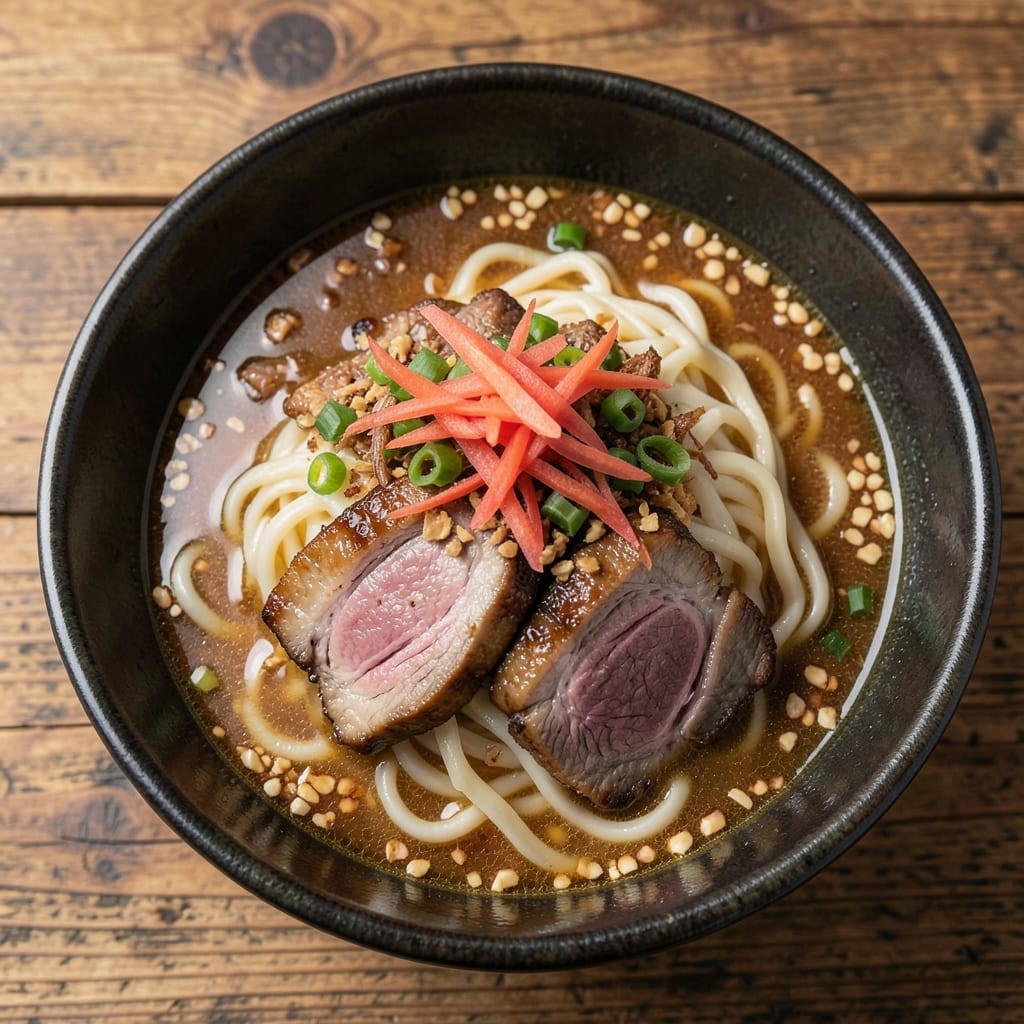
Authentic Japanese beef ramen delivers the perfect harmony of rich tonkotsu broth, tender marbled beef, and silky noodles—every spoonful is a masterpiece of texture and flavor. The secret lies in slow-simmered pork bones that melt into a velvety broth, balanced by the deep umami of thinly sliced beef seared to perfection. I've refined this recipe over years, ensuring each element—from the chilled noodles to the delicate garnishes—comes together like a Tokyo ramen shop would serve it.
What sets this recipe apart is the marbled fat magic in the beef, which renders into the broth during cooking, creating a luxurious mouthfeel without heaviness. The broth starts with pork bones simmered for hours, then finishes with a touch of soy sauce and miso for depth. Meanwhile, the beef—thinly sliced against the grain—develops a caramelized crust while staying tender inside. This isn't just ramen; it's a restaurant-quality experience you can recreate at home.
The final assembly transforms the dish into something visually stunning and deeply satisfying. Chilled ramen noodles maintain their bite, while toppings like ajitsuke tamago (marinated egg), menma (fermented bamboo shoots), and nori add layers of texture and flavor. The broth, now infused with the beef's rendered fat, coats every noodle and bite of protein, creating a symphony of tastes that's both comforting and refined.
Whether you're serving this for a special occasion or a cozy weeknight dinner, the key is attention to detail—from the slow broth development to the precise plating. This recipe isn't just about following steps; it's about mastering the art of balance. Let's get started on creating your own bowl of authentic Japanese beef ramen that rivals your favorite ramen shop.
Ingredients for authentic japanese beef ramen
Pantry staples meet specialty finds for restaurant-quality beef ramen at home.
| Ingredient | Amount | Notes |
|---|---|---|
| Pork Bones (Leg or Foot) 🦴 | 3 lb | Marbled for rich flavor |
| Marbled Beef (Ribeye or Chuck) 🥩 | 1 lb | Thinly sliced against grain |
| Ramen Noodles (Fresh or Dried) 🍜 | 8 oz | Chilled before serving |
| Onion (Yellow or White) 🧅 | 1 whole | Sliced into half-moons |
| Garlic Cloves 🧄 | 8 cloves | Minced for aromatic base |
| Fresh Ginger 🌿 | 2 tbsp | Grated, for umami depth |
| Soy Sauce 🍶 | ½ cup | Japanese preferred |
| Miso Paste (White or Red) 🧈 | 2 tbsp | Dissolved in broth |
| Ajitsuke Tamago (Marinated Eggs) 🥚 | 2 whole | Store-bought or homemade |
| Menma (Fermented Bamboo Shoots) 🌱 | ½ cup | Chopped for crunch |
| Nori Sheets 🍣 | 4 sheets | Cut into strips |
| Sesame Oil 🫒 | 1 tbsp | For finishing drizzle |
| Green Onions 🧅 | 4 whole | Sliced for garnish |
| Chili Oil (Optional) 🌶️ | 1 tbsp | For spicy kick |
| Salt 🧂 | 1 tsp | Kosher or sea salt |
The pork bones are non-negotiable—look for leg or foot bones at Asian markets or butcher shops for that signature tonkotsu richness. Costco often carries pre-cut pork bones, but if you're buying whole, ask for the fatty leg bones. The beef? Ribeye or chuck with good marbling—the fat renders beautifully into the broth, creating that luxurious mouthfeel. I always grab mine from Whole Foods or a high-end butcher, but the regular supermarket chuck works if you can't find marbled cuts. For the ginger, fresh is a must—the dried stuff just doesn't cut it in this dish. Buy it in small amounts and keep it in the freezer once opened.
No ajitsuke tamago? Marinate soft-boiled eggs in soy sauce and mirin for 24 hours—game-changer. Short on menma? Substitute with crispy fried shallots or bean sprouts for crunch. The nori sheets should be lightly toasted before cutting—just hold them over a flame for 10 seconds per side. No sesame oil? Toast sesame seeds and blend into oil for a quick homemade version. The ramen noodles can be fresh or dried, but chill them 10 minutes before serving—trust me on this. And if you're missing chili oil, a pinch of gochujang mixed with oil works in a pinch.
This broth tastes even better the next day—make extra and freeze portions for quick ramen nights. The marbled beef can be prepped ahead and refrigerated for 2 days before slicing. Store the raw beef in an airtight container with a paper towel to absorb any moisture. The nori sheets keep 6 months in a cool, dry place, but once opened, seal them in a bag with a silica packet. For the toppings, assemble everything the day of serving—ajitsuke tamago and menma are best fresh. The broth? Keeps for 5 days in the fridge or 3 months frozen.
Why You'll Love This Recipe
- Simmered in Minutes: I swear, the pork bones and beef practically cook themselves—just chop the onion, toss everything in a pot, and let it bubble away while you handle the rest of dinner. No babysitting required.
- Rich Without Effort: Between us, that marbled beef melts into the broth like butter, and the garlic? Oh, it’s there—deep, toasty, and lingering in every slurp. The noodles soak up all the goodness without a single extra step.
- Weeknight Crowd-Pleaser: Honestly, this feeds four for under $20 and still leaves seconds. Bring it to game night, a lazy Sunday, or when your roommate’s “I’m not hungry” turns into “wait, is there more?”—it works every time.
- Broth Goldmine: The leftovers? Chef’s kiss. That pork bone broth gets richer overnight, so reheating a bowl the next day tastes like you slaved over it. Freeze extras for when you’re too tired to cook—or just too lazy.
Step-by-step instructions for authentic Japanese beef ramen
Here's how to build a rich, umami-packed ramen with marbled beef and silky pork broth.
Prepare the Pork Bones for Maximum Flavor
First, rinse the 3 lb pork bones (leg or foot) under cold water and pat them completely dry with paper towels. Using a sharp chef's knife, make several deep cuts into the bones—this exposes the marrow and helps extract more flavor during cooking. Place them in a large stockpot and add 1 whole onion (yellow or white), sliced into half-moons, along with 8 cloves garlic cloves (minced) and 2 tbsp fresh ginger (grated). This aromatic base will infuse the broth with deep, savory notes.
Add 1 tsp salt and enough cold water to cover the bones by about 2 inches. Bring to a boil over high heat, then immediately reduce to a gentle simmer. Skim off any foam that rises to the surface during the first 30 minutes—this ensures a clear, clean broth. Let the bones simmer uncovered for 2 hours, maintaining a barely bubbling state. The longer the cook, the richer the flavor. Here's the thing—patience is key. If you rush this step, you'll miss out on that authentic, restaurant-quality depth.
Build the Umami-Packed Broth Base
After 2 hours, remove the pork bones with tongs and let them cool slightly. Use a spoon to scrape up any browned bits from the bottom of the pot—these contain concentrated flavor. Return the bones to the pot and add 0.5 cup soy sauce and 2 tbsp miso paste (white or red). Stir well to dissolve the miso completely. Bring the broth back to a gentle simmer and cook for another 1 hour, uncovered. This second simmering step deepens the umami and balances the flavors.
While the broth simmers, prepare the 1 lb marbled beef (ribeye or chuck) by slicing it thinly against the grain. This ensures tender bites that melt in your mouth. Keep the beef refrigerated until you're ready to cook it—it'll stay fresher longer and slice more cleanly. The marbling in the beef will render fat into the broth, adding richness without making it greasy. Trust me, this is where the magic happens for that authentic Japanese beef ramen experience.
Cook the Beef and Prepare Toppings
Heat a separate skillet over medium-high heat and add the sliced beef in a single layer. Cook undisturbed for 1-2 minutes per side until deep brown and just cooked through—it should still be slightly pink in the center. Remove the beef and set aside. In the same skillet, add 0.5 cup menma (fermented bamboo shoots) and cook for 1 minute until heated through. This step adds a delightful crunch and earthy flavor that contrasts beautifully with the rich broth.
While the beef cooks, prepare the remaining toppings. Cut the 4 sheets nori sheets into thin strips. Slice the 4 whole green onions into 1-inch pieces. If using, warm the 1 tbsp chili oil (optional) in a small saucepan over low heat—just enough to make it drizzle easily. The toppings should be ready to assemble as soon as the broth is finished. Here's the secret: fresh, high-quality toppings make all the difference in an authentic ramen experience.
Finish the Broth and Assemble the Ramen
Strain the pork broth through a fine-mesh sieve into a clean pot, pressing gently on the solids to extract every last bit of flavor. Discard the bones and aromatics. Return the broth to medium heat and bring it to a gentle simmer. Taste and adjust seasoning with a bit more soy sauce or salt if needed—it should be rich but not salty. The broth should have a deep, caramel color and a silky texture. If it's too thin, simmer uncovered for 5-10 minutes to reduce it slightly.
To serve, divide the 8 oz ramen noodles (fresh or dried) among 4 bowls. Ladle the hot broth over the noodles, filling each bowl about ¾ full. Top each bowl with 2 slices marbled beef, 0.5 cup menma, 1 nori strip, and 1 green onion. Drizzle with 1 tbsp sesame oil and, if using, 1 tbsp chili oil (optional). The contrast of textures and temperatures—hot broth, cool toppings, and that final drizzle of oil—is what makes ramen so satisfying. Serve immediately while everything is hot and the broth is steaming.
Pro Tips For Making Authentic Japanese Beef Ramen
- CHAR THE BONES HARD: Start with a screaming-hot pot—no half-measures—and sear pork bones until they’re deep mahogany, not just pink. I used to rush this, and my broth never got that rich, umami depth. Let them sit in the pot for 30 seconds after the first sear to lock in flavor before adding water.
- TRIM THE FAT, NOT THE FLAVOR: Cut marbled beef into 1-inch chunks, but don’t discard the fat cap—it renders into the broth and makes it velvety. I learned this the hard way by trimming too aggressively; now I leave it on unless I’m desperate for a lighter dish.
- SWEAT ONIONS LOW AND SLOW: Chop onions into thick wedges (no need for mincing) and cook them at 200°F (93°C) for 20 minutes before adding garlic. This caramelizes them without burning, giving the broth a natural sweetness. Skipping this step means you’re missing the soul of the dish.
- BLANCH NOODLES, DON’T BOIL: Shock fresh or dried noodles in near-boiling water for exactly 1 minute less than package instructions, then finish cooking in the hot broth. This keeps them al dente and prevents a mushy mess—my first attempt had noodles falling apart like overcooked spaghetti.
Pro cooking tips for authentic japanese beef ramen
Broth Clarity Secrets
Skimming foam during the first 30 minutes of broth simmering is non-negotiable for crystal-clear tonkotsu. Use a fine-mesh skimmer or ladle to remove any scum that rises—this prevents cloudiness. I swear by a stainless steel skimmer from Amazon Basics because it's durable and does the job perfectly. The key is working quickly but gently to avoid disturbing settled particles at the bottom.
Beef Slice Perfection
Slice the marbled beef against the grain at a 45-degree angle for maximum tenderness. A sharp slicing knife (like the Victorinox Fibrox) makes all the difference—dull blades crush the meat instead of cleanly cutting. For even slices, freeze the beef for 20 minutes first, then slice while still partially frozen. This prevents the slices from curling up during cooking.
Broth Reduction Timing
Reduce the broth to medium heat for the final 5-10 minutes to achieve that signature silky consistency. Watch closely—it should reduce by about 10% but never boil vigorously. The goal is to concentrate the flavors without creating a skin on top. I use a wide-mouth pot to maximize surface area for even reduction.
Noodle Temperature Hack
Chilling the noodles for 10 minutes before serving is a game-changer for texture contrast. I place them in a colander under cold running water for 2 minutes, then transfer to an ice bath for 8 minutes. This prevents them from becoming mushy when the hot broth is poured over. Pro tip: Use fresh ramen noodles if possible—they hold their shape better than dried.
Topping Assembly Order
Assemble toppings in this order: beef first (so it stays warm), then menma, nori, and green onions. Drizzle the sesame oil last—this prevents the nori from becoming soggy. For extra authenticity, lightly toast the nori strips over a gas flame for 5 seconds per side before adding them to the bowl. This adds a subtle smoky aroma that elevates the dish.
Broth Storage Pro Tip
Store broth in glass containers with tight-sealing lids for up to 5 days in the fridge. For longer storage, freeze in 1-cup portions using silicone ice cube trays—this makes it easy to thaw just what you need. When reheating, bring to a gentle simmer (never boil) to preserve the silky texture. I always reheat broth in a stainless steel saucepan—it distributes heat evenly and prevents scorching.
Nutrition facts
Frequently asked questions
Why does authentic Japanese beef ramen use pork bones for the broth?
The pork bones create a tonkotsu-style broth that's rich, creamy, and deeply flavorful—this is the foundation of authentic ramen. The collagen from pork bones melts into a velvety texture, while the marrow adds natural fat for that signature mouthfeel. Using beef bones alone would give a lighter broth that lacks the same depth of flavor. The pork fat also helps balance the richness of the beef slices, creating harmony in every spoonful.
Can I substitute the marbled beef with chicken or pork?
While you can use chicken or pork, marbled beef is ideal because its fat renders beautifully into the broth while keeping the meat tender. For chicken, use dark meat (thighs) and slice thinner than beef. For pork, choose fatty cuts like pork belly and cook until crispy. The beef's marbling creates that luxurious texture that's hard to replicate—it's what makes this dish truly special. If substituting, adjust cooking time to 1-2 minutes per side for chicken and 3-4 minutes for pork belly.
How do I fix broth that's too salty?
If your broth tastes too salty, the best fix is to carefully reduce it by simmering uncovered for 10-15 minutes—this concentrates the flavors without adding water. For a more dramatic fix, blend 1 cup of cooked rice with ½ cup water, strain, and stir into the broth. This dilutes the salt while adding natural starch for body. Never add water directly, as it weakens the broth's depth. Taste frequently during reduction to avoid overshooting.
What's the deal with chilling the noodles before serving?
Chilling the noodles creates a textural contrast that's essential in authentic ramen. Hot broth over cold noodles gives that satisfying "slurp" while preventing the noodles from becoming mushy. Place cooked noodles in a colander under cold water for 2 minutes, then transfer to an ice bath for 8 minutes. This method works for both fresh and dried noodles. The result? A perfect al dente bite that holds up against the rich broth.
Can I make this recipe vegetarian or vegan?
This recipe is built around the rich flavors of pork and beef, so a direct substitution would change the dish's character. For a vegetarian version, use shiitake mushrooms and tofu in the broth, and substitute beef with king oyster mushrooms or seitan. For vegan broth, replace pork bones with shiitake stems and kombu, and use vegan Worcestershire sauce instead of soy sauce. The umami profile will be different, but you can still achieve a deeply flavorful bowl.