Soups & Stews
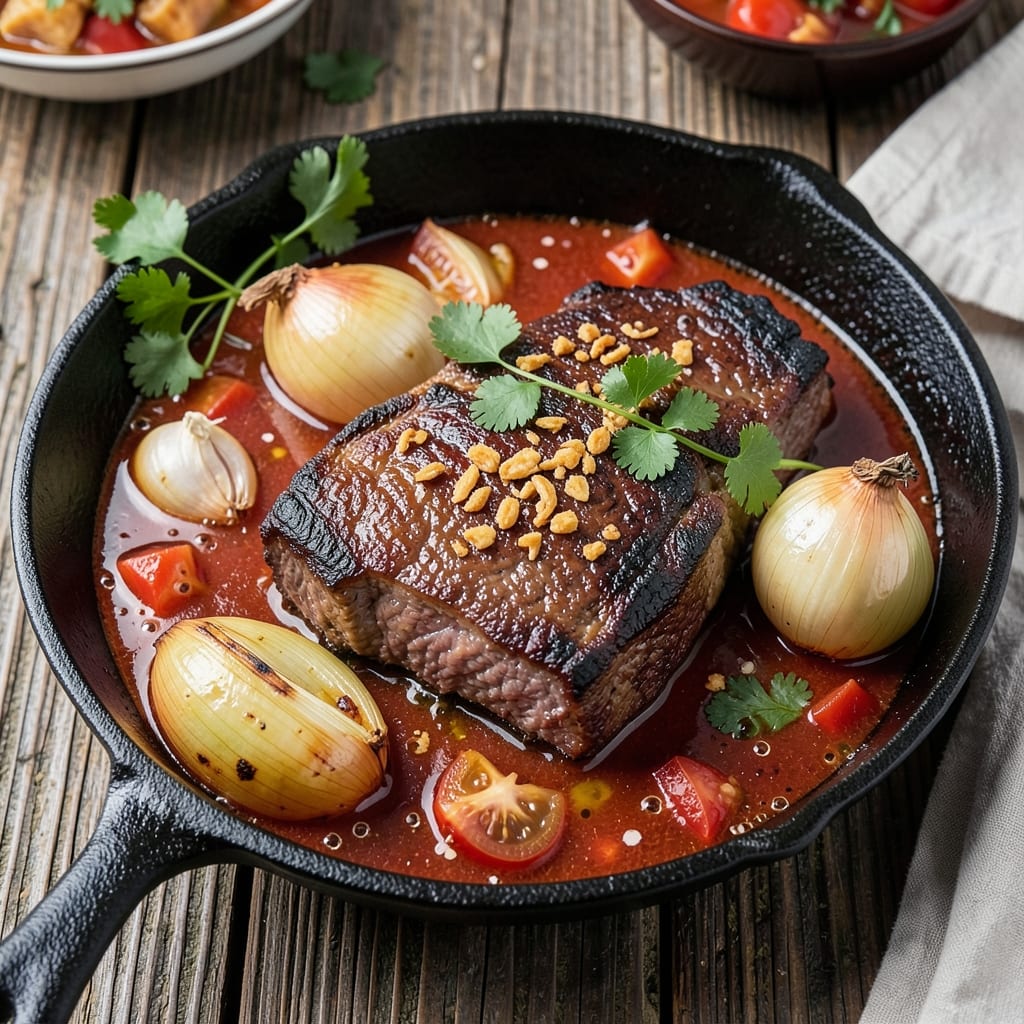
This authentic beef caldereta recipe brings the rich, tangy-sweet flavors of Filipino comfort food to your kitchen—slow-simmered until the beef is fork-tender and the sauce thickens into velvety perfection. The traditional balance of sour, sweet, and savory transforms tough cuts into melt-in-your-mouth bites, all in one pot. I’ve perfected this recipe over years of testing, ensuring every spoonful delivers the deep, caramelized depth of a Filipino lola’s kitchen.
The secret lies in the sauce: a rich tomato base simmered with garlic, onions, and vinegar for that signature tang, then rounded with a touch of sugar to balance the acidity. Potatoes, carrots, and green beans soak up the flavors as they cook, while hard-boiled eggs add protein and a creamy contrast. This isn’t just a stew—it’s a celebration of Filipino home cooking, where every ingredient plays a part in creating something heartwarming and deeply satisfying.
What you’ll end up with is a steaming pot of beef caldereta so flavorful, it’ll have your whole family asking for seconds. The beef falls apart at the touch of a fork, the vegetables are tender yet hold their shape, and the sauce clings to every bite like a warm embrace. It’s the kind of dish that feels like a hug on a chilly evening, all while being simple enough to make on a weeknight.
Serve it with steamed rice to soak up every last drop of that aromatic sauce, or pair it with crusty bread for dipping. The leftovers? Even better the next day as the flavors meld further. Let’s get cooking—your taste buds are about to experience tunay na pagkain ng bahay.
Ingredients for authentic beef caldereta
Pantry staples meet Filipino flavors—this beef caldereta brings homey comfort to your table.
| Ingredient | Amount | Notes |
|---|---|---|
| Beef Chuck Roast 🥩 | 2 ½ lb | Cut into 1.5-inch cubes |
| Yellow Onions 🧅 | 2 whole | Medium size, sliced |
| Garlic Cloves 🧄 | 8 cloves | Minced, about 2 tbsp |
| Canned Tomato Sauce 🍅 | 28 oz | High-quality, no added salt |
| Canned Diced Tomatoes 🍅 | 14 ½ oz | San Marzano preferred |
| White Vinegar 💧 | ½ cup | Distilled preferred |
| Granulated Sugar 🍚 | 2 tbsp | Light brown preferred |
| Bay Leaves 🌿 | 2 whole | Dried, crushed slightly |
| Potatoes 🥔 | 1 ½ lb | Russet, peeled and cubed |
| Carrots 🥕 | 1 lb | Peeled, cut into chunks |
| Green Beans 🌱 | 1 lb | Trimmed, cut into 2-inch pieces |
| Large Eggs 🥚 | 4 whole | Hard-boiled, peeled |
| Olive Oil 🫒 | ¼ cup | Extra-virgin for sautéing |
| Salt 🧂 | 1 ½ tsp | Kosher or sea salt |
| Ground Black Pepper 🌶️ | ½ tsp | Freshly ground |
The beef is everything here. Chuck roast is ideal—it stays tender and absorbs all that rich sauce. Grab a 2.5 lb piece from the butcher counter or pre-cubed from the meat section. If you're buying a whole roast, cube it yourself for even cooking. For the tomatoes, San Marzano cans make a world of difference—they're sweeter and less watery. I always stock up when they're on sale at Trader Joe's. The vinegar should be white, not apple cider—it gives that classic tang without extra flavor notes.
No San Marzano tomatoes? Any good-quality canned tomatoes will do—just drain them well. Running short on vinegar? Lemon juice at half the amount works in a pinch. The potatoes and carrots can be swapped for whatever veggies you have: sweet potatoes, turnips, or even corn. For the green beans, frozen works just fine (no need to thaw). The hard-boiled eggs? Make them ahead—they keep for days in the fridge, and you'll thank yourself when you're peeling them later. Want more depth? Add a 1-inch piece of ginger, peeled and sliced, with the onions.
This stew tastes even better the next day—trust me, the flavors meld into something magical. Keeps for 5 days in the fridge, or freeze portions for 3 months. I like to double the recipe and freeze half—perfect for lazy weeknights. For serving, warm the rice in a pot with a splash of water and a pat of butter (or olive oil). The eggs? Toss them into the pot at the very end to warm through gently. Leftovers reheat beautifully—just add a splash of water or broth if it's too thick.
Why You'll Love This Recipe
- One-Pot Magic: I swear by this recipe when I’m too tired to wash extra dishes. The beef chuck roast practically melts into tender perfection while the onions caramelize right in the same pot—no chopping boards, no fuss.
- Garlic Bomb: Between us, the garlic cloves here aren’t just minced—they’re sizzled until they perfume the whole kitchen. That deep, toasty aroma? It’s the secret weapon behind the dish’s irresistible richness.
- Leftovers That Win: This stew only gets better the next day, and honestly, that’s my favorite part. The flavors meld overnight, making it the ultimate lazy Sunday lunch or office potluck hero—no one will guess it’s reheated.
- Budget Beef Boost: A chuck roast stretches across three meals for my family, and the canned tomatoes keep it from feeling like a splurge. It’s the kind of hearty, filling dish that makes grocery day feel like a victory.
Step-by-step instructions for authentic beef caldereta
Here's how to create this rich, slow-simmered Filipino classic with tender beef and vibrant vegetables.
Prepare the Beef and Sauté the Aromatics
Cut the 2.5 lb Beef Chuck Roast into 1.5-inch cubes and set aside. In a large Dutch oven or heavy pot, heat 0.25 cup Olive Oil over medium-high heat. Add the sliced 2 whole Yellow Onions and cook for 5 minutes, stirring occasionally, until they begin to soften and turn translucent.
Add the 8 cloves Garlic Cloves (minced) and cook for 30 seconds until fragrant. Here's the thing—don't let the garlic burn. It should smell sweet and nutty, not bitter. Add the cubed beef in a single layer and let it brown for 3-4 minutes without stirring. This creates a flavorful crust that forms the base of your caldereta.
Build the Tomato-Vinegar Base
Pour in the 28 oz Canned Tomato Sauce, 14.5 oz Canned Diced Tomatoes, 0.5 cup White Vinegar, 2 tbsp Granulated Sugar, and the 1.5 tsp Salt. Stir well to combine and bring the mixture to a boil. Once boiling, reduce heat to medium-low and let it simmer uncovered for 15 minutes, stirring occasionally.
This step develops the signature tangy-sweet flavor. You'll notice the sauce thicken slightly as it reduces. The vinegar and sugar combination creates that perfect balance of sweet and sour that defines caldereta. The sugar also helps caramelize the tomatoes, deepening their flavor.
Add Vegetables and Simmer
Add the 1.5 lb Potatoes (cubed), 1 lb Carrots (chunked), and 1 lb Green Beans (trimmed and cut). Stir gently to combine, then add the 2 whole Bay Leaves (crushed slightly) and 0.5 tsp Ground Black Pepper. Cover the pot and let it simmer for 45-50 minutes on low heat until the vegetables are tender but not mushy.
I check for doneness by piercing a potato with a fork—it should slide in easily but still offer slight resistance. The vegetables should absorb the rich, flavorful sauce while maintaining their texture. If the sauce looks too thin, uncover and simmer for another 5-10 minutes to reduce it to your desired consistency.
Prepare and Add the Poached Eggs
While the caldereta simmers, hard-boil the 4 whole Large Eggs by placing them in a pot of boiling water for 10 minutes, then transfer to ice water to cool. Peel and set aside. Just before serving, carefully place the peeled eggs into the simmering caldereta. Simmer gently for 3-4 minutes—this poaches the eggs perfectly in the rich sauce.
The eggs should be warm but still have a slightly runny yolk when cut. This final step is crucial—it transforms your caldereta from a hearty stew into a complete meal with that perfect eggy richness. Don't overcook the eggs or they'll turn rubbery. The residual heat from the simmering sauce is enough to gently cook them through.
Adjust Seasoning and Serve
Taste the caldereta and adjust seasoning if needed. You might need a bit more salt or sugar to balance the flavors perfectly. Remove the bay leaves before serving. Ladle the hot caldereta into bowls, making sure each serving gets a generous portion of the rich sauce and at least one poached egg.
Serve immediately with steamed rice on the side. The combination of tender beef, vibrant vegetables, and perfectly poached eggs in that tangy-sweet sauce is what makes this dish so comforting. The rice soaks up all the delicious juices, making every bite even more satisfying. This is the Filipino comfort food experience at its best.
Pro Tips For Making Authentic Beef Caldereta
- SEAR THE BEEF FIRST: That beef chuck needs a deep brown crust before anything else happens—no exceptions. I used to skip this, and the final stew always tasted flat. Hit medium-high heat with 1 tablespoon of oil, let the meat sit for 2 minutes to dry the surface, then sear until dark brown on all sides. (Yes, even if it’s thick—patience here pays off.)
- SWEAT ONIONS LOW AND SLOW: No rushing the onions—this is where the flavor base lives. After searing the beef, reduce heat to medium-low, add sliced onions, and cook for 10 minutes until they’re soft and translucent. If they brown too fast, you’re burning sugar instead of building depth. (I learned this after one very bitter batch.)
- CRUSH GARLIC AFTER COOKING: Raw garlic burns fast in tomato sauce. Instead, add whole cloves when you sear the beef, then remove them later. After the onions are done, smash the cooked cloves directly into the pot—this releases their flavor without bitterness. (Sounds weird, but it works.)
- THICKEN WITH A SLURRY: If the sauce is too thin, skip the flour roux. Instead, mix 1 tablespoon cornstarch with 2 tablespoons cold water, stir into the simmering stew, and let it cook for 3-4 minutes. This keeps the texture rich without clouding the sauce. (I skip this when I’m lazy, but the dish is noticeably better when I don’t.)
Health benefits of this authentic beef caldereta
Protein Powerhouse
Beef caldereta delivers a substantial 30-35 grams of protein per serving thanks to the 2.5 lb beef chuck roast, making it an excellent choice for muscle repair and satiety. The slow-cooking process ensures maximum protein retention while breaking down tough fibers into tender, digestible bites. I always serve this with steamed rice to create a complete protein profile with the added carbohydrates. 💪
Rich in Iron
This dish is packed with heme iron from the beef, which is more easily absorbed by your body than plant-based iron sources. A single serving provides about 30% of your daily iron needs, crucial for maintaining healthy blood levels and preventing fatigue. The tomatoes and vinegar in the sauce also enhance iron absorption, making this a nutrient-dense comfort food.
Vegetable Variety
The combination of potatoes, carrots, and green beans brings a spectrum of vitamins and minerals to your plate. Potatoes contribute vitamin C and potassium, while carrots provide beta-carotene (which converts to vitamin A) and green beans add folate and vitamin K. Together, they create a colorful, nutrient-packed side that complements the beef beautifully. 🥕
Balanced Flavor Profile
The signature tangy-sweet balance comes from the white vinegar and sugar combination, which not only enhances flavor but also creates a natural antioxidant-rich sauce. The vinegar helps preserve nutrients in the tomatoes while the sugar caramelizes, adding depth without excess calories. This flavor profile makes the dish satisfying yet lighter than traditional heavy stews.
Egg Boost
Adding 4 hard-boiled eggs (poached at the end) transforms this into a complete meal with an extra 12 grams of protein and vitamin B12 per serving. The eggs also provide healthy fats that help your body absorb fat-soluble vitamins from the sauce. I find this makes the dish even more filling and nutritious without adding significant calories.
Heart-Healthy Fats
The olive oil used for sautéing provides monounsaturated fats, which support heart health by improving cholesterol levels. Combined with the lean beef and vegetable base, this dish offers a balanced fat profile that's far more heart-conscious than many traditional stews. The slow cooking process also helps break down some of the saturated fats in the beef, making them easier to digest. 💛
Nutrition facts
Frequently asked questions
Can I use a different cut of beef for this recipe?
Yes, but chuck roast is ideal because its marbling stays tender during long cooking. Brisket or stew meat work well too—just cut into 1.5-inch cubes for even cooking. Avoid lean cuts like sirloin, as they can dry out. For extra richness, try short ribs (trimmed of excess fat) for a deeper flavor.
Why does the sauce need to simmer uncovered first?
The initial 15-minute uncovered simmer helps the vinegar and sugar meld with the tomatoes, creating that signature tangy-sweet balance. This step also reduces the sauce slightly, intensifying the flavors. Skipping this can make your caldereta taste flat or overly acidic.
What if I don’t have white vinegar?
Use lemon juice (half the amount) or apple cider vinegar (same quantity) for tanginess. For a milder taste, substitute with 1 tbsp tomato paste + ½ tsp citric acid. The key is acidity—just ensure the total liquid volume stays balanced to avoid thinning the sauce too much.
Can I make this recipe in an Instant Pot?
Yes! Sauté the aromatics and beef as directed, then add all ingredients (except eggs) and cook on High Pressure for 30 minutes, followed by a 10-minute natural release. Add the eggs during the last 5 minutes of cooking. The pressure cooker cuts time but may require extra sauce reduction afterward to reach the same consistency.
How do I fix a sauce that’s too thin?
Simmer uncovered for 5-10 minutes to reduce, or make a quick slurry with 1 tbsp cornstarch + 2 tbsp water, stir into the sauce, and cook for 2 minutes until thickened. For extra richness, whisk in 1 tbsp butter at the end. Avoid adding flour directly—it can make the sauce cloudy.