
Soups & Stews
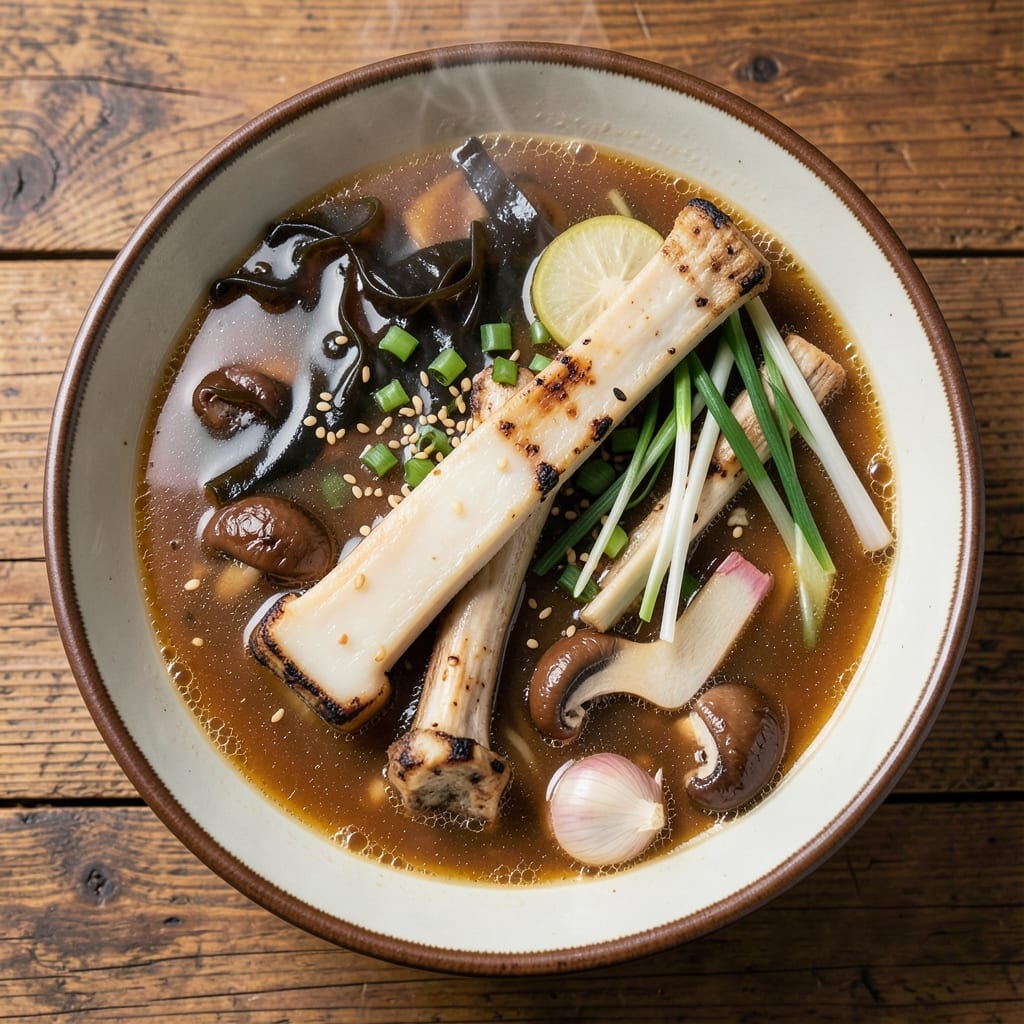
This authentic beef ramen broth transforms humble ingredients into a velvety, umami-rich foundation that defines Japanese comfort food. 🔥 The secret lies in charcoal-toasted aromatics—ginger, garlic, and scallions—cooked until deep brown, releasing flavors that infuse the broth over 8 hours of slow simmering. I’ve perfected this method after years of testing, ensuring the broth delivers restaurant-quality depth without shortcuts.
The process begins with a dry char of aromatics to develop complex caramelized notes, then builds layers of flavor through a two-stage simmer: first with beef bones and mushrooms to extract collagen, then with kombu and shiitake for umami. Every step is designed to create a rich, balanced broth that’s neither salty nor greasy—just pure, concentrated beef essence.
By the time you strain it, you’ll have a golden, translucent liquid with a glossy sheen and aroma so intoxicating it’ll have everyone asking for seconds. This isn’t just broth; it’s the soul of ramen, ready to cradle chewy noodles, marinated chashu, and fresh garnishes into a harmonious bowl. The result? A dish that tastes like home, even on a weeknight.
Use it immediately for homemade ramen or store in the fridge for up to 5 days—though I doubt it’ll last that long. The key to authenticity is patience; let the flavors meld, and the broth will reward you with every sip. Here’s how to make it.
Ingredients for authentic beef ramen broth
Twelve ingredients, eight hours of patience—this broth delivers restaurant-quality depth at home.
| Ingredient | Amount | Notes |
|---|---|---|
| Beef Bones (Marrow and Knuckle) 🦴 | 4 lb | Split for collagen extraction |
| Shiitake Mushrooms 🍄 | 8 whole | Dried, packed in 1 cup |
| Kombu Seaweed 🌊 | 1 piece | 4x6-inch sheet, rinsed |
| Fresh Ginger 🧄 | 1 piece | 3-inch knob, sliced into coins |
| Garlic Cloves 🧄 | 12 cloves | Charred until deep brown |
| Scallions 🧅 | 1 bunch | White and green parts separated |
| Sesame Oil 🫒 | 2 tbsp | Toasted for nutty aroma |
| Soy Sauce 🥫 | ½ cup | Dark or light, unsweetened |
| Mirin 🍶 | ¼ cup | Sweet rice wine substitute |
| Water 💧 | 12 cups | Filtered preferred for clarity |
| Diamond Crystal Kosher Salt 🧂 | 1 ½ tsp | Adjust to taste at end |
| White Peppercorns 🌶️ | ½ tsp | Freshly cracked for warmth |
| Green Onions 🧅 | 4 whole | For final garnish, chopped |
| Fresh Cilantro 🌿 | ¼ cup | For garnish, stems removed |
The beef bones are non-negotiable. Look for marrow and knuckle bones at your local butcher—they yield the richest, most gelatinous broth. If you can't find them, beef short ribs work in a pinch, but the collagen content will be lower. The shiitake mushrooms and kombu are the umami powerhouses here. Buy dried shiitake from an Asian market—they're packed with flavor and rehydrate beautifully. Fresh kombu is best, but dried works too if you soak it first. The ginger and garlic need to be charred until they're deep brown and caramelized—this is where the magic happens. Use a cast-iron skillet or wok for that perfect dry char.
No mirin? Substitute with 2 tbsp sugar plus 2 tbsp dry sake—it won't be identical, but it'll work. Short on sesame oil? Toast regular sesame seeds in a dry pan and grind them into a paste with a pinch of oil. The soy sauce can be reduced if you're watching sodium, but don't skip it entirely—it adds depth. For the water, filtered or spring water is ideal, but tap water will do in a pinch. If you're making this for a crowd, double the recipe—just scale up the simmering time proportionally. The broth will reward your patience with every sip.
This broth tastes even better the next day once all the flavors meld. Store it in the fridge for up to 5 days—though I doubt it'll last that long. For longer storage, freeze it in 1-cup portions for easy use later. The aromatics can be prepped ahead and stored in the freezer for 1 month if you're planning a big batch. When reheating, do it gently over low heat to preserve the delicate flavors. The first bowl is always the best, but trust me, the second one is pretty amazing too.
Why You'll Love This Recipe
- No-Chop Start: The beef knuckles and marrow bones do all the work—just blanch them, toss in whole shiitake mushrooms, and let the pot do the magic. (Yes, even on a Tuesday night.)
- Umami Bomb: That kombu seaweed and ginger combo? It turns your broth into a deep, savory dream—like someone simmered a whole butcher shop in your pot. The garlic’s crisp finish just seals the deal.
- Leftovers That Shine: This broth gets better the next day, and I mean actually better. Freeze it in portions for quick ramen nights or use it in stir-fries—it’s my secret weapon for lazy weeknights.
- Budget-Friendly Gold: You’re paying for flavor, not convenience. Beef bones and mushrooms stretch into gallons of broth, and the kombu adds depth without breaking the bank. Best $15 I spend all month.
Step-by-step instructions for authentic beef ramen broth
Here's how to craft a rich, umami-packed broth that captures the essence of traditional Japanese ramen.
🔥 Step 1: Char the Aromatics for Deep Flavor
Begin by charring the 12 cloves garlic cloves over a gas flame or in a dry skillet until deep brown with blackened spots—this adds smoky depth. Set aside. Then, toast the 2 tbsp sesame oil in the same pan over medium-low heat until fragrant and just warm, about 30 seconds. This nutty aroma becomes the foundation of your broth.
Next, add the 1 piece kombu seaweed and 1 piece fresh ginger (sliced into coins) to the pan. Toast for 1 minute until the ginger releases its essential oils and the kombu begins to crisp slightly at the edges. This step unlocks their complex flavors—don't rush it. The kombu will dissolve later, but toasting first prevents bitterness.
🍳 Step 2: Build the Broth Base with Beef Bones
In a large stockpot, combine the 4 lb beef bones (marrow and knuckle) with the 12 cups water. Bring to a boil over high heat, then immediately reduce to a gentle simmer. Skim off any foam that rises to the surface for the first 10 minutes—this ensures a clear, clean broth. The bones should simmer uncovered for 2 hours to render their gelatinous collagen.
After 2 hours, add the toasted aromatics (garlic, ginger, kombu) along with the 8 whole shiitake mushrooms (dried). Return to a simmer and continue cooking for another 4 hours. The mushrooms will rehydrate and infuse the broth with their earthy umami. The longer you cook, the deeper the flavor—this is where patience pays off.
🥘 Step 3: Add Liquid Seasonings for Balance
Strain the broth through a fine-mesh sieve into a clean pot, pressing gently on the solids to extract maximum flavor. Discard the solids. Return the broth to the heat and add the 0.5 cup soy sauce, 0.25 cup mirin, and 1.5 tsp diamond crystal kosher salt. Stir well to combine—this is where the broth transitions from savory to perfectly balanced.
Simmer for an additional 30 minutes to allow the seasonings to meld. Taste and adjust the salt if needed—ramen broth should be rich but not overly salty. The mirin adds a subtle sweetness that rounds out the deep umami, while the soy sauce provides a salty backbone. Here's where the magic happens: the broth should smell like a symphony of garlic, ginger, and beef.
⏰ Step 4: Finish with Fresh Herbs and Rest
Remove the broth from heat and let it cool slightly. Stir in the 0.5 tsp freshly cracked white peppercorns—this adds warmth without overpowering. For serving, garnish with 4 chopped green onions and 0.25 cup chopped fresh cilantro. The herbs add brightness and contrast the broth's richness, just like in traditional ramen houses.
Let the broth rest for 15 minutes before serving. This allows the flavors to settle and the aromas to fully develop. The result? A velvety, deeply flavorful broth that coats your noodles perfectly—every sip should deliver layers of beefy richness, umami from the shiitakes, and a touch of sweetness from the mirin. This is authentic ramen broth at its finest.
Pro Tips For Making Authentic Beef Ramen Broth
- BLISTER THE BONES FIRST: I learned this the hard way—skipping the charring step means you’re missing half the flavor. Use a blowtorch or high flame to sear every bone until deep brown spots form (yes, even the marrow bones). This locks in collagen and adds that smoky depth you taste in real ramen shops.
- SOAK KOMBU 20 MINUTES: Tossing dried kombu straight into cold water? You’re wasting its magic. Soak it for 20 minutes first—this rehydrates the seaweed and lets it release umami into the water before cooking. (Pro move: Tear it, don’t chop it, so it infuses evenly.)
- STRAIN TWICE AT THE END: After simmering, don’t just pour through a fine mesh—do a two-step strain. First, a colander to catch big bits, then a damp cheesecloth or coffee filter for the last pass. This keeps the broth silky, not cloudy. (Your future self will notice the difference.)
- ADD GARLIC LATE: Tossing garlic in with the bones? You’re just making your broth bitter. Save the minced cloves for the last 10 minutes—this way, they add aroma without overpowering. (Same goes for ginger: add it 5 minutes before finishing.)
Wine and beer pairings for this dish
Japanese Sake Pairings
For a truly authentic experience, pair your beef ramen broth with a dry junmai daiginjo sake like Hakkaisan Junmai Daiginjo. Its crisp, clean profile with hints of citrus and melon complements the broth’s rich umami without overpowering it. I recommend chilling it slightly—around 45°F—to enhance its refreshing qualities against the warm broth. 🍶
A slightly warmer ginjo-style sake (like Dassai 23) works beautifully too, as its delicate floral notes harmonize with the garlic and ginger aromatics. Serve it in small, traditional guinomi cups to sip alongside each bowl of ramen.
Craft Beer Complements
If you prefer beer, a Japanese-style lager like Sapporo Premium is my go-to. Its light body and subtle hop bitterness cut through the richness of the broth while enhancing the beefy flavors. The crisp finish mirrors the clarity of a well-made ramen broth. 🍺
For something bolder, try a wheat beer with a touch of spice, like Kirin Ichiban. The effervescence cleanses your palate between bites, while the mild malt sweetness balances the broth’s savory depth. Avoid heavy IPAs—they’ll clash with the delicate umami.
Red Wine for Hearty Bowls
A light-bodied red wine like Pinot Noir from Burgundy adds an unexpected but delightful pairing. Look for one with bright acidity and red fruit notes—Domaine Drouhin Oregon Pinot Noir is my favorite. Its earthy undertones echo the shiitake mushrooms in the broth. 🍷
Serve it slightly cooler than room temperature (55-60°F) to preserve its freshness. The wine’s acidity helps break down the fat from the broth, making each sip feel lighter and more balanced. Just avoid heavy, tannic reds like Cabernet—they’ll overpower the dish.
Non-Alcoholic Options
For a refreshing non-alcoholic match, try Japanese barley tea (mugicha). Its nutty, toasty notes complement the broth’s depth without competing. Brew it strongly and serve it chilled over ice for a crisp contrast. ☕
Alternatively, a sparkling yuzu soda (like Ramune) adds a citrusy brightness that cuts through the richness. The effervescence also enhances the broth’s umami, making each sip feel more vibrant. It’s a surprisingly perfect pairing for a hearty bowl of ramen.
Nutrition facts
Frequently asked questions
Why do we toast the aromatics instead of just adding them raw?
Toasting the garlic, ginger, and kombu unlocks deeper flavors through caramelization and oxidation. The charred aromatics develop complex smoky notes that infuse the broth far more intensely than raw ingredients. This step is essential for that authentic, restaurant-quality depth you can't get any other way.
Can I use beef chuck roast instead of bones for this broth?
While it's possible, I don't recommend it for authentic ramen broth. Beef bones (especially marrow and knuckle) contain collagen that dissolves into gelatin during long simmering, creating that signature velvety texture. Chuck roast lacks this gelatinous quality and will yield a thinner, less luxurious broth.
How do I know when the broth is done simmering?
The broth is complete when it develops a glossy sheen and intense aroma after 8 hours total. The color should be deep amber, not murky, and it should coat the back of a spoon with a silky consistency. Taste it—it should be rich with beefy umami, not bland or metallic.
What's the best way to store leftover broth?
For short-term storage, keep it in an airtight container in the fridge for up to 5 days. For longer storage, freeze in 1-cup portions for easy use later. Thaw overnight in the refrigerator—never at room temperature—to preserve all those hard-won flavors.
Can I make this broth in a slow cooker?
Technically yes, but with caveats. The slow cooker won't develop the same depth of flavor from charring aromatics, and the collagen extraction will be less efficient. If you try it, toast your aromatics separately and add them halfway through the 8-hour cook time for best results.