
Soups & Stews
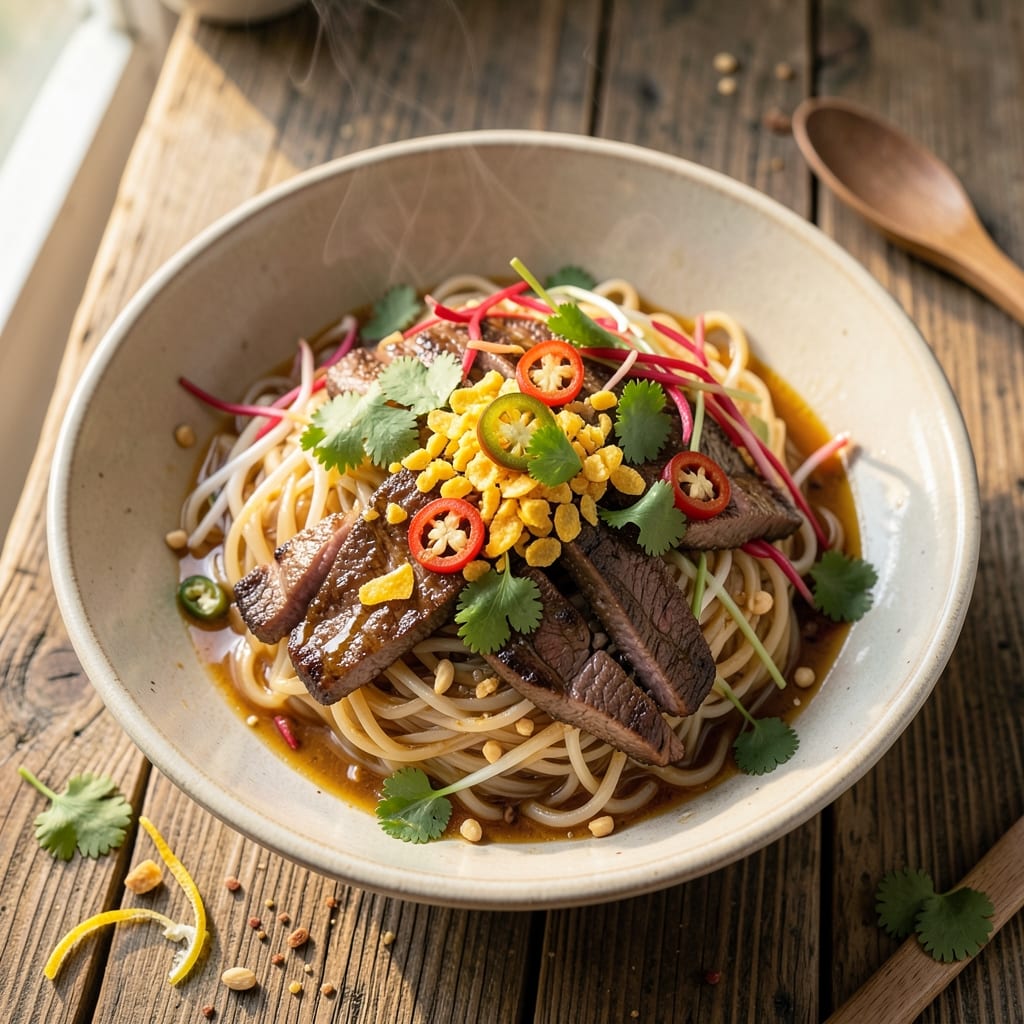
This authentic beef pad Thai recipe delivers the perfect balance of tamarind, fish sauce, and lime—just like street-side Thai stalls serve it. The key lies in a quick-marinated beef that stays tender yet flavorful, paired with perfectly chewy rice noodles and a sauce that's tangy, sweet, and savory all at once. I've perfected this version after years of testing, ensuring every element comes together in harmony.
The magic happens in the wok, where high heat sears the beef just enough to lock in flavor before tossing it with the noodles and sauce. Traditional Thai techniques—like using just enough tamarind paste for that signature tang and balancing it with fish sauce—are what set this apart from Westernized versions. The result? A dish that's restaurant-quality but achievable at home with simple ingredients.
What makes this recipe truly authentic is the plating: crispy bean sprouts for texture, crushed peanuts for crunch, and fresh lime and cilantro for brightness. Each bite delivers the perfect combination of chewy noodles, tender beef, and a sauce that's both complex and balanced. This is the pad Thai I grew up craving—now you can make it too.
Ready in under 30 minutes, this recipe is perfect for weeknight dinners or impressing guests. The prep is straightforward, but the flavors are anything but basic. Let's get cooking!
Ingredients for authentic beef pad thai
Simple ingredients, bold flavors—this is the pad Thai you'll crave again and again.
| Ingredient | Amount | Notes |
|---|---|---|
| Flat Rice Noodles 🍜 | 8 oz | Medium-width, dried |
| Thinly Sliced Flank Steak 🥩 | 1 lb | Thinly sliced against grain |
| Tamarind Paste 🍯 | ½ cup | Thick, unsweetened |
| Fish Sauce 🍶 | ¼ cup | Red Boat preferred |
| Palm Sugar 🍚 | ¼ cup | Or light brown sugar |
| Lime Juice 🍋 | ½ cup | Freshly squeezed |
| Soy Sauce 🍶 | ¼ cup | Light or all-purpose |
| Garlic Cloves 🧄 | 6 cloves | Minced, aromatic |
| Bean Sprouts 🌱 | 2 cups | Fresh, crispy |
| Crushed Peanuts 🥜 | ½ cup | Roasted, unsalted |
| Fresh Cilantro 🌿 | ¼ cup | Chopped, bright green |
| Sesame Oil 🫒 | 1 tbsp | Toasted, for aroma |
| Vegetable Oil 🫒 | ¼ cup | High smoke point |
| Salt 🧂 | 1 tsp | Kosher or sea salt |
| Ground Black Pepper 🌶️ | ½ tsp | Freshly cracked |
The beef is where it all starts. Flank steak is my go-to—it's lean but tender when sliced thin against the grain. Grab it from the butcher counter if possible; they'll slice it perfectly for you. Thai markets often carry pre-sliced beef for pad Thai, but if you can't find it, slice it yourself with a sharp knife. The tamarind paste? Mae Ploy or Thai Kitchen brands are my favorites—they've got that perfect balance of tangy and sweet. If you can't find palm sugar, light brown sugar works in a pinch, though it'll be slightly less authentic.
No fish sauce? Soy sauce plus a splash of Worcestershire gets you close, but trust me on this—Red Boat fish sauce is worth the investment. The garlic needs to be fresh; pre-minced garlic just doesn't cut it here. For the bean sprouts, Trader Joe's has the best crisp ones—look for them in the produce section. If your peanuts are salted, skip the extra salt in the sauce. The lime juice should be freshly squeezed—bottled just doesn't have the same zing. And if you're feeling fancy, toast your peanuts in a dry pan for 2-3 minutes before crushing them for extra flavor.
This dish tastes even better the next day—honestly, the flavors meld even more. Store leftovers in an airtight container in the fridge for up to 3 days. The noodles soften when reheated, so I like to keep them separate from the sauce and beef until serving. For extra crunch, toast the crushed peanuts fresh before serving. And if you've got extra tamarind paste, it keeps for 6 months in the pantry—perfect for future pad Thai cravings.
Why You'll Love This Recipe
- No-Soaking Needed: I keep a big bag of dried rice noodles in my pantry—just boil, drain, and toss. No waiting, no fuss. The second you add that hot tamarind-fish sauce mix, they soften perfectly while you cook the beef.
- Sweet-Savory Magic: That tamarind paste and palm sugar combo? It’s the secret—tangy, sticky, and just sweet enough to make your taste buds dance. The fish sauce cuts through the richness, and the flank steak? Thinly sliced and seared just right—chewy, tender, and packed with flavor.
- Lunch or Dinner: Make a big batch on Sunday and eat it all week. It’s just as good cold with a squeeze of lime as it is piping hot. Between us, my kids beg for leftovers more than they do for takeout.
- Budget-Friendly Feast: A pound of flank steak and a tub of noodles stretch across four servings easily. The sauce costs pennies—just tamarind, fish sauce, and sugar—and you’ll use it up before it goes bad. That’s real value.
Step-by-step instructions for authentic beef pad Thai
Here's how to make restaurant-quality pad thai with that perfect tamarind balance and signature crunch.
Soak the Rice Noodles Until Plump
Place the 8 oz flat rice noodles in a large bowl and cover completely with warm water. Let them soak for 10-15 minutes until they're pliable but still slightly firm to the touch. They should look translucent and feel tender when pressed between your fingers.
I like to use my fingers to test the noodles every few minutes—they're ready when they separate easily but still hold their shape. Drain the noodles thoroughly in a colander and rinse with cold water to stop the cooking process. Keep them covered with a damp towel until you're ready to cook them—they'll dry out if left exposed.
Create the Tamarind-Balanced Sauce
In a small bowl, whisk together the 0.5 cup tamarind paste, 0.25 cup fish sauce, 0.25 cup palm sugar, and 0.5 cup lime juice until completely smooth. This sauce is the heart of your pad thai—the tamarind gives that signature tangy sweetness while the fish sauce adds umami depth.
Taste the sauce and adjust the balance: if it's too tart, add a pinch more palm sugar; if it's too sweet, add a splash of lime juice. The sauce should coat your tongue with both sweet and sour flavors. Set this aside while you prepare the rest of your ingredients—it'll come together beautifully at the end.
Stir-Fry the Flank Steak and Aromatics
Heat 0.25 cup vegetable oil in a wok or large skillet over high heat until shimmering. Add the 1 lb thinly sliced flank steak and stir-fry for 2-3 minutes until just cooked through and still slightly pink in the center. Remove the steak and set aside.
In the same wok, add 1 tbsp sesame oil and the 6 cloves minced garlic. Stir-fry for 30 seconds until fragrant—you'll smell that wonderful garlic aroma that makes everything taste better. This quick cooking preserves the garlic's brightness without letting it burn.
Assemble the Pad Thai in the Wok
Return the cooked steak to the wok and add the drained rice noodles. Pour in the tamarind sauce and toss everything together vigorously for 1-2 minutes until the noodles are well-coated and heated through. The noodles should absorb the sauce while maintaining their chewy texture.
Add 2 cups bean sprouts and 0.25 cup soy sauce, tossing everything together for another 30 seconds until the bean sprouts are just wilted but still crisp. The bean sprouts add that essential crunch and freshness that makes pad thai so satisfying. Taste and adjust seasoning with 1 tsp salt and 0.5 tsp ground black pepper if needed.
Finish with Peanuts and Cilantro
Transfer the pad thai to serving plates and immediately top with 0.5 cup crushed peanuts and 0.25 cup chopped fresh cilantro. The peanuts add that signature crunch and nutty flavor that balances the dish perfectly, while the cilantro brings freshness to every bite.
Serve immediately while everything is hot and the bean sprouts still have their crisp texture. This dish tastes best when eaten fresh, so gather everyone around the table—pad thai is meant to be shared and enjoyed right away. The combination of tangy, sweet, salty, and umami flavors makes each bite unforgettable!
Pro Tips For Making Authentic Beef Pad Thai
- SOAK NOODLES UNTIL THEY SINK: I learned this the hard way—dry rice noodles are the enemy of perfect Pad Thai. Soak them in warm water (not boiling) for 20-30 minutes until they’re soft but still hold shape when drained. If they’re mushy before hitting the wok, you’ve over-soaked them, and the texture will turn to glue. Drain well and rinse with cold water to stop cooking—this keeps them from turning into a sticky mess when stir-frying.
- SEAR STEAK IN BATCHES: Thinly sliced flank steak is delicate, and crowding it in the wok steams it instead of searing. Cook in 2-3 batches over high heat with just enough oil to coat, stirring constantly for 30-45 seconds per batch until it’s just cooked through—bright red in the center. If it turns gray before it’s done, you’ve overcooked it, and the dish loses its snap.
- BALANCE THE SAUCE FIRST: Taste your tamarind, fish sauce, and palm sugar mixture before adding it to the noodles. It should be tangy, salty, and sweet—like a concentrated version of the final dish. Start with 1:1:1 ratio (tamarind:fish sauce:palm sugar), then adjust. I used to dump it all in blindly and wondered why my Pad Thai tasted flat or harsh.
- STIR-FRY NOODLES DRY FIRST: Don’t drown your noodles in sauce right away—toss them in the wok with a little oil over high heat for 1-2 minutes until they’re lightly toasted and fragrant. This builds flavor and prevents a soggy, saucy mess. Add the sauce after the noodles are coated in oil, then toss everything together quickly. (Yes, even if you’re impatient like me.)
Flavor customization for authentic beef pad thai
Spicy Thai Kick
For a fiery version, add 1-2 tbsp Thai chili paste (like Maesri) to the tamarind sauce or sprinkle ½ tsp chili flakes over the finished dish. I like to toast the peanuts with 1 tsp chili powder for extra heat—just stir them in a dry pan for 1 minute before crushing. Serve with extra sriracha or bird’s eye chili sauce on the side for those who love it spicy. 🌶️
Sweet & Smoky Twist
Swap palm sugar for ½ cup coconut sugar and add 1 tsp smoked paprika to the sauce for a caramelized, smoky depth. Toast 2 tbsp sesame seeds in a dry pan until golden, then sprinkle over the finished dish. This version has a dessert-like sweetness that pairs perfectly with the savory beef. 🔥
Vegetarian Adaptation
Replace the beef with 1 lb firm tofu pressed and sliced, or extra-firm tofu cubed and pan-fried until crispy. For extra protein, add ½ cup shredded chicken or shrimp cooked separately. The tamarind sauce remains the same—its tangy balance works beautifully with plant-based proteins too. 🌱
Extra Crunchy Toppings
Boost texture with ¼ cup crushed wasabi peas (mix with peanuts) or 2 tbsp fried shallots for a crispy, umami kick. For a nutty crunch, toast 2 tbsp pumpkin seeds and sprinkle over the top. These toppings add layers of flavor and contrast to the chewy noodles. ✨
Creamy Coconut Version
Stir ¼ cup coconut milk into the sauce for a richer, creamier texture. Add 1 tsp grated ginger and ½ tsp turmeric for warmth. Top with cilantro and lime wedges to cut through the richness. This version feels indulgent but keeps the dish light and fresh. 🥥
Herb-Forward Garnish
Swap cilantro for Thai basil or mint leaves for a brighter, more aromatic finish. Add thinly sliced scallions and a sprinkle of toasted coconut flakes for extra texture. These herbs elevate the dish with fresh, herbal notes that balance the tamarind’s tang. 🌿
Nutrition facts
Frequently asked questions
Why does my pad Thai sauce taste too sweet or sour?
The tamarind-fish sauce balance is key! If it's too tart, add ½ tsp more palm sugar; if too sweet, stir in 1 tsp fresh lime juice. Taste as you go—the sauce should coat your tongue with both flavors. Pro tip: Use Red Boat fish sauce for authentic umami depth that balances the tang.
Can I use regular rice noodles instead of flat rice noodles?
No—flat rice noodles are essential for authentic texture. They're wider and chewier than thin rice noodles. If you can't find them, look for "pad Thai noodles" in Asian grocery stores. They're designed to absorb sauce while maintaining that signature bite.
How do I get the beef perfectly tender without drying it out?
Slice the flank steak thinly against the grain (⅛-inch thick) and marinate for 10-15 minutes in 1 tbsp soy sauce + 1 tsp lime juice. Cook over high heat for just 2-3 minutes—it should be pink inside. Overcooking makes it tough!
What's the best way to store leftovers?
Keep noodles and sauce separate in an airtight container for up to 3 days. Reheat only the sauce and beef, then toss with fresh noodles to maintain chewiness. For extra crunch, toast peanuts fresh before serving.
Can I make pad Thai ahead of time?
Prep components separately: cook the beef, make the sauce, and soak the noodles (keep them covered). Assemble just before serving to preserve texture. The sauce and beef keep 3 days refrigerated, while dry noodles can be soaked up to 24 hours ahead.