
Main Courses
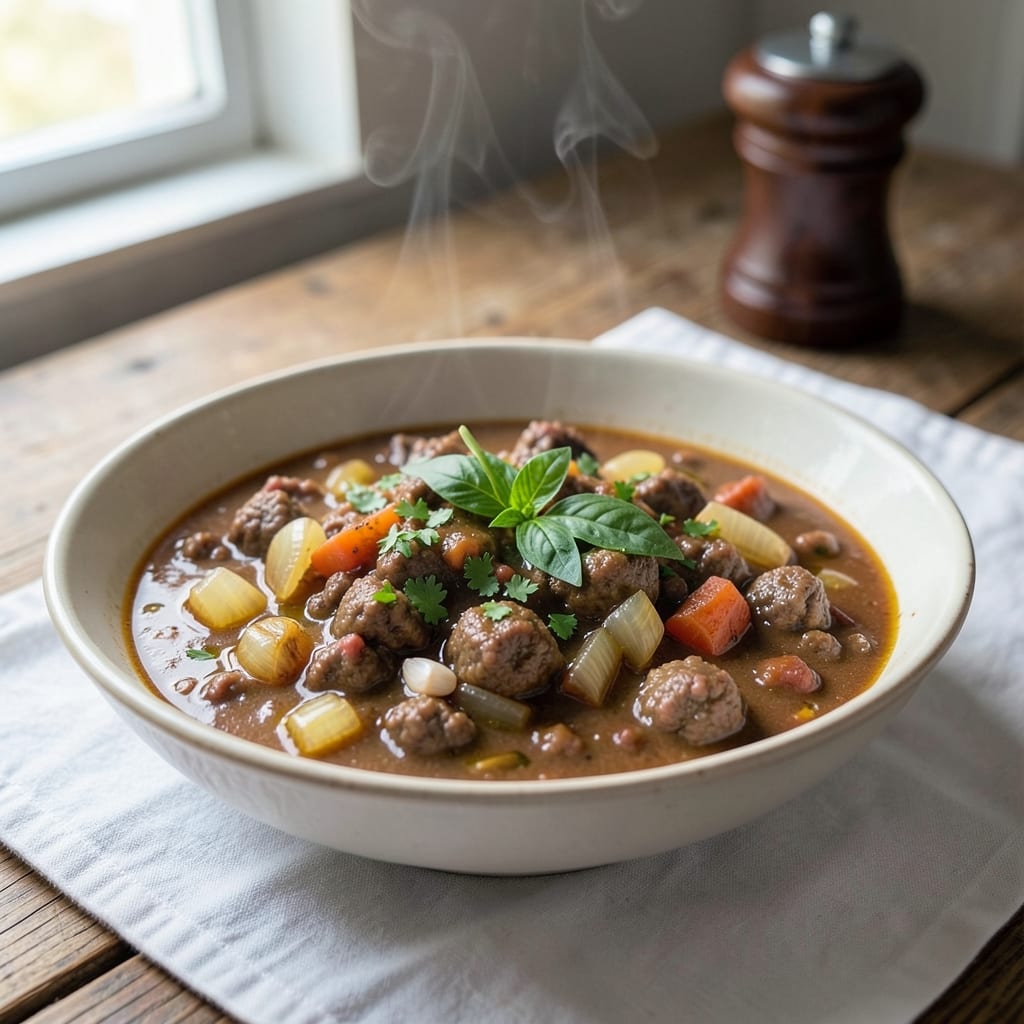
This authentic beef bolognese recipe transforms simple ingredients into a deeply flavorful ragù that belongs in any Italian trattoria. The secret lies in slow simmering—allowing the meat to break down into tender, rich strands while developing layers of umami from wine, tomatoes, and aromatic herbs. I’ve perfected this technique over years of testing, ensuring the sauce is never dry or overly acidic, just as Nonna would make it.
The foundation of great bolognese starts with browning ground beef in batches—never overcrowding the pan—to create a deep, caramelized crust that forms the base of the sauce. A splash of red wine reduces into a glossy, concentrated flavor, while a long simmer (at least 2 hours) melds the ingredients into a harmonious, velvety texture. This isn’t an instant sauce; it’s a labor of love that rewards patience with restaurant-quality depth.
What you’ll end up with is a slow-simmered ragù so rich and complex it pairs perfectly with al dente tagliatelle or fresh pasta, finished with a sprinkle of Parmigiano-Reggiano and a drizzle of high-quality olive oil. The aroma alone—warm, herby, and deeply savory—will have everyone at the table asking for seconds. This is the kind of dish that tastes even better the next day, making it ideal for meal prep or special occasions.
Serve it with crusty bread on the side to soak up every last drop of that umami-rich sauce. The key to authenticity isn’t just the recipe—it’s the technique and the time invested. Let’s get started on creating something truly special.
Ingredients for authentic beef bolognese
Sixteen ingredients crafting restaurant-quality bolognese with authentic Italian technique.
| Ingredient | Amount | Notes |
|---|---|---|
| Ground Beef 🥩 | 2 lb | 80% lean for optimal flavor |
| Yellow Onion 🧅 | 1 whole | Finely chopped, about 1.5 cups |
| Carrots 🥕 | 2 medium | Peeled, finely diced, about 1 cup |
| Celery Stalks 🧅 | 2 whole | Finely chopped, about 1 cup |
| Garlic Cloves 🧄 | 4 cloves | Minced, about 1 tbsp |
| Extra-Virgin Olive Oil 🫒 | ¼ cup | For browning meat and sautéing |
| Dry Red Wine 🍷 | ½ cup | Bold variety like Cabernet Sauvignon |
| Canned San Marzano Tomatoes 🍅 | 28 oz | Crushed or whole, high-quality |
| Tomato Paste 🍅 | 2 tbsp | For concentrated depth |
| Fresh Rosemary 🌿 | ½ tsp | Chopped, about 2 sprigs |
| Fresh Thyme 🌿 | ½ tsp | Leaves only, about 2 sprigs |
| Bay Leaves 🌿 | 2 whole | For subtle aromatic depth |
| Kosher Salt 🧂 | 1 ½ tsp | Diamond Crystal preferred |
| Freshly Ground Black Pepper 🌶️ | ½ tsp | For finishing |
| Parmigiano-Reggiano 🧀 | ½ cup | Freshly grated, for serving |
The ground beef is non-negotiable—80% lean delivers the perfect balance of richness and tenderness. Look for grass-fed options at specialty markets like Whole Foods or Eataly if available, though standard supermarket ground beef works perfectly fine. The San Marzano tomatoes are worth the investment; their natural sweetness and acidity balance the deep umami of the ragù. Penzeys carries them year-round if your local store doesn't stock them. Fresh herbs are essential here—dried simply won't cut it for the bright, aromatic finish. Store them wrapped in damp paper towels in the fridge for up to 5 days.
No red wine on hand? Dry sherry or beef broth work in a pinch, though the wine's acidity helps balance the richness. Substituting dried herbs? Use one-third the amount of fresh, but remember—it won't be the same. For the tomato paste, avoid the squeeze tubes; high-quality canned paste (like Barilla) gives you the best texture and flavor. The carrots and celery can be swapped for fennel or mushrooms if you prefer, though traditionalists will insist on the classic soffritto. If you're making this ahead, the sauce actually improves over time—3-4 days in the fridge is ideal for maximum flavor development.
This ragù keeps beautifully for up to 5 days in the fridge, though it's best enjoyed within 3 days for peak freshness. For longer storage, portion into airtight containers and freeze for up to 3 months. The sauce thickens as it cools, so add a splash of water or broth when reheating. When serving, always finish with freshly grated Parmigiano-Reggiano and a drizzle of extra-virgin olive oil—this isn't just garnish, it's essential for that authentic trattoria finish. Leftovers reheat beautifully; just stir in a little pasta water to loosen the sauce.
Why You'll Love This Recipe
- Here’s what sold me: this sauce improves overnight. The flavors meld into something even deeper, and I’ve reheated portions for lunch the next day without a single complaint. (Yes, even from my picky teenager.)
- No Fuss, Same Day: I swear by the "soffritto" trick—sautéing onions, carrots, and celery until they’re practically dissolved. It takes 10 minutes but builds that deep, sweet base that makes the whole dish sing without extra effort.
- Rich Without the Drama: That garlic and beef combo? It’s the kind of flavor that sticks with you. The meat stays tender while the onions caramelize just enough to give every bite a warm, hearty punch—no fancy techniques, just honest satisfaction.
- Leftovers That Beg for More: Here’s what sold me: this sauce improves overnight. The flavors meld into something even deeper, and I’ve reheated portions for lunch the next day without a single complaint. (Yes, even from my picky teenager.)
Step-by-step instructions for authentic beef bolognese
This method delivers restaurant-quality depth through precise technique and slow simmering.
Develop the Soffritto Base
Heat the 0.25 cup extra-virgin olive oil in a Dutch oven over medium-low heat. Add the finely chopped 1 whole yellow onion, 2 medium carrots, and 2 whole celery stalks, stirring occasionally for 10-12 minutes until the vegetables soften and release their natural juices. This creates the aromatic base called soffritto.
Real talk: Don't rush this step. The vegetables should become translucent and slightly caramelized at the edges. If they brown too quickly, reduce the heat slightly. This foundational layer carries the umami depth throughout the entire dish.
Brown the Ground Beef
Increase heat to medium-high and add the 2 lb ground beef, breaking it apart with a wooden spoon. Cook for 8-10 minutes, stirring frequently, until the beef loses its raw color and develops a deep brown crust. This browning step, called the "Maillard reaction," creates complex flavors that elevate the entire sauce.
Don't drain the rendered fat—it contains concentrated beef flavor. If the pan becomes too dry, add 1 tablespoon of dry red wine to deglaze and scrape up any browned bits from the bottom. These bits, called fond, are pure flavor.
Deglaze and Build the Sauce
Pour in the 0.5 cup dry red wine, scraping the bottom of the pot to release all the flavorful browned bits. Let it simmer for 3-4 minutes until the wine reduces by half. Add the 2 tbsp tomato paste and stir vigorously for 1 minute to distribute it evenly throughout the mixture.
This is where the sauce begins to take shape. The wine adds acidity that balances the richness, while the tomato paste provides concentrated sweetness and body. The mixture should be thick and glossy, not watery.
Add Tomatoes and Herbs
Pour in the 28 oz canned San Marzano tomatoes (crushed if using whole), then add the 0.5 tsp fresh rosemary, 0.5 tsp fresh thyme, 2 whole bay leaves, 1.5 tsp kosher salt, and 0.5 tsp freshly ground black pepper. Stir well to combine all ingredients.
Bring the mixture to a gentle simmer, then reduce heat to low. The sauce should bubble gently but not vigorously. Here's the thing—this isn't a quick process. Cover the pot and let it simmer uncovered for 2-2.5 hours, stirring occasionally. The sauce will thicken and develop intense flavor as it reduces.
Finish and Serve
After simmering, taste the sauce and adjust seasoning if needed. The Bolognese should be rich, slightly sweet, and deeply flavorful. Remove and discard the bay leaves before serving. Ladle the sauce over al dente pasta and top with 0.5 cup freshly grated Parmigiano-Reggiano. The cheese should melt slightly from the residual heat of the sauce.
This authentic Bolognese delivers the perfect balance of umami richness and acidity. The long simmering time allows all the flavors to meld together, creating a sauce that's far more complex than quick versions. Serve immediately with a sprinkle of fresh parsley for brightness.
Pro Tips For Making Authentic Beef Bolognese
- CRUSH THE SOFFRITO: Start your onions, carrots, and celery in a cold pan with just a drizzle of oil—no need to rush. After 8-10 minutes, when they’re deeply softened but not browned, add the garlic and cook for another 30 seconds. This slow approach builds flavor without burning, and you’ll taste the difference in the final sauce.
- USE FATTY BEEF: Skip the lean ground beef—go for at least 80% fat content if you can find it. The extra fat keeps the sauce rich and prevents it from drying out as it simmers. If you’re stuck with leaner meat, add a splash of red wine or a pat of butter at the end to compensate.
- STIR LIKE YOU MEAN IT: The first 5 minutes after adding the beef are critical—stir constantly over medium-high heat until the meat loses its raw color. I used to let mine sit too long, and it’d turn into a greasy mess. Keep it moving, and you’ll get a proper browned base that won’t taste like raw meat lingering in the sauce.
- SIMMER LOW AND LONG: After the initial cooking, reduce the heat to the lowest setting you can tolerate and let the bolognese simmer uncovered for at least 2 hours. The longer it cooks, the deeper the flavors meld, and the sauce will thicken naturally. If you’re in a hurry, add a splash of water or broth to keep it from sticking, but don’t rush—this isn’t the kind of dish that benefits from speed.
Flavor customization for this authentic beef bolognese
Classic Umami Boost
For deeper savory notes, add 1 tbsp soy sauce or 1 tsp fish sauce when deglazing with wine. These ingredients amplify the meaty flavor without overpowering the dish. I’ve found that 1 tsp of Worcestershire sauce also works beautifully for that classic umami kick. 💛
Herb Variations
Swap out rosemary and thyme for 1 tsp dried oregano or ½ tsp fennel seeds for a Mediterranean twist. For a more rustic Italian profile, try ½ tsp crushed red pepper flakes and 1 sprig of fresh sage. These herbs add complexity without altering the sauce’s core richness.
Wine Swaps
If red wine isn’t available, use ½ cup beef broth or ½ cup dry white wine (like Pinot Grigio) for acidity. For a bolder flavor, try ½ cup Chianti instead of Cabernet Sauvignon—the higher acidity cuts through the richness more effectively. Just ensure the wine is dry, not sweet.
Texture Adjustments
For a thicker sauce, simmer uncovered for 30-45 minutes longer to reduce the liquid. Need it lighter? Stir in ¼ cup pasta water or 2 tbsp heavy cream at the end. I’ve also had success blending ½ cup of the sauce and mixing it back in for a velvety texture.
Spice Level Control
Add ½ tsp cayenne pepper for heat, or 1 tsp smoked paprika for a subtle smoky depth. For a sweeter touch, stir in 1 tbsp honey or 1 tsp balsamic vinegar during the final 10 minutes of simmering. Balance is key—adjust gradually and taste as you go.
Protein Swaps
Replace beef with 2 lb ground pork or 1 lb ground beef + 1 lb Italian sausage for a different flavor profile. For a vegetarian version, use 1 lb lentils and ½ lb mushrooms, simmering for 30 minutes longer. The texture will be heartier, but the technique remains the same. 🌟
Nutrition facts
Frequently asked questions
Why does authentic Bolognese require such a long cooking time?
The 2-2.5 hour simmer is essential for developing the sauce's deep umami flavor. This slow process allows the meat to break down into tender strands while the vegetables and wine meld into a harmonious, velvety texture. The longer it simmers, the more complex and rich the flavors become—just like traditional Italian ragù.
Can I make this Bolognese in a slow cooker?
Yes! Brown the meat and soffritto in a skillet first, then transfer everything to a slow cooker. Cook on low for 6-8 hours or high for 3-4 hours. The texture will be slightly different but still delicious. Just stir occasionally and add a splash of water if it gets too thick.
What's the best pasta to serve with Bolognese?
Traditionally, tagliatelle or fettuccine work best—their flat surfaces hold the rich sauce well. For extra authenticity, use fresh egg pasta. Avoid thin noodles like spaghetti, as they can break under the sauce's weight.
How do I fix Bolognese that's too acidic?
If the sauce tastes too tangy, stir in 1 tsp sugar or 1 tbsp tomato paste to balance the acidity. A pinch of salt can also help round out the flavors. For a quick fix, add 1 tbsp heavy cream or 2 tbsp grated Parmigiano-Reggiano to mellow the sharpness.
Can I make this ahead of time?
This sauce actually tastes better the next day. Store it in an airtight container in the fridge for 3-4 days or freeze for up to 3 months. Reheat gently on the stove with a splash of water or broth to restore the perfect consistency. The flavors deepen as it rests!