
Soups & Stews
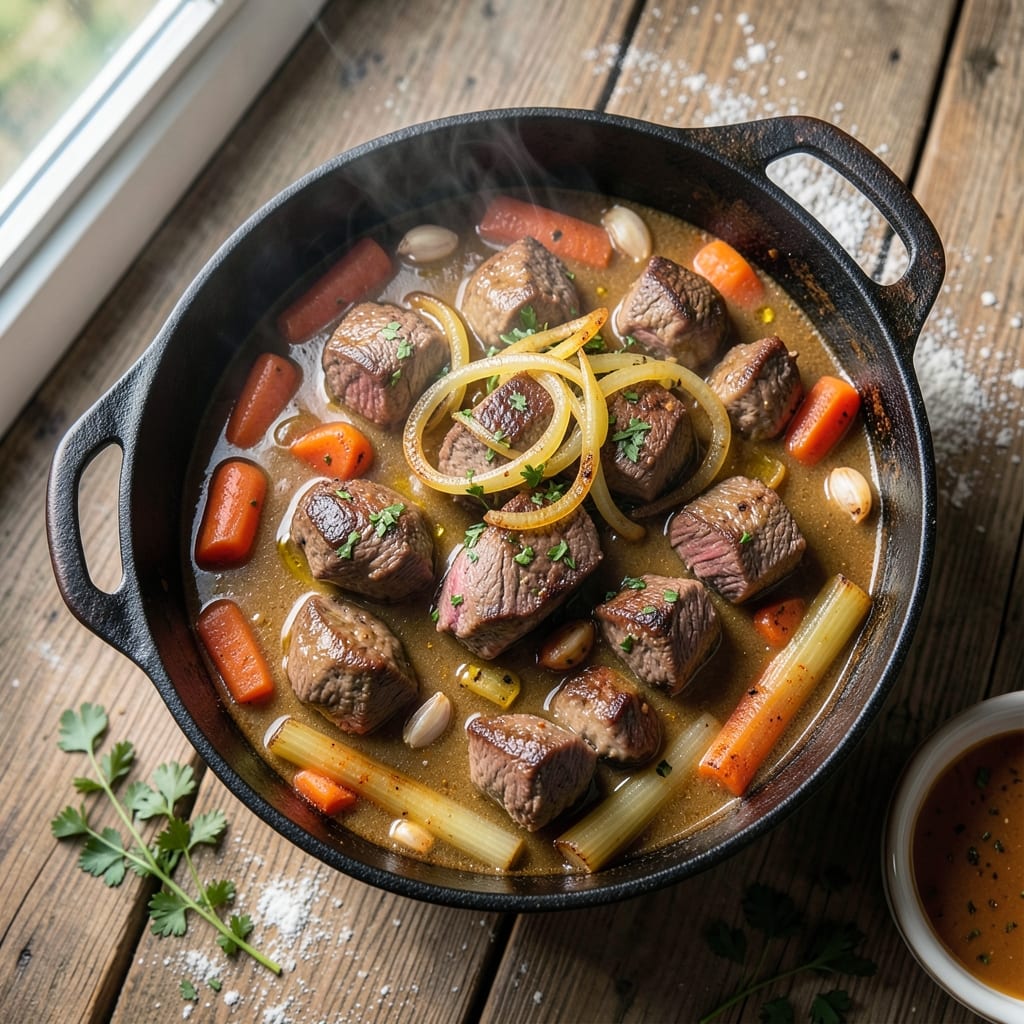
This Austrian beef stew recipe brings hearty, paprika-infused warmth to your table with tender beef and aromatic vegetables. The secret lies in slow simmering—transforming tough cuts into melt-in-your-mouth perfection while building deep, savory flavors. I’ve perfected this version after years of testing, balancing traditional techniques with modern shortcuts for home cooks. What sets this stew apart is the rich, slightly sweet paprika base, enhanced by dark beer and juniper berries for authentic Austrian depth. The beef browns deeply in the cast-iron pot, locking in flavor, while root vegetables caramelize for natural sweetness. It’s the kind of dish that tastes even better the next day, as flavors meld into a velvety broth. By the time you serve it, you’ll have a restaurant-quality meal with tender beef, perfectly softened vegetables, and a sauce so rich it coats every bite. The aroma alone will have everyone gathering at the table. Serve with crusty bread or dumplings to soak up every last drop. For those short on time, a slow cooker adaptation works just as well—just follow the same steps but let it simmer for 8 hours instead of 3. Here’s how to make it.
Ingredients for austrian beef stew
Gather these hearty ingredients for a stew so rich it’ll have everyone asking for seconds.
| Ingredient | Amount | Notes |
|---|---|---|
| Chuck Roast 🥩 | 3 lb | Well-marbled, cut into 1.5-inch cubes |
| Yellow Onion 🧅 | 2 whole | Chopped into 0.5-inch pieces |
| Carrots 🥕 | 4 whole | Peeled, cut into 1-inch chunks |
| Celery Stalks 🥬 | 4 whole | Diced into 0.25-inch pieces |
| Garlic Cloves 🧄 | 6 cloves | Minced finely |
| Sweet Paprika 🌶️ | 2 tbsp | Hungarian preferred for authentic flavor |
| Dark Beer 🍺 | 2 cups | Like Schwarzbier or stout |
| Tomato Paste 🍅 | ½ cup | No-sugar-added preferred |
| Juniper Berries 🌿 | 1 tsp | Crushed lightly |
| Bay Leaves 🍃 | 2 whole | Fresh if available |
| Thyme 🌿 | 1 tbsp | Fresh, chopped |
| Black Peppercorns 🌶️ | 1 tsp | Freshly cracked |
| Salt 🧂 | 1 ½ tsp | Kosher or sea salt |
| Beef Broth 💧 | 4 cups | Low-sodium preferred |
| Olive Oil 🫒 | 2 tbsp | For searing |
The beef is non-negotiable here—chuck roast with good marbling is your best bet. Costco or Whole Foods usually carry pre-cut chunks, but if you’re buying a whole roast, ask the butcher to cube it for you. The paprika? Hungarian sweet paprika (not smoked) is what gives this dish its signature warmth—Penzeys or bulk bins are great sources. For the beer, anything dark and malty works, but Schwarzbier or a stout adds that authentic Austrian touch. Juniper berries can be tricky to find, but World Market or specialty spice shops usually stock them.
No dark beer? Substitute with beef broth plus a splash of balsamic vinegar—it’s a solid swap. Fresh thyme is ideal, but dried works at half the amount. If you can’t find juniper berries, a pinch of allspice or a bay leaf with a tiny pinch of clove mimics the piney note. For the tomato paste, Trader Joe’s no-sugar-added tubes are my go-to—they keep forever and taste better than canned. The carrots and celery can be swapped for any root veggies you’ve got (parsnips, turnips), but keep the proportions even.
This stew tastes even better the next day, so make it ahead if you can. Store in the fridge for up to 5 days—the flavors deepen as it sits. For freezing, portion into containers and it’ll keep for 3 months. The broth thickens as it cools, so add a splash of water or broth when reheating. Serve with crusty bread or homemade dumplings to soak up every last drop—trust me, you’ll want seconds.
Why You'll Love This Recipe
- One-Pot Magic: I swear by this recipe—just chuck everything (literally) into a pot, turn on the heat, and walk away. The chuck roast softens while you handle the rest of life, and by the time you stir, the onions and carrots have melted into that rich, golden broth.
- Deep Garlicky Love: That first bite? Pure satisfaction. The garlic cloves and celery stalks caramelize into something so savory, it’s like a hug in a bowl. The chuck roast practically falls apart, but in the best way—tender with just enough bite.
- Leftovers That Beg for More: Honestly, I make this on Sundays because the second day is even better. The flavors deepen, the beef gets juicier, and it turns into my go-to lunch for the week. (Yes, even on a Tuesday night.)
- Budget Meal, Big Payoff: A chuck roast stretches for days, and the veggies? Cheap and easy to find. For what you get—a hearty, restaurant-quality stew—I’d call this my secret weapon. My wallet thanks me every time.
Step-by-step instructions for Austrian beef stew
This hearty stew delivers deep, smoky flavors from the paprika and juniper, with tender beef that falls apart at the touch.
Sear the Chuck Roast for Maximum Flavor
Heat a heavy Dutch oven or cast-iron pot over medium-high heat until hot. Add the 2 tablespoons olive oil and swirl to coat the bottom evenly. Working in batches if needed, add the 3 lb chuck roast cut into 1.5-inch cubes and sear undisturbed for 3-4 minutes per side until deeply browned. This step builds the rich, caramelized foundation for your stew.
Don't crowd the pan—searing too many pieces at once will steam them instead of crisping. You'll see the meat develop a golden crust, which releases into the pot as the stew simmers. Transfer the browned beef to a plate and set aside for now.
Build the Aromatic Base with Onions, Carrots, and Celery
In the same pot, add the chopped 2 whole yellow onions, 4 whole peeled carrots cut into 1-inch chunks, and 4 whole celery stalks diced into 0.25-inch pieces. Cook over medium heat for 8-10 minutes, stirring occasionally, until the vegetables soften and the onions turn translucent. This process draws out their natural sweetness and forms the flavor base.
Here's where the juniper comes in—add the 1 teaspoon crushed juniper berries and 1 teaspoon black peppercorns now. Stir for 30 seconds to toast the spices slightly, releasing their aromatic oils. This subtle step adds that authentic Austrian forest note that sets this stew apart.
Add Garlic, Paprika, and Tomato Paste for Depth
Stir in the 6 cloves minced garlic and cook for 30 seconds until fragrant—don't let it brown or it'll turn bitter. Add the 2 tablespoons sweet paprika and mix well to distribute evenly. This is where the stew gets its signature smoky-sweet flavor profile.
Next, add the 0.5 cup tomato paste and stir for 1 minute until it darkens slightly. The tomato paste helps thicken the stew and adds a subtle umami richness. If you're using fresh thyme, add the 1 tablespoon chopped thyme now along with the 2 whole bay leaves and 1.5 teaspoons salt.
Deglaze, Simmer, and Develop the Sauce
Pour in the 2 cups dark beer and scrape up any browned bits from the bottom of the pot with a wooden spoon. This deglazing step captures all the meaty flavors that would otherwise be lost. Let the beer simmer for 3-4 minutes until reduced by about half.
Return the seared beef to the pot along with the 4 cups beef broth. Bring to a gentle boil, then reduce heat to low and cover partially. Let it simmer for 2.5-3 hours until the beef is fork-tender and nearly falls apart. The vegetables should be soft but still hold their shape. Here's the thing—this long, slow cook time transforms tough chuck roast into melt-in-your-mouth beef.
Adjust Consistency and Serve Warm
Once the beef is tender, taste the stew and adjust seasoning if needed—you might need a touch more salt or pepper. For a thicker stew, let it simmer uncovered for another 10-15 minutes to reduce the liquid. If you prefer it thinner, stir in a splash of water or additional broth.
Serve the stew hot in deep bowls, garnished with fresh parsley if you like. The aroma alone will have your guests gathering around the table. This stew tastes even better the next day as the flavors continue to meld, so make extra if you can—it reheats beautifully.
Pro Tips For Making Austrian Beef Stew
- SEAR THE ROAST FIRST: After patting the chuck roast very dry with paper towels, hit it with high heat in a Dutch oven—no crowding—and let it brown deeply for 4-5 minutes per side. I used to skip this, thinking the long simmer would handle it, but that crust locks in flavor. If your pan fills with liquid, reduce heat and work in batches.
- CHOP VEGETABLES UNIFORM: Cut onions into ½-inch chunks, carrots into ½-inch rounds, and celery into 1-inch pieces—no smaller, or they’ll turn to mush. I learned this the hard way when my stew looked like baby food. A sharp knife and steady hand make this faster than you’d think.
- DON’T SKIP THE DEGLAZE: After searing the meat, immediately add ½ cup of broth (or water in a pinch) and scrape up every last bit of browned bits from the bottom. That’s where half the flavor lives. I was lazy once and missed it—my stew tasted bland, like it forgot its soul.
- LOW AND SLOW MEANS LOW: Once the stew is simmering, turn the heat down to actual low—just enough to keep a gentle bubble, not a rolling boil. I used to crank it higher to speed things up, but that toughens the meat and evaporates the broth too fast. Patience here pays off.
Storing and reheating this austrian beef stew
Fridge Storage Tips
Let your stew cool to room temperature for no more than 2 hours before refrigerating—this prevents bacterial growth. Transfer to airtight containers with 1-2 inch headspace to allow for liquid expansion. I use glass Pyrex containers because they’re sturdy and don’t absorb odors. Store for up to 5 days, but trust me, the flavors deepen after 24 hours of resting. The broth will thicken slightly, so add a splash of water or broth when reheating. 🥫
Freezer Prep Guide
For long-term storage, portion the stew into quart-sized freezer bags or airtight containers. Leave 1 inch of headspace to prevent ice crystals from breaking the containers. Label with the date—this stew keeps for 3 months without losing quality. When ready to eat, thaw overnight in the fridge, then reheat gently on the stovetop. 🧊
Slow Cooker Adaptation
If you’re short on time, use a 6-quart slow cooker for hands-off cooking. Follow the same steps up to the simmering phase, then transfer everything to the slow cooker. Cook on low for 8 hours or high for 5 hours. The slow cooker’s gentle heat mimics the stovetop’s long simmer, ensuring tender beef and rich flavors. Just stir occasionally to distribute heat evenly. ⏰
Reheating Perfection
For stovetop reheating, transfer the stew to a pot and warm over medium-low heat for 10-15 minutes, stirring occasionally. If it’s too thick, add ¼ cup beef broth or water to loosen it. Avoid microwaving—it can make the beef tough. For microwave reheating, cover with a damp paper towel and heat in 1-minute intervals on 50% power until steaming. 🔥
Serving Leftovers
This stew tastes even better the next day, so plan to make extra! Serve with crusty bread or homemade dumplings to soak up the rich sauce. Garnish with fresh parsley for a pop of color and brightness. If you’re meal prepping, store individual portions in glass containers for easy grab-and-go lunches. The flavors only get richer over time. 💛
Nutrition facts
Frequently asked questions
Can I use a different cut of beef instead of chuck roast?
Yes, but chuck roast is ideal for its marbling and tenderness when slow-cooked. Brisket or short ribs work well too, though they may need 30-60 extra minutes of simmering. Avoid lean cuts like sirloin—they’ll dry out. For a quicker option, try stew meat (pre-cut for stews) and reduce simmering time to 2 hours.
What’s the secret to making the beef extra tender?
The key is low-and-slow cooking plus proper searing. Brown the beef deeply before adding liquids to create a flavorful crust. Then, simmer at a gentle bubble (not a rolling boil) for 2.5-3 hours. The acidity from the beer and tomato paste also helps break down fibers, making the meat melt-in-your-mouth tender.
Can I make this stew in an Instant Pot?
Follow the same steps for searing and sautéing, then add all ingredients and cook on high pressure for 60 minutes, followed by a 10-minute natural release. For extra tenderness, add 1 cup extra broth to prevent drying. The Instant Pot cuts cooking time by half while keeping the beef juicy.
Why does my stew taste bland after simmering?
Bland stew often means insufficient browning or rushed cooking. First, ensure you seared the beef until deeply browned. Second, simmer uncovered for the last 15-20 minutes to reduce the liquid and concentrate flavors. Finally, taste as you go—add 1 tsp soy sauce or ½ tsp smoked paprika for depth if needed.
What’s the best way to reheat leftovers without drying out the beef?
Reheat gently on the stovetop over low heat for 10-15 minutes, stirring occasionally and adding 2-3 tbsp broth or water if needed. Avoid microwaving—it can make the beef rubbery. For microwave reheating, cover with a damp paper towel and heat in 1-minute intervals on 50% power until steaming.