
Main Courses
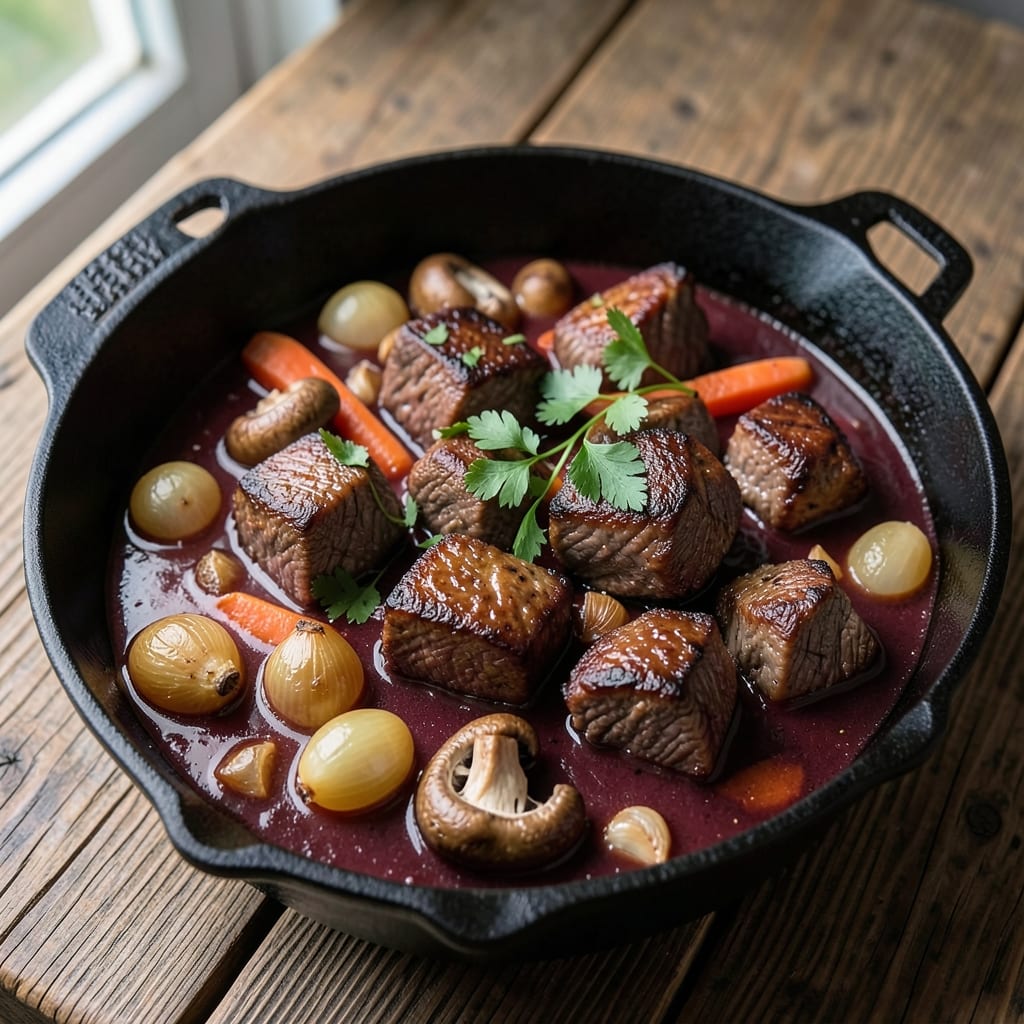
This basic beef bourguignon recipe transforms humble beef and vegetables into a deeply satisfying French classic that tastes like a Parisian bistro. The secret lies in slow simmering—where red wine reduces into a rich, velvety sauce that clings to tender beef and earthy mushrooms. I've simplified the technique without sacrificing authenticity, making it achievable for home cooks while keeping the restaurant-quality results.
What makes this dish special is the layering of flavors: caramelized onions and mushrooms form the aromatic base, while the beef develops a deep, wine-infused richness during the long simmer. The key steps—browning the meat, deglazing with wine, and slow cooking—ensure every bite delivers that signature depth. Unlike many recipes, this version uses just one pot, streamlining the process without compromising on taste.
The result is a hearty stew with fork-tender beef, melt-in-your-mouth vegetables, and a sauce so luxurious it feels like a celebration. The aroma alone will have your kitchen smelling like a French countryside dinner, while the texture—juicy beef, tender carrots, and mushrooms—makes it impossible to resist. Perfect for cozy weeknights or special occasions, this bourguignon proves that classic dishes can be both impressive and approachable.
Serve with crusty bread to soak up every drop of that wine-infused sauce, or pair it with mashed potatoes for a comforting meal. The beauty of this recipe is its versatility—it reheats beautifully for leftovers, making it ideal for meal prep. Let's get cooking and bring a taste of France to your dinner table.
Ingredients for basic beef bourguignon
French bistro flavors begin with these quality ingredients—each playing its part in building deep, wine-infused richness.
| Ingredient | Amount | Notes |
|---|---|---|
| Chuck Roast 🥩 | 2 lb | Cut into 1.5-inch cubes, trimmed of fat |
| Yellow Onions 🧅 | 2 whole | Sliced into 1/4-inch half-moons |
| Cremini Mushrooms 🍄 | 16 oz | Sliced into 1/4-inch pieces |
| Carrots 🥕 | 4 medium | Peeled, cut into 1-inch chunks |
| Garlic Cloves 🧄 | 6 cloves | Smashed with side of knife |
| All-Purpose Flour 🌾 | 2 tbsp | For dredging beef cubes |
| Dry Red Wine 🍷 | 2 cups | Bold variety like Cabernet Sauvignon |
| Beef Broth 💧 | 2 cups | Low-sodium preferred |
| Tomato Paste 🍅 | 2 tbsp | Smooth, not chunky |
| Fresh Thyme Leaves 🌿 | 1 tbsp | Or 1 tsp dried thyme |
| Fresh Rosemary 🌿 | 1 tbsp | Chopped, plus sprigs for garnish |
| Olive Oil 🫒 | 2 tbsp | Extra-virgin for richness |
| Salt 🧂 | 1 ½ tsp | Diamond Crystal preferred |
| Ground Black Pepper 🌶️ | 1 tsp | Freshly cracked |
| Bay Leaves 🌿 | 2 whole | Remove before serving |
The chuck roast is non-negotiable for this dish—its marbling ensures tender, fork-friendly beef after hours of slow cooking. Look for well-marbled cuts at specialty butchers or the meat department of Whole Foods, where they often carry higher-quality beef than standard supermarkets. If using pre-cut cubes, pat them dry before dredging—the flour will adhere better. For mushrooms, cremini or baby bella deliver the best earthy flavor; avoid pre-sliced varieties as they oxidize quickly. The carrots should be firm with vibrant orange color—organic varieties often have better flavor and texture.
No red wine on hand? Substitute with beef broth plus 1 tbsp balsamic vinegar for depth, though the acidity won't replicate wine's complexity. Fresh thyme and rosemary are ideal, but dried works at one-third the amount—just toast the dried herbs in a dry pan for 30 seconds to wake up their flavors. For tomato paste, San Marzano is the gold standard, but any quality smooth paste will work. The flour matters too—King Arthur or Gold Medal all-purpose create the best roux for thickening. If using pre-minced garlic, toast it first to remove moisture and enhance flavor.
This dish tastes even better the next day as flavors meld—plan ahead and make extra. Store in an airtight container in the fridge for up to 5 days, or freeze portions for 3 months. For reheating, add a splash of broth or water to prevent the sauce from thickening too much. The wine-infused sauce freezes beautifully, though the texture may separate slightly upon thawing. To serve, sprinkle with fresh rosemary sprigs and crusty bread—a good baguette from Trader Joe's works perfectly for soaking up every drop.
Why You'll Love This Recipe
- One-Pot Magic: I swear by this recipe because it’s one pan—no chopping boards, no extra dishes. Just sear the chuck roast, toss in the onions and carrots, then let the garlic and mushrooms melt into a rich sauce. Honestly, the cleanup is almost as good as the meal.
- Deep, Rich Taste: That slow-cooked chuck roast turns tender while soaking up the wine and herbs—it’s got layers. The mushrooms add an earthy punch, and the caramelized onions? They’re the secret weapon. Between us, this isn’t just "good"—it’s the kind of dish that makes you want to linger at the table.
- Weeknight to Dinner Party: I make this for lazy Tuesdays (yes, even on a Tuesday night) and then again for guests because it feels fancy without the fuss. Serve it over mashed potatoes or crusty bread—either way, it’s a crowd-pleaser. My daughter picks out the carrots, but still asks for seconds.
- Budget-Friendly Feast: A chuck roast stretches for days, and the veggies are pantry staples. I’ve fed six people for under $20, and the leftovers? Even better the next day. Not the prettiest, but the taste makes up for it—and my wallet thanks me.
Step-by-step instructions for wine-reduced beef bourguignon
Master this classic French technique with precise timing and layering for deep flavor development.
Sear the Chuck Roast for Maximum Flavor
Heat the 2 tablespoons olive oil in a heavy Dutch oven over medium-high heat until shimmering. Working in batches, add the 2 lb chuck roast cut into 1.5-inch cubes and sear for 3-4 minutes per side until deeply browned. This step creates the fundamental Maillard reaction that forms the rich foundation of the dish.
Don't rush this process - you want each piece to develop a dark golden crust. If your pan gets crowded, work in two batches to maintain proper heat. Once all pieces are browned, transfer them to a plate and set aside. You'll notice the aroma intensifying as the meat releases its natural juices - this is your first indication of the flavors to come.
Build the Vegetable Base with Proper Layering
In the same Dutch oven, add 2 tablespoons olive oil if needed and reduce heat to medium. Add the 2 whole yellow onions sliced into ¼-inch half-moons and cook for 5-6 minutes until softened and beginning to caramelize. Add the 4 medium carrots cut into 1-inch chunks and 16 oz cremini mushrooms sliced into ¼-inch pieces, cooking for another 5 minutes until the mushrooms release their moisture and begin to brown.
Stir in the 6 smashed garlic cloves and cook for 30 seconds until fragrant. This sequential cooking prevents the garlic from burning while allowing each vegetable to develop its own flavor profile. The onions should be translucent with just a hint of color, while the mushrooms should be tender with golden edges.
Develop the Sauce with Wine Reduction
Sprinkle the 2 tablespoons all-purpose flour over the vegetables and stir vigorously for 1 minute to coat all surfaces. Gradually pour in the 2 cups dry red wine, scraping up any browned bits from the bottom of the pot with a wooden spoon. This deglazing step captures all the flavor you've built so far.
Bring the mixture to a simmer and reduce by half - about 8-10 minutes - until the wine has evaporated and you have a thick, glossy liquid. The sauce should coat the back of a spoon and have a rich, winey aroma. This reduction process is crucial as it concentrates the flavors and creates the signature velvety texture of bourguignon.
Braise the Beef to Tender Perfection
Return the browned beef to the Dutch oven along with any accumulated juices. Stir in the 2 cups beef broth, 2 tablespoons tomato paste, 1 tablespoon fresh thyme leaves, 1 tablespoon chopped fresh rosemary, 1.5 teaspoons salt, 1 teaspoon ground black pepper, and 2 whole bay leaves. Bring to a gentle simmer, then cover and transfer to a 325°F oven.
Braise for 2.5 to 3 hours until the beef is fork-tender and easily pulls apart. You'll know it's done when the meat reaches an internal temperature of 203°F and the sauce has thickened significantly. The liquid should coat the beef and vegetables in a glossy, wine-infused sauce. This long, slow cooking process transforms tough chuck roast into melt-in-your-mouth tenderness.
Finish and Adjust for Optimal Texture
Remove the bay leaves and adjust the seasoning if needed. If the sauce is too thin, simmer uncovered for 5-10 minutes to reduce further. For extra richness, you can remove the beef and reduce the sauce by half on the stovetop before returning the beef to coat. The final sauce should be thick enough to cling to the beef and vegetables but still have a silky, velvety consistency.
Serve immediately with crusty bread or over mashed potatoes to soak up every bit of that luxurious sauce. Each bite should deliver tender beef, caramelized vegetables, and a complex interplay of wine and herb flavors. The dish continues to improve as it sits, so don't hesitate to make extra - it reheats beautifully the next day.
Pro Tips For Making Basic Beef Bourguignon
- SEAR THE ROAST LONG: After patting the chuck roast dry, let it sit in the fridge for 30 minutes before searing—cold meat releases cleaner juices. Then, walk away and let it brown undisturbed for 8-10 minutes per side on high heat. I used to flip it too soon, and the crust turned to sludge. High heat. Seriously, crank it up until you get deep golden patches.
- CHOP ONIONS THICK: Slice those yellow onions into ¼-inch thick rounds, not paper-thin pieces. Thicker slices caramelize faster and hold their shape better in the long simmer. I learned this the hard way—my first batch turned into mush by the end, and no one wants soup-like onions in their bourguignon.
- DEGLAZE WITH RED WINE: Use the same pot you seared the meat in, splash in 1 cup of red wine (like a dry Pinot Noir or Cabernet), and let it bubble for 2-3 minutes before adding the broth. The wine’s acidity lifts the browned bits off the bottom, making the sauce richer. Skimping on wine here is like skipping the garlic—noticeably duller.
- SIMMER LOW AND COVERED: Once the liquid reaches a gentle boil, drop the heat to the lowest setting that keeps it bubbling just at the edges, then cover the pot. Check it every 30 minutes to avoid evaporation—this is where the beef tenderizes. I was impatient and kept lifting the lid, and my sauce reduced into glue. Patience here makes the difference between fork-tender meat and chewy disappointment.
Perfect pairings for this recipe
Wine Pairing Perfection
The rich, wine-infused sauce of beef bourguignon demands a bold red that complements its depth. I always reach for a Burgundy Pinot Noir—specifically a Gevrey-Chambertin—as it mirrors the dish's earthy mushroom notes and herbaceous thyme. The high acidity cuts through the sauce's richness while enhancing the beef's tenderness. For a more affordable option, try a California Zinfandel like Ravenswood Old Vine, which offers similar jammy fruit notes without the hefty price tag. 🍷
Bread Pairings
Crusty bread isn't just a side—it's essential for soaking up that luxurious sauce. My go-to is a fresh baguette from Trader Joe's, toasted until golden and crisp. For extra indulgence, serve with garlic bread made from a sourdough loaf—rubbed with garlic, olive oil, and a sprinkle of Parmigiano-Reggiano before baking. The contrast between the sturdy bread and silky sauce makes every bite unforgettable.
Vegetable Sides
Light, fresh vegetables balance the hearty bourguignon beautifully. I love serving sautéed green beans with garlic and lemon zest—their bright acidity refreshes the palate. For a more substantial option, try creamy mashed potatoes with a touch of Gruyère cheese, which adds nutty depth. The key is to keep sides simple so the star of the show—your bourguignon—shines.
Cheese Course
If you're serving bourguignon as part of a full French meal, follow it with a triple-crème cheese like Brie de Meaux or Camembert. Their creamy, buttery texture contrasts perfectly with the dish's robust flavors. For a lighter option, chèvre (goat cheese) with honey and walnuts adds a tangy brightness that cleanses the palate. 🧀
Dessert Harmony
End the meal with something light yet complementary. A dark chocolate tart with raspberry coulis balances the richness, while crème brûlée adds a creamy, caramelized finish. For a classic French touch, serve tarte Tatin—its caramelized apples and buttery pastry echo the dish's rustic charm. The key is to avoid overly sweet desserts that clash with the wine's depth.
Beverage Alternatives
No wine on hand? A robust beer like Corona Extra or Stella Artois works surprisingly well—their crispness cuts through the sauce. For non-alcoholic options, sparkling apple cider (like Martinelli's) adds a refreshing contrast. The effervescence helps reset your palate between bites, making the bourguignon taste even more vibrant. 🍺
Nutrition facts
Frequently asked questions
Can I use a different cut of beef instead of chuck roast?
While chuck roast is ideal for its marbling and tenderness, you can substitute with stew beef or even brisket cut into similar-sized cubes. Avoid lean cuts like sirloin—they won't become tender enough during braising. If using brisket, trim excess fat first to prevent greasiness in the sauce.
How do I prevent the sauce from becoming too thin?
If your sauce seems too thin, simmer it uncovered for 5-10 minutes to reduce further. For extra thickness, remove half the beef and reduce the sauce by half on the stovetop before returning the beef. A 1 tablespoon cornstarch slurry (mixed with cold water) can also help thicken the sauce if needed.
Can I make beef bourguignon in a slow cooker? Yes! Brown the beef and vegetables in a skillet first, then transfer everything to a 6-quart slow cooker. Add the wine, broth, and seasonings, then cook on Low for 7-8 hours or High for 4-5 hours. The texture will be slightly different but still delicious. Just
What if I don't have red wine?
No problem! Mix 2 cups beef broth with 1 tablespoon balsamic vinegar and 1 teaspoon soy sauce for depth. The acidity helps replicate wine's flavor profile. For extra richness, add ½ teaspoon smoked paprika to mimic the complexity of red wine.
How long can I store leftovers?
Store in an airtight container in the fridge for up to 5 days, or freeze for 3 months. The flavors actually improve overnight as the sauce continues to meld. When reheating, add a splash of broth or water to prevent the sauce from thickening too much.