
Soups & Stews
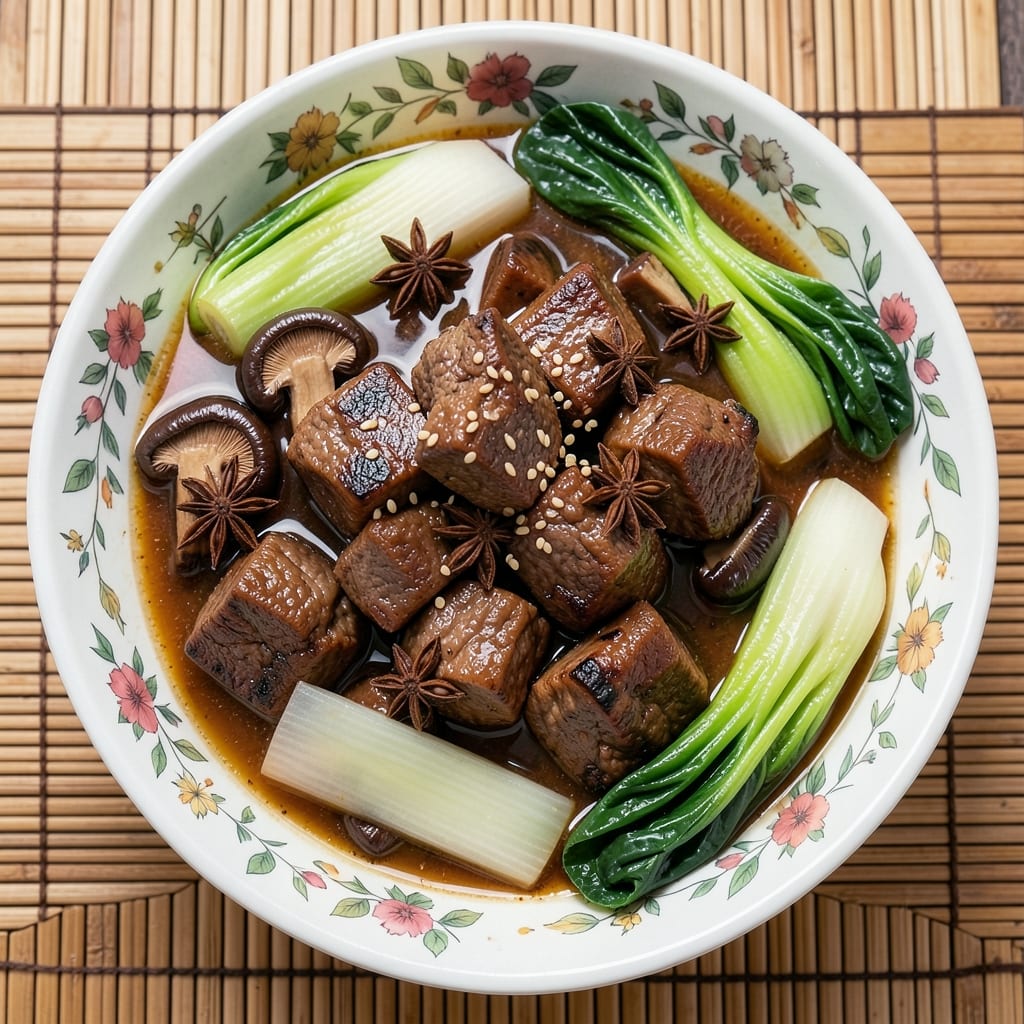
This Asian style beef stew recipe delivers crispy wok-seared edges and a silky, aromatic broth that balances sweet, savory, and umami flavors. The secret lies in marinating beef chunks with soy sauce, ginger, and garlic before searing them in a hot wok—creating that coveted caramelized crust while keeping the meat tender inside. What sets this apart is the layered broth, built with star anise, cinnamon, and a touch of coconut milk for depth without heaviness.
The recipe transforms tougher cuts into melt-in-your-mouth pieces through a slow simmer, where the flavors meld into a harmonious blend. Unlike traditional Western stews, this version relies on aromatic spices and a touch of sweetness from honey or brown sugar to complement the deep umami of soy and fermented black beans. The result is a dish that's both comforting and sophisticated, perfect for weeknight dinners or special occasions.
By the time you serve this stew, you'll have golden-brown beef with crispy edges, vegetables that retain their texture, and a broth so rich it coats every spoonful. The aroma alone will have everyone gathering at the table—imagine the wok searing, the spices blooming, and that first bite of perfectly balanced flavors. This isn't just a stew; it's a flavor experience that bridges home cooking and restaurant-quality results.
The beauty of this recipe lies in its versatility. Serve it over steamed jasmine rice to soak up every last drop of that silky broth, or pair it with fluffy noodles for a heartier meal. The leftovers taste even better the next day as the flavors continue to develop. Whether you're feeding a family or hosting dinner guests, this Asian-style beef stew will leave them asking for seconds—and the recipe to take home.
Ingredients for asian style beef stew
Quality beef and aromatic spices create restaurant-style wok-seared beef stew with crispy edges.
| Ingredient | Amount | Notes |
|---|---|---|
| Beef Chuck Roast 🥩 | 1 ½ lb | Cut into 1-inch chunks |
| Soy Sauce 🍶 | ½ cup | High-quality, low-sodium preferred |
| Ginger Root 🌿 | 1 tbsp | Freshly grated, aromatic |
| Garlic Cloves 🧄 | 6 cloves | Minced, fresh preferred |
| Brown Sugar 🍯 | 2 tbsp | Light or dark variety |
| Star Anise 🌶️ | 2 whole | Whole pods, crushed slightly |
| Cinnamon Sticks 🌿 | 2 whole | 1-inch pieces, aromatic |
| Fermented Black Beans 🫘 | ½ cup | Rinsed, chopped |
| Coconut Milk 🥥 | 13 ½ oz | Full-fat, canned |
| Carrots 🥕 | 2 whole | Medium, sliced into rounds |
| Onion 🧅 | 1 whole | Yellow, sliced |
| Green Bell Pepper 🌶️ | 1 whole | Sliced into strips |
| Vegetable Oil 🫒 | ¼ cup | High smoke point |
| Salt 🧂 | 1 ½ tsp | Kosher or sea salt |
| Black Pepper 🌶️ | ½ tsp | Freshly ground |
The beef is everything here—chuck roast delivers that melt-in-your-mouth texture when cooked low and slow. Most grocery stores carry it pre-cut, but if you're buying a whole roast, ask the butcher to cube it for you. Costco or Trader Joe's often have it pre-chunked, which saves time. Look for good marbling—the white fat streaks are what keep the meat juicy during long cooking. For the soy sauce, Kikkoman or Pearl River Bridge are solid choices, but any high-quality brand works. The ginger and garlic? Fresh is non-negotiable here—they're the flavor foundation.
No star anise? 1 tsp ground cinnamon plus 1/2 tsp anise seeds gets you close. Running out of fermented black beans? Substitute 1/4 cup soy sauce plus 1/2 tsp molasses for that funky depth. The coconut milk can be swapped for 1/2 cup heavy cream if you're avoiding dairy, though the flavor profile shifts slightly. For the vegetables, baby carrots or pre-sliced bell peppers from the store are fine—just make sure they're fresh. The brown sugar? Light or dark doesn't matter here, but don't use raw sugar (it's too coarse).
This stew tastes even better the next day as the flavors meld. Store in an airtight container in the fridge for up to 5 days. For freezing, portion into individual containers—it reheats beautifully. The broth reduces slightly overnight, so you might want to make a bit extra if you're serving it over rice. The crispy edges? That's all about the wok searing—don't skip that step. It's what makes this stew restaurant-quality at home.
Why You'll Love This Recipe
- One-Pot Magic: I swear by this—just toss everything in a Dutch oven and let it do the work. No chopping mountains of veggies or stirring every five minutes. The beef chuck roast practically melts into tender perfection while the soy sauce and brown sugar caramelize into a glossy sauce that needs zero extra effort.
- Umami Bomb: That first bite? Chef’s kiss. The beef chuck roast gets this incredible balance of salty-sweet from the soy and brown sugar, while the fresh ginger and garlic cloves add a bright, punchy kick. It’s the kind of flavor that makes you reach for a second bowl without even thinking.
- Weeknight Workhorse: Between us, this is my go-to when I need something hearty but not fussy. Double the batch on Sunday, and I’ve got lunch for the week—pack it in containers, reheat it, or serve it cold in sandwiches. My kids even ask for it, and that’s saying something.
- Budget-Friendly Feast: A whole chuck roast feeds six for under $20, and the flavors are so rich, you won’t miss overpriced takeout. The leftovers? Even better the next day—if there are any, because it disappears fast around my table. Honestly, it’s one of those rare recipes where the ingredients cost less than delivery, but the taste costs nothing.
Step-by-step instructions for Asian style beef stew
This method delivers restaurant-quality wok-seared beef with a velvety coconut broth—every bite combines crispy edges and tender meat.
Prep and Sear the Beef for Maximum Flavor
Cut the 1.5 lb Beef Chuck Roast into 1-inch chunks and pat them completely dry with paper towels. Season generously with 1.5 tsp Salt and 0.5 tsp Black Pepper, pressing the spices into the meat so they adhere. This step is crucial—wet surfaces prevent proper browning later.
Heat 0.25 cup Vegetable Oil in a heavy-bottomed Dutch oven or wok over high heat until shimmering. Working in batches to avoid crowding, sear the beef for 2-3 minutes per side until deeply golden brown and crispy. Transfer the seared beef to a plate and set aside. The caramelized crust will form the flavor base for your stew.
Build the Aromatic Base with Spices and Vegetables
In the same pot, reduce heat to medium and add the 1 whole Onion and 2 whole Carrots, sliced into rounds. Cook for 5 minutes until the onions soften and begin to color. Add the 1 whole Green Bell Pepper in strips and cook for another 3 minutes until slightly tender but still vibrant.
Stir in the 6 cloves Garlic Cloves (minced), 1 tbsp Ginger Root (freshly grated), 2 whole Star Anise (lightly crushed), and 2 whole Cinnamon Sticks (cut into 1-inch pieces). Cook for 1 minute until fragrant—this releases their essential oils into the pot. The spices should sizzle gently without burning.
Simmer the Broth with Fermented Black Beans
Pour in the 0.5 cup Soy Sauce and 2 tbsp Brown Sugar, stirring to deglaze the pot and scrape up any browned bits. Add 0.5 cup Fermented Black Beans (rinsed and chopped) and return the seared beef to the pot. Pour in 13.5 oz Coconut Milk and bring the mixture to a gentle simmer over medium-low heat. The coconut milk should just bubble softly at the edges.
Cover the pot and let it simmer for 1 hour, stirring occasionally. The broth should reduce slightly and develop a rich, aromatic depth. The beef should be tender enough to pierce with a fork but still hold its shape. If the liquid reduces too quickly, add ½ cup water to maintain consistency.
Finish with Crispy Edges and Perfect Texture
For the signature crispy edges, transfer the stew to a large skillet or wok with a tight-fitting lid. Increase heat to high and cover for 2-3 minutes, shaking the pan gently to distribute the beef evenly. This step creates the signature wok-seared texture while keeping the broth silky.
Taste and adjust seasoning—you may need an additional ½ tsp Salt or a splash of Soy Sauce to balance flavors. Serve immediately over steamed rice, garnished with extra Green Bell Pepper strips for color and freshness. The contrast between the crispy beef edges and velvety broth makes every bite unforgettable.
Pro Tips For Making Asian Style Beef Stew
- SEAR THE ROAST FIRST: Hit that chuck roast with a screaming-hot pan—no rushing this. A deep caramel crust locks in flavor and keeps the meat from drying out later, especially when you’re simmering it low and slow with soy and ginger. I used to skip this, and the stew always tasted like it was missing something.
- GRATE THE GINGER FINE: Skip the mincer—grate that ginger root with a microplane or the finest side of a box grater. You want it almost paste-like so it dissolves smoothly into the sauce, not just sits in chunks at the bottom. (Yes, even if you’re impatient to start cooking.)
- STIR IN SOY LATE: Add the soy sauce and brown sugar only in the last 30 minutes of cooking. Too early, and the acidity will break down the meat faster than you’d like, turning it tender but mushy. Save it for when the beef is already falling apart on its own.
- USE STAR ANISE FOR DEPTH: Toss in a single star anise pod with the ginger and garlic at the start—it disappears but adds a warm, aromatic backbone to the sauce. No anise? A pinch of five-spice powder works, but it’s not the same. (I know, I know, but trust the process.)
Wine and beer pairings for this dish
Rice Wine Pairings
For an authentic Asian touch, reach for a dry Chinese rice wine like Shaoxing wine—it complements the soy and star anise beautifully. I add 2 tbsp Shaoxing wine directly to the stew during simmering for depth. If you prefer to serve it separately, a chilled glass of Miyabi Junmai (Japanese junmai) enhances the umami without overpowering the dish. 🍶
Light Beer Options
A crisp Japanese lager like Asahi Super Dry or Sapporo cuts through the richness while balancing the stew’s sweet-savory notes. For a hoppier contrast, try a Korean hoppy IPA—the citrusy bitterness plays wonderfully against the coconut milk. Serve the beer slightly chilled (40-45°F) to refresh your palate between bites.
Red Wine for Hearty Eaters
If you prefer red wine, a Pinot Noir from China’s Yanling region pairs surprisingly well—its light body and subtle earthiness mirror the stew’s aromatic spices. For a bolder option, a Cabernet Sauvignon with 12-14% ABV stands up to the beef’s richness. Decant for 30 minutes to soften tannins and enhance aroma.
Non-Alcoholic Pairings
For a non-alcoholic match, sparkling yuzu soda (like Ramune) adds a citrusy lift that brightens the dish’s depth. Alternatively, serve cold jasmine tea—its floral notes complement the ginger and star anise. A splash of lime juice in iced tea also enhances the stew’s umami profile. 💧
Pro Tip: Temperature Matters
Serve wine or beer at the right temperature to avoid overwhelming the stew. Red wines should be 60-65°F, whites 45-50°F, and beers 40-45°F. I keep my drinks in a wine cooler or beer chiller to maintain consistency. Pro tip: A double-walled stainless steel tumbler keeps beer cold for hours without condensation.
Nutrition facts
Frequently asked questions
Can I use a different cut of beef for this stew?
Yes, but choose wisely! Chuck roast is ideal because it's flavorful and tenderizes beautifully during long cooking. You can also use brisket or short ribs—just increase simmering time to 2-3 hours for extra tenderness. Avoid lean cuts like sirloin, as they'll dry out. For quick cooking, try flank steak (sliced thin) with a shorter simmer of 45 minutes.
How do I make this stew spicier?
Add heat by including 1-2 tbsp of chili paste (like sambal oelek) when you deglaze the pot, or stir in 1 tsp of red pepper flakes during the final 5 minutes of simmering. For smoky depth, add 1 tbsp of gochujang (Korean chili paste) with the soy sauce. Start with 1 tsp and adjust to taste—spice builds as the stew cools.
Can I prepare this stew in a slow cooker?
Brown the beef first in a skillet, then transfer everything to your slow cooker. Cook on low for 6-8 hours or high for 3-4 hours. Skip the final crispy edge step—just stir in 1 tbsp of cornstarch mixed with water during the last 30 minutes to thicken the broth slightly. The slow cooker version is even more tender!
What's the best way to reheat leftovers?
Reheat gently in a pot over low heat with 2 tbsp of water to prevent drying out. For crispy edges, transfer to a skillet after reheating and cover tightly for 2 minutes on medium-high heat. Microwaving works too—cover with a damp paper towel and heat for 1-2 minutes on 50% power. Leftovers taste best within 3 days when stored properly.
Why did my beef turn out tough?
Overcooking or using lean beef are the most common causes. Always cut beef into 1-inch chunks and sear them properly first. For tough cuts, simmer longer at low heat (up to 3 hours) with the lid slightly ajar to release excess moisture. Never skip the high-heat crisping step at the end—this seals in juices. If your stew is dry, add ½ cup water during reheating.