
Main Courses
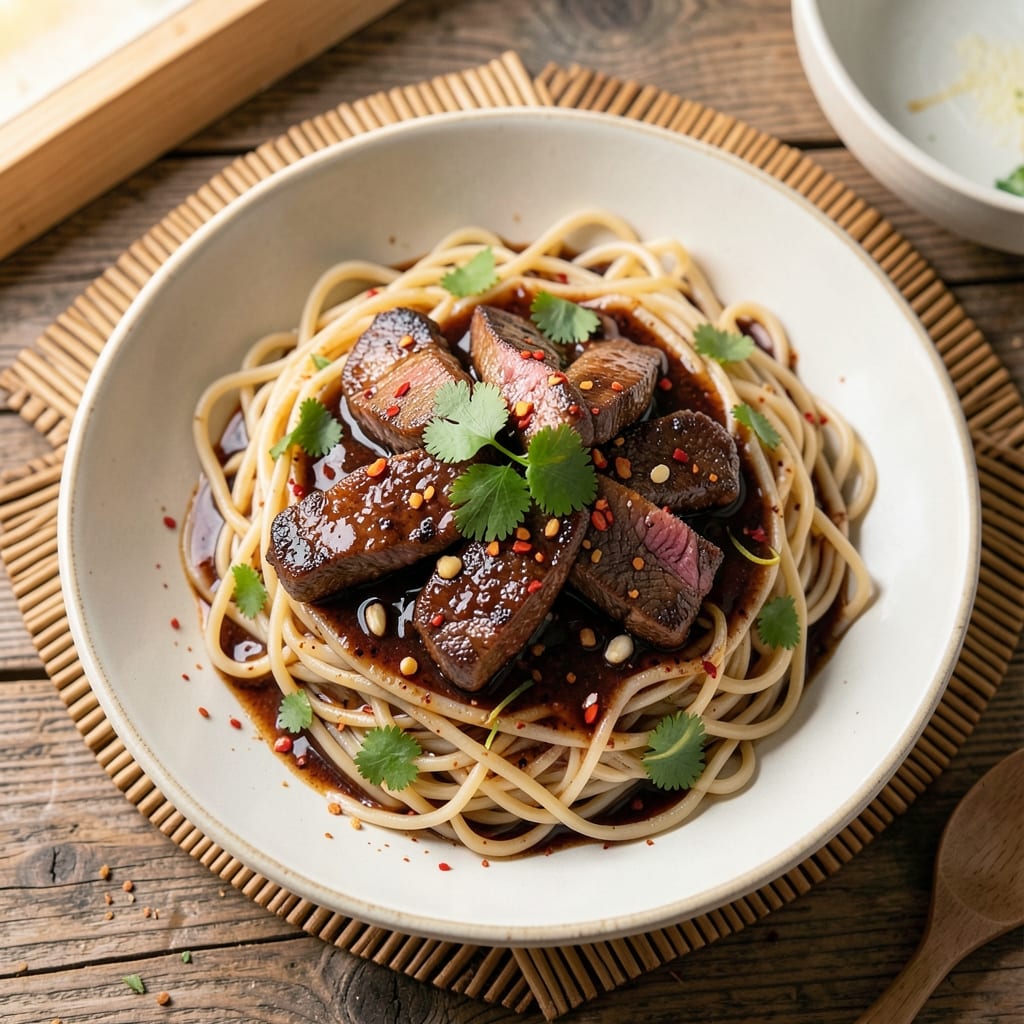
This Asian spicy beef noodle recipe delivers the perfect balance of bold wok heat and silky noodle texture in every bite. The secret lies in marinating the beef with a blend of soy sauce, garlic, and chili paste to develop deep, complex flavors before quick searing. What sets this dish apart is the layered approach to spice—fresh chili peppers for immediate heat and dried chili flakes for lingering warmth, all harmonized with umami-rich ingredients like oyster sauce and dark soy sauce.
Where many recipes skimp on broth development, this version builds flavor through a two-step process: first caramelizing aromatics in the wok, then simmering with beef and spices until the liquid reduces to a rich, slightly sticky consistency. The wheat noodles cook in the broth itself, absorbing those deep flavors while maintaining their signature chewy bite. For those who prefer less heat, simply reduce the fresh chili or add extra broth to dilute the spice levels.
By the time you serve this dish, you'll have a steaming bowl of aromatic beef and noodles where every component plays its part: tender beef slices cut into perfect bite-sized pieces, silky noodles that cling to the spoon, and a broth so flavorful it deserves its own bowl. The finishing touches—crisp green onions, sesame seeds, and a drizzle of chili oil—add freshness and visual appeal that make this dish as impressive as it is delicious.
Perfect for weeknight dinners or weekend gatherings, this recipe scales effortlessly from two servings to a crowd. The key to success is patience in building the flavors and precision in timing the noodles—once you master these elements, you'll have a restaurant-quality dish that's foolproof to recreate at home. Let's get cooking!
Ingredients for asian spicy beef noodle
Bold flavors start with these essential ingredients for restaurant-style spicy beef noodles.
| Ingredient | Amount | Notes |
|---|---|---|
| Flank Steak 🥩 | 1 ½ lb | Cut into thin strips, boneless |
| Wheat Noodles 🍜 | 12 oz | Fresh or dried, chewy variety |
| Soy Sauce 🥄 | ⅓ cup | Light or dark, high quality |
| Dark Soy Sauce 🥄 | 1 tbsp | For color and depth |
| Oyster Sauce 🦪 | 2 tbsp | Umami-rich, not too sweet |
| Garlic Cloves 🧄 | 6 cloves | Minced, fresh preferred |
| Ginger Root 🌿 | 2 tbsp | Freshly grated, aromatic |
| Red Chili Paste 🌶️ | 2 tbsp | Thai or Indonesian, spicy |
| Green Onions 🧅 | ½ cup | Sliced, white and green parts |
| Sesame Seeds 🌰 | 1 tbsp | Toasted, for crunch |
| Chili Oil 🌶️ | 1 tbsp | Spicy, for finishing |
| Vegetable Oil 🫒 | 3 tbsp | High smoke point |
| Dried Chili Flakes 🌶️ | 1 tsp | Adjust for heat preference |
| Fresh Chili Peppers 🌶️ | 1 whole | Thai or serrano, sliced |
| Salt 🧂 | 1 ½ tsp | Kosher or sea salt |
The beef is everything here. Flank steak delivers that perfect chew, but sirloin or ribeye work too—just slice against the grain. I grab mine from the butcher counter at Whole Foods or Trader Joe's—they usually have it pre-sliced for stir-fry. Fresh ginger and garlic? Penzeys Spices sells pre-minced jars if you're short on time, but freshly grated makes all the difference. The chili paste is non-negotiable—Maesri or Sriracha are my go-tos, but anything labeled 'Thai chili paste' at the international aisle works. For the noodles, fresh egg noodles from the Asian market section give that authentic bite, but dried wheat noodles like Ramen or Udon are fine in a pinch.
No chili oil? Mix 1 tbsp vegetable oil with 1 tsp chili flakes and 1 tsp soy sauce—it won't be identical, but it'll add heat. Running out of dark soy sauce? Extra light soy sauce plus 1 tsp molasses mimics the color. The fresh chili peppers can be swapped for 1-2 tsp chili garlic sauce> if you're avoiding seeds. For extra umami, add 1 tbsp fish sauce (though skip if vegetarian). The sesame seeds? Toast them in a dry pan for 1-2 minutes>—they'll smell amazing and add serious crunch. No toasted sesame oil? Neutral oil is fine, but it won't have that nutty depth.
Marinate the beef for at least 30 minutes> (overnight is best) to develop flavor. Store the chili paste and soy sauces in cool, dark cabinets>—they last 6-12 months unopened. Fresh ginger keeps 2 weeks> in the fridge wrapped tightly. The noodles? Cook al dente>—they'll finish in the hot broth. This dish reheats beautifully—just add a splash of water and heat through. Leftovers keep 3-4 days> in the fridge, or freeze for 3 months> (though texture changes slightly). Double the recipe—it's that good.
Why You'll Love This Recipe
- No-Fuss Protein: I swear by flank steak here—it’s lean, affordable, and slices like butter after a quick marinade in soy and dark soy. No fancy cuts, no wasted money, just pure, tender beef that disappears in minutes.
- Umami Bomb: That combo of oyster sauce and dark soy? Chef’s kiss. The dark sauce gives it that glossy, caramelized depth, while the oyster sauce adds this rich, savory punch that makes every bite sing. Honestly, the sauce alone is reason enough to make this twice.
- Lunchbox Hero: Between us, this is my secret weapon for meal prep. Cook a big batch of noodles and beef, portion them into containers, and you’ve got a week’s worth of takeout-style lunches. Toss in some steamed veggies or a fried egg, and suddenly you’re the office hero.
- Leftovers That Don’t Suck: Most spicy beef noodles turn sad overnight—but not this one. The soy sauces keep it flavorful, and the noodles stay al dente if you reheat them with a splash of water. I’ve had this for breakfast (yes, really) and it still hits. Budget-friendly? Absolutely. Reliable? Even more so.
Step-by-step instructions for Asian spicy beef noodles
Here's how to create restaurant-quality spicy beef noodles with perfectly tender meat and bold, aromatic flavors.
Prep and Marinate the Flank Steak
Slice the 1.5 lb flank steak into thin strips against the grain—about ¼-inch thick—using a sharp knife. This ensures maximum tenderness. Transfer the sliced steak to a bowl and add 0.33 cup soy sauce, 1 tbsp dark soy sauce, 2 tbsp oyster sauce, 1.5 tsp salt, 6 cloves minced garlic, and 2 tbsp freshly grated ginger. Mix thoroughly to coat evenly.
Let the marinated steak sit at room temperature for 15-20 minutes while you prepare the rest of the ingredients. This brief marinating time infuses the beef with flavor without making it mushy. The steak should be fully coated—if it looks dry, add 1 tablespoon of the marinade to help distribute the flavors.
Cook the Beef and Build the Sauce Base
Heat 3 tbsp vegetable oil in a wok or large skillet over high heat until shimmering. Add the marinated steak in a single layer and sear for 1-2 minutes until the edges turn deep brown and the beef is 80% cooked—it should still have a slight pink center. Remove the beef and set it aside on a plate.
In the same wok, reduce heat to medium-high and add 2 tbsp red chili paste. Stir for 30 seconds until fragrant, then add 1 whole sliced fresh chili pepper and 1 tsp dried chili flakes. Cook for 1 minute to meld the spices. This step develops the signature heat and depth of the dish—don't rush it or the flavors won't integrate properly.
Cook the Wheat Noodles Al Dente
Bring a large pot of water to a rolling boil and add the 12 oz wheat noodles. Cook according to package instructions until 1 minute before al dente—they'll finish cooking in the wok. Drain the noodles, reserving ½ cup of pasta water, and rinse briefly under cold water to stop the cooking process. Toss the noodles with 1 tbsp toasted sesame seeds to add texture.
Here's the thing—overcooked noodles turn mushy, while undercooked ones feel tough. The key is to cook them just until they're tender but still slightly firm. You'll know they're perfect when they hold their shape but can be easily chewed. Keep them covered with a damp towel while you finish the sauce.
Combine Everything for Maximum Flavor
Return the cooked beef to the wok and add the drained noodles. Pour in ½ cup reserved pasta water and toss everything together for 1-2 minutes until the noodles absorb the sauce and become silky. The pasta water helps create a glossy, cohesive sauce that clings beautifully to each strand.
Drizzle in 1 tbsp chili oil and 0.5 cup sliced green onions, tossing gently to distribute the heat and freshness. Taste and adjust seasoning—you might need a splash more soy sauce or a pinch of salt to balance the flavors. The dish should be boldly spicy with layers of umami from the oyster sauce and sweetness from the dark soy sauce.
Serve Immediately with Crunchy Toppings
Divide the spicy beef noodles among 4 bowls, garnishing each with an extra sprinkle of sesame seeds and green onions. Serve immediately while the noodles are hot and silky, and the beef is still juicy. The contrast of textures—chewy noodles, tender beef, and crispy toppings—makes every bite exciting.
This dish sings when served right away, so don't let it sit. The flavors meld beautifully in the first few minutes, creating that perfect balance of heat, richness, and freshness. Pair with a cold beer or iced tea to cool the palate between bites—you'll be hooked after the first forkful!
Pro Tips For Making Asian Spicy Beef Noodle
- Slice Against the Grain: Flank steak fights you if you don’t cut it right. After searing, slice thinly against the grain—no need to wait, just go for it. Thick slices mean chewy beef; thin slices mean every bite melts like it should.
- Rest the Steak Before Slicing: I learned this the hard way—skipping the rest means tough, stringy beef. After cooking, tent the steak with foil and let it sit 5 minutes. The fibers relax, and your noodles get that perfect tender pull.
- Balance the Sauces: Too much soy sauce flattens the flavor. Use 1 tablespoon light soy, 1 dark soy, and 1 oyster sauce for every 200g of beef. Stir in just enough to coat the noodles—you can always add more, but you can’t take it out.
- Boil Noodles Al Dente: Overcooked noodles turn mushy in the sauce. Drop them in boiling water and pull them out when they’re still slightly firm—about 1 minute before package instructions say. They’ll finish cooking in the hot sauce and beef.
Pro cooking tips for asian spicy beef noodle
Wok Heat Mastery
Your wok needs to be screaming hot before adding beef—think high heat until oil shimmers like a desert mirage. I use a 14-inch carbon steel wok> (like Mauviel) because it retains heat better than stainless steel. Preheat it for 2-3 minutes> on the stove until it's so hot you could fry an egg in 10 seconds>. This ensures your beef sears instantly, locking in juices instead of steaming. 🔥
Marinate Smartly
Don't over-marinate the beef—30 minutes max> is perfect. Any longer and the soy sauce will start breaking down the proteins, making the meat mushy. I like to add 1 tsp cornstarch> to the marinade for extra tenderness. Also, slice the beef ¼-inch thick> against the grain—this is non-negotiable for texture. If your steak is thick, pound it gently with a meat mallet first.
Spice Layering
The secret to balanced heat is layering: start with 2 tbsp chili paste> (for depth), add 1 fresh chili> (for immediate heat), and finish with 1 tsp chili flakes> (for lingering warmth). For extra complexity, toast the chili flakes in the wok for 10 seconds> before adding them—they'll release their essential oils and add a smoky note. Adjust heat by reducing the fresh chili to ½> or adding 1 extra tbsp soy sauce> to mellow the burn.
Noodle Timing
Cook the noodles 1 minute less> than package instructions say, then finish them in the wok. This two-step process ensures they're perfectly al dente when served. Pro tip: Reserve ½ cup pasta water>—it's liquid gold for creating that signature glossy sauce. If your noodles stick together, toss them with ½ tsp oil> while they cook to prevent clumping. 🍜
Sauce Integration
Combine everything in the wok for just 1-2 minutes>—any longer and the noodles will turn mushy. The reserved pasta water is crucial here; it helps create a cohesive sauce that clings to each noodle strand. Taste as you go: if it's too dry, add another splash of water or broth. The sauce should coat the back of a spoon but still be slightly sticky—not watery. A pinch of white pepper> at this stage adds depth without altering the color.
Nutrition facts
Frequently asked questions
Can I use ground beef instead of flank steak?
Ground beef works in a pinch, but it won't give you that same tender, chewy texture. For best results, use 80/20 ground chuck and cook it thoroughly to avoid toughness. If you do substitute, reduce the cooking time to 1 minute after adding it to the wok to prevent overcooking.
How do I make this recipe less spicy?
Start by reducing the fresh chili pepper to just ½ or remove it entirely. For extra mildness, add 1 tbsp more soy sauce or ½ cup beef broth to balance the heat. Always taste as you go—you can adjust while cooking, but you can't take spice out once it's in!
What kind of noodles should I use?
For authentic texture, use fresh wheat noodles (like lo mein or udon) from the Asian market. If you only have dried noodles, egg noodles or spaghetti work in a pinch. Cook them 1 minute less than package instructions say—they'll finish cooking in the wok. Avoid rice noodles, as they won't hold up to the sauce.
Can I make this dish ahead of time?
You can prep components ahead: marinate the beef (up to 24 hours), make the sauce base (without noodles), and even cook the beef (store separately). When ready to serve, reheat the beef and sauce together, then add freshly cooked noodles. For best texture, serve within 30 minutes of combining everything.
What's the best way to store leftovers?
Store leftovers in an airtight container in the fridge for up to 3-4 days. Reheat gently on the stove with a splash of water or broth to restore moisture. For freezing, package components separately (beef, noodles, sauce) and thaw overnight in the fridge before reheating. The noodles may soften slightly after freezing.