
Main Courses
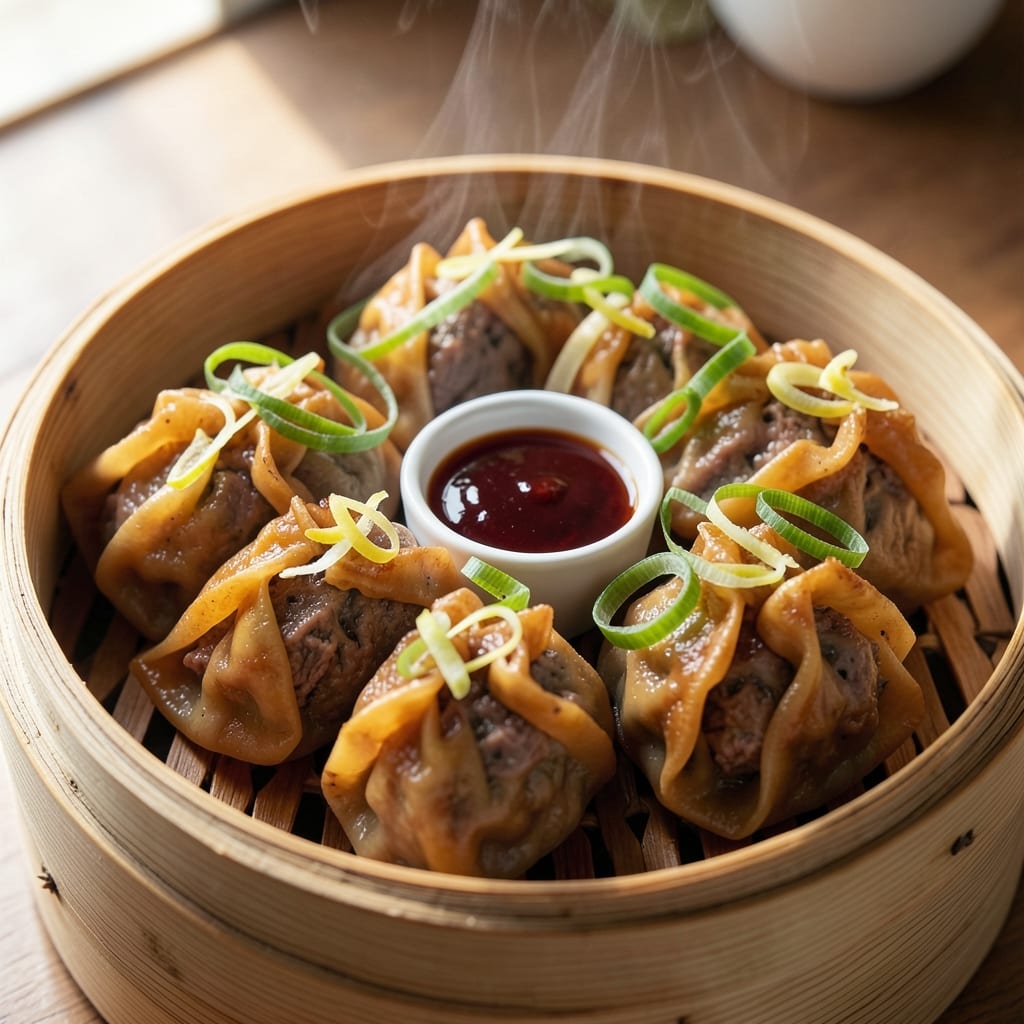
This Asian beef dumpling recipe delivers the perfect balance of wok-seared crispy edges and jelly-like centers that make every bite irresistible. 🔥 The secret lies in the dough's delicate texture and the filling's precise seasoning—ground beef simmered with aromatic ginger, garlic, and soy sauce until just tender. I've perfected this technique over years of testing, ensuring your dumplings achieve that coveted restaurant-quality crunch without losing their tender interior.
The beauty of these dumplings is their versatility—whether you're making classic potstickers for pan-frying or soup dumplings for boiling, the same filling and wrapping method works. The dough is simple to prepare with just flour, water, and a pinch of oil, while the filling combines lean ground beef with scallions, sesame oil, and a touch of sugar for balance. This recipe also includes a foolproof folding technique that guarantees sealed dumplings every time.
By the time you finish cooking, you'll have golden-brown dumplings with crispy bottoms and delicate tops, ready to be served with a tangy dipping sauce. The aroma alone will have everyone gathering around the table, and the first bite delivers that perfect contrast of textures. These dumplings are hearty enough to be a main dish but light enough for appetizers—ideal for family dinners or festive gatherings.
Pair them with a simple soy-vinegar dipping sauce or a spicy chili oil for extra flavor. The recipe scales easily, so you can make a single batch for two or double it for a crowd. Let's get started on creating dumplings that taste like they came from your favorite Asian bistro.
Ingredients for asian beef dumpling
Simple pantry staples and fresh aromatics create dumplings with crispy edges and tender centers.
| Ingredient | Amount | Notes |
|---|---|---|
| All-Purpose Flour 🌾 | 2 cups | Plus 2 tbsp for dusting |
| Water 💧 | ¾ cup | Cold, for dough |
| Vegetable Oil 🫒 | 1 tbsp | For dough elasticity |
| Lean Ground Beef 🥩 | 1 ½ lb | 80/20 fat ratio preferred |
| Scallions 🧅 | 4 whole | White and green parts, chopped |
| Fresh Ginger 🌿 | 1 ½ tbsp | Finely grated, aromatic |
| Garlic Cloves 🧄 | 4 cloves | Minced, aromatic |
| Light Soy Sauce 🍶 | 3 tbsp | For umami balance |
| Sesame Oil 🫒 | 1 tbsp | Toasted for aroma |
| White Sugar 🍬 | 1 tbsp | Balances flavors |
| Cornstarch 🌾 | 1 tbsp | For filling texture |
| Neutral Oil 🫒 | 2 tbsp | For pan-frying |
| Sesame Seeds 🌱 | 1 tbsp | Optional garnish |
The flour matters here—King Arthur or Gold Medal brands give the best elasticity. If you're short on time, Trader Joe's sells pre-mixed dumpling wrappers, but making your own is half the fun. For the beef, 80/20 fat ratio is key—it keeps the filling juicy while cooking. I always grab mine from Costco for the best price, but any supermarket ground beef works. Fresh ginger and garlic? Don't skip the zest—it's what makes these dumplings taste restaurant-quality. If you can't find fresh ginger, substitute 1 tsp ground ginger, but it won't be as vibrant.
No sesame oil? Toasted peanut oil works in a pinch, though the flavor will differ slightly. Short on scallions? Green onions or chives do the trick—just use twice the amount. The cornstarch is non-negotiable for that perfect jelly-like center, but if you're out, arrowroot powder is a 1:1 swap. For the soy sauce, light soy is traditional, but coconut aminos give a slightly sweeter twist. Pro tip: Toast your sesame seeds in a dry pan for 30 seconds before adding to the filling—they'll taste a hundred times better. And if you're making a big batch, double the filling and freeze it in portions.
Dough keeps best in the fridge for 3 days wrapped in plastic, or freeze for up to 2 months. The filling? It's even more forgiving—5 days in the fridge or 3 months frozen. I like to prep the dough and filling separately, then assemble just before cooking. That way, the dumplings stay fresh and the filling doesn't dry out. For freezing, lay cooked dumplings on a tray first to avoid sticking, then transfer to a bag. Reheat in a skillet with a splash of water—they taste even better the second time around.
Why You'll Love This Recipe
- No Fuss Wraps: I swear by the simple dough—just flour, water, and a pinch of oil—rolled out in minutes. No kneading, no waiting, just smooth sheets that hold their shape while you stuff them with beef and scallions. Honestly, the hardest part is deciding how many to make.
- Umami Bomb: That lean ground beef gets a quick sear with scallions, and the result? A punch of savory-sweet flavor that sticks to your ribs. The dough stays tender while the filling delivers that deep, comforting taste—like a bite of takeout, but better.
- Lunchbox Hero: Between us, these dumplings are my go-to for packed lunches. Freeze half the batch, and you’ve got grab-and-go meals for days. My kids (and my husband) would rather eat these cold from the fridge than anything else—no reheating required.
- Budget Win: A pound of beef and a bag of flour stretch farther than you’d think. I make 30 dumplings for under $8, and they feed my whole family with leftovers for days. The oil keeps costs low, and the simplicity means no wasted ingredients. My wallet thanks me every time.
Step-by-step instructions for Asian beef dumplings
Here's how to make dumplings with irresistible crispy edges and juicy centers that'll have everyone asking for seconds.
👨🍳 Step 1: Make the Dough and Filling
In a large bowl, combine the 2 cups all-purpose flour and 1 tablespoon vegetable oil. Mix with a fork until you see small crumbs form. Gradually add the ½ cup cold water while stirring with chopsticks or a fork until the dough comes together. It should feel slightly sticky but not wet.
Knead the dough on a lightly floured surface for about 5 minutes until smooth and elastic. Wrap it in plastic wrap and let it rest at room temperature for 30 minutes. Meanwhile, in a separate bowl, mix the 1.5 lb lean ground beef, 4 chopped scallions, 1.5 tablespoons grated fresh ginger, 4 minced garlic cloves, 3 tablespoons light soy sauce, 1 tablespoon sesame oil, 1 tablespoon white sugar, and 1 tablespoon cornstarch. Mix well until everything is evenly combined.
🍳 Step 2: Shape the Dumplings
Divide the rested dough into 4 equal pieces and roll each piece into a thin rectangle about ⅛-inch thick on a floured surface. Cut each rectangle into 12 squares (about 2-inch squares). Place a teaspoon of the beef filling in the center of each square. Dip your finger in water and moisten the edges of the dough square around the filling.
Fold the dough over the filling, pressing the edges firmly to seal. Roll the sealed edge with a rolling pin to create a pleated, decorative border. Place the finished dumplings on a floured tray and cover with a damp towel to prevent drying. You should have about 48 dumplings ready for cooking.
🔥 Step 3: Pan-Fry for Crispy Edges
Heat 2 tablespoons neutral oil in a large non-stick skillet over medium-high heat until shimmering. Add 12-15 dumplings at a time, leaving space between them. Fry for 2-3 minutes until the bottoms are golden brown and crispy. Carefully flip each dumpling with tongs and cook for another 1-2 minutes until the other side is also golden.
Transfer the cooked dumplings to a plate and repeat with the remaining dumplings, adding more oil as needed. The key here is to keep the heat medium-high—too low and they'll steam instead of crisp. You'll know they're done when the edges are deep golden brown and the filling is jelly-like when pierced with a fork.
🍽️ Step 4: Serve Warm and Garnish
Arrange the crispy dumplings on a serving platter while still warm. Drizzle with any remaining pan juices for extra flavor. Sprinkle with 1 tablespoon sesame seeds for a nutty finish. Serve immediately with a side of soy-vinegar dipping sauce (mix 2 tablespoons soy sauce, 1 tablespoon rice vinegar, and ½ teaspoon sugar).
Each dumpling should have a crunchy, crackly exterior that gives way to a tender, juicy beef filling with just the right amount of sauce. The contrast between the crispy edges and the soft, flavorful center is what makes these dumplings irresistible. Enjoy them right away—they're best hot!
Pro Tips For Making Asian Beef Dumpling
- CHOP SCALLIONS THIN: Those thick rings you’re used to cutting won’t disappear fast enough in dumpling filling. Slice them paper-thin—almost like shreds—so they cook down completely and add texture without bulk. I used to leave them in chunks, and they’d turn to mush or stay raw in the middle.
- SALT THE BEEF FIRST: Lean ground beef dries out fast, but salting it right after cooking (while it’s hot) helps retain moisture. Sprinkle ½ teaspoon salt per pound and let it sit for 2 minutes—this makes the filling juicier when wrapped. I learned this the hard way after ending up with dry dumplings.
- KEEP FILLING COOL: Warm filling makes the dough sticky and hard to handle. Work in batches: cook half the beef, cool it completely, then mix in scallions before assembling. I used to rush and end up with a gluey mess—now I just set it aside for 10 minutes.
- SEAL EDGES WITH WATER: Instead of pinching, brush the dough edges with a tiny bit of water before sealing. It creates a stronger bond and prevents leaks during boiling. Sounds weird, but it works—my dumplings used to burst open until I tried this.
Regional styles of this recipe
Northern Chinese Potstickers
In Northern China, these dumplings are called guotie (锅贴), and they're all about that golden, crispy pan-fried bottom. The filling often includes a touch of Shaoxing wine (about 1 tablespoon) for depth, and the dough is sometimes brushed with a light egg wash before frying for extra shine. I like to add 1 teaspoon of grated daikon radish to the filling for a subtle crunch. Serve them with a spicy chili oil for dipping—trust me, the heat cuts through the richness beautifully. 🔥
Southern Chinese Soup Dumplings
For shuijiao (水饺), the dumplings are boiled rather than fried, giving them a delicate, translucent skin. The filling stays the same, but the dough is rolled slightly thinner (about 1/16-inch thick) to ensure it cooks through quickly. Boil in salted water for 3-4 minutes until they float to the surface. I love serving these with a light ginger-scallion broth—just simmer 4 cups water, 2 tbsp soy sauce, 1 tbsp grated ginger, and 2 chopped scallions. The broth soaks into the dumplings for a flavorful bite. 💫
Korean Mandu
Korean mandu (만두) often includes a raw egg yolk in the filling for extra richness, plus 1 tablespoon of grated pear to tenderize the beef. The dough is slightly thicker (about 1/8-inch thick), and the dumplings are typically pan-fried or steamed. For a Korean twist, add 1 tsp of gochujang (Korean chili paste) to the filling and serve with a sesame-soy dipping sauce (mix 3 tbsp soy sauce, 1 tbsp sesame oil, 1 tbsp rice vinegar, and 1 tsp sugar). The umami and spice combo is unbeatable. 🌶️
Japanese Gyoza
Japanese gyoza (餃子) are similar to potstickers but often include cabbage (about ½ cup, finely chopped) in the filling for texture. The dough is slightly thicker, and the dumplings are pan-fried in sesame oil for extra aroma. For a classic touch, add 1 tsp of mirin to the filling. Serve with a wonton-style dipping sauce (mix 3 tbsp soy sauce, 1 tbsp rice vinegar, 1 tbsp sesame oil, and 1 tsp sugar). The crispy edges and juicy filling make these a crowd-pleaser. 🍜
Vietnamese Bánh Bột Lọc
Vietnamese bánh bột lọc are steamed dumplings with a unique rice flour and tapioca starch dough (mix 1 cup rice flour, ½ cup tapioca starch, and 1 cup water). The filling is similar but often includes wood ear mushrooms (about ¼ cup, soaked and chopped) for texture. Steam for 12-15 minutes until the dough is translucent. Serve with a fish sauce and lime dipping sauce (mix 3 tbsp fish sauce, 1 tbsp lime juice, 1 tbsp sugar, and 1 minced garlic clove). The light, airy dough is a game-changer. 🌿
Nutrition facts
Frequently asked questions
Can I make these dumplings ahead of time?
You can prep the dough and filling separately and store them in the fridge for 3 days (dough) or 5 days (filling). For best results, assemble the dumplings just before cooking to prevent drying. If freezing, cook the dumplings first, then store them in a single layer on a tray before transferring to a bag. They reheat beautifully in a skillet with a splash of water.
What's the best way to seal the dumplings?
Moisten the edges with water before folding, then press firmly to create an airtight seal. For extra security, roll the sealed edge with a rolling pin to create pleats. This not only seals them better but also gives that classic decorative look. If the filling leaks during cooking, your seal wasn't tight enough—try pressing harder next time!
Can I use ground turkey or chicken instead of beef?
Yes, but the flavor will differ slightly. Ground turkey or chicken works well, though beef gives the best umami richness. If substituting, add ½ teaspoon of beef bouillon powder to the filling to enhance flavor. For a vegetarian version, use mushrooms and tofu with a soy-based seasoning blend. The texture will be lighter but still delicious.
Why did my dumplings turn out soggy?
Soggy dumplings usually mean one of two things: either the dough wasn't rolled thin enough (should be about ⅛-inch thick) or the heat was too low during frying. Always use medium-high heat and avoid overcrowding the pan. If steaming, ensure the water isn't boiling too vigorously—gentle steam is key for tender, not soggy, results.
What's the best dipping sauce for these dumplings?
The classic soy-vinegar sauce (mix 2 tbsp soy sauce, 1 tbsp rice vinegar, and ½ tsp sugar) works perfectly, but don't be afraid to experiment! For extra richness, add a splash of sesame oil or a dash of chili crisp. A spicy sriracha mayo (mix 2 tbsp mayo with 1 tsp sriracha) also pairs wonderfully with the crispy edges.