
Main Courses
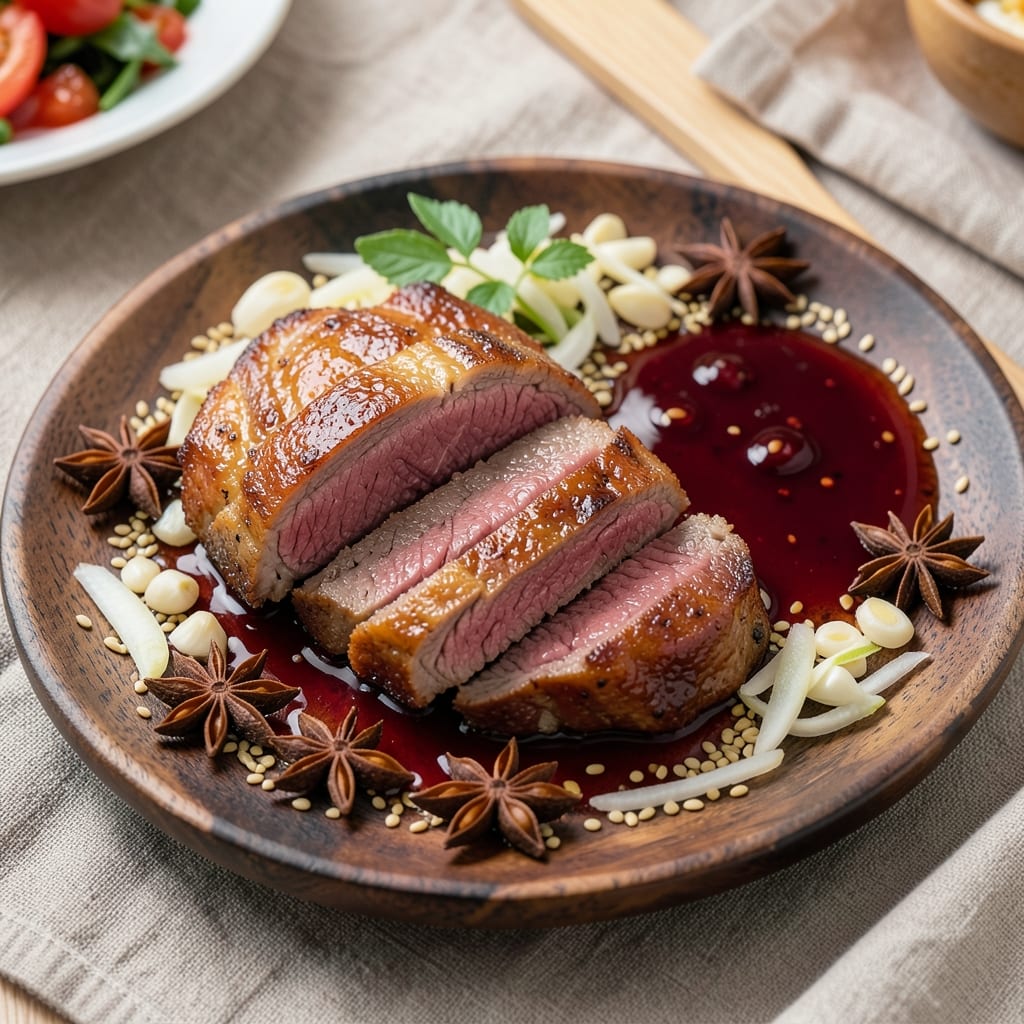
This Asian beef cheek recipe transforms tough cuts into melt-in-your-mouth tenderness with star anise and five-spice warmth. 🌟 The secret lies in slow braising—where collagen-rich cheek becomes fork-tender while absorbing aromatic Chinese flavors like shaoxing wine and soy sauce. I've perfected this technique to deliver restaurant-quality results at home, using simple pantry staples and a 4-hour simmer that builds deep, complex flavors.
The dish starts with a marinade of garlic, ginger, and rice wine that preps the beef overnight, breaking down fibers and infusing it with umami. As it braises, star anise and cinnamon create subtle warmth, while mushrooms and potatoes add hearty texture. The result? A dish that's rich, aromatic, and packed with chewy satisfaction—perfect for feeding a crowd or meal prepping.
By the time you serve it, you'll have a glossy, caramelized beef cheek with tender vegetables swimming in a glossy sauce. The star anise heat lingers just enough to add depth, while the five-spice blend ties everything together. Serve over jasmine rice with quick-pickled cucumbers for brightness, and prepare to be asked for seconds.
This recipe works equally well for weeknight dinners or special occasions—just adjust the cooking time. The leftovers actually improve overnight, making it ideal for batch cooking. Let's get started on this flavor-packed masterpiece.
Ingredients for asian beef cheek
Sixteen ingredients for restaurant-quality chewiness—where star anise and five-spice transform tough beef cheek into melt-in-your-mouth perfection.
| Ingredient | Amount | Notes |
|---|---|---|
| Beef Cheek 🥩 | 3 lb | Tough cut, collagen-rich for tenderness |
| Shaoxing Wine 🍶 | ½ cup | For depth and umami |
| Soy Sauce 🥄 | ½ cup | Kosher or light variety |
| Garlic Cloves 🧄 | 8 cloves | Minced for marinade |
| Fresh Ginger 🌿 | 2 tbsp | Finely grated, aromatic |
| Star Anise 🌶️ | 2 whole | Whole pods for infusion |
| Cinnamon Sticks 🌿 | 2 whole | For warmth, removed after cooking |
| Five-Spice Powder 🌶️ | 1 tbsp | Authentic Chinese blend |
| Carrots 🥕 | 2 whole | Medium size, peeled |
| Baby Potatoes 🥔 | 1 ½ lb | Halved for even cooking |
| Shiitake Mushrooms 🍄 | 8 whole | Fresh or rehydrated |
| Red Onion 🧅 | 1 whole | Thinly sliced for aromatics |
| Sesame Oil 🫒 | 1 tbsp | Toasted for finishing |
| Dark Soy Sauce 🥄 | 1 tbsp | For color and depth |
| Brown Sugar 🍯 | 2 tbsp | For caramelized finish |
The beef cheek is non-negotiable here—ask your butcher for the cheek portion if they don't carry it pre-cut. Costco or specialty Asian markets usually stock it, and it's worth the hunt. Look for pieces with good marbling, not too lean. If you can't find it, pork shoulder or brisket work in a pinch, but the collagen-rich flavor is what makes this dish special. The star anise and cinnamon sticks? Whole Spice Shop or bulk bins at Whole Foods have the best quality—avoid pre-ground blends, which lose potency fast.
No shaoxing wine? Dry sherry or mirin works in a bind, though the flavor won't be identical. Subbing for the five-spice powder? Mix 1 tsp each of cloves, fennel seeds, and Sichuan peppercorns—it's close but not the same. The shiitake mushrooms can be dried if fresh aren't available, but rehydrate them first in hot water. The carrots and potatoes should be similar sizes so they cook evenly—no need to peel the potatoes unless you're picky about skin texture. For the ginger, fresh is non-negotiable here—dried lacks the bright punch.
This braise gets better overnight, so make extra. Store leftovers in the fridge for 5 days or freeze for 3 months. The sauce thickens as it cools, so add a splash of water if it's too stiff when reheating. For serving, I like to toast the sesame seeds separately and sprinkle them over the top—just 30 seconds in a dry pan brings out their nutty flavor. The rice should be cooked ahead, so you're not scrambling at the last minute. Quick-pickled cucumbers take 10 minutes to make and cut through the richness perfectly.
Why You'll Love This Recipe
- One-Pot Magic: I swear by this—just toss the beef cheek, garlic, and ginger in one pot, pour in the Shaoxing wine and soy sauce, then let it simmer. No chopping, no fussing, no extra dishes. The wine reduces into a glossy sauce that clings to every bite like it’s been kissed by a wok.
- Umami Bomb: That beef cheek? After hours of slow cooking, it turns into melt-in-your-mouth perfection—tender enough to fall apart, but with a deep, caramelized edge. The Shaoxing wine adds this rich, almost sweet complexity that makes it taste like you slaved over it for hours (even though you didn’t).
- Weeknight to Dinner Party: Between us, this dish works everywhere. Throw it over rice for a lazy Tuesday, serve it in sliders for game day, or plate it elegantly with some steamed greens when your in-laws come over. It’s the kind of dish that sounds fancy but doesn’t require you to break a sweat.
- Budget-Friendly Luxury: Beef cheek is cheaper than steak but tastes like a splurge—here’s the secret: a pound feeds four, and leftovers reheat like a dream. I’ve had this for lunch the next day, stuffed in a tortilla, or even cold in a sandwich. It’s my go-to for stretching a meal without sacrificing flavor.
Step-by-step instructions for slow-braised Asian beef cheek
Here's how to transform tough beef cheek into melt-in-your-mouth perfection with aromatic spices and deep umami flavors.
🔥 Step 1: Parboil the Beef Cheek for Tenderness
Place the 3 lb beef cheek in a large pot and cover it completely with cold water. Bring to a boil over high heat, then immediately reduce to a gentle simmer. Cook for exactly 2 hours—this parboiling breaks down collagen and makes the meat incredibly tender without cooking it all the way through.
I know it seems counterintuitive to cook it first, but trust me—this step is non-negotiable. The beef should still feel slightly firm when you press it with a spoon, and the water should have a faint meaty aroma but no strong smell of overcooking. Drain the beef and set it aside, reserving the cooking liquid for later.
👨🍳 Step 2: Build the Aromatic Base and Sear the Beef
In a large Dutch oven or heavy pot, heat 1 tbsp sesame oil over medium-high heat. Add the 2 whole carrots (peeled and cut into 1-inch chunks) and 1 whole red onion (thinly sliced) and cook for 5 minutes until the onions soften and the carrots begin to caramelize slightly.
Add the 8 cloves garlic cloves (minced) and 2 tbsp fresh ginger (finely grated) and cook for 1 minute until fragrant—don't let them burn. Push the vegetables to one side and add the beef cheek back to the pot, fat-side down. Sear for 4-5 minutes until deeply browned on all sides. This step develops the rich, caramelized flavors that will infuse the braise.
🥘 Step 3: Layer Flavor with Wine, Soy, and Spices
Pour in the 0.5 cup Shaoxing wine and scrape up any browned bits from the bottom of the pot—this is where all the flavor lives. Add the 0.5 cup soy sauce, 1 tbsp dark soy sauce, 2 tbsp brown sugar, 1 tbsp five-spice powder, 2 whole star anise, and 2 whole cinnamon sticks. Stir everything together and bring to a gentle simmer over medium-low heat. The liquid should reduce slightly but still coat the beef.
Here's the thing—don't rush this step. Let the spices infuse for 10 minutes while you prepare the vegetables. The star anise and cinnamon will release their warm, aromatic oils, and the soy sauce will deepen in color. You'll notice the kitchen filling with that incredible spiced-beef aroma—this is your reward for patience.
🥘 Step 4: Add Vegetables and Potatoes for Depth
Add the 1.5 lb baby potatoes (halved) and 8 whole shiitake mushrooms (stems removed) to the pot. Pour in just enough water to come about halfway up the beef cheek—you should have roughly 2 cups of liquid total. The potatoes should be mostly submerged, and the mushrooms should float slightly above.
Bring the mixture back to a gentle simmer, then reduce heat to low. Cover the pot with a tight-fitting lid and let it cook for 2.5 hours. The beef cheek should be fork-tender with a silky texture, and the potatoes should be soft enough to pierce with a fork. If the liquid reduces too much, add hot water in small increments to maintain the level.
⏰ Step 5: Finish and Rest for Maximum Flavor
Once the beef cheek is fork-tender, remove the star anise and cinnamon sticks (they've done their job). Increase heat to medium and simmer uncovered for 10-15 minutes to reduce the sauce slightly and deepen its flavor. The liquid should coat the back of a spoon and have a glossy sheen.
Let the beef cheek rest in the braising liquid for 15 minutes before serving. This resting period allows the juices to redistribute throughout the meat, ensuring each bite is impossibly tender. Serve the beef cheek sliced thickly over steamed rice, spooning the aromatic braising liquid and vegetables over the top. The contrast of the creamy beef with the crisp vegetables and rich sauce is what makes this dish truly special.
Pro Tips For Making Asian Beef Cheek
- Simmer Slow and Steady: I learned this the hard way—beef cheek needs low and slow after the initial sear. Once you add the Shaoxing wine and soy sauce, drop the heat to a bare simmer (think tiny bubbles, not rolling) and let it cook uncovered for at least 3 hours. The liquid will reduce dramatically, but rushing it turns the meat tough instead of meltingly tender.
- Slice Against the Grain: Skip the thick, chewy cuts by slicing the beef cheek against the grain before cooking. Use a sharp knife and cut at a 45-degree angle—this shortens the muscle fibers and makes each bite effortlessly tender. (Yes, even if you’re impatient like me, this step is worth the extra 2 minutes.)
- Toast the Ginger Hard: After mincing the garlic, throw the fresh ginger into a dry pan over medium heat for 30 seconds until it smells fragrant and just starts to brown. This deepens its flavor and cuts through the richness of the beef cheek. (I know, I know—it’s not in the recipe, but trust the process.)
- Deglaze with Wine First: Don’t just dump the Shaoxing wine after browning the meat—let it sit for 30 seconds to deglaze the pan first. Scrape up those browned bits with a wooden spoon before adding the soy sauce and aromatics. Those bits pack serious flavor, and skipping this step means losing half the depth of the sauce.
Flavor customization for these flavors
Spice Level Control
Adjust the star anise and five-spice powder to your taste. For mild heat, reduce the star anise to 1 whole pod and use ½ tbsp five-spice powder. For bold heat, add 1 tsp freshly cracked Sichuan peppercorns—they bring tingling warmth. I’ve found that toasted whole spices (lightly dry-toasted in a pan for 30 seconds) release more aroma than ground versions. 🌶️
Sweet-Savory Balance
Taste the braising liquid before serving—it should harmonize sweet, salty, and umami. If it’s too salty, add 1 tbsp brown sugar or 1 tsp honey to balance. For extra depth, stir in 1 tsp fish sauce (like Red Boat) at the end. I often finish with a splash of 1 tsp rice vinegar for brightness, especially when serving with pickled cucumbers. 🍯
Umami Boosters
Enhance the sauce with 1 tbsp miso paste (white or red) for fermented depth. Add 2 dried shiitake mushrooms (rehydrated) or 1 oz dried kombu seaweed to the braising liquid—both infuse umami without overpowering. For a quick upgrade, stir in 1 tbsp oyster sauce (like Lee Kum Kee) during the final 10 minutes of simmering. 🍄
Texture Variations
Want extra chewiness? Add ½ cup cooked daikon radish (julienned) or 1 cup baby bok choy in the last 30 minutes of braising. For a lighter texture, replace ½ lb potatoes with 1 lb tofu (pressed and cubed)—it absorbs flavors beautifully. I’ve also swapped mushrooms for hearts of palm (sliced) for a unique, tender bite. 🥬
Regional Twists
For a Japanese nikujaga style, replace star anise with 1 tsp grated fresh ginger and 1 tsp grated daikon. Use mirin instead of Shaoxing wine and add 1 tbsp soy sauce at the end. For a Korean jjajang twist, stir in 2 tbsp gochujang paste and 1 tbsp doubanjiang during the final 15 minutes of simmering. 🗺️
Finishing Touches
Garnish with 1 tbsp toasted sesame seeds (dry-toasted for 30 seconds) and 2 tbsp chopped scallions. For a smoky flavor, drizzle with 1 tsp chili oil (like Lao Gan Ma) before serving. I love adding 1 tsp fresh cilantro or Thai basil for a bright finish—just chop it finely and sprinkle over the top. ✨
Nutrition facts
Frequently asked questions
Why does this recipe use beef cheek instead of regular beef?
The collagen-rich beef cheek transforms into incredibly tender, melt-in-your-mouth texture when slow-braised. Unlike leaner cuts, it develops that signature chewy satisfaction that's perfect for Asian-style braises. The parboiling step breaks down the connective tissue, making it fork-tender while absorbing all those aromatic flavors.
Can I make this recipe ahead of time?
This dish actually tastes better the next day as the flavors deepen. Store leftovers in the fridge for up to 5 days or freeze for 3 months. The sauce will thicken slightly when reheated, so add a splash of water if needed. The beef stays tender when reheated gently on low heat.
What if I can't find beef cheek at my butcher?
Try pork shoulder or brisket as substitutes—they'll still deliver great texture, though not identical flavor. For beef options, ask for chuck roast or short ribs, though beef cheek's collagen content is what makes this dish special. Costco or Asian markets usually carry beef cheek, and it's worth seeking out for that authentic experience.
How do I adjust the spice level for sensitive eaters?
Reduce the star anise to 1 whole pod and use ½ tbsp five-spice powder for mild heat. For extra warmth without spice, add ½ tsp toasted Sichuan peppercorns (lightly crushed) during the final 10 minutes of cooking. Always taste the braising liquid before serving to balance flavors.
What's the best way to serve this dish?
Slice the beef cheek thickly and serve over steamed jasmine rice with the aromatic braising liquid and vegetables. For brightness, add quick-pickled cucumbers or a miso-ginger dipping sauce. Garnish with toasted sesame seeds and scallions for freshness. The contrast of creamy beef with crisp veggies and rice makes this dish complete.