
Soups & Stews
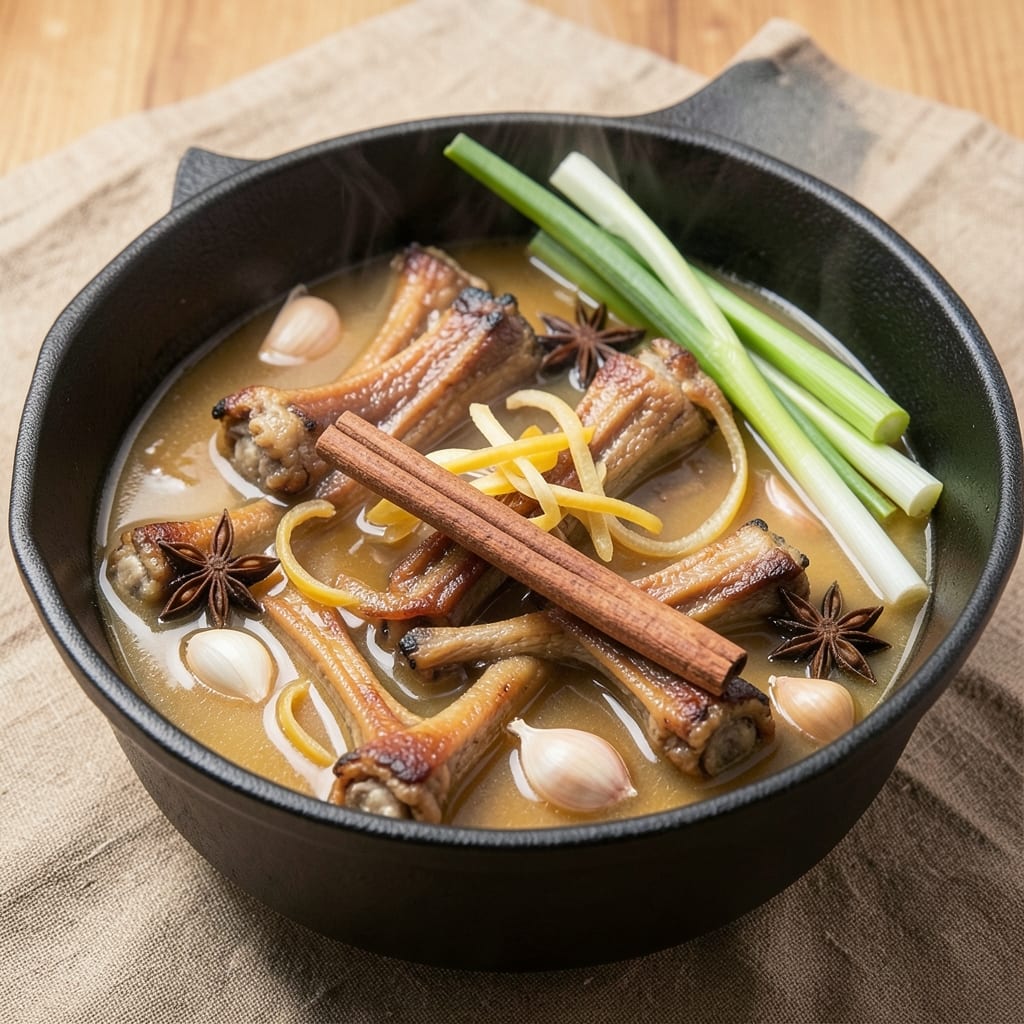
This Asian beef bone broth recipe transforms simple pantry ingredients into a deeply flavorful elixir that forms the heart of countless Asian dishes. The key lies in slow extraction—letting collagen-rich bones and aromatic spices infuse over hours to create a rich, umami-packed liquid that's far more complex than store-bought versions. I've refined this method to balance traditional techniques with modern convenience, ensuring home cooks can achieve restaurant-quality results without specialized equipment.
The foundation begins with beef bones—knuckles, marrow bones, or oxtails—simmered with ginger, garlic, and star anise to build layers of savory depth. A cold start prevents surface scum, while frequent skimming keeps the broth crystal clear. The process requires patience, but the reward is unmatched flavor: a velvety, golden liquid that's perfect for sipping or as a base for pho, ramen, or braised dishes.
What sets this recipe apart is its versatility—adapt it for Korean daechigot by adding fermented seafood, or Vietnamese canh chua with tamarind and shrimp paste. The broth develops richer collagen and gelatin as it simmers, transforming tough cuts into melt-in-your-mouth texture when used in recipes. Whether you're a beginner or seasoned cook, this method delivers professional-level results with simple ingredients.
Ready in just 8-12 hours (or 4-6 hours in a pressure cooker), this broth keeps for up to 5 days refrigerated or 3 months frozen. The aroma alone will transform your kitchen into an Asian eatery, and the flavor? That's where the magic happens. Let's get started on creating your flavor foundation.
Ingredients for asian beef bone broth
Simple ingredients unlock restaurant-quality depth in this Asian beef bone broth.
| Ingredient | Amount | Notes |
|---|---|---|
| Beef Bones (Knuckles, Marrow, or Oxtails) 🦴 | 4 lb | Raw, uncooked, collagen-rich |
| Cold Water 💧 | 12 cups | For initial cold soak |
| Fresh Ginger 🧅 | 3 inches | Unpeeled, sliced thick |
| Garlic Cloves 🧄 | 8 cloves | Whole, unpeeled |
| Star Anise Pods 🌟 | 4 whole | Whole, not ground |
| Cinnamon Sticks 🌿 | 2 whole | 1-inch pieces preferred |
| Bay Leaves 🌿 | 4 whole | Dried, standard size |
| White Peppercorns 🌶️ | 1 tbsp | Crushed lightly |
| Salt 🧂 | 1 tsp | Kosher or sea salt |
| Apple Cider Vinegar 🍏 | 2 tbsp | For collagen extraction |
| Sesame Oil 🫒 | 1 tbsp | For finishing aroma |
| Green Onions 🧅 | 2 whole | For garnish, chopped |
The bones are everything here. Look for knuckles or marrow bones at your butcher—they're packed with collagen and marrow that melts into rich, velvety texture. Costco or local meat markets usually carry them, often labeled as 'beef soup bones' or 'bone-in beef cuts'. Avoid bones with meat still attached, as they can make the broth cloudy. Fresh ginger and garlic should be vibrant—no wrinkly or sprouting roots. Star anise and cinnamon sticks? Penzeys Spices or bulk bins at Whole Foods have the best quality, but regular grocery store jars work fine for occasional use. The key is freshness: if your spices smell dusty, they've lost their punch.
No star anise? Anise seeds or fennel seeds at half the amount work in a pinch. Short on ginger? Ginger powder at one-third the volume, but fresh is always better. The apple cider vinegar might seem odd, but it's a game-changer—Bragg Organic is my go-to, but any raw, unfiltered vinegar does the trick. Sesame oil is just for finishing—Kadoya or La Choy are reliable brands. The green onions are optional but add a bright finish. For extra depth, add a dried shiitake mushroom or two to the pot. And if you're feeling adventurous, a splash of fish sauce or soy sauce at the end can take it to another level—just don't add it early or the broth will turn dark.
This broth gets better with time—8-12 hours is ideal for maximum collagen extraction. Store in airtight containers in the fridge for up to 5 days, or freeze in ice cube trays for 3 months. The fat will solidify on top when chilled—just scoop it off before reheating. I always make double batches because it disappears fast. The aroma alone makes the kitchen smell like an Asian street market, and the flavor? That's where the magic happens. Use it as a base for pho, ramen, or even sip it straight with a splash of rice vinegar and a sprinkle of chili flakes.
Why You'll Love This Recipe
- I’ll be real: I buy bones in bulk and freeze them. A single batch costs me less than takeout and lasts months. The leftovers? I reduce them into a paste for marinades or blend them into sauces. Not the prettiest, but the taste makes up for it—and my wallet thanks me every time.
- Just Three Ingredients: Honestly, I swear by this—beef bones, cold water, and a handful of aromatics. No fancy prep, no last-minute grocery runs. The star anise and ginger do all the work while you sip tea and let the pot simmer. (Between us, I’ve made this with just knuckles and a bag of frozen ginger once. Still turned out rich.)
- Umami Bomb: That first sip? Pure satisfaction. The marrow bones melt into the broth, turning it into this velvety, deeply savory base—like a hug in a bowl. The garlic and star anise add this bright, almost floral depth that makes it taste like it simmered for days, not hours.
- Weeknight to Holiday: Here’s what sold me—this broth is my secret weapon. Use it for quick stir-fries on Tuesday, elevate pho on Saturday, or freeze it for a last-minute soup when company drops by. I keep a jar in the freezer labeled “Emergency Richness” because, let’s be real, it’s always an emergency when you need flavor.
Step-by-step instructions for Asian beef bone broth
Transform simple ingredients into rich, aromatic broth through precise technique.
Prepare the Bones and Cold Soak
Place the 4 lb beef bones in a large stockpot and cover completely with the 12 cups cold water. I like to use a pot that's at least 8-quart capacity to give the broth room to develop. Add the 2 tbsp apple cider vinegar and let it soak for 30 minutes at room temperature. This acidic soak helps extract collagen from the bones and prevents the broth from becoming cloudy.
The vinegar will create a slightly tangy aroma as it works to break down the bones' surface. Don't skip this step—it's what gives authentic Asian broth its signature clarity and depth of flavor. After soaking, bring the mixture to a boil over medium-high heat to begin the cooking process.
Simmer and Skim for Clarity
Once boiling, reduce heat to low and maintain a gentle simmer. You should see small bubbles breaking the surface but no vigorous boiling. Skim off any foam or impurities that rise to the surface during the first 30 minutes of cooking. Use a fine-mesh skimmer or ladle to remove these impurities—they can make the broth cloudy.
After the initial skimming, add the 3 inches fresh ginger (sliced thick), 8 cloves garlic (whole and unpeeled), 4 whole star anise pods, 2 whole cinnamon sticks, 4 whole bay leaves, and 1 tbsp crushed white peppercorns. These aromatic ingredients will infuse the broth with complex, warming flavors. The ginger and garlic should remain whole to prevent bitterness, while the spices will dissolve gradually, releasing their essential oils.
Cook Low and Slow for Maximum Flavor
Continue simmering uncovered for 4-6 hours, maintaining a gentle simmer the entire time. The broth should never boil vigorously—this can cause the proteins to coagulate and make the broth cloudy. Check the water level periodically and add hot water as needed to keep the bones covered. The longer you cook, the more collagen will extract from the bones, creating a naturally thick, gelatinous broth.
After 3 hours, you'll notice the broth developing a rich, amber color and an intense aroma. This is when the magic happens—the flavors meld together to create that unmistakable umami depth. The bones should become soft enough to pierce with a fork, indicating they've released their maximum flavor and nutrients. If you're using knuckles or oxtails, they'll also begin to separate slightly from the bone.
Strain and Finish with Sesame Oil
Once the broth has cooked for 4-6 hours, carefully strain it through a fine-mesh sieve or cheesecloth-lined colander into a clean pot or bowl. Press gently on the solids to extract every last drop of flavorful liquid. The strained broth should be clear with a deep amber color and a rich, aromatic scent. Discard the solids—no need to waste them, as they've given everything they could to the broth.
Return the strained broth to the pot and stir in the 1 tsp salt and 1 tbsp sesame oil. The sesame oil adds a delicate nutty aroma that complements the deep umami flavors. Taste and adjust the seasoning if needed—you might find the broth already perfectly balanced. Let the broth cool slightly before serving, or store it in the refrigerator for up to 5 days or freeze for up to 3 months.
Garnish and Serve
Before serving, finely chop the 2 whole green onions and sprinkle them over the surface of the broth. The green onions add a fresh, bright contrast to the deep, savory flavors. Serve the broth hot as a base for noodle dishes, stir-fries, or enjoy it on its own as a comforting soup. Each bowl should be rich, aromatic, and packed with the deep umami infusion that makes this broth so special.
This broth is incredibly versatile—use it in place of water when cooking grains like rice or quinoa, or reduce it to make a flavorful sauce for meats. The collagen-rich broth will also support gut health, making it a nourishing addition to any meal.
Pro Tips For Making Asian Beef Bone Broth
- BLANCH BONES FIRST: Skip the raw bone smell by searing bones first, then blanching them in boiling water for 10 minutes before adding to the pot. I learned this the hard way—raw marrow bones left my broth tasting like a locker room until I started blanching.
- PEEL GINGER THICK: Use a spoon to scrape off just the outer skin, leaving the thickest layer of ginger intact. Thin slices burn fast and turn bitter—thick chunks infuse flavor without turning to ash.
- SIMMER LOW AND COVERED: Keep the broth at a gentle simmer (tiny bubbles, not rolling) with a lid slightly ajar. After burning my first batch by boiling it aggressively, I now aim for 4-6 hours at 180°F (82°C)—slower means deeper flavor.
- CRUSH WHOLE SPICES: Lightly crush star anise pods with a rolling pin before adding them—this releases oils without turning to dust. I was skeptical until I tried it: the broth now has a richer, more complex aroma.
Serving suggestions for leftovers
Pho or Ramen Base
This aromatic broth is the soul of pho or ramen. For pho, strain the broth through a fine-mesh sieve into a clean pot, then simmer with 1 cinnamon stick and 4 star anise pods for 10 minutes to concentrate the flavors. Serve with rice noodles, thinly sliced raw beef or chicken, bean sprouts, lime wedges, and hoisin sauce. The broth's depth transforms a simple bowl into an authentic Vietnamese experience. 🍜
Braised Dishes
Use this broth to braise tough cuts like short ribs or pork belly. Deglaze a Dutch oven with 2 tbsp soy sauce, add the broth, and simmer for 2-3 hours until the meat is fork-tender. Finish with 1 tbsp sesame oil and 1 tsp sugar for balance. The collagen-rich broth keeps the meat impossibly tender and infuses it with umami. 🥩
Soup Upgrade
Transform simple soups like miso or egg drop into gourmet versions. Replace water with this broth and add 1 tsp fish sauce for extra depth. For egg drop soup, whisk 2 eggs with 2 tbsp broth before slowly drizzling into the pot. The result is a silky, flavorful broth that elevates any dish. 🥘
Rice Cooker Magic
Cook rice or grains in this broth instead of water for extra flavor. Use a 1:2 ratio of broth to rice (e.g., 1 cup broth to ½ cup rice) in your rice cooker. The result is fragrant, umami-infused rice perfect for fried rice or grain bowls. Save the leftover broth for future meals—it’s too good to waste! 🍚
Sipping Broth
Serve it hot as a comforting drink, especially on chilly days. Pour into mugs and garnish with green onions, a drizzle of chili oil, and a pinch of white pepper. The warmth and depth make it a satisfying standalone treat. Pair with steamed dumplings or spring rolls for a full meal. ☕
Freezer-Friendly Sauce
Reduce the broth by half in a saucepan for a concentrated sauce. Use it to glaze roasted meats, stir-fries, or as a dipping sauce for dumplings. Store in airtight containers for up to 3 months. The reduced version intensifies the umami, making it a versatile pantry staple. 🧊
Nutrition facts
Frequently asked questions
Can I use chicken or pork bones instead of beef?
While beef bones are traditional for this recipe, you can adapt it for chicken or pork—but expect different results. Chicken bones yield a lighter broth with less gelatin, perfect for quick soups. Pork bones create a richer, fattier broth (great for braising). For beef-like depth, use pork trotter bones or chicken feet (common in Asian broths). The cooking time may vary—chicken broth cooks in 2-3 hours, while pork needs 6-8 hours for maximum collagen extraction.
Why does my broth turn cloudy or greasy?
Cloudiness usually means proteins coagulated from boiling too vigorously. Always maintain a gentle simmer, never a rolling boil. Grease forms when fat rises to the surface—skim it off during the first 30 minutes and again after 2 hours. For extra clarity, try a cheesecloth-lined strainer when filtering. Pro tip: A cold start (soaking bones in cold water) helps prevent scum formation.
Can I make this in a slow cooker or Instant Pot?
For a slow cooker, follow the same steps but cook on low for 12-16 hours (or high for 8-10 hours). For an Instant Pot, use the high pressure setting for 2 hours (natural release), then strain and reduce if needed. The pressure cooker cuts time by 60% but may yield slightly less gelatin. Add 1 extra cup of water if using a pressure cooker to prevent burning.
What's the best way to store leftover broth?
Store in airtight glass containers in the fridge for up to 5 days. The fat will solidify on top—simply scoop it off before reheating. For long-term storage, freeze in ice cube trays or silicone molds for easy portioning. Thaw overnight in the fridge or use frozen cubes directly in recipes. The flavor actually improves over time as the collagen continues to develop!
How can I make this broth more umami?
Boost umami by adding 1 tbsp fish sauce or 1 tsp soy sauce at the end (don't add early or it darkens the broth). For extra depth, include dried shiitake mushrooms or kelp flakes during cooking. A splash of mushroom powder (like Better Than Bouillon) or 1 tsp MSG (optional) also enhances savory notes. The key is balancing these with the natural umami from slow-cooked bones.