
Main Courses
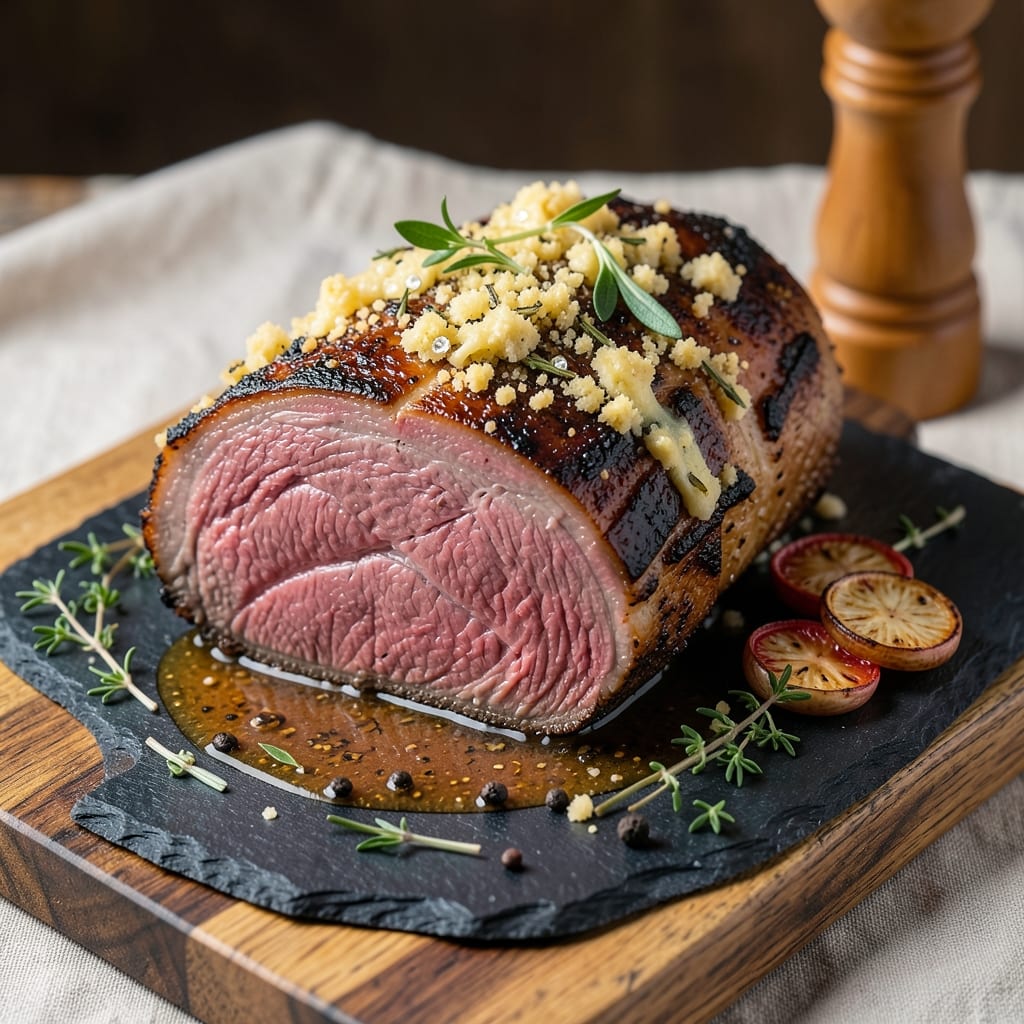
This Angus beef prime rib roast recipe delivers melt-in-your-mouth tenderness with a juicy pink center—the secret lies in a dry brine and herb-infused crust that locks in flavor while keeping the interior impossibly tender. After perfecting it for holiday feasts, I’ve refined the technique to ensure restaurant-quality results at home, even with a busy schedule.
The key to success starts with a 24-hour dry brine, which transforms tough cuts into fork-tender perfection by breaking down muscle fibers naturally. Then, a high-heat sear followed by a low-and-slow finish guarantees a crust that’s crisp yet yields to the knife, while the interior stays perfectly pink—no guesswork, no overcooking. This method works for both reverse sear purists and those who prefer a single roast.
What you’ll end up with is a prime rib roast so rich and flavorful that every slice feels like a celebration—rosy, buttery, and bursting with herbaceous notes from the crust. The aroma alone will have guests gathering before the timer even goes off, and the leftovers? Even better the next day, sliced thin for sandwiches or reheated with a splash of beef broth.
Pair it with classic sides like creamy mashed potatoes, roasted garlic herb butter, and a bold red wine reduction for a meal that feels like a five-star experience without the fuss. Ready to master this showstopper? Let’s get started.
Ingredients for angus beef prime rib roast
Six premium ingredients transform a simple roast into restaurant-quality prime rib with a juicy pink center.
| Ingredient | Amount | Notes |
|---|---|---|
| Angus Beef Prime Rib Roast 🥩 | 6 lb | Bone-in, 1.5-inch thick, center-cut |
| Kosher Salt 🧂 | ½ cup | Diamond Crystal preferred, coarse grain |
| Fresh Black Peppercorns 🌶️ | 1 tbsp | Cracked, not ground |
| Fresh Rosemary 🌿 | ¼ cup | Finely chopped, stems removed |
| Fresh Thyme 🌿 | ¼ cup | Leaves only, stems discarded |
| Fresh Garlic 🧄 | 8 cloves | Smashed, skin-on |
| Unsalted Butter 🧈 | ½ cup | Cold, cut into 8 pieces |
| Extra-Virgin Olive Oil 🫒 | ¼ cup | For crust application |
| Red Wine 🍷 | ½ cup | Bold Cabernet Sauvignon, reduced |
| Beef Broth 💧 | 1 cup | Homemade or high-quality store-bought |
| Balsamic Vinegar 🍶 | 1 tbsp | For basting |
| Fresh Parsley 🌿 | ⅛ cup | Chopped, for garnish |
The Angus beef prime rib is the foundation—look for USDA Prime grade with visible marbling, preferably from Snake River Farms or your trusted butcher. A bone-in cut ensures better flavor distribution, and 1.5-inch thickness guarantees even cooking. For the dry brine, Diamond Crystal kosher salt dissolves more easily than table salt, creating a deeper flavor penetration. Fresh herbs are non-negotiable here; Whole Foods or local farmers markets offer the most vibrant rosemary and thyme. If you can't source fresh, dried herbs at one-third the amount will work in a pinch, though texture suffers. The garlic should be firm and unpeeled—smash the cloves with the side of your knife to release flavor without losing moisture.
No red wine? Beef broth with 1 tbsp balsamic vinegar replicates the depth. The butter crust is critical—use European-style unsalted butter (like Plugrá) for higher fat content, which browns beautifully. For the sear, avocado oil handles higher heat than olive oil, though extra-virgin olive oil works if you're gentle. The herb butter should be cold when applied to prevent melting during the dry brine. If you're short on time, pre-mix the dry brine ingredients the night before and store in an airtight container until ready to apply. The balsamic vinegar adds a subtle tang that balances the richness—substitute with apple cider vinegar if unavailable.
The dry-brined roast keeps 24 hours uncovered in the fridge—no need to seal it. After roasting, rest for 30 minutes before slicing to retain juices. Leftovers reheat beautifully: wrap slices in foil with a splash of beef broth and warm in a 350°F oven for 10 minutes. For long-term storage, vacuum-seal portions and freeze for up to 3 months. The herb crust remains crisp for 2 days if stored properly, though flavor peaks immediately after cooking. Portion into individual servings for easy reheating—each slice makes a stunning sandwich with roasted garlic herb butter on crusty bread.
Why You'll Love This Recipe
- Here’s what sold me: this roast works for everything. Game day? Check. Unexpected guests? Done. Even a quiet Tuesday night when you just want to impress yourself. The prep is minimal, the flavor is bold, and it’s the kind of dish that makes you look like a hero without trying.
- Foolproof Timing: Honestly, this roast is made for lazy Sundays. You season it, pop it in the oven, and walk away—no babysitting required. The rosemary and thyme release their magic slowly, so you’re not stuck hovering over the stove like you are with a steak.
- Butter-Soft Perfection: That crispy crust? The melt-in-your-mouth interior? It’s all thanks to the prime rib’s natural richness and a generous coat of kosher salt and cracked black pepper. No fancy rubs, no guesswork—just pure, satisfying beef that tastes like it belonged on a restaurant plate.
- Leftovers That Win: Between us, the best part might be the next day. Thinly sliced prime rib sandwiches with a smear of horseradish cream? Yes, please. Or reheated with a sprinkle of fresh thyme—still tender, still ridiculously good. No one will guess it’s not fresh.
Step-by-step instructions for perfectly cooked Angus beef prime rib roast
Master this high-heat sear and low-temperature finish technique for melt-in-your-mouth tenderness.
Prepare the Herb Butter Crust and Season the Roast
In a food processor, combine the 0.5 cup unsalted butter, 0.25 cup fresh rosemary, 0.25 cup fresh thyme, 8 cloves fresh garlic, 0.5 cup kosher salt, and 1 tbsp cracked fresh black peppercorns. Pulse until the mixture resembles coarse crumbs with butter evenly distributed. Spread this mixture evenly over the 6 lb angus beef prime rib roast, pressing firmly so it adheres completely.
Transfer the roast to a wire rack set in a rimmed baking sheet. Place it fat-side up and let it sit at room temperature for 30 minutes before cooking. This ensures even cooking and prevents cold spots in the center. The herb butter will form a flavorful, golden crust while keeping the interior juicy.
Sear the Roast for Maximum Flavor
Preheat your oven to 450°F. Heat a large oven-safe skillet over high heat and add 0.25 cup extra-virgin olive oil. Once shimmering, carefully place the roast in the skillet, fat-side down. Sear for 8-10 minutes until the exterior develops a deep golden-brown crust and the internal temperature reaches 130°F on a meat thermometer inserted into the thickest part.
This high-heat sear locks in juices and builds the foundational crust. If the butter mixture starts to smoke excessively, reduce heat slightly but maintain a steady sizzle. The crust should be firm enough to hold its shape when pressed gently with tongs.
Roast to Juicy Perfection
Transfer the skillet to the preheated oven and roast for 2-2.5 hours until the internal temperature reaches 125°F. This low-and-slow finish ensures the roast develops that coveted pink center while remaining fork-tender. Baste the roast with 0.5 cup red wine and 1 cup beef broth every 30 minutes to keep it moist and enhance flavor.
During the last 15 minutes, increase the oven temperature to 475°F to create a crispy exterior. The roast is done when the internal temperature reaches 125°F—this guarantees a juicy pink center that will carry over to 130°F during resting. The crust should be deep mahogany with a crackly texture.
Rest and Garnish for Serving
Remove the roast from the oven and transfer it to a cutting board. Tent loosely with aluminum foil and let it rest for 20-30 minutes. This resting period allows the juices to redistribute throughout the meat, ensuring every slice remains succulent. During this time, reduce the 0.5 cup red wine and 1 cup beef broth by half in the skillet over medium heat, then stir in 1 tbsp balsamic vinegar for a glossy finishing sauce.
After resting, slice the roast against the grain into ½-inch thick portions. Garnish each serving with 0.125 cup chopped fresh parsley and drizzle with the reduced wine sauce. The final internal temperature should be 130°F, delivering that perfect balance of pink center and flavorful crust.
Pro Tips For Making Angus Beef Prime Rib Roast
- CRANK THE HEAT FIRST: Start your prime rib on the hottest setting your oven can handle—500°F or higher—until the exterior forms a deep crust. After 15 minutes, drop to 325°F for the rest of the cook. I used to baby this step, and the crust never got that caramelized, buttery perfection it deserves.
- SALT THE MEAT 48 HOURS EARLY: Generously coat the prime rib with kosher salt and refrigerate uncovered for two days. This isn’t just seasoning—it’s a flavor infusion that penetrates deep. I learned this the hard way when my first attempt tasted like it needed more salt after cooking.
- STOP AT MEDIUM-RARE: Pull the prime rib from the oven when the internal temp hits 115°F—yes, that’s rare. It’ll climb to 120°F while resting, giving you that perfect pink center. My first time, I overcooked it to medium and ruined a $200 cut of beef.
- USE A MEAT THERMOMETER: Guessing doneness with prime rib is a disaster waiting to happen. A quality probe in the thickest part of the roast is the only way to nail that juicy, tender finish. I skipped this once and ended up with a chewy, overdone mess.
Storing and reheating your angus beef prime rib roast
Refrigerator Storage
Store your prime rib in an airtight container with a splash of beef broth or red wine to keep it moist. I use glass Pyrex containers for even reheating. Keep it refrigerated for up to 4 days—the flavors actually deepen as the herbs meld further. Let it cool completely before storing to prevent condensation buildup. 💫
Freezer Storage
For longer storage, vacuum-seal the roast in portioned slices (about ½-inch thick) for easy reheating later. Label with the date and freeze for up to 3 months. Thaw overnight in the fridge—never at room temperature—to preserve texture. The herb crust remains crisp when reheated properly, though it loses some crunch after freezing. 🧊
Reheating Leftovers
My go-to method is wrapping slices in aluminum foil with 1 tbsp beef broth per slice, then warming in a 350°F oven for 10-15 minutes. For stovetop, use a heavy skillet on medium-low heat with a splash of broth to prevent drying. Avoid microwaving—it turns the crust rubbery. Always check internal temp reaches 165°F for safety. 🔥
Reviving Crust Texture
If the herb crust loses crispness after storage, broil for 2-3 minutes at the end of reheating. Place slices on a baking sheet and watch closely—they go from limp to crackly fast. For extra moisture, brush with a tiny bit of melted butter before broiling. This trick works wonders for restaurant-quality results at home. ✨
Meal Prep Tips
Slice the roast into ½-inch portions and store in quart-sized freezer bags for easy grab-and-go meals. Reheat individual portions in 10 minutes—perfect for quick lunches. I like pairing these with roasted garlic mashed potatoes or crusty bread for a satisfying sandwich. Label bags with reheating instructions to avoid guesswork later. 📅
Sauce Refresh
Revive the reduced wine sauce by heating it gently with 1 tbsp beef broth and a pinch of kosher salt. If it thickens too much, thin with a splash of water or broth. Drizzle over reheated slices to restore that restaurant-quality shine. The sauce keeps well in the fridge for 5 days—stored separately in an airtight container. 🍷
Nutrition facts
Frequently asked questions
What's the ideal internal temperature for a juicy pink center?
For that signature pink center, aim for 125°F internal temperature when removed from the oven—it will rise to 130°F while resting. This guarantees tender, moist meat without overcooking. Always use a meat thermometer in the thickest part of the roast, avoiding the bone.
Can I use a different cut of beef instead of prime rib?
While prime rib delivers the best marbling, you can substitute with a bone-in ribeye roast or top loin for similar results. However, these cuts may need slightly longer cooking times. For maximum tenderness, choose a cut with at least 1-inch thickness and follow the same dry brine method.
How do I adjust cooking time for a different weight roast?
For every 1 lb difference, add 15-20 minutes to the roasting time. A 4 lb roast would cook in about 1.5-2 hours, while an 8 lb roast might need 2.5-3 hours. Always check internal temperature rather than relying solely on time—this ensures perfect doneness every time.
What if my oven doesn't go up to 475°F for the final crisp?
No problem! Broil the roast for 5-7 minutes during the last 15 minutes of cooking to achieve that crispy crust. Keep a close eye to prevent burning. Alternatively, finish under a salamander broiler at high heat for 3-4 minutes for even browning.
How do I prevent the herb crust from falling off?
Press the herb butter mixture firmly onto the roast and let it sit at room temperature for 30 minutes before cooking. This allows the butter to slightly soften and adhere better. For extra insurance, lightly brush the roast with olive oil before applying the herb crust. The key is patience—don't rush the searing process.