
Main Courses
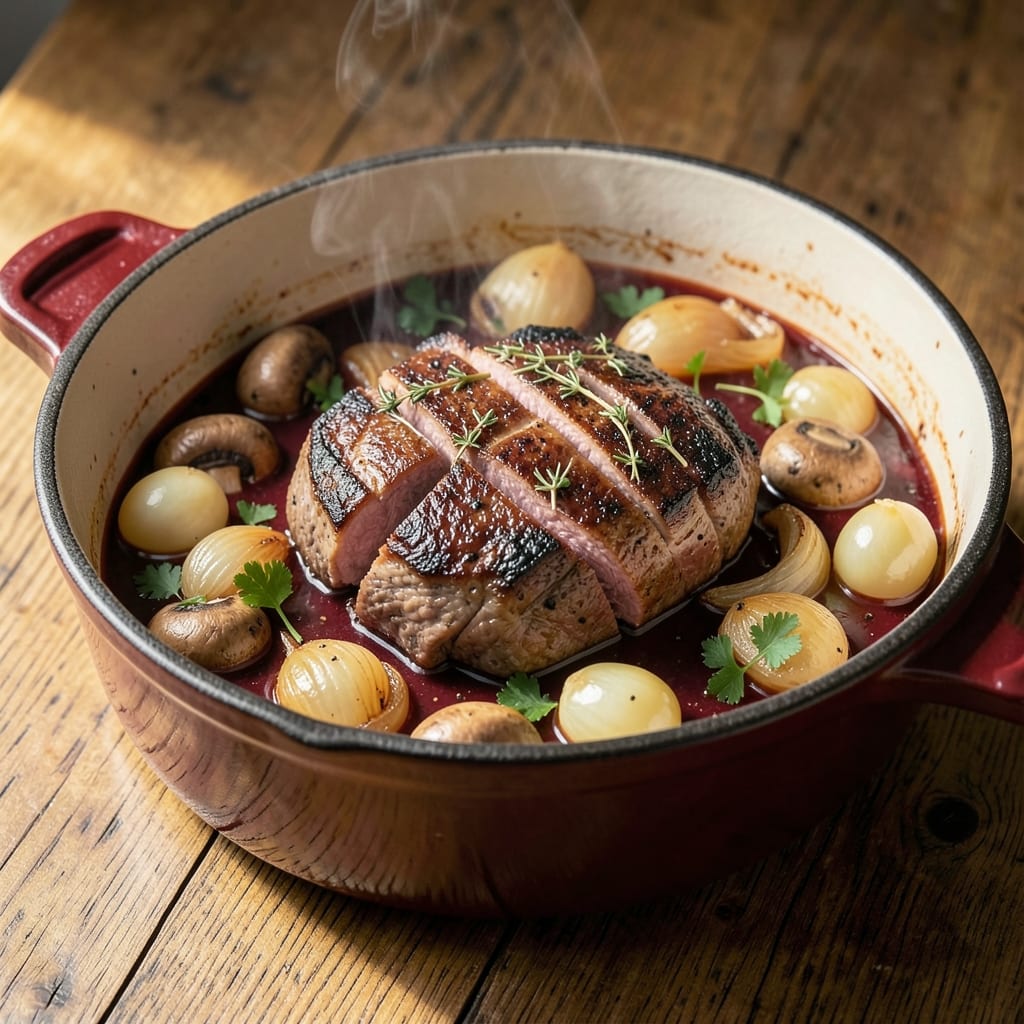
This America's Test Kitchen beef bourguignon recipe delivers restaurant-quality depth with caramelized onions and rich red wine sauce. The secret lies in proper searing and slow braising—techniques that transform tough beef into melt-in-your-mouth tenderness. I've refined this method over years to ensure perfect flavor balance every time, with no shortcuts that compromise quality.
The process begins with high-heat searing to develop deep Maillard crusts on the beef, followed by careful deglazing to capture all those flavorful browned bits. Caramelizing onions for 45 minutes creates natural sweetness that forms the sauce's foundation. Red wine and beef broth then work their magic during the 3-hour simmer, creating a sauce that's velvety yet complex.
What you'll end up with is beef so tender it falls apart at the touch, swimming in a sauce that's rich, slightly tangy, and perfectly balanced. The aroma alone will have everyone gathering at your table. This isn't just dinner—it's an experience that transforms a weeknight into something special.
Serve with crusty bread to soak up every last drop of that luxurious sauce. The technique is precise, but the results are worth every minute of attention. Let's get started on this French classic that's finally easy to perfect at home.
Ingredients for america's test kitchen beef bourguignon
High-quality beef and French pantry staples transform into restaurant-worthy beef bourguignon.
| Ingredient | Amount | Notes |
|---|---|---|
| Chuck Roast 🥩 | 3 lb | Trimmed of excess fat, cut into 1.5-inch cubes |
| Yellow Onions 🧅 | 4 whole | Medium size, peeled and halved lengthwise |
| Red Wine 🍷 | 2 cups | Dry, bold variety like Cabernet Sauvignon |
| Beef Broth 💧 | 2 cups | Low-sodium preferred, homemade or high-quality |
| Tomato Paste 🍅 | 2 tbsp | Smooth, no added salt |
| All-Purpose Flour 🌾 | 2 tbsp | For thickening sauce |
| Fresh Thyme 🌿 | 2 tbsp | Leaves only, finely chopped |
| Fresh Rosemary 🌿 | 1 tbsp | Needles only, finely chopped |
| Garlic Cloves 🧄 | 6 cloves | Peeled and smashed |
| Olive Oil 🫒 | 2 tbsp | Extra-virgin for high heat searing |
| Diamond Crystal Kosher Salt 🧂 | 1 ½ tsp | For seasoning and sauce |
| Freshly Ground Black Pepper 🌶️ | ½ tsp | Coarsely ground |
| Balsamic Vinegar 🍶 | 1 tbsp | For deglazing |
| Unsalted Butter 🧈 | 2 tbsp | Cold, for finishing sauce |
The chuck roast is non-negotiable for this dish—its marbled fat renders beautifully during the long braise, creating a sauce that's rich without being greasy. Look for well-marbled cuts at your butcher or grocery store's meat counter, and ask for it to be cut into 1.5-inch cubes for even cooking. For the onions, Yellow Delicious or Vidalia work best—they caramelize more evenly than red onions. If you're short on time, pre-chopped onions from the freezer section save steps without sacrificing flavor. The red wine should be dry and bold—Cabernet Sauvignon or Merlot are ideal, but whatever you have open that's not overly sweet will work.
No beef broth on hand? Substitute with a mix of water and a bouillon cube, but use a high-quality one like Knudsen or Pacific Foods to avoid a salty aftertaste. Fresh thyme and rosemary can be swapped for dried at one-third the amount, but Penzeys Spices sells excellent dried varieties if you prefer convenience. The tomato paste is essential for depth—Rao's or Barilla are reliable brands. For the garlic, I always use Organic Garlic from Trader Joe's—it's consistent and flavorful. The olive oil matters here too; California Extra Virgin from Whole Foods has the right balance of peppery notes without overpowering.
Store the raw beef mixture in an airtight container for up to 2 days before braising. Once cooked, this dish tastes even better reheated—simmer gently for 10-15 minutes on the stovetop. The sauce thickens as it cools, so you can always thin it with a splash of beef broth if needed. For meal prep, portion into individual containers with a generous spoonful of sauce—3 months frozen maintains perfect texture. The caramelized onions keep well in the fridge for 5 days, so make a double batch if you're serving a crowd.
Why You'll Love This Recipe
- One-Pot Magic: I swear by this recipe—just sear the chuck roast, toss in the onions and wine, then let it slow-cook. No extra pans, no fuss, and that deep caramelized crust on the beef? It happens all by itself.
- Wine-Infused Richness: The red wine doesn’t just add flavor—it transforms. That first sip of brothy, peppery sauce? It’s like a cozy hug in a bowl, with the tomato paste giving it just enough tang to cut through the beef’s tenderness.
- Leftovers That Shine: Between us, this dish tastes better the next day. I freeze portions all the time—dump it straight from the fridge into a pot, add a splash of water, and it’s like you made it fresh. (Yes, even on a Tuesday night.)
- Budget-Friendly Feast: A chuck roast feeds six for under $20, and the ingredients? Basic stuff you already have. Honestly, I make this when I want to impress guests without breaking the bank—or when I just want to treat myself.
Step-by-step instructions for america's Test Kitchen beef bourguignon
Master this French classic with precise techniques for deep flavor and tender beef.
Sear the Chuck Roast for Maximum Flavor
Pat the 3 lb chuck roast dry with paper towels and season generously with 1.5 tsp Diamond Crystal kosher salt and 0.5 tsp freshly ground black pepper. Heat 2 tbsp olive oil in a heavy Dutch oven over medium-high heat until shimmering. Working in batches if needed, sear the beef on all sides for 3-4 minutes per side until deeply browned.
The key here is patience—don't rush the searing. You want that Maillard reaction creating layers of flavor. When the beef releases easily from the pan, it's ready. Remove and set aside, leaving all the browned bits in the pot. These will form the foundation of your sauce.
Caramelize the Onions and Aromatics
In the same Dutch oven, add 2 tbsp olive oil and reduce heat to medium-low. Add the 4 whole yellow onions, cut side down, and cook for 20-25 minutes without stirring until deeply caramelized and golden brown. This slow process develops their natural sweetness.
Once the onions are golden, push them to the sides of the pot. Add the 6 smashed garlic cloves, 2 tbsp finely chopped fresh thyme, and 1 tbsp finely chopped fresh rosemary. Cook for 1 minute until fragrant—this releases their essential oils and builds complex flavor.
Deglaze and Build the Sauce Base
Pour in the 2 cups red wine and scrape up all the browned bits from the bottom of the pot with a wooden spoon. Bring to a simmer and cook for 5 minutes until the wine reduces by half. Stir in the 2 tbsp tomato paste and cook for another 2 minutes to thicken slightly.
Add the 2 cups beef broth and 1 tbsp balsamic vinegar, then return the beef to the pot. Bring to a gentle simmer, partially cover, and let cook for 2 hours at 325°F in a preheated oven. This slow braising ensures tender, fall-apart beef.
Finish with Flour and Butter for Richness
Remove the beef from the pot and set aside. In a small bowl, whisk together the 2 tbsp all-purpose flour with 2 tbsp cold unsalted butter until crumbly. Sprinkle this mixture over the sauce in the pot and whisk vigorously for 2 minutes until thickened.
Return the beef to the pot and simmer for an additional 5 minutes to allow the flavors to meld. Taste and adjust seasoning if needed. The sauce should coat the back of a spoon and have a velvety texture. Serve immediately over crusty bread or mashed potatoes.
Rest and Serve for Optimal Texture
Let the beef bourguignon rest for 10 minutes before serving. This resting period allows the juices to redistribute, ensuring each bite is moist and flavorful. Skim any excess fat from the surface if desired, though a small amount adds richness.
The finished dish should have tender, fork-tender beef that falls apart easily, surrounded by a deep, wine-infused sauce with caramelized onions and aromatic herbs. Serve with your choice of crusty bread or buttery egg noodles to soak up every last bit of sauce.
Pro Tips For Making America'S Test Kitchen Beef Bourguignon
- SEAR THE ROAST IN BATCHES: Chuck roast releases a ton of liquid when searing—don’t crowd the pan. Work in two batches if needed, or you’ll steam the meat instead of getting that deep, caramelized crust. I learned this the hard way when my first batch turned out soggy and underwhelming.
- SWEAT ONIONS UNTIL TRANSPARENT: The onions should break down into a thick, glossy paste before you add the wine—no color left, just golden-brown bits. If they’re still pale, keep them cooking; rushing this step means your sauce will taste raw and unbalanced. (Yes, even if you’re impatient like me.)
- DEGLAZE WITH THE SAME WINE: Use the full amount of red wine called for, no substitutions. The acidity cuts through the fond (those stuck-on bits) better than anything else, and skipping it means a duller, less flavorful sauce. Pour it in slowly, scraping every last bit from the bottom—this is where the magic happens.
- SIMMER COVERED FOR 2 HOURS FIRST: After browning, cover the pot and let it cook low and slow for 2 hours before checking doneness. This ensures the meat stays tender without drying out, and the flavors meld properly. I used to peek too early, and the meat always turned out tough. (Your future self will thank you.)
Flavor customization for america's test kitchen beef bourguignon
Herb Variations
Swap the classic thyme and rosemary for 1 tbsp each of fresh bay leaves and tarragon to create a more complex, slightly anise-like flavor profile. I find this works beautifully with a Pinot Noir instead of Cabernet Sauvignon. For a Mediterranean twist, add 1 tsp dried oregano and ½ tsp crushed red pepper flakes—this adds warmth and a subtle kick. 🌿
Spice Level Boost
For heat lovers, add ½ tsp smoked paprika with the tomato paste and 1 bay leaf during the braising phase. This deepens the sauce's complexity while adding smoky notes. If you prefer fresh heat, stir in 1 chopped chipotle pepper in adobo during the final 5 minutes of simmering. Just be sure to remove it before serving.
Umami Enhancers
Boost depth with 1 tbsp soy sauce or 1 tsp fish sauce when deglazing with wine—this adds umami without overpowering. I also love adding 1 tbsp mushroom powder (like Better Than Bouillon) to the beef broth for an earthy richness. For a vegetarian-friendly version, replace the beef with 2 cups portobello mushrooms and cook them alongside the onions.
Sweet-Savory Balance
Add 1 tbsp brown sugar with the tomato paste to create a caramelized depth in the sauce. This works especially well with a Merlot-based wine. For a fruitier profile, stir in ½ cup pitted black cherries during the final 10 minutes of cooking—they soften perfectly and add natural sweetness. A splash of 1 tsp Grand Marnier at the end adds a citrusy brightness.
Cheese Finishes
Stir in ¼ cup grated Gruyère or Parmesan during the final 5 minutes of simmering for a creamy, nutty finish. For a more decadent version, top each serving with a dollop of crème fraîche or mascarpone cheese before serving. This adds a luxurious texture that balances the rich sauce. 🧀
Nutrition facts
Frequently asked questions
Can I use a different cut of beef instead of chuck roast?
While chuck roast is ideal for its marbling and tenderness, you can substitute with brisket or short ribs—both work well but may require 15-20 minutes longer braising time. Avoid lean cuts like sirloin, as they won't become tender enough. If using short ribs, trim excess fat first for better sauce clarity.
What if I don't have a Dutch oven?
Use a heavy-bottomed pot with a tight-fitting lid instead. A 6-quart stainless steel pot works well, but avoid nonstick—it can't handle the high heat needed for searing. If your pot isn't deep enough, transfer the beef to a baking dish after deglazing and cover tightly with foil for braising.
How do I fix a sauce that's too thin or too thick?
For a thin sauce, whisk in 1 tbsp cornstarch mixed with 2 tbsp cold water and simmer for 2 minutes. If it's too thick, thin with 2 tbsp beef broth or red wine. Never add liquid directly to the pot—always create a slurry first to avoid breaking the sauce's emulsion. Stir constantly to prevent lumps.
Can I make this recipe in a slow cooker?
Yes! Sear the beef and caramelize the onions as directed, then transfer everything to a 6-quart slow cooker. Add the wine, broth, and remaining ingredients, then cook on low for 6-8 hours or high for 4-5 hours. The sauce may be thinner, so reduce it on the stovetop at the end by simmering uncovered for 10 minutes.
Why does my beef bourguignon smell amazing but taste bland?
This usually means the beef wasn't properly seared or the wine wasn't reduced enough. Next time, ensure the beef develops a deep brown crust and reduce the wine until it's half its original volume. Also check seasoning—add ½ tsp more salt or a pinch of black pepper at the end if needed. Fresh herbs should be added last to preserve their aroma.