
Soups & Stews
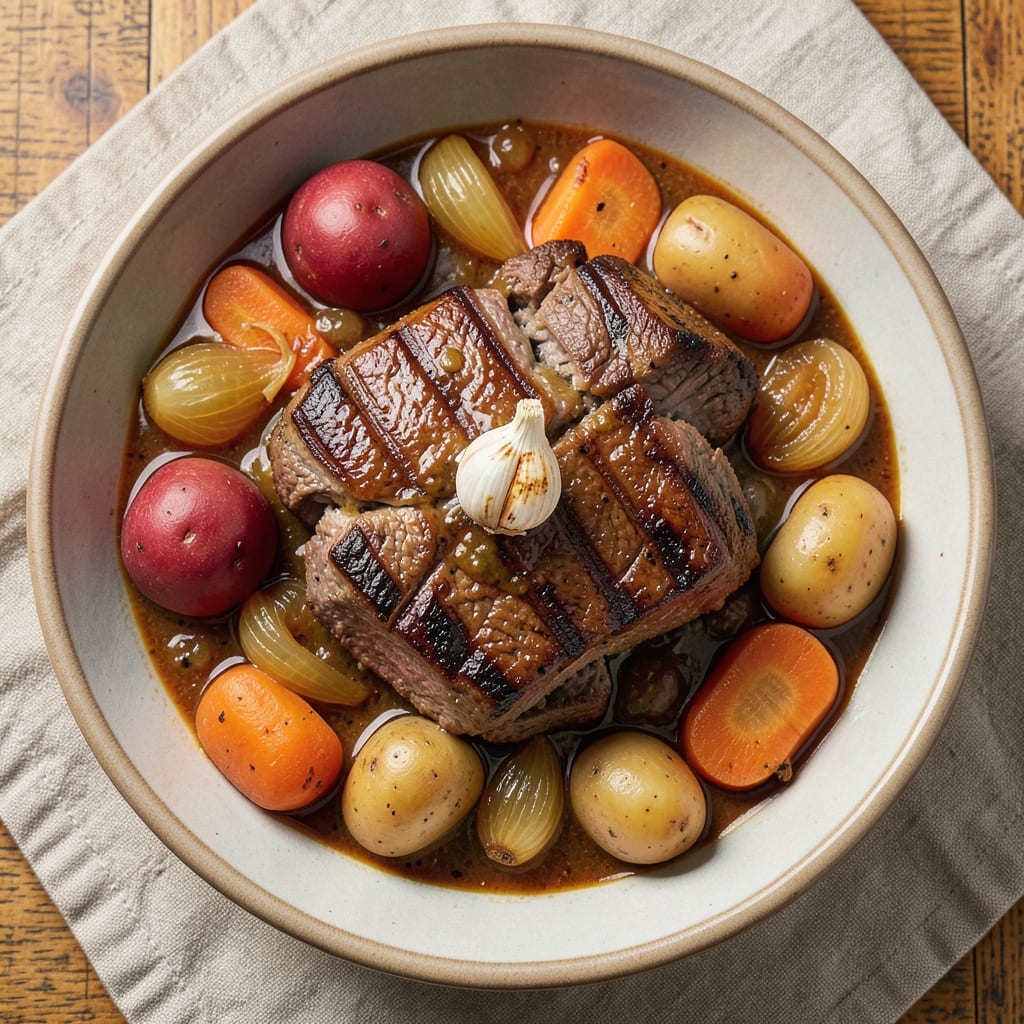
This American beef stew recipe transforms tough cuts into melt-in-your-mouth perfection through slow simmering and caramelized root vegetables. The secret lies in proper browning and deglazing—techniques that build deep, savory layers of flavor you won’t find in instant versions. I’ve perfected this over years of testing, ensuring every bite delivers that restaurant-quality richness at home.
The process begins with searing chunks of beef until deeply browned, then deglazing the pot to capture all those flavorful bits. Carrots, potatoes, and onions caramelize slowly as they simmer, creating natural sweetness that balances the hearty beef. A touch of tomato paste adds depth without overpowering the dish, while herbs like thyme and bay leaf infuse aromatic complexity.
By the time it’s done, you’ll have a stew so tender it nearly falls apart with a fork, with vegetables that are perfectly caramelized and meat that’s rich yet never greasy. The aroma alone will have everyone gathering around the table, and the leftovers—if there are any—will be even better the next day as flavors meld further.
Serve with crusty bread for soaking up every last drop or alongside roasted vegetables for a complete meal. This is comfort food at its finest, designed to impress without requiring advanced skills. Let’s get started on creating your own pot of hearty, satisfying beef stew.
Ingredients for american beef stew
Heartier than takeout, richer than instant—just these 14 ingredients for melt-in-your-mouth beef stew.
| Ingredient | Amount | Notes |
|---|---|---|
| Chuck Roast 🥩 | 2 lb | Trimmed of excess fat |
| Yellow Onions 🧅 | 1 whole | Large, chopped into wedges |
| Carrots 🥕 | 4 medium | Peeled, cut into chunks |
| Russet Potatoes 🥔 | 4 medium | Peeled, cut into chunks |
| Garlic Cloves 🧄 | 4 cloves | Minced for even cooking |
| Tomato Paste 🍅 | 2 tbsp | High-quality for depth |
| Beef Broth 💧 | 4 cups | Low-sodium preferred |
| Red Wine 🍷 | 1 cup | Bold, dry variety |
| Fresh Thyme 🌿 | 2 sprigs | Or 1 tsp dried thyme |
| Bay Leaves 🌿 | 2 whole | Remove before serving |
| Olive Oil 🫒 | 2 tbsp | For searing beef |
| Salt 🧂 | 1 ½ tsp | Kosher or sea salt |
| Black Pepper 🌶️ | 1 tsp | Freshly ground preferred |
| All-Purpose Flour 🌾 | 1 tbsp | For thickening broth |
The beef is everything here. Chuck roast from the butcher counter (not pre-cut) has the best marbling—look for bright red color, not grayish. If you're buying a whole roast, ask for it to be cut into 1.5-inch chunks. Costco or local butchers usually have the best selection, but the regular supermarket chuck works fine too. For the carrots and potatoes, medium-sized gives you the right balance of texture—small ones turn to mush, giant chunks stay undercooked. The onions? Yellow onions have more sweetness than red, but either works.
No red wine? Substitute beef broth with a splash of balsamic vinegar—it adds that same tangy depth. Fresh thyme is ideal, but dried works at half the amount. If tomato paste feels like overkill, crushed tomatoes in a pinch (use 1 cup instead). The flour for thickening? All-purpose is fine, but if you've got cornstarch, use half the amount for a clearer broth. For the potatoes, Yukon golds
This stew only gets better with time. Day-old tastes richer as flavors meld, so make extra. Store in the fridge for 5-6 days or freeze for 3 months. I like to portion it into individual containers—just reheat with a splash of broth. The beef will be fork-tender, and those caramelized veggies? Worth every minute of simmering. Leftovers reheat beautifully—just add a little water or broth if it's too thick.
Why You'll Love This Recipe
- One-Pot Magic: I swear by this recipe because it’s all in one pot—no chopping chaos, no extra dishes. Toss in the chuck roast, dump in the onions and carrots (roughly chopped, no judgment), add the potatoes, and let it simmer. Honestly, the hardest part is waiting for the garlic to soften.
- Rich, Deep Taste: That chuck roast? It melts into tender, melt-in-your-mouth perfection, while the onions caramelize just enough to give it a sweet, savory punch. The garlic cloves—whole and smashed—infuse the broth with layers of flavor without overpowering. It’s the kind of taste that makes you want to eat it straight from the pot.
- Meal Prep Hero: Between us, this stew is my secret weapon for busy weeks. Make a big batch on Sunday, and you’ve got lunch or dinner covered for days. The potatoes stay firm, the beef stays juicy, and it actually tastes better the next day—no sad leftovers here.
- Budget-Friendly Feast: A chuck roast stretches across multiple meals, and the veggies (onions, carrots, potatoes) are cheap but pack serious flavor. I’ve fed six people for under $15 with this recipe—no fancy ingredients, just hearty, satisfying comfort. Plus, it’s the kind of dish that makes even picky eaters ask for seconds.
Step-by-step instructions for American beef stew
Here's how to build a rich, hearty stew that transforms simple ingredients into a comforting masterpiece.
Sear the Chuck Roast for Deep Flavor
Heat a heavy pot or Dutch oven over medium-high heat and add the 2 tablespoons olive oil. Pat the 2 lb chuck roast completely dry with paper towels—this helps create a better sear. Place the roast in the pot and let it sear undisturbed for 4-5 minutes until a deep golden brown crust forms on one side.
Flip the roast and sear the other side for another 4-5 minutes. The goal is to develop that caramelized crust that carries so much flavor into the stew. Remove the roast and set it aside on a plate. You'll notice the pot now has beautiful browned bits—this is called fond, and it's packed with flavor we'll dissolve later.
Build the Flavor Base with Vegetables
In the same pot, add the 1 whole yellow onion (chopped into wedges) and 4 cloves garlic cloves (minced). Cook for 3-4 minutes until the onions soften and begin to caramelize slightly. This step adds sweetness that balances the savory stew.
Add the 4 medium carrots (cut into chunks) and 4 medium russet potatoes (cut into chunks). Stir everything together and cook for another 2-3 minutes until the vegetables start to soften slightly. Here's where it gets good—sprinkle the 2 tablespoons tomato paste over the vegetables and stir to coat everything evenly. The tomato paste will deepen the stew's richness and give it that classic red hue.
Deglaze and Develop the Sauce
Pour in the 1 cup red wine and scrape up all those browned bits from the bottom of the pot using a wooden spoon. This deglazing step is crucial—it captures all the caramelized flavors you worked so hard to create. Let the wine simmer for 3-4 minutes until it reduces by about half and the alcohol cooks off.
Add the 4 cups beef broth, 2 sprigs fresh thyme, and 2 whole bay leaves. Stir everything together and bring to a gentle boil. Once boiling, return the chuck roast to the pot, placing it back in the same position you removed it from. This ensures even cooking all around.
Simmer Until Tender and Flavorful
Reduce the heat to low and cover the pot with a lid. Let the stew simmer gently for 2 to 2.5 hours. This long, slow cook time is what transforms tough chuck roast into fork-tender beef and allows all the flavors to meld together beautifully. Check occasionally and add a splash of water if the stew gets too dry.
After about 1.5 hours, you can check for doneness by inserting a fork into the roast. If it slides in easily, the meat is ready. If not, continue cooking for another 30 minutes. The vegetables should be tender but still hold their shape—russet potatoes should be fork-tender but not falling apart.
Finish and Thicken the Stew
Remove the chuck roast from the pot and set it aside on a cutting board. Strain the stew through a fine-mesh sieve into a clean pot, pressing on the vegetables with a spoon to extract all the flavor. This step gives you a smooth stew base without large vegetable pieces.
Return the strained stew to the heat and sprinkle in the 1 tablespoon all-purpose flour. Stir constantly for 2-3 minutes until the stew thickens slightly. Return the chuck roast to the pot and let it warm through for 5 minutes. Remove and discard the thyme sprigs and bay leaves before serving.
Slice the chuck roast into thick pieces and serve the stew hot, ladling it over the sliced meat. The result should be a rich, velvety stew with tender beef and perfectly caramelized vegetables. This hearty dish is perfect for cold evenings and makes even more flavorful the next day!
Pro Tips For Making American Beef Stew
- Brown the Chuck Roast: I learned this the hard way—skipping the deep sear means your stew will taste more like soup. Get that roast deep golden on all sides in a hot Dutch oven with 1 tablespoon of oil, even if it takes 10 minutes. The crust locks in flavor and keeps the meat tender.
- Cut Potatoes Uniformly: Russets break apart when they’re uneven, turning your stew into a mushy mess. Aim for 1.5-inch chunks—big enough to hold shape but small enough to cook through. (Yes, even if it looks like you’re making baby potatoes.)
- Add Potatoes Late: I used to toss them in with the onions and carrots, and they’d turn to glue. Wait until the beef has cooked for 2 hours before adding potatoes—they’ll soak up flavor without falling apart. (Your future self will thank you.)
- Deglaze with Beer: Skip the water for the initial deglaze—use 1 cup of beer (or broth) instead. The alcohol burns off, leaving behind depth that water can’t match. (Does it look weird? Yes. Does it work? Every single time.)
Make-ahead tips for this dish
Prep Ahead Strategy
Start by chopping all your vegetables the night before and storing them in airtight containers in the fridge. I like to keep the onions, carrots, and potatoes in separate containers so they don’t get soggy. The chuck roast can also be trimmed and cut into chunks ahead of time—just store it uncovered on a plate in the fridge to prevent excess moisture. This saves you 30 minutes of prep time on stew day. 💡
Slow Cooker Adaptation
For a hands-off approach, use a 6-quart slow cooker on low for 8 hours. Brown the beef and vegetables in a separate skillet first, then transfer everything to the slow cooker with the wine, broth, and spices. The long cook time ensures tender meat without monitoring. I add a splash of water if it looks dry before serving. The flavors develop beautifully this way.
Freezer-Friendly Plan
This stew freezes exceptionally well for up to 3 months. After cooking, let it cool completely, then portion into quart-sized freezer bags or airtight containers. Leave 1 inch of headspace for expansion. To serve, thaw overnight in the fridge, then reheat on the stovetop with a splash of broth. The texture stays perfect—no mushy vegetables or dry meat. I make double batches for easy meals later. ❄️
Vegetable Pre-Cook Tip
If you’re short on time, par-cook the vegetables for 10 minutes before adding the beef. Boil them in salted water until slightly tender, then drain and set aside. This cuts the total simmering time by 30-45 minutes while keeping the carrots and potatoes perfectly tender. Just
Broth Boosting
Enhance the depth of flavor by making your own beef broth ahead of time. Simmer beef bones with carrots, onions, and herbs for 4-6 hours, then strain and store in the freezer. Use it instead of store-bought broth for a richer, more complex base. I keep a gallon of homemade broth on hand for all my slow-cooked dishes—it makes a noticeable difference in the final result. 💛
Make-Ahead Serving
For a stress-free dinner party, assemble the stew completely (up to the simmering step) and refrigerate it overnight. The next day, bring it to a simmer for 1.5 hours to finish cooking. The flavors meld even more overnight, creating a deeper, more complex dish. Serve with warm crusty bread or roasted garlic mashed potatoes for a complete meal that feels restaurant-quality. 🍽️
Nutrition facts
Frequently asked questions
Can I use a different cut of beef instead of chuck roast?
For similar results, try stew meat or chuck shoulder—both have great marbling. If you prefer leaner options, top round works but may need 30 extra minutes of simmering. Avoid tender cuts like sirloin—they'll turn mushy. The key is choosing a cut with connective tissue that breaks down during slow cooking.
Why does my stew taste watery even after simmering?
Watery stews usually happen from one of three issues: not enough browning (the fond adds thickness), too much liquid, or not enough time to reduce. Try this fix: After simmering, remove the meat and reduce the broth uncovered on medium-high heat for 10-15 minutes to evaporate excess liquid. For future batches, use 1 tablespoon cornstarch mixed with 2 tablespoons cold water as a slurry to thicken at the end.
What's the best way to reheat leftover beef stew?
Reheat gently on the stovetop over low heat or in a 350°F oven for 20-30 minutes to prevent the meat from drying out. For best texture, add 2-3 tablespoons broth or water per quart to restore moisture. Microwaving works in a pinch, but it can make the vegetables rubbery—always stir well and cover with a damp paper towel to retain steam.
Can I make this in an Instant Pot?
Yes! Sear the beef in the pot first, then add all ingredients and cook on high pressure for 45 minutes, followed by a 10-minute natural release. The pressure cooker cuts time dramatically but still delivers tender meat. For extra richness, deglaze with wine after searing just like the stovetop version. The Instant Pot version works well for 4-6 servings—just adjust liquid if needed.
What if I don't have red wine?
No problem! Substitute with 1 cup beef broth plus 1 tablespoon balsamic vinegar for depth, or use 1 cup apple cider for subtle sweetness. The wine adds acidity that balances the richness—so if you skip it, just increase the tomato paste by 1 teaspoon to compensate. For a non-alcoholic version, use 1 cup grape juice with 1 teaspoon lemon juice.