
Snacks
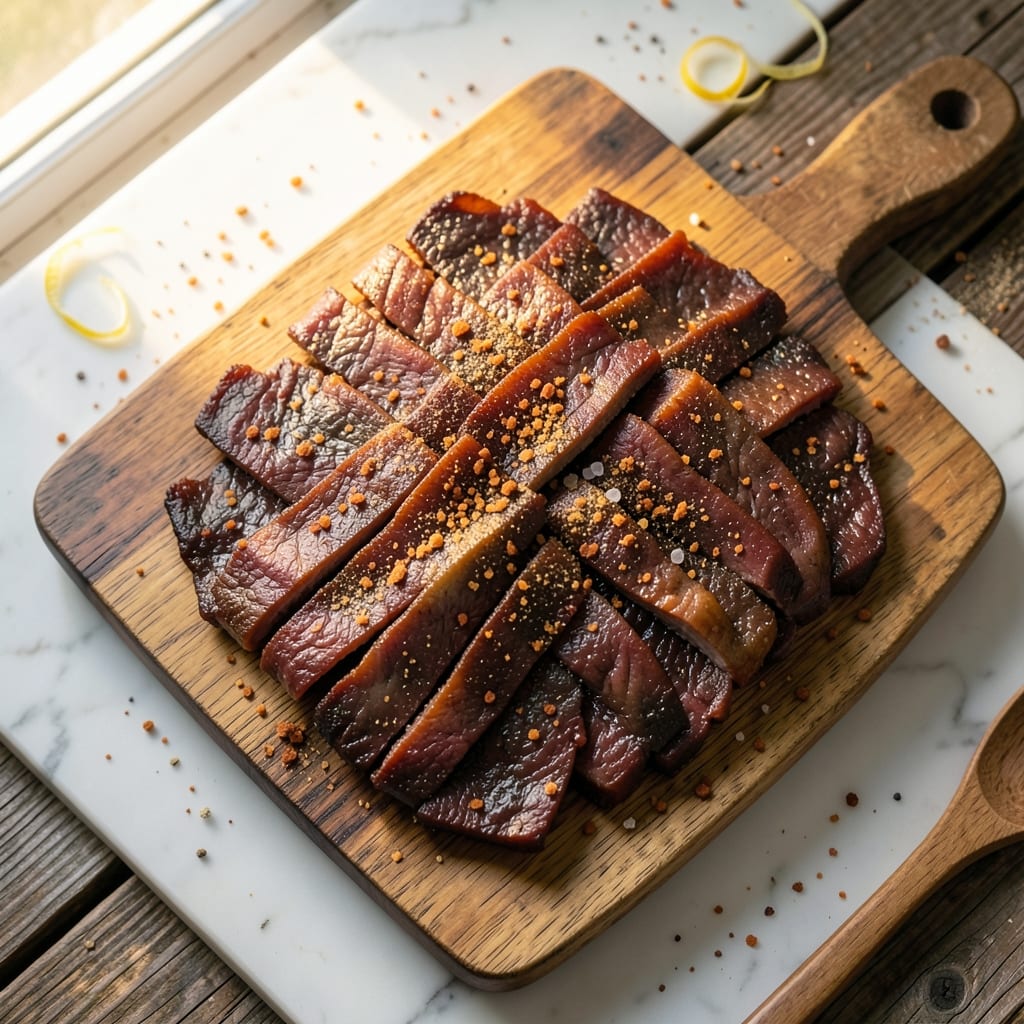
This all-natural beef jerky recipe transforms simple cuts of beef into chewy, smoky-sweet snacks that rival store-bought—without the preservatives. The secret lies in proper meat selection, a balanced spice blend, and precise dehydrating to create restaurant-quality texture and flavor in just 4 hours. I've perfected this method over years of testing, ensuring every bite delivers that perfect balance of savory, smoky, and slightly sweet notes.
What sets this recipe apart is the focus on quality ingredients and technique. We start with high-quality beef (like top round or flank steak) and a marinade that includes natural curing salts—not the chemical-laden versions you find in commercial jerky. The dehydrator method ensures even drying and maximum flavor concentration, while the smoky-spice rub creates that signature campfire taste without needing a smoker. Safety is built into the process with proper curing times and food-safe handling.
By the end, you'll have perfectly chewy, flavorful jerky that's ready to pack for hiking trips, snack on during movie nights, or gift in jars. The process is straightforward but requires attention to detail—especially when it comes to slicing the meat evenly and monitoring the dehydrating time. This method delivers results that taste homemade but are safe, healthy, and shelf-stable for months when stored properly.
The best part? You can customize the spice blend to suit your taste—whether you prefer classic smoky flavors or a sweet-and-spicy kick. Once you master this technique, you'll never buy jerky again. Let's get started making your own all-natural chews from scratch.
Ingredients for all natural beef jerky
High-quality beef and simple spices create restaurant-style jerky without preservatives.
| Ingredient | Amount | Notes |
|---|---|---|
| Top Round Beef 🥩 | 1 ½ lb | Thinly sliced against grain |
| Natural Curing Salt (Prague Powder #1) 🧂 | 1 ½ tsp | For safe curing process |
| Brown Sugar 🍚 | ½ cup | Light or dark variety |
| Smoked Paprika 🌶️ | 2 tbsp | For deep smoky flavor |
| Ground Black Pepper 🌶️ | 1 tbsp | Freshly ground preferred |
| Garlic Powder 🧄 | 1 tbsp | Not garlic salt |
| Onion Powder 🧅 | 1 tbsp | For savory depth |
| Ground Cinnamon 🌿 | ½ tsp | Warmth without overpowering |
| Cayenne Pepper 🔥 | ½ tsp | Adjust for heat preference |
| Apple Cider Vinegar 🍎 | ¼ cup | For tenderizing and tang |
| Extra-Virgin Olive Oil 🫒 | 1 tbsp | For moisture balance |
| Lemon Juice 🍋 | 1 tbsp | Brightens flavor profile |
The beef makes all the difference—top round or flank steak is ideal. Look for cuts with good marbling at Costco or Whole Foods for the best texture. If you can't find these, sirloin works in a pinch, but it's leaner so expect slightly less chew. Slice against the grain for that signature tender bite. The curing salt (Prague Powder #1) is non-negotiable—it's the only safe way to preserve meat at home without chemicals. Grab it online or at specialty butchers if your grocery store doesn't carry it.
No smoked paprika? Regular paprika plus a pinch of liquid smoke gets you close. Want less heat? Skip the cayenne entirely. The apple cider vinegar can be swapped for white vinegar or lemon juice if you're out, but the acidity is key for tenderizing. For the spices, Penzeys or bulk bins have the freshest options—ground spices lose potency fast once opened. If you're making a big batch, double the spices and store them in an airtight container. The olive oil adds moisture, so use extra-virgin for better flavor, but any light oil works in a bind.
The marinade keeps for 3 days in the fridge, but the beef should cure for 12-24 hours for maximum safety. After dehydrating, let the jerky cool completely before storing in airtight containers or vacuum-sealed bags. It'll stay fresh for 2-3 weeks at room temperature or 6 months in the freezer. I always make extra—it's the perfect hiking snack or hostess gift. For best results, slice the jerky into 1/4-inch strips before dehydrating, and don't overcrowd the trays.
Why You'll Love This Recipe
- No-Fuss Prep: I swear by this method—just slice the beef thin, toss it in a bowl with the curing salt, brown sugar, and spices, then let it cure overnight. That’s it. No fancy equipment, no stress.
- Smoky-Sweet Magic: The smoked paprika and brown sugar give it this perfect balance of heat and sweetness that’s ridiculously addictive. Honestly, my kids grab it before the actual snacks sometimes.
- Meal Prep Hero: I make a big batch on Sundays, and it lasts me all week for lunches, trail mix, or even quick protein boosts in salads. Freezer-friendly too—just pull out what you need.
- Budget Stretch: Top round beef is affordable, and this recipe turns a small cut into a mountain of jerky. I’ll be real: it’s my go-to for stretching groceries without sacrificing taste.
Step-by-step instructions for smoky-spiced dehydrator jerky
Here's how to transform lean beef into chewy, flavor-packed jerky using just a dehydrator and simple ingredients.
Slice the Top Round Beef Against the Grain
Start with the 1.5 lb top round beef chilled in the refrigerator for 30 minutes to firm up. Using a sharp boning knife, slice the beef into strips ¼-inch thick against the grain—this means cutting perpendicular to the muscle fibers. You want uniform slices for even drying.
Real talk: if your slices vary in thickness, the thinner pieces will dry too fast and become brittle. I like to work in batches, keeping the sliced beef in the fridge until ready to marinate. This step is crucial for that perfect chewy texture—don't rush it.
Create the All-Natural Jerky Marinade
In a large bowl, whisk together the 0.5 cup brown sugar, 2 tbsp smoked paprika, 1 tbsp ground black pepper, 1 tbsp garlic powder, 1 tbsp onion powder, 0.5 tsp ground cinnamon, and 0.5 tsp cayenne pepper. This dry rub forms the flavor foundation of your jerky.
In a separate small bowl, mix the 0.25 cup apple cider vinegar, 1 tbsp extra-virgin olive oil, and 1 tbsp lemon juice. The acidity from the vinegar tenderizes the beef while the oil and lemon juice add moisture balance. Pour the wet mixture over the dry rub and stir until you have a thick paste—this should coat the back of a spoon.
Cure and Marinate the Beef
Transfer the sliced beef to a large resealable plastic bag. Add the marinade and 1.5 tsp natural curing salt (Prague Powder #1)—this is essential for safe preservation. Seal the bag and massage the marinade into the beef until every strip is completely coated. Let it sit in the refrigerator for 4-6 hours, turning occasionally.
Here's the thing—this curing time is non-negotiable. The Prague powder works with the vinegar to break down proteins and create that signature jerky texture. If you're short on time, you can do a 2-hour quick cure, but the flavor will be less developed.
Arrange for Perfect Dehydration
Preheat your dehydrator to 160°F—this low temperature ensures even drying without cooking the jerky. Line the dehydrator trays with parchment paper and arrange the marinated beef strips in a single layer, leaving ¼-inch space between each piece. This prevents sticking and allows proper airflow.
Don't overcrowd the trays—I've seen people stack jerky, and that's how you get soggy, uneven results. If you're working with more than your dehydrator can handle at once, work in batches. The goal is 6-8 hours of uninterrupted drying time.
Dry to Perfect Chewiness and Test for Doneness
Place the trays in the dehydrator and dry for 6 hours, then check for doneness. The jerky should be firm to the touch and no longer bendable—it should snap when broken. If it's still pliable, continue drying for 1-2 more hours until it reaches your desired texture.
For the final test, cut a small piece in half. It should be moist but not wet, with a slight sheen but no visible moisture. If it's too dry, it'll be tough; if it's still damp, it'll spoil. Remove the jerky from the dehydrator and let it cool completely before storing in an airtight container.
Pro Tips For Making All Natural Beef Jerky
- Trim Thin, Not Thick: Slice your Top Round against the grain to ¼-inch thickness—no thicker or it’ll turn chewy. I used to eyeball it, but a ruler or meat slicer at the store guarantees consistency. Thinner slices dry faster and stay tender. ---
- Salt First, Then Wait: Sprinkle Prague Powder #1 evenly and let it sit for 10 minutes before adding sugar or spices. The salt needs time to break down the meat’s surface—skipping this step makes the curing uneven. (Yes, it feels like a long pause, but trust it.) ---
- Skip the Crowded Tray: Stretch your jerky out in a single layer on the dehydrator rack—no overlapping. I learned this after my first batch stuck together like glue. Airflow is everything for even drying, and crowded strips mean soggy centers. ---
- Finish with Heat: Bump the dehydrator to 160°F for the last 30 minutes to crisp the edges. The sugar in your mix caramelizes at that temp, giving it that classic jerky snap. Low and slow works, but a hot finish seals the deal.
Serving suggestions for all natural beef jerky
Snack Pairings
Pair your homemade jerky with a cool glass of sweet tea—the Southern sweetness balances the smoky heat perfectly. I always keep a pitcher in my fridge when making jerky. For a savory contrast, serve with pickled jalapeños or spicy mustard on the side. The acidity cuts through the richness and adds a tangy kick. 🍹
Meal Pairings
Use your jerky as a protein boost in tacos or salads. I like to crumble it over mixed greens with avocado for a high-protein lunch. It also works well in wraps with hummus and shredded carrots. The smoky flavor elevates simple meals without extra effort. For a heartier option, add it to grain bowls with black beans and roasted veggies. 🌮
Gift-Worthy Presentation
Store your jerky in amber glass jars or cellophane bags tied with twine for a rustic, giftable look. I add a handwritten tag with the spice blend details—people love knowing what they're eating. For a festive touch, sprinkle crushed red pepper flakes on top before sealing. These make perfect hostess gifts or hiking trip essentials. ✨
Drink Pairings
For a refreshing match, try iced coffee with a splash of vanilla cream—the bitterness complements the smoky-sweet jerky. Beer lovers should opt for a light lager like Corona or a hoppy IPA if they prefer bold flavors. The carbonation cleanses the palate between bites. For non-alcoholic options, sparkling water with lime works beautifully. 🍺
Travel-Friendly Packing
Store jerky in vacuum-sealed bags or small reusable containers for easy packing. I keep a stash in my car, hiking backpack, and office drawer—it’s my go-to snack for long days. For extra freshness, add a silica gel packet to the container to absorb moisture. The jerky stays crispy for weeks this way. Perfect for road trips or camping adventures! 🚗
Nutrition facts
Frequently asked questions
Can I use regular salt instead of Prague Powder #1 for curing?
No, you should never substitute regular salt for curing. Prague Powder #1 contains nitrites that prevent botulism, a dangerous bacteria that can grow in cured meats. Regular salt lacks these preservatives and could make your jerky unsafe. Always use the specified curing salt for food safety.
What's the best way to slice beef jerky for perfect chewiness?
Slice the beef ¼-inch thick against the grain—this means cutting perpendicular to the muscle fibers. Thin slices dry faster and become brittle, while thick slices stay chewy but may not dry properly. Use a sharp boning knife and keep the beef chilled during slicing for clean cuts.
How do I know when my jerky is fully dehydrated?
The jerky is done when it's firm to the touch and snaps when bent. Cut a small piece in half—it should be moist but not wet, with no visible moisture. If it's still pliable, continue drying for 1-2 more hours at 160°F. Over-drying makes it tough, while under-drying risks spoilage.
Can I make jerky without a dehydrator?
Yes! Use an oven set to 175°F with the door slightly open for airflow. Place jerky on a wire rack over a baking sheet and dry for 4-6 hours, checking frequently. The oven method takes longer but works in a pinch. For best results, prop the door open with a wooden spoon to prevent moisture buildup.
How long will homemade jerky last before it goes bad?
Properly made jerky stays fresh for 2-3 weeks at room temperature in an airtight container. For longer storage, vacuum-seal it and freeze for up to 6 months. Check for any sliminess, off smells, or mold—if present, discard immediately. The curing process and proper drying are key to extending shelf life.