
Soups & Stews
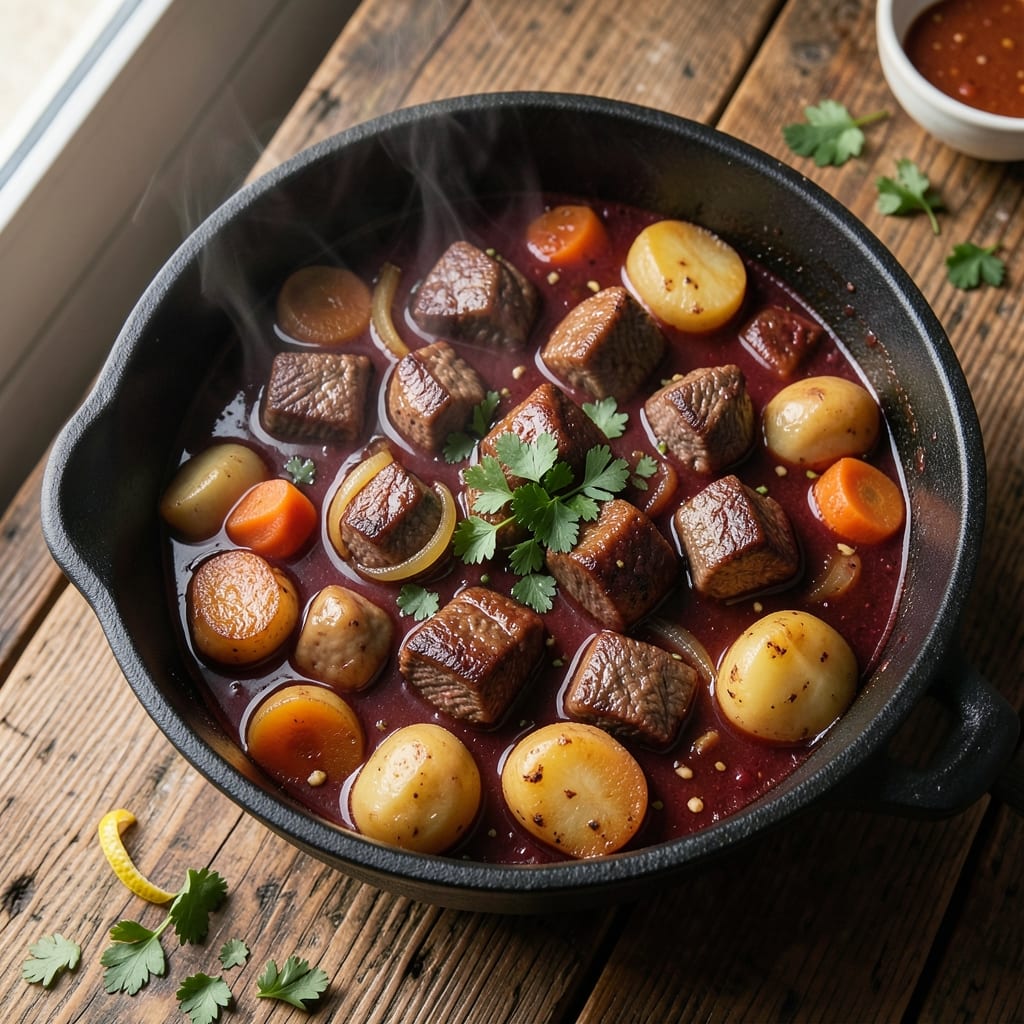
This absolute best beef stew recipe transforms tough beef chuck into melt-in-your-mouth perfection through slow simmering and careful technique. The secret lies in proper browning and deglazing, which builds deep, complex flavors that develop over 8 hours of gentle cooking. Every spoonful delivers rich, velvety broth infused with tender beef, hearty vegetables, and aromatic herbs.
What sets this recipe apart is the attention to detail—starting with a well-seared beef that forms a flavorful crust, then deglazing the pot to capture all those browned bits that create depth. The vegetables cook just until tender, absorbing the flavorful broth while maintaining their texture. This isn't just stew; it's a comforting, restaurant-quality meal that comes together with simple ingredients and patience.
By the time it's done, you'll have a pot of hearty stew with perfectly tender beef, carrots that caramelize slightly, potatoes that hold their shape, and a sauce that's thick enough to coat every bite. The aroma alone will have everyone gathering around the table, and the first taste will confirm this is the best beef stew you've ever made.
Serve it with crusty bread to soak up every last drop of that rich, flavorful broth. The slow cooking process ensures the beef is fork-tender while the vegetables remain vibrant, creating a harmonious balance of textures and flavors. This is the kind of meal that tastes even better the next day, making it perfect for meal prep or a cozy weekend dinner.
Ingredients for absolute best beef stew
Simple ingredients that transform into restaurant-quality beef stew with deep, rich flavor.
| Ingredient | Amount | Notes |
|---|---|---|
| Beef Chuck Roast 🥩 | 3 lb | Well-marbled, cut into 1.5-inch cubes |
| Yellow Onion 🧅 | 2 whole | Medium, chopped into half-moons |
| Carrots 🥕 | 4 whole | Medium, peeled and cut into chunks |
| Russet Potatoes 🥔 | 3 lb | Peeled and cut into 1.5-inch chunks |
| Garlic Cloves 🧄 | 6 cloves | Peeled and smashed |
| Tomato Paste 🍅 | ½ cup | High-quality, no sugar added |
| Beef Broth 💧 | 6 cups | Homemade or premium store-bought |
| Red Wine 🍷 | 1 cup | Bold, dry red like Cabernet Sauvignon |
| All-Purpose Flour 🌾 | 2 tbsp | For thickening |
| Fresh Thyme 🌿 | ¼ cup | Stems removed, chopped |
| Fresh Rosemary 🌿 | ¼ cup | Needles only, chopped |
| Bay Leaves 🌿 | 2 whole | Fresh preferred |
| Black Peppercorns 🌶️ | 1 tbsp | Freshly cracked |
| Salt 🧂 | 2 tbsp | Kosher or sea salt |
| Olive Oil 🫒 | ¼ cup | For searing beef |
The beef is everything here—chuck roast with good marbling is non-negotiable. Grab it from the butcher section if your store has one, or look for pre-cubed beef stew meat. Costco or Whole Foods usually have the best quality, but any well-marbled cut works. If you're buying a whole roast, ask to have it cut into 1.5-inch cubes—they'll do it for free. For the wine, any bold, dry red works here—Cab Sauv, Merlot, whatever's open. The tomato paste? San Marzano if you can find it, but any good-quality paste will do. Fresh herbs make a difference, but dried will work in a pinch (use half the amount).
No red wine? Beef broth with a splash of balsamic vinegar gets you close. The carrots can be baby carrots if that's what's in the fridge, but whole carrots caramelize better. For the potatoes, Russets hold up best to slow cooking—Yukon Golds if you want creamier texture. The flour is just for thickening at the end, so don't stress about brands. If you're prepping ahead, the beef can be seared and refrigerated overnight—just add it straight to the pot when you're ready to simmer. The broth? Homemade is ideal, but Swanson's or Pacific Foods are solid store-bought options.
This stew tastes even better the next day—honestly, that's when all the flavors meld together perfectly. Keeps for 5-6 days in the fridge, and freezes beautifully for up to 3 months. I always make a double batch and freeze half—perfect for lazy weeknights. For serving, grab some crusty bread to soak up that rich broth. The leftovers reheat wonderfully—just add a splash of broth if it's too thick after refrigeration.
Why You'll Love This Recipe
- I swear by this trick: just toss the whole onion and carrots into the pot with their skins on. They peel right off after cooking—no knife skills required. The chuck roast does all the work for you once it’s in the slow cooker.
- Foolproof Chopping: I swear by this trick: just toss the whole onion and carrots into the pot with their skins on. They peel right off after cooking—no knife skills required. The chuck roast does all the work for you once it’s in the slow cooker.
- Deep, Slow-Roasted Magic: That beef chuck turns ridiculously tender, falling apart with just a fork. The garlic cloves brown into crispy little nuggets, and the potatoes soak up all the rich, savory broth—like a hug in a bowl.
- Budget That Actually Feeds: A single chuck roast stretches to feed four, five, or even six—depending on how much you love seconds. Onions, carrots, and potatoes are cheap staples, and the flavor punches way above its price. My wallet thanks me every time.
Step-by-step instructions for the ultimate beef stew
This isn't just any beef stew—this is the kind that transforms tough chuck into melt-in-your-mouth perfection.
Sear the Beef for Deep Flavor
Heat the 0.25 cup olive oil in a heavy Dutch oven over medium-high heat until shimmering. Working in batches, add the 3 lb beef chuck roast cubes and sear for 2-3 minutes per side until deeply browned. This isn't just cooking—it's building flavor through the Maillard reaction.
Don't rush this step. You want those cubes to develop a rich crust that will infuse the stew with incredible depth. As you sear, remove the beef and set it aside on a plate. If the oil starts smoking, reduce the heat slightly—you want color, not smoke.
Build the Flavor Base
In the same Dutch oven, add the 2 whole yellow onion and 4 whole carrots cut into chunks. Cook for 5 minutes until softened. Add the 6 cloves garlic cloves and cook for another 30 seconds until fragrant—this is where the aromatics wake up and start singing.
Stir in the 0.5 cup tomato paste and cook for 2 minutes until it darkens slightly. This creates the foundation for your stew's rich color and deep flavor. Sprinkle in the 2 tbsp all-purpose flour and stir vigorously for 1 minute to remove any raw taste.
Deglaze and Simmer
Pour in the 1 cup red wine and scrape up all those browned bits from the bottom of the pot—this is pure flavor. Let it reduce by half (3-4 minutes) before adding the 6 cups beef broth. Bring to a gentle boil, then reduce heat to low and add the seared beef back in.
Add the 3 lb russet potatoes (cut into chunks), 0.25 cup fresh thyme, 0.25 cup fresh rosemary, 2 whole bay leaves, 1 tbsp black peppercorns, and 2 tbsp salt. The potatoes should be mostly submerged—they'll absorb flavor as they cook.
The Long Simmer
Here's where the magic happens. Cover the Dutch oven and simmer for 6-8 hours on low heat. You want this to bubble gently, not boil vigorously. Check occasionally to ensure there's enough liquid—add water if needed to keep the potatoes submerged.
After 4 hours, taste the stew. The beef should be tender enough to pierce with a fork but still hold its shape. If it's not quite there, continue cooking. The long simmer breaks down collagen in the beef, creating that irresistible melt-in-your-mouth texture. This is the moment that makes this stew worth the wait.
Finish and Serve
Once the beef is fork-tender and the potatoes are easily pierced with a knife (6-8 hours total), remove the bay leaves. Taste and adjust seasoning—you might need a bit more salt or pepper. The stew should be rich but not overwhelmingly salty.
Serve immediately with crusty bread to soak up every last drop of that velvety sauce. Each bite should deliver tender beef, caramelized vegetables, and layers of herbaceous, wine-infused flavor. This isn't just stew—it's a hearty, comforting masterpiece that tastes even better the next day.
Pro Tips For Making Absolute Best Beef Stew
- Sear the Chuck Hard: That beef chuck needs a deep, dark crust—don’t skimp on the time here. Use a heavy pot, medium-high heat, and let those sides brown for 4-5 minutes per side without moving it. I learned this the hard way when my stew tasted more like "slow-cooked beef" than "rich, caramelized perfection."
- Cut Potatoes Uniformly: Big chunks? They’ll stay rock-hard. Tiny dice? They’ll turn to mush. Aim for 1.5-inch pieces—thick enough to hold shape but small enough to cook through. Russets break down fast, so add them last, about 30 minutes before serving.
- Deglaze with Red Wine: Skip the broth splash—use ½ cup dry red wine instead. It cuts through the meat’s richness and adds depth without overpowering. Just scrape that browned fond off the bottom first; that’s where the flavor lives. (Yes, even if you’re not a wine drinker.)
- Add Garlic Late: Toss whole garlic cloves in with the potatoes for the last 15 minutes. They’ll soften perfectly without burning, and you’ll get that sweet, mellow garlic flavor instead of bitter, overcooked bits. No need to mince—just peel and drop.
Essential Equipment for this dish
Dutch Oven Essentials
A heavy Dutch oven is non-negotiable for this recipe—I use my Le Creuset 6-quart because it distributes heat evenly and handles the long simmer beautifully. If you don’t own one, a Lodge cast iron works just as well (they’re more budget-friendly). The key is choosing a pot with a tight-fitting lid to lock in moisture during those 6-8 hours of cooking. 🔥
Thermometer for Precision
Since this stew requires low-and-slow cooking, an instant-read thermometer is your best friend. I recommend the ThermoWorks Thermapen ONE—it’s fast and accurate. Use it to check the beef’s internal temperature (195-200°F for perfect tenderness) and to monitor the broth’s simmer (it should bubble gently, not boil). No thermometer? A simple fork test works too—pierce the beef; if it slides off easily, it’s done.
Wooden Spoon for Stirring
A long wooden spoon (like the OXO Good Grips) is ideal for stirring the stew without scratching the pot. Wood won’t react with acidic ingredients like wine or tomato paste, and it’s gentle on your Dutch oven’s surface. Avoid metal utensils during the simmer—they can scratch and leach flavors over time. Pro tip: Soak it in warm, soapy water after use to prevent warping.
Measuring Cups for Accuracy
Precision matters when balancing flavors. Use stainless steel measuring cups (like OXO’s) for broth, wine, and tomato paste—they’re durable and won’t warp like plastic. For the 2 tbsp flour, a coffee spoon works perfectly. Avoid glass measures for hot liquids—they can crack under sudden temperature changes. I keep my measuring tools near the stove for quick adjustments during cooking.
Knife Skills Matter
Sharp knives are a game-changer for prepping ingredients. A Wüsthof 8-inch chef’s knife is my go-to for chopping onions, carrots, and potatoes into even chunks. Consistent sizing ensures vegetables cook uniformly. For garlic, a garlic press saves time, but I still smash cloves with the flat side of my knife for better flavor release. Invest in a sharpening stone—dull knives make prep frustrating and unsafe.
Optional: Slow Cooker
No stove space? A 6-quart slow cooker (like Hamilton Beach) can handle the simmering for you. Transfer the seared beef, veggies, and liquid to the slow cooker, then cook on LOW for 8 hours. The texture might be slightly less caramelized, but the tenderness will still be incredible. Just stir occasionally to prevent sticking—this isn’t a set-it-and-forget-it meal, but it’s a great shortcut. 💫
Nutrition facts
Frequently asked questions
Why is searing the beef so important in this recipe?
The searing step creates the Maillard reaction, which develops deep, caramelized flavors that infuse the entire stew. Skipping this step means missing out on that rich, meaty depth that makes this stew truly exceptional. Those browned bits (fond) also dissolve into the sauce during cooking, adding layers of complexity.
Can I use a different cut of beef instead of chuck roast?
While chuck roast is ideal due to its marbling and collagen content, you can substitute with round roast or brisket—just be prepared for slightly less tenderness. Avoid lean cuts like sirloin; they won't break down properly during the long simmer. If using a tougher cut, increase cooking time by 1-2 hours.
What if my stew is too thin after cooking?
Simmer the stew uncovered for 10-15 minutes to reduce the liquid naturally. If that doesn't work, mix 1 tbsp cornstarch with 2 tbsp cold water, stir it into the stew, and simmer for another 5 minutes until thickened. The sauce should coat the back of a spoon but still be spoonable.
How can I make this stew ahead of time?
This stew actually tastes better the next day! Cook it as directed, then refrigerate for up to 5-6 days or freeze for 3 months. Reheat gently on the stove over low heat, adding a splash of broth if needed. The flavors meld beautifully overnight, making it perfect for meal prep.
What's the best way to reheat leftovers?
Never microwave—it makes the sauce watery. Instead, reheat in a pot over medium-low heat, stirring occasionally and adding 1-2 tbsp broth or water if it gets too thick. For best results, cover and let it warm through gently. This preserves the texture and prevents the beef from drying out.