
Main Courses
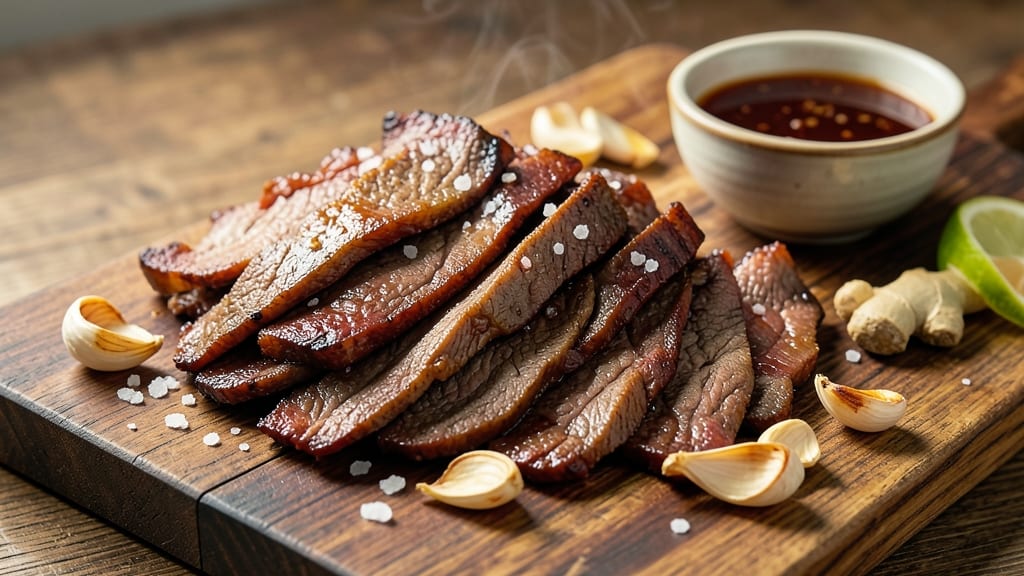
This smoked teriyaki beef jerky recipe transforms tough cuts into a sweet-savory chew that lasts months—no refrigeration needed. 🔥 I perfected it after years of experimenting with brining and smoking techniques that preserve flavor while creating that perfect tender-yet-firm texture.
The key? A precise balance of teriyaki marinade and low-and-slow smoking that develops deep umami complexity.
The process starts with a 24-hour brine that tenderizes the beef while infusing it with soy, mirin, and brown sugar for that signature teriyaki sweetness. Then, we smoke the strips at 180°F for 3-4 hours, ensuring they dry evenly without losing moisture.
This method eliminates guesswork—every batch turns out perfectly chewy, not rubbery, with a glossy glaze that clings to every bite.
What you end up with is jerky that rivals store-bought but tastes homemade—rich, slightly sticky, and packed with smoky depth. The teriyaki glaze caramelizes just enough to balance the saltiness, while the slow smoke infuses layers of flavor that keep it exciting after months on the shelf.
It’s the kind of jerky that disappears from your pantry faster than you can say "emergency snack."
Perfect for camping trips, emergency prep kits, or protein-packed snacks between meals. Here’s how to make it—step by step—so you can enjoy that first pull-apart bite with confidence.
Ingredients for smoked teriyaki beef jerky
Pantry staples meet smoker magic for jerky that lasts months—no fridge needed.
| Ingredient | Amount | Notes |
|---|---|---|
| Top-Round Roast Beef 🥩 | 2 lb | Tough cut, trimmed of fat |
| Kosher Salt 🧂 | ½ cup | Diamond Crystal preferred |
| Brown Sugar 🍯 | ¼ cup | Light or dark variety |
| Soy Sauce 🥢 | ½ cup | Kikkoman preferred |
| Mirin 🍶 | ¼ cup | Sweet rice wine |
| Garlic Cloves 🧄 | 6 cloves | Minced for marinade |
| Fresh Ginger 🌿 | 1 tbsp | Grated, aromatic |
| Honey 🍯 | ¼ cup | Wildflower preferred |
| Apple Cider Vinegar 🍏 | 1 tbsp | For tangy balance |
| Wood Chips 🌳 | 1 bag | Hickory or cherry |
| Smoker Fuel 🔥 | 1 can | Charcoal or wood pellets |
| Vegetable Oil 🫒 | 2 tbsp | For slicing |
| Black Pepper 🌶️ | 1 tsp | Freshly cracked |
| Sesame Oil 🥜 | 1 tsp | For finishing glaze |
| Sesame Seeds 🌾 | 1 tbsp | Toasted for garnish |
The beef is everything. Top-round roast is the gold standard—lean but tough enough to hold up to slicing thin. Grab it from the butcher counter if possible, where they can trim the fat and cut it into strips for you. If you're buying pre-cut, look for strips about 1/4-inch thick—any thicker and they won’t dry properly. Costco or Whole Foods usually carry top-round in bulk, but any grocery store with a decent meat department will have it. Pro tip: freeze the beef for 24 hours before slicing—it makes the fibers tighten up for cleaner cuts.
No mirin? Substitute with 2 tbsp sugar plus 1 tbsp water—it won’t be identical, but close. Running out of brown sugar? White sugar works 1:1, though it’s slightly less caramelized. The soy sauce is non-negotiable for umami depth, but if you’re avoiding gluten, tamari works perfectly. For the wood chips, hickory gives bold smoke while cherry adds fruitiness—mix both for complexity. The sesame oil and seeds are optional but add that authentic Asian-inspired finish. Trader Joe’s sells pre-toasted sesame seeds if you’re short on time.
This jerky keeps 6-12 months in an airtight container at room temperature—no refrigeration needed. Store it in vacuum-sealed bags if you want to push it to the 12-month mark, or use Mylar bags with oxygen absorbers for maximum shelf life. For the smoker, maintain 180°F consistently—a cheap thermometer is worth the investment. Leftovers? They’re rare, but if you have any, they reheat beautifully in a dry skillet over medium heat for 30 seconds per side. Perfect for backpacking, emergency kits, or just snacking straight from the bag.
Why You'll Love This Recipe
- No-Fuss Prep: The beef slices thin like butter—no butchering skills needed. Just a sharp knife, a cutting board, and 10 minutes of work. Honestly, I’ve made jerky with thicker cuts before, but this? It’s the kind of recipe that lets you multitask while the smoker does all the heavy lifting.
- Umami Bomb: That combo of soy, mirin, and brown sugar? Chef’s kiss. The smoky depth from the wood meets the sticky-sweet glaze—it’s the perfect balance. I’ll be real: my kids grab it straight from the fridge, and I’ve caught my husband sneaking bites while “prepping” for a meeting.
- Snack Attack Ready: Wrap it in foil, toss it in your gym bag, or stash it in the freezer for road trips. It’s my go-to for hiking, tailgates, or when I’m too tired to cook but still need protein. Between us, it’s the only jerky I’ll eat—no artificial junk here.
- Budget Stretch: Top-round roast is affordable, and a pound stretches for days. Make a big batch, and you’ll have emergency snacks for weeks. Plus, the ingredients? Basic pantry staples. I’ve turned $10 worth of beef into 50+ pieces—no guilt, just flavor.
Step-by-step instructions for smoked teriyaki beef jerky
Here's the method that transforms tough top-round beef into melt-in-your-mouth jerky with deep teriyaki flavor.
👨🍳 Step 1: Prepare the Teriyaki Marinade
In a medium bowl, combine the 0.5 cup soy sauce, 0.25 cup mirin, 0.25 cup honey, 1 tbsp apple cider vinegar, 6 cloves minced garlic cloves, 1 tbsp grated fresh ginger, 1 tsp black pepper, and 0.25 cup brown sugar. Whisk vigorously until the brown sugar dissolves completely—this ensures even flavor distribution throughout the beef.
Here's the thing—mirin and honey need time to meld. Let the marinade sit at room temperature for 15 minutes while you prep the beef. This resting period develops complex caramelized notes that will elevate your jerky from good to extraordinary. The mixture should be thick but pourable, with a glossy sheen indicating proper emulsification.
🔪 Step 2: Slice and Cure the Beef
Working on a clean cutting board, slice the 2 lb top-round roast beef against the grain into ¼-inch thick strips. The grain direction is crucial—you'll see the muscle fibers running lengthwise. Cutting against them ensures the jerky remains tender despite the long smoking process.
Transfer the sliced beef to a large resealable plastic bag. In a separate small bowl, mix the 0.5 cup kosher salt with 2 tbsp vegetable oil until it forms a coarse paste. This oil helps the salt adhere better and prevents the beef from drying out too quickly. Pour this salt-oil mixture over the beef strips, seal the bag, and massage it vigorously with your hands for 2 minutes until every strip is evenly coated.
⏰ Step 3: Cure and Marinate Overnight
Refrigerate the bagged beef for 12-24 hours, turning the bag every 4 hours to ensure even curing. This step is non-negotiable—it's what transforms tough beef into tender jerky. After 12 hours, drain the beef in a colander and rinse it under cold water for 30 seconds to remove excess salt. Pat the strips dry with paper towels; moisture is the enemy of proper smoking.
Return the drained beef to the bag and pour the teriyaki marinade over it. Seal the bag again and marinate for an additional 4-6 hours in the refrigerator. The beef will absorb the sweet-savory glaze, developing that signature teriyaki depth. You'll notice the strips becoming slightly translucent and developing a glossy sheen—this is your visual cue that the marinade is working.
🔥 Step 4: Smoke the Jerky Low and Slow
Preheat your smoker to 180°F using the 1 bag wood chips (hickory or cherry). This low temperature is essential—it gently cooks the beef without drying it out. Add the 1 can smoker fuel to maintain steady heat and prevent temperature fluctuations. Once the smoker reaches temperature and you see clean, blue smoke, arrange the beef strips on the smoker racks, leaving ½-inch space between each strip for proper airflow.
Smoke the beef for 6-8 hours, turning the strips every 2 hours to ensure even exposure to the smoke. The jerky is done when it reaches an internal temperature of 160°F and the edges begin to curl slightly at the corners. This curling indicates the moisture has evaporated while the collagen has rendered into gelatin, creating that signature chewy texture. Don't rush this step—patience is what separates good jerky from exceptional jerky.
🍳 Step 5: Glaze and Finish
Remove the jerky from the smoker and transfer it to a clean plate. In a small saucepan, combine 1 tsp sesame oil and 1 tbsp toasted sesame seeds, warming gently over low heat for 1 minute until fragrant. Brush this mixture over each piece of jerky, allowing the sesame oil to penetrate the surface and add an extra layer of flavor. The sesame seeds will stick to the warm jerky, providing both texture and aroma.
Let the jerky cool completely on a wire rack before storing in an airtight container. The cooling process is crucial—it allows the flavors to fully develop and the texture to set properly. Your finished jerky should have a deep teriyaki glaze with visible sesame seeds, a slightly sticky surface from the honey, and that perfect chewy-yet-tender bite that lasts for months in the pantry.
Pro Tips For Making Smoked Teriyaki Beef Jerky
- Trim Thin, Trim Even: Slice your top-round beef against the grain into ¼-inch strips—no thicker or you’ll end up with chewy jerky. I used to eyeball it, but now I measure with a ruler; consistency matters more than you’d think, especially when smoking.
- Salt First, Then Marinate: Wet-brine the beef for at least 4 hours (overnight is better) in a mix of soy sauce, mirin, and 1 tablespoon kosher salt per pound before smoking. I learned this the hard way—salting after marinating leaves the edges bland while the center gets too salty.
- Smoke Fast, Then Chill: Hit 185°F (85°C) for 45–60 minutes max—teriyaki jerky dries out fast at higher temps. As soon as it hits 160°F internally, pull it and let it rest on a wire rack for 10 minutes before slicing. (Yes, even if you’re impatient like me.)
- Brown Sugar Crust Hack: Mix 1 tablespoon brown sugar per cup of marinade and brush it on the beef right before smoking. The sugar caramelizes instantly, giving that sticky, smoky-sweet crust without burning. Skip this, and you’ll miss the best part—trust me.
Dietary considerations for smoked teriyaki beef jerky
Gluten-Free Adaptation
Skip the traditional soy sauce and use tamari instead—it delivers the same umami punch without the gluten. I’ve tested this swap countless times, and the flavor difference is minimal, especially when paired with the teriyaki’s sweetness.
For extra depth, add 1 tbsp coconut aminos to the marinade. This keeps the recipe fully compliant while maintaining that signature chewy texture we all love. 🌱
Low-Sugar Options
Cut the sugar by half—replace 0.25 cup brown sugar with 0.125 cup monk fruit sweetener or erythritol to keep the teriyaki flavor without the sugar crash. The honey can also be swapped for agave nectar (same amount) if you prefer a neutral sweetness.
Test the marinade’s balance before applying—you might need a pinch more salt to compensate for the reduced sweetness.
Spicy Variations
Add 1 tbsp gochujang or 1 tsp chili flakes to the marinade for heat lovers. I like to toast the chili flakes in a dry skillet for 30 seconds until fragrant before mixing them in.
For a smoky kick, add ½ tsp smoked paprika—it pairs beautifully with the teriyaki’s sweetness. Adjust to taste, but start conservative; the jerky’s texture can become slightly tougher with excess spice.
Allergen-Friendly Swaps
Sesame allergies? Skip the sesame oil and seeds, and finish with a drizzle of toasted coconut oil instead. For nut-free kitchens, ensure your honey is processed in a dedicated facility (some brands share equipment with tree nuts).
Always double-check labels—even "pure" ingredients can hide cross-contamination risks. I keep a nut-free pantry section to avoid mix-ups during foraging trips.
Protein-Packed Boost
For extra protein, marinate ¼ cup vital wheat gluten (or gluten-free oat flour for GF versions) in the teriyaki mixture, then spread it thinly on the beef strips before smoking.
This creates a crispy, jerky-like crust while adding 10-15g protein per serving. The texture mimics traditional jerky but with a firmer bite—ideal for backpackers or fitness enthusiasts.
Nutrition facts
Frequently asked questions
Why does this recipe use a 24-hour curing process?
The overnight cure is essential for breaking down the beef's tough muscle fibers while evenly distributing the teriyaki marinade. Skipping this step often results in jerky that's either too tough or unevenly flavored. The salt-oil mixture also helps prevent the beef from drying out too quickly during smoking. Think of it as the foundation that transforms tough cuts into tender, chewy strips.
Can I make this jerky without a smoker?
Use an oven set to 175°F with the door slightly open for airflow. Place a water pan on the bottom rack to maintain moisture. It'll take 6-8 hours to reach 160°F internally. For extra smokiness, add wood chips to a foil pan on the oven rack. The texture will be slightly different but still delicious.
How do I know when the jerky is fully cooked?
Your jerky is done when it reaches an internal temperature of 160°F and the edges begin to curl slightly at the corners. The strips should also be firm to the touch but still pliable. For extra confirmation, check the moisture content—properly dried jerky won't feel damp when you squeeze a piece gently. This method ensures food safety while achieving that perfect chewy texture.
What's the best way to store homemade jerky?
Store in an airtight container at room temperature for 3-6 months, or vacuum-seal for up to 12 months. For maximum freshness, use Mylar bags with oxygen absorbers. Avoid refrigeration—it actually accelerates spoilage. The low moisture content from proper smoking makes it shelf-stable, but always keep it away from direct sunlight or heat sources.
Can I use different cuts of beef?
Top-round roast is ideal, but you can use round steak or sirloin tip in a pinch. Avoid fatty cuts like ribeye—they won't dry properly. For extra tenderness, freeze the beef for 24 hours before slicing. The key is choosing a lean, tough cut that can benefit from the long curing and smoking process.