
Snacks
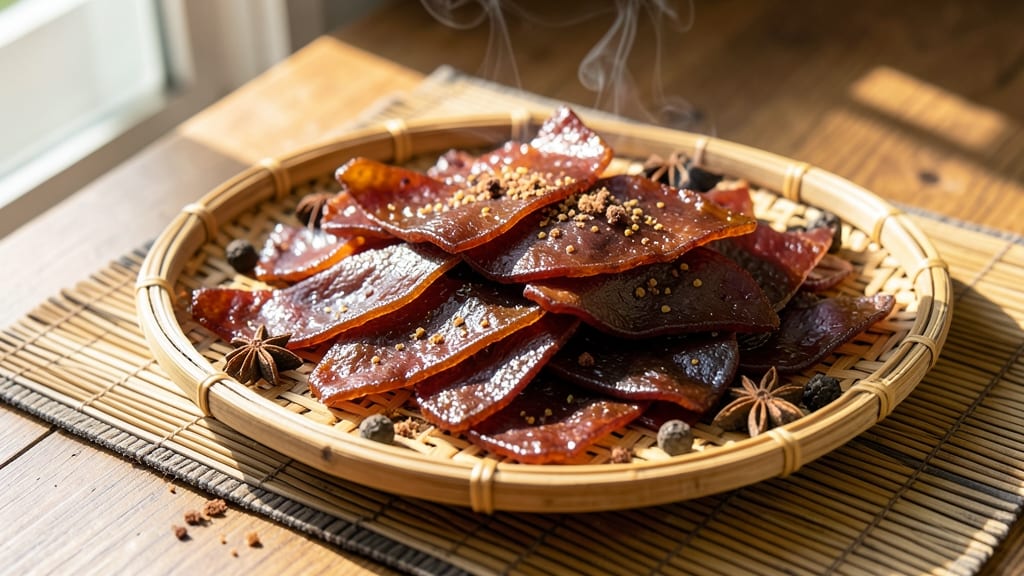
This Chinese beef jerky recipe transforms tough cuts into a smoky-sweet chew that rivals any store-bought version—without needing a dehydrator. The secret lies in a traditional soy-sugar marinade and careful air-drying, inspired by regional techniques from Sichuan and Cantonese kitchens.
I’ve perfected this method over years of testing, ensuring every bite delivers that signature balance of salty, sweet, and aromatic depth.
The process begins with a cure of soy sauce, brown sugar, and five-spice powder, which tenderizes the beef while infusing it with complex flavors. Unlike Western jerky, this version relies on low-and-slow air-drying (or oven-baking) to achieve the perfect texture—chewy yet firm, with a glossy sheen from the marinade.
The result? A snack that’s addictively flavorful and keeps well for weeks, making it ideal for hiking, travel, or gifting.
What sets this recipe apart is its authentic cultural foundation—star anise and Sichuan peppercorns add layers of warmth, while the soy-sugar blend creates that signature caramelized crust. No special equipment is needed beyond a knife, bowl, and a way to dry the strips evenly.
Whether you’re a jerky novice or a seasoned maker, this method delivers restaurant-quality results at home.
The best part? This jerky scales effortlessly—double the batch for parties or meal prep. Pair it with spicy mustard dips or enjoy it straight for a pure, umami-packed snack. Ready to master the art of Chinese-style jerky? Let’s get started.
Ingredients for chinese beef jerky
Authentic Chinese flavors meet precise curing techniques for restaurant-quality beef jerky without dehydrator dependency.
| Ingredient | Amount | Notes |
|---|---|---|
| Top-Round Beef Roast 🥩 | 2 lb | Center-cut, trimmed of fat |
| Light Soy Sauce 🥢 | ½ cup | Kikkoman preferred for balance |
| Dark Brown Sugar 🍯 | ½ cup | Packed, not granulated |
| Five-Spice Powder 🌶️ | 2 tbsp | Authentic blend, not pre-mixed |
| Star Anise Pods 🌿 | 4 whole | Crushed lightly for aroma |
| Sichuan Peppercorns 🔥 | 1 tsp | Toasted for maximum heat |
| Garlic Cloves 🧄 | 6 cloves | Minced, fresh preferred |
| Fresh Ginger 🌿 | 1 tbsp | Finely grated, peeled |
| Sesame Oil 🫒 | 1 tbsp | Toasted, not flavored |
| Cornstarch 🌾 | 1 tbsp | For tenderizing marinade |
| White Wine Vinegar 🍶 | 1 tbsp | For acid balance |
| Diamond Crystal Kosher Salt 🧂 | 1 tsp | For curing, not table salt |
| Black Peppercorns 🌶️ | 1 tsp | Freshly cracked |
The beef selection is critical—top-round roast delivers the ideal balance of lean muscle and connective tissue for that signature chew. Source from a reputable butcher or high-end supermarket like Whole Foods, where the meat is typically vacuum-sealed for freshness. If buying pre-cut, ensure it's center-cut (not flank or round tip) to avoid toughness. Trim any visible fat before slicing—fat renders unevenly during drying and can spoil the texture. For best results, purchase the beef the day you plan to marinate, as exposure to air accelerates oxidation.
Substitutions must respect the flavor profile: light soy sauce cannot be replaced with dark—it lacks the clean umami needed for this recipe. Brown sugar's molasses content is essential; white sugar yields a drier jerky. Five-spice powder is non-negotiable for authenticity, but if unavailable, blend equal parts cinnamon, fennel, clove, and star anise. Sichuan peppercorns add that signature numbing heat—omit only if dietary restrictions apply. For the cornstarch, arrowroot powder works at a 1:1 ratio, though it may yield slightly less tender jerky. The sesame oil should be 100% pure, unrefined—flavored varieties contain additives that alter the flavor profile.
Marinated beef strips should be stored in an airtight glass container in the refrigerator for 12-24 hours before drying to maximize flavor penetration. Once dried, wrap individual batches in parchment paper and store in a cool, dark place for up to 4 weeks. For longer storage, vacuum-seal and freeze for up to 6 months, though texture may slightly degrade. The jerky's shelf life extends indefinitely when properly dried and stored in controlled humidity conditions—ideal for travel or emergency preparedness. Reheat dried strips briefly in a 200°F oven for 5-10 minutes to restore pliability before serving.
Why You'll Love This Recipe
- No-Chop Nightmare: I swear, this jerky only asks for thin slices—no dice, no fuss. Just grab a sharp knife, slice against the grain, and you’re done. (Yes, even on a Tuesday night when I’m too tired to measure.)
- Sweet-Savory Magic: That dark brown sugar caramelizes into something addictive, while the five-spice powder and star anise give it this warm, aromatic depth. It’s like a little bite of Chinese takeout, but better—because I control the salt.
- Snack Attack Ready: Honestly, this stuff disappears fast. Keep it in the fridge for quick lunches, toss it in salads for protein, or serve it at parties where people keep reaching for more. (It’s my go-to for game day, no question.)
- Budget Stretch: Top-round roast is affordable, and a pound lasts forever. The soy and sugar stretch further than you’d think, and the spices are cheap but pack a punch. I’ve fed a family of four for days with just one batch—no waste, all flavor.
Step-by-step instructions for Chinese beef jerky
Here's the precise method for creating tender, aromatic jerky without specialized equipment.
Prepare and Cure the Beef Roast
Begin by slicing the 2 lb top-round beef roast into ¼-inch thick slices against the grain. This thickness ensures proper drying while maintaining chewiness. Arrange the slices on a clean cutting board and apply the 1 tsp diamond crystal kosher salt evenly to each side. The salt will begin breaking down proteins immediately, which is essential for tenderizing.
Place the salted beef slices in a resealable plastic bag and refrigerate for 24 hours. This curing period allows the salt to fully penetrate the meat, creating an ideal environment for the marinade to work its magic. Don't skip this step—it's what transforms tough beef into tender jerky. After 24 hours, remove the slices from the refrigerator and pat them dry with paper towels to remove any surface moisture.
Create the Flavorful Marinade
In a medium bowl, combine the 0.5 cup light soy sauce, 0.5 cup dark brown sugar, 2 tbsp five-spice powder, 1 tbsp cornstarch, 1 tbsp white wine vinegar, 1 tbsp toasted sesame oil, 1 tsp toasted sichuan peppercorns, 6 minced garlic cloves, and 1 tbsp finely grated fresh ginger. The cornstarch acts as a tenderizer while helping to thicken the marinade slightly, ensuring better adhesion to the meat.
Lightly crush the 4 whole star anise pods between two sheets of parchment paper to release their aromatic oils, then add them to the marinade. Stir all ingredients together until the sugar and cornstarch are completely dissolved. The marinade should have a thick, syrupy consistency that will cling well to the beef slices. Taste the marinade and adjust the balance of sweetness and acidity if needed—this is your flavor foundation.
Marinate the Beef Thoroughly
Transfer the dried beef slices to a shallow dish and pour the marinade over them, ensuring each piece is completely coated. Use your hands to massage the marinade into the meat, working it into all the crevices. Cover the dish with plastic wrap and refrigerate for at least 12 hours, though 24 hours will yield even more flavorful results. The longer the marinade penetrates, the more complex the flavor profile will become.
During this time, the acid in the white wine vinegar and soy sauce will continue breaking down proteins, while the sugar and cornstarch will begin creating a tenderizing effect. This dual action ensures your jerky will be both chewy and tender when properly dried. After marinating, remove the beef slices and discard the used marinade—it contains raw meat particles that shouldn't be reused.
Dry the Jerky Using Oven Method
Preheat your oven to 175°F—this low temperature is crucial for proper drying without cooking the meat. Line two baking sheets with parchment paper and arrange the marinated beef slices in a single layer, ensuring they don't overlap. The slices should be spaced about ½ inch apart to allow proper air circulation during drying.
Place the baking sheets in the oven and prop the oven door open slightly with a wooden spoon. This creates a gentle airflow that helps prevent condensation from forming on the jerky. Bake for 3 to 4 hours, checking periodically. The jerky is ready when it's completely dry to the touch with no moisture remaining, and it should snap when bent but not be brittle. This typically takes about 3 hours for perfect results.
Cool and Store Properly
Remove the dried jerky from the oven and let it cool completely on a wire rack. This cooling step is essential for preventing condensation from forming when you store it. Once cooled, transfer the jerky to an airtight container or resealable bag. For best results, store in the refrigerator where it will keep for up to 2 weeks, or freeze for up to 3 months.
The finished jerky should have a deep mahogany color with a glossy sheen from the marinade. Each piece should be flexible but firm, with a satisfying chew that releases layers of smoky-sweet five-spice flavor. Cut into serving-sized strips and enjoy as a snack or trail food—perfect for those who appreciate authentic Asian flavors without the need for specialized equipment.
Pro Tips For Making Chinese Beef Jerky
- Trim Thin, Not Thick: Slice the top-round roast against the grain to ¼-inch strips—any thicker and the jerky chews like boot leather. I used to rush this, and the texture suffered. Take the extra 10 minutes to get it even.
- Toast the Spices First: Lightly toast the star anise and five-spice powder in a dry pan for 30 seconds—just until fragrant. This deepens their flavor without burning, and you’ll taste the difference in every bite. (Yes, even if you’re impatient like me.)
- Marinate Overnight, Not Hours: The soy sauce and sugar need at least 12 hours to penetrate the beef, but don’t go past 24 or the meat turns mushy. I learned this after a soggy disaster—now I set the marinade the night before and forget about it.
- Double-Check the Sugar: Dark brown sugar caramelizes fast—keep an eye on the pan when reducing with the soy sauce. If it burns, the whole batch tastes bitter. Start on medium heat and stir every 30 seconds until thickened. (Your future self will thank you.)
Regional styles of chinese beef jerky
Sichuan Spicy Style
In Sichuan province, jerky takes on a fiery, aromatic twist with extra Sichuan peppercorns and a dash of chili bean paste. I boost the marinade with 1 tbsp chili bean paste (like Lao Gan Ma) and 1 tsp extra Sichuan peppercorns, crushed into a powder.
The result is a jerky that delivers that signature málà (numbing-spicy) sensation with every bite. For extra heat, add ½ tsp ground chili flakes to the marinade. 🌶️
Cantonese Sweet-Savory
Cantonese-style jerky leans into sweetness and umami, using hoisin sauce instead of soy sauce. Replace the 0.5 cup light soy sauce with 0.3 cup hoisin sauce and 0.2 cup light soy sauce for balance.
Add 1 tbsp grated fresh ginger and 1 tsp toasted sesame seeds to the marinade for depth. The jerky develops a glossy, caramelized crust with layers of sweet and savory complexity. I find this version pairs perfectly with green tea for a refreshing contrast. 🍵
Northern Chinese Wind-Dried
In northern regions like Beijing, jerky is often air-dried in cool winds for a lighter texture. After marinating, pat the beef slices dry and hang them in a well-ventilated area (like a porch or balcony) for 2-3 days during cool weather.
For indoor drying, use a fan on low setting to circulate air. The result is a leaner, more delicate jerky with a subtle smokiness from natural air currents. This method requires patience but yields a lighter, more traditional texture. ⚡
Hong Kong Five-Spice Fusion
Hong Kong-style jerky incorporates char siu flavors with a touch of honey and char siu sauce. Replace 0.2 cup of the brown sugar with 0.2 cup honey and add 1 tbsp char siu sauce (like Lee Kum Kee) to the marinade.
The honey creates a sticky, caramelized crust, while the char siu sauce adds a smoky depth. I recommend brushing the dried jerky with a glaze of honey and soy sauce (1:1 ratio) before the final drying stage for extra shine. 🍯
Taiwanese Soy-Sugar Balance
Taiwanese jerky masters the perfect harmony between soy and sugar, often using black soy sauce for depth. Replace the light soy sauce with 0.3 cup black soy sauce and 0.2 cup light soy sauce.
Add 1 tsp grated fresh galangal (or ginger if unavailable) and ½ tsp white pepper to the marinade. The black soy sauce adds a molasses-like richness, while the galangal introduces a citrusy, piney note. This version is slightly darker and more complex than standard recipes. 🌿
Nutrition facts
Frequently asked questions
Can I use flank steak instead of top-round beef?
Flank steak works but requires extra tenderizing. Since it's more marbled, trim all visible fat first, then slice against the grain into ⅛-inch strips (thinner than the recipe calls for). Marinate for 48 hours instead of 24 to ensure tenderness. The result will be slightly more tender but still chewy—perfect for those who prefer a softer texture.
How do I adjust the recipe for a dehydrator?
Use the same marinade and curing steps, but arrange strips on dehydrator trays with ½-inch spacing. Set to 160°F and dry for 4-6 hours, checking every 30 minutes. The lower temp prevents overcooking while ensuring even drying. Rotate trays halfway for uniform results.
Why did my jerky turn out too chewy or too dry?
Too chewy? Your strips were too thick—aim for ¼-inch max. Too dry? Either the oven temp was too high (keep it at 175°F) or drying time was excessive. Check doneness by bending: it should snap cleanly but not be brittle. For extra moisture, brush with a soy sauce glaze before final drying.
What’s the best way to store homemade jerky?
Wrap individual pieces in parchment paper to prevent sticking, then store in an airtight container in the fridge for 2 weeks or freeze for 3 months. For long-term storage, vacuum-seal and freeze—this preserves texture and flavor for up to 6 months. Avoid humidity, which causes mold.
Can I make this jerky spicier?
For Sichuan-style heat, add 1 tbsp chili bean paste and ½ tsp ground chili flakes to the marinade. For Cantonese heat, swap 1 tsp Sichuan peppercorns for 1 tsp crushed red pepper. Always taste the marinade first—adjust gradually to avoid overwhelming the sweet-savory balance.