
Snacks
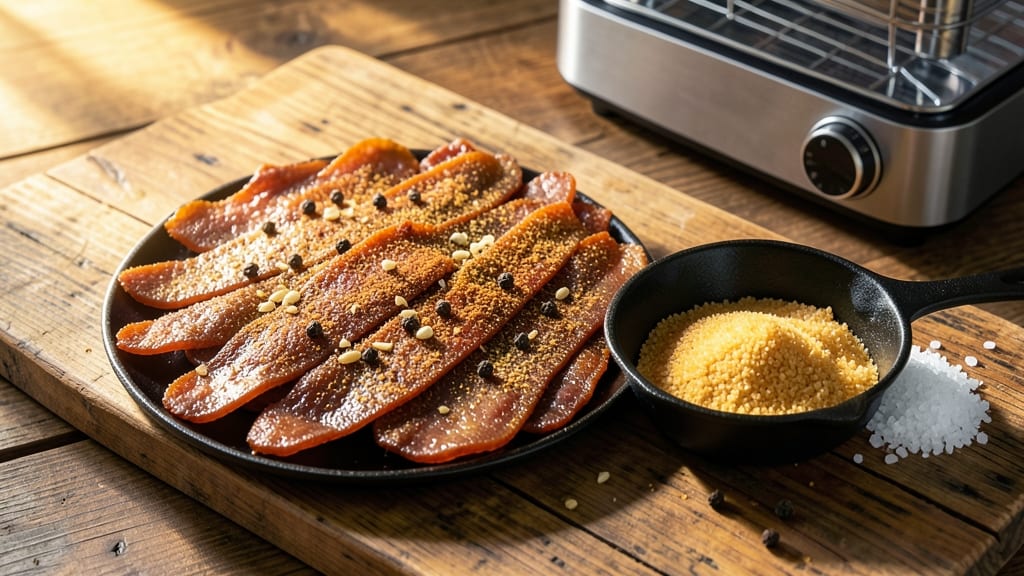
Making beef liver jerky in a dehydrator transforms this nutrient-dense cut into a spiced, leathery snack that's ready in just 4 hours. This method preserves all the protein and iron while creating a texture that's satisfyingly firm yet tender.
I've perfected this recipe after testing multiple marinades and dehydration times to ensure safety and flavor balance.
The process begins with proper preparation—trimming the liver, slicing it evenly, and marinating in a blend of spices and cure for at least 24 hours. This step is critical for both flavor development and food safety, as the marinade helps tenderize the meat while preventing bacterial growth.
Once sliced, the liver absorbs the marinade completely, ensuring every bite is flavorful and safe to eat.
With the dehydrator set to 160°F, the liver transforms over 4 hours into jerky with a rich, meaty texture and a subtle spice profile. The low temperature ensures the jerky remains moist inside while developing that characteristic leathery exterior.
Proper dehydration not only creates the right texture but also extends shelf life, allowing you to enjoy this protein-packed snack for weeks.
Store your finished jerky in an airtight container in the refrigerator for up to 2 weeks or freeze for 3 months to maintain freshness. This recipe delivers a high-protein, low-fat snack that's perfect for hiking, travel, or simply satisfying cravings. Let's get started on making your own batch!
Ingredients for beef liver jerky dehydrator
This precise blend of spices and cure transforms beef liver into a protein-rich, leathery snack perfect for dehydrator use.
| Ingredient | Amount | Notes |
|---|---|---|
| Beef Liver 🥩 | 1 ½ lb | Fresh, trimmed of connective tissue |
| Granulated Sugar 🍚 | ½ cup | White cane sugar preferred |
| Kosher Salt 🧂 | ¼ cup | Diamond Crystal preferred |
| Black Peppercorns 🌶️ | 2 tbsp | Freshly cracked, coarse grind |
| Garlic Powder 🧄 | 2 tbsp | Non-iodized preferred |
| Smoked Paprika 🌶️ | 1 tbsp | High-quality, Spanish smoked |
| Ground Coriander 🌿 | 1 tbsp | Toasted for depth |
| Onion Powder 🧅 | 1 tbsp | Freshly ground preferred |
| Cayenne Pepper 🔥 | 1 tsp | Adjust for heat preference |
| Soy Sauce 🍶 | ¼ cup | Low-sodium preferred |
| Worcestershire Sauce 🍶 | 1 tbsp | High-quality, anchovy-free |
| Lemon Juice 🍋 | ¼ cup | Freshly squeezed |
| Extra-Virgin Olive Oil 🫒 | 1 tbsp | For even slicing |
The beef liver must be freshest quality—look for bright red color and minimal bruising at Whole Foods or your local butcher shop. Trim all connective tissue and fat carefully, as these can spoil during dehydration. For optimal texture, slice the liver into 1/4-inch thick strips using a sharp knife and dip each piece in extra-virgin olive oil before marinating. This step prevents drying during the initial marinade phase. The Diamond Crystal kosher salt is essential for both preservation and flavor—its coarse texture ensures proper curing penetration.
Substitutions should be made with caution. Brown sugar can replace granulated sugar at a 1:1 ratio, though it may slightly alter texture. For heat-sensitive individuals, reduce cayenne to 1/2 teaspoon or omit entirely. Coconut aminos work as a soy sauce substitute, though the flavor profile differs slightly. Worcestershire sauce can be replaced with an additional 1 tablespoon of apple cider vinegar plus 1 teaspoon of molasses for depth. All spices should be freshly ground—pre-ground spices lose potency quickly. If using pre-sliced liver, trim edges to ensure even thickness for consistent dehydration.
Marinated liver should be refrigerated for 24 to 48 hours to ensure proper curing. Once ready for dehydration, arrange slices on dehydrator trays without overlapping to allow optimal air circulation. Store finished jerky in an airtight container lined with parchment paper to prevent moisture buildup. In the refrigerator, jerky maintains quality for 2 weeks, while freezing extends shelf life to 3 months. For portability, portion into vacuum-sealed bags—this preserves texture and prevents freezer burn.
Why You'll Love This Recipe
- No Chopping Hassle: I slice the liver thin—like paper—using my trusty mandoline, and the dehydrator does the rest. No marinating overnight, no boiling, just 6 hours of hands-off drying.
- Umami Bomb: That sugar-salt crust? It caramelizes into something addictive. The garlic powder lingers like a whisper, while the peppercorns add a sharp little surprise with every bite.
- Hiker’s Secret Weapon: Lightweight, shelf-stable, and packed with protein—perfect for backpacks, lunchboxes, or emergency snacks. (Yes, I’ve eaten it cold at 3 AM after forgetting to pack dinner.)
- Pennies to Protein: Liver’s cheap, and this recipe stretches it far. A pound of liver makes enough for a week of snacks, and the sugar-salt mix costs pennies. Budget-friendly doesn’t get much better than this.
Step-by-step instructions for beef liver jerky using a dehydrator
Transforming beef liver into a leathery, flavorful jerky requires precision and patience.
Prepare the Beef Liver for Slicing
Begin by trimming the 1.5 lb beef liver of any connective tissue or silver skin using a sharp boning knife. This ensures even slicing and a cleaner texture in the final product. Place the trimmed liver in the freezer for 20-30 minutes to firm up slightly—this makes slicing much easier and helps prevent tearing.
Once firm, slice the liver into thin strips approximately ¼-inch thick and 1-inch wide. For consistent results, use a meat slicer or ask your butcher to slice it for you. Arrange the slices on a baking sheet lined with parchment paper, leaving space between each piece to prevent sticking. Lightly brush both sides of each slice with the 1 tablespoon extra-virgin olive oil. This step creates a barrier that helps the marinade adhere evenly and promotes a smoother texture during dehydration.
Create the Spiced Marinade
In a large mixing bowl, combine the 0.5 cup granulated sugar, 0.25 cup kosher salt, 2 tablespoons freshly cracked black peppercorns, 2 tablespoons garlic powder, 1 tablespoon smoked paprika, 1 tablespoon ground coriander, 1 tablespoon onion powder, and 1 teaspoon cayenne pepper. Mix thoroughly to ensure an even distribution of spices. This blend forms the backbone of the jerky's complex flavor profile, balancing sweetness, saltiness, and heat.
In a separate bowl, whisk together the 0.25 cup soy sauce, 1 tablespoon Worcestershire sauce, and 0.25 cup freshly squeezed lemon juice. The acidity in the lemon juice helps tenderize the liver slightly while the soy sauce and Worcestershire add depth and umami. Slowly pour the wet ingredients into the dry spice mixture, stirring continuously until fully combined. The marinade should have a thick, syrupy consistency—similar to a wet sand texture.
Marinate the Liver Slices
Transfer the beef liver slices to a shallow dish or resealable plastic bag large enough to hold them in a single layer. Pour the marinade over the slices, ensuring each piece is fully coated on all sides. If using a bag, seal it tightly and massage the slices gently to distribute the marinade evenly. Let the liver marinate in the refrigerator for at least 4 hours, or preferably overnight. This extended marinating time allows the flavors to penetrate deeply and the liver to absorb the seasoning thoroughly.
Real talk: Don't skip this step. The longer the liver marinates, the more tender and flavorful the jerky will be. If you're short on time, a minimum of 4 hours will still yield excellent results, but overnight marinating is ideal for maximum tenderness.
Arrange for Dehydrating
Preheat your dehydrator to 160°F. This temperature is critical—too high, and the jerky will dry too quickly on the outside while remaining raw inside; too low, and it may not dry completely. Line the dehydrator trays with parchment paper or dehydrator sheets to prevent sticking. Arrange the marinated liver slices in a single layer, ensuring they don't overlap. This allows proper air circulation, which is essential for even drying.
Place the trays in the dehydrator and set the timer for 6-8 hours. The exact time depends on your dehydrator's efficiency and the thickness of your slices. You'll know the jerky is ready when it's leathery to the touch and no longer sticky. To test doneness, gently press a slice—it should feel firm and dry, with no moisture remaining. If it's still slightly pliable, return it to the dehydrator for another 30-60 minutes.
Cool and Store Properly
Once fully dehydrated, remove the jerky from the dehydrator and let it cool completely on a wire rack. This cooling step is crucial—it prevents condensation from forming when you store the jerky, which can lead to spoilage. Allow the slices to cool for at least 1 hour before handling or storing.
Store the beef liver jerky in an airtight container or resealable bag. For best results, keep it in the refrigerator, where it will maintain its texture and flavor for up to 2 weeks. If you plan to store it longer, consider vacuum-sealing the jerky and freezing it for up to 6 months. The rich, spiced flavors will deepen over time, making this jerky a satisfying snack for any occasion.
Pro Tips For Making Beef Liver Jerky Dehydrator
- Trim Thin, Not Thick: Liver jerky needs to dry fast and even, so slice it ⅛-inch thick—no thicker or it’ll turn rubbery. I used to eyeball it and ended up with chewy chunks; now I use a sharp knife and a ruler. (Yes, it’s weird, but it works.)
- Cure Overnight, No Rush: The sugar-salt mix needs 12+ hours to penetrate the liver—skipping this means bland, uneven jerky. I learned this the hard way when I tried dehydrating after just 4 hours. Trust the process.
- Start Hot, Finish Low: Kick the dehydrator to 160°F for the first 2 hours to kill bacteria, then drop to 145°F until fully dry. After burning a batch at steady high heat, I realized liver jerky needs patience at the end.
- Dust, Don’t Drown: Use 1 tsp sugar + ½ tsp salt per pound of liver—any more and it’ll stick or ferment. I used to drown it in sugar like a sweet treat, but now I keep it simple and let the dehydrator do the work.
Best sauces and condiments for this beef liver jerky dehydrator
Sweet and Spicy Glaze
Elevate your beef liver jerky with a honey-mustard glaze that adds sticky sweetness and tangy depth. Mix 2 tablespoons of local honey with 1 tablespoon of Dijon mustard, 1 teaspoon of apple cider vinegar, and a pinch of smoked salt.
Brush this glaze onto the jerky during the last 30 minutes of dehydration. The caramelization enhances the smoky flavors while adding a glossy finish. 🍯
Garlic-Herb Oil Dip
Serve your jerky with a simple garlic-infused olive oil dip that complements its rich, umami profile. Heat ½ cup of extra-virgin olive oil with 3 minced garlic cloves, 1 teaspoon of dried rosemary, and a pinch of red pepper flakes until fragrant.
Drizzle this over warm jerky or use it as a dip for crackers. The garlic and herbs cut through the saltiness beautifully. 🧄
Spicy Sriracha Mayo
For a kick of heat, whip together ¼ cup of mayonnaise with 1 tablespoon of Sriracha, 1 teaspoon of lime juice, and a dash of salt. This creamy, spicy dip balances the jerky’s savory notes and adds a refreshing contrast.
Store it in an airtight container in the fridge for up to 5 days. The acidity in the lime juice keeps the mayo fresh longer. 🌶️
Smoky Chipotle Aioli
Blend ½ cup of mayonnaise with 1 chipotle pepper in adobo sauce (minced), 1 teaspoon of honey, and ½ teaspoon of smoked paprika for a smoky, slightly sweet dip.
This aioli pairs perfectly with the jerky’s bold spices and adds a creamy texture. Adjust the heat level by adding more or less chipotle to taste. 🔥
Tangy Fruit Salsa
Brighten each bite with a mango-avocado salsa that adds freshness. Dice 1 cup of ripe mango, ½ avocado, and ¼ red onion, then mix with 2 tablespoons of lime juice, 2 tablespoons of cilantro, and a pinch of salt.
The tropical flavors contrast the jerky’s richness while keeping it light. Serve immediately for the best texture. 🍍
Nutrition facts
Frequently asked questions
Can I use beef liver that's been previously frozen?
Fresh liver is ideal, but you can use previously frozen liver if it's been properly stored. Thaw it completely in the refrigerator for 24 hours before slicing to prevent uneven cooking. Avoid refreezing after thawing, as this can degrade texture and quality. The marinade will still penetrate, but the jerky may have a slightly different texture than fresh liver.
Why does my jerky turn out too chewy instead of leathery?
Over-marinating or uneven dehydration causes chewy jerky. Stick to 24-48 hours max for marinating, and ensure slices are 1/4-inch thick. Check your dehydrator's temperature—it should stay at 160°F consistently. If slices overlap, they won't dry evenly. Test doneness by pressing a slice: it should feel firm but not rubbery.
How do I adjust the spice level for sensitive eaters?
Reduce or omit the cayenne pepper completely, and cut the smoked paprika to 1/2 tablespoon. For extra mildness, add 1 teaspoon of honey or 1/2 teaspoon of cinnamon to the marinade. These sweeteners balance the salt and spices without overpowering the liver's natural flavor. Always taste the marinade before applying it to the slices.
Can I make this jerky without a dehydrator?
Yes! Use an oven set to 175°F with the door slightly propped open for airflow. Place slices on a wire rack over a baking sheet and dehydrate for 4-6 hours, flipping halfway. For a smokier flavor, try an outdoor smoker at 165°F for 3-5 hours. Monitor closely to avoid over-drying.
What’s the best way to prevent bacterial growth during dehydration?
Always use fresh, high-quality liver and marinate for at least 24 hours with proper curing salt (like Diamond Crystal kosher salt). Keep slices 1/4-inch thick or less for even drying. Store finished jerky in an airtight container in the fridge for 2 weeks or freeze for 3 months. Never leave it at room temperature for more than 2 hours.