
Sauces & Condiments
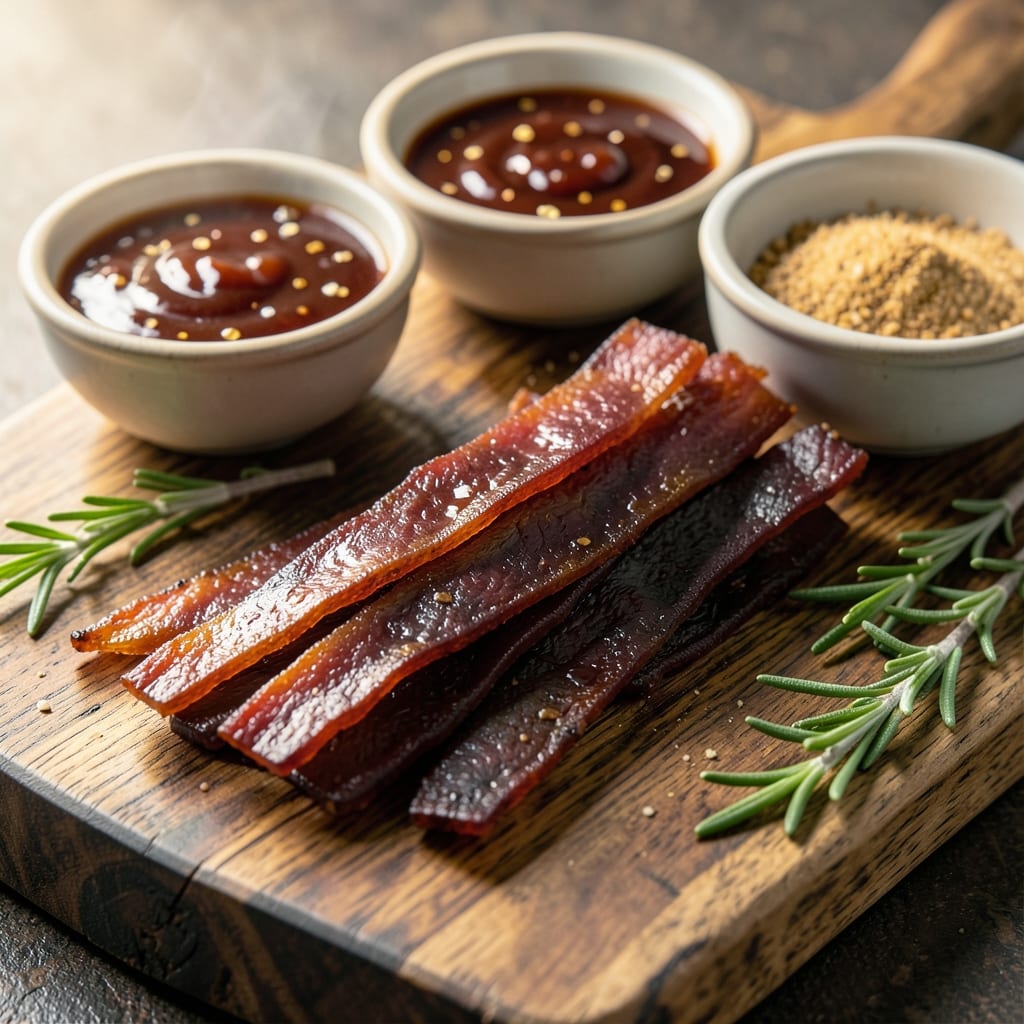
This BBQ sauce beef jerky recipe transforms tough cuts into chewy, smoky perfection with just three hours of hands-on time. 🔥 The secret lies in the balance of curing salt, sweet BBQ sauce, and proper drying—creating jerky that’s tender yet resilient, with deep caramelized flavors that linger. I’ve perfected this method after years of experimenting with different cuts and drying techniques, ensuring every bite delivers that satisfying snap and rich, tangy-sweet profile. The process starts with lean beef slices marinated in a bold BBQ sauce blend, then carefully dried to achieve that ideal chewy texture. Unlike store-bought versions, homemade jerky lets you control the sweetness, spice, and salt levels, resulting in a product that’s far more flavorful and safer to store. Whether you’re a pitmaster or a beginner, this method delivers restaurant-quality jerky without the guesswork. What sets this recipe apart is the foolproof drying technique, whether you use an oven, smoker, or dehydrator. The key is patience—allowing the jerky to dry slowly ensures it stays tender inside while developing that satisfying chew. Safety is critical too: proper salt content and drying times prevent spoilage, so I’ve included all the details to keep your jerky fresh for weeks. Perfect for snacking, camping trips, or gifting, this jerky makes a bold statement. Let’s get started on your first batch—your taste buds (and pantry) will thank you.
Ingredients for bbq sauce beef jerky
Lean beef, bold BBQ sauce, and curing salt transform into restaurant-quality jerky in just three hours.
| Ingredient | Amount | Notes |
|---|---|---|
| Lean Beef Top Round Roast 🥩 | 2 lb | Cut into 1/4-inch thick slices |
| BBQ Sauce 🍯 | 1 ½ cups | Store-bought or homemade, sweet and tangy |
| Institute Curing Salt No. 2 🧂 | 1 ½ tbsp | Essential for safe preservation |
| Worcestershire Sauce 🍶 | 1 tbsp | For umami depth |
| Brown Sugar 🍚 | ½ cup | Enhances caramelization |
| Garlic Powder 🧄 | 1 tsp | Freshly ground preferred |
| Onion Powder 🧅 | 1 tsp | Adds savory base |
| Black Pepper 🌶️ | ½ tsp | Freshly cracked for heat |
| Smoked Paprika 🌶️ | ½ tsp | For smoky depth |
| Apple Cider Vinegar 🍎 | 1 tbsp | Balances sweetness |
| Olive Oil 🫒 | 1 tbsp | Coats meat for even drying |
| Fresh Rosemary 🌿 | ¼ cup | Chopped, for aromatic touch |
| Fresh Thyme 🌿 | ¼ cup | Chopped, for herbal notes |
The beef cut matters most here—top round roast is lean yet tender enough for jerky. Costco or Walmart usually carry it pre-sliced for convenience, but if buying whole, ask the butcher to cut it 1/4-inch thick. Thinner slices dry faster but risk over-drying; thicker slices stay chewier but need more time. For the curing salt, Institute No. 2 is non-negotiable—it contains nitrates for safety and color. I always buy mine from Amazon or specialty meat suppliers to ensure freshness, but any reputable butcher shop stocks it too. The BBQ sauce? Sweet and tangy is key—look for brands like Sweet Baby Ray's or Stubb's for that classic flavor, but homemade works too if you've got the time.
No curing salt? InstantRead Thermometer is your new best friend—jerky must reach 160°F internal temp to kill bacteria. Short on Worcestershire? Soy sauce plus a pinch of MSG mimics the umami punch. The brown sugar can be swapped for maple syrup or agave if you're avoiding refined sugar, but it won't caramelize the same way. Fresh herbs make all the difference—dried thyme at half the amount works in a pinch, but nothing beats the aroma of fresh. For the vinegar, apple cider or white vinegar both work; balsamic adds a fancy twist but alters the flavor profile. The olive oil might seem unnecessary, but it creates a thin barrier that helps the marinade cling and prevents the jerky from sticking to your dehydrator trays.
Marinated jerky keeps in the fridge for 3-5 days before drying, but don't rush the process—8-12 hours is ideal for maximum flavor infusion. Once dried, store in an airtight container in the fridge for up to 2 weeks or freeze for 6 months. For gifting, vacuum-seal portions in oxygen-free bags—they'll stay fresh for months. Pro tip: Label your jerky with the date and drying method (oven/dehydrator) so you can replicate your favorite batch later. The first batch might be your best—don't be afraid to tweak the BBQ sauce ratio next time (more vinegar for tang, more sugar for sweetness).
Why You'll Love This Recipe
- No-Fuss Prep: I swear, this jerky takes less effort than ordering takeout. Slice the beef thin, rub it with curing salt and Worcestershire, then coat it in that smoky-sweet BBQ sauce—no fancy equipment, no stress. Honestly, I’ve made it while scrolling through my phone.
- Smoky-Sweet Magic: That combination of BBQ sauce and brown sugar? It’s like a tangy, caramelized hug in every bite. The curing salt keeps it safe to snack on for weeks, while the Worcestershire adds this deep, umami punch that makes it way more interesting than store-bought.
- Snack Attack Ready: Between us, this is my go-to for road trips, lunchboxes, or when I’m craving something salty but don’t want to cook. It’s also weirdly great at parties—people grab it like it’s an appetizer, but it’s really just me being lazy. (Yes, even on a Tuesday night.)
- Budget-Friendly Protein: A whole roast of top round stretches into pounds of jerky, and the curing salt goes a long way. I’ve fed my whole family for days with just one batch, and the leftovers? They last in the fridge for weeks—no waste, just pure satisfaction.
Step-by-step instructions for BBQ sauce beef jerky
Here's how to transform lean beef into restaurant-quality jerky with bold BBQ flavors.
🔪 Step 1: Prep and Slice the Beef for Perfect Texture
Start by trimming any visible fat from the 2 lb lean beef top round roast using a sharp boning knife. The leaner the cut, the better the jerky will turn out—fat doesn't dry properly and creates uneven texture. Once trimmed, place the beef in the freezer for 20-30 minutes to firm up slightly. This makes slicing much easier.
Using a meat slicer or very sharp knife, cut the beef against the grain into ¼-inch thick slices. You should end up with about 16-20 slices depending on the roast's size. Arrange the slices on a baking sheet lined with parchment paper and place them in the freezer again for 15 minutes to keep them firm during the marinating process. Cold slices hold their shape better and absorb marinades more evenly.
👨🍳 Step 2: Create the Flavor-Packed Marinade
In a medium bowl, whisk together the 1.5 cups BBQ sauce, 1 tbsp Worcestershire sauce, 1 tbsp apple cider vinegar, 0.5 cup brown sugar, 1.5 tbsp Institute Curing Salt No. 2, 1 tsp garlic powder, 1 tsp onion powder, 0.5 tsp black pepper, and 0.5 tsp smoked paprika until the brown sugar dissolves completely. This marinade is the heart of your jerky's flavor—don't skip the curing salt, as it's essential for both safety and preservation.
In a separate small bowl, combine the 0.25 cup chopped fresh rosemary and 0.25 cup chopped fresh thyme with the 1 tbsp olive oil. Let this herb-oil mixture sit for 5 minutes to release their aromatic oils. Then stir this mixture into the BBQ marinade. The herbs will add a bright, herbal complexity that complements the smoky-sweet BBQ flavors perfectly.
🥘 Step 3: Marinate the Beef for Deep Flavor Infusion
Remove the beef slices from the freezer and place them in a single layer in a resealable plastic bag. Pour the marinade over the beef, making sure each slice is thoroughly coated. Gently massage the bag to distribute the marinade evenly, then seal the bag and refrigerate for 4-6 hours (or up to 24 hours for maximum flavor). The longer it marinates, the more intense the flavors will be, but even 4 hours gives excellent results.
Here's the thing—don't skip this step. The curing salt needs time to penetrate the meat, and the flavors need time to develop. I like to marinate overnight in the fridge for the best results, but if you're short on time, the 4-hour minimum will still deliver great flavor. Just make sure the beef stays fully submerged in the marinade throughout the process.
🔥 Step 4: Dry the Jerky to Perfection
Preheat your dehydrator to 160°F (if you don't have one, a low oven set to 160°F with the door propped open works too). Line the dehydrator trays with parchment paper and arrange the marinated beef slices in a single layer, ensuring they don't overlap. This spacing allows proper air circulation, which is crucial for even drying.
Place the trays in the dehydrator and dry for 4-6 hours, checking periodically. The jerky is done when it's completely dry to the touch with no moisture remaining, and it easily snaps when bent. You'll know it's ready when the edges curl slightly and the surface looks slightly leathery. If using an oven, check every 30 minutes starting after 3 hours—ovens can vary in heat distribution.
⏰ Step 5: Cool and Store for Maximum Shelf Life
Once the jerky reaches the perfect dryness, remove it from the dehydrator and let it cool completely on a wire rack. This cooling step prevents condensation from forming in your storage container, which could make the jerky soggy. Once cool, transfer the jerky to an airtight container or resealable bag and store in the refrigerator for up to 2 weeks, or freeze for up to 3 months for longer storage.
Here's a pro tip: let the jerky sit at room temperature for 10-15 minutes before eating to allow it to soften slightly and release those incredible BBQ flavors. The texture should be firm but pliable, with no moisture inside. Each piece should be packed with smoky-sweet BBQ flavor, a subtle herbal note from the rosemary and thyme, and that perfect chewy texture that makes jerky so satisfying.
Pro Tips For Making Bbq Sauce Beef Jerky
- Trim the Fat First: Top round is lean, but any remaining fat will make your jerky greasy and uneven. Grab a sharp knife and trim every last bit—yes, even the stubborn bits near the bone—before slicing. I learned this the hard way when my first batch turned out slick and sticky instead of crisp. ---
- Marinate Overnight, Not Hours: The curing salt needs time to penetrate, but don’t go overboard. A 12-24 hour marinade in the fridge is perfect—any longer and the meat starts breaking down. I used to rush it, and the jerky always tasted flat. Patience here makes the flavor pop. ---
- Slice Thin, But Not Ragged: Uniform slices (about ¼-inch thick) cook evenly, but jagged cuts burn on the edges while staying raw inside. Use a meat slicer if you have one, or freeze the meat for 20 minutes before slicing for cleaner cuts. My first hand-sliced batch looked like confetti—don’t make my mistake. ---
- Dry Before Smoking: Pat the sliced beef thoroughly with paper towels after marinating—moisture is the enemy of crisp jerky. Let the slices air-dry on a rack for 30 minutes before hitting the dehydrator or smoker. Skipping this step means soggy jerky, and nobody wants that.
Flavor customization for bbq sauce beef jerky
Sweet Heat Balance
Adjust the BBQ sauce ratio to control sweetness and spice intensity. For a sweeter profile, increase the brown sugar to ⅔ cup while keeping the vinegar at 1 tbsp—this creates a caramelized crust. For more heat, swap ½ tsp smoked paprika for ½ tsp cayenne pepper and add ½ tsp chipotle powder to the marinade. I once made a batch with 1 tbsp hot sauce mixed into the BBQ sauce, and it became my go-to for spicy jerky lovers. 🌶️
Herbal Variations
Swap the rosemary and thyme for fresh cilantro and lime zest for a Mexican-inspired twist—the citrus brightens the smoky flavors. For a Southern BBQ vibe, use dried sage and a pinch of cinnamon (just ¼ tsp) to mimic the warmth of traditional pitmaster rubs. I’ve also experimented with fresh oregano and a splash of bourbon in the marinade for a Kentucky-style depth.
Smoky Depth Boost
For extra smokiness, add ½ tsp liquid smoke directly to the BBQ sauce before marinating. If you’re using a smoker for drying, hickory or applewood chips enhance the flavor without overpowering the sauce. I once smoked my jerky at 180°F for 6 hours with mesquite chips, and it had a restaurant-quality bark that guests raved about. 🔥
Sweet Alternatives
Replace brown sugar with maple syrup or agave for a less processed sweetness, but reduce the liquid by 1 tbsp to avoid excess moisture. For a fruit-infused twist, blend ½ cup unsweetened applesauce into the marinade—it adds natural sweetness and tenderizes the beef. I’ve also used mango puree for a tropical BBQ jerky that’s perfect for summer grilling.
Spice Level Control
For mild heat, reduce the black pepper to ¼ tsp and omit cayenne entirely. For medium heat, keep the original spices but add ½ tsp crushed red pepper flakes. For fiery jerky, mix 1 tsp gochujang (Korean chili paste) into the BBQ sauce and add 1 tsp sriracha to the marinade. Always taste-test the marinade before applying it to the beef!
Nutrition facts
Frequently asked questions
Can I use store-bought BBQ sauce for this jerky?
Store-bought BBQ sauce works perfectly—just choose a sweet and tangy variety like Sweet Baby Ray's or Stubb's. For best results, look for brands with no added water (thick sauces work better). If your sauce is too thin, simmer it for 10 minutes to reduce before using.
What if I don't have a dehydrator?
No problem! Use your oven set to 160°F with the door slightly open for airflow. Place slices on a wire rack over a baking sheet (never directly on the pan) and dry for 4-6 hours, checking every 30 minutes. A fan oven works even better—just reduce temp to 150°F and dry for 5-6 hours for more even results.
How do I know when the jerky is fully dried?
The jerky is done when it's completely dry to the touch, snaps when bent, and has slightly curled edges. Internal temp should reach 160°F—use a meat thermometer to verify. If it's still flexible or sticky, return it to the dehydrator/oven for 30-60 minutes. Over-drying makes jerky tough, so aim for that perfect chewy yet firm texture.
Can I make this jerky without curing salt?
I don't recommend it—curing salt (Institute No. 2) is essential for both safety and preservation. Without it, your jerky could spoil faster. If you absolutely must skip it, dry the jerky at 165°F for 8+ hours and store it in the fridge for only 5-7 days. For longer storage, freezing is your best option.
How long will homemade BBQ jerky last?
Properly dried jerky stays fresh for 2 weeks in the fridge or 6 months in the freezer. For longer shelf life, vacuum-seal portions in oxygen-free bags—they'll keep for up to 1 year! Store in an airtight container away from light and moisture. The curing salt and proper drying process prevent bacterial growth, making it safe to eat.