
Soups & Stews
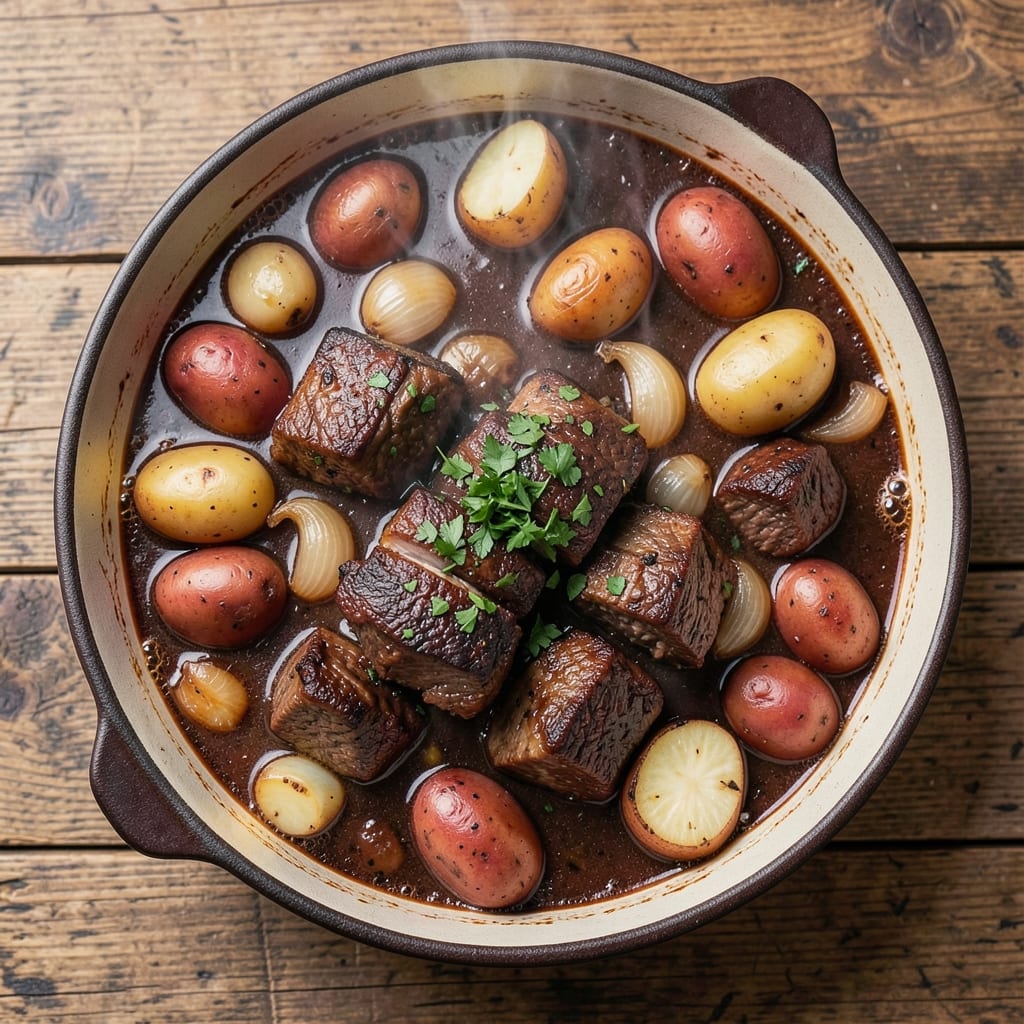
Bavarian beef stew transforms tough cuts into melt-in-your-mouth tenderness through slow braising and dark beer depth—this recipe delivers restaurant-quality results with traditional techniques. The caramelized onions build rich sweetness while the beer infuses subtle malt notes, creating layers of flavor that develop over hours. What starts as simple ingredients becomes a deeply satisfying meal that warms both body and soul.
This method begins with browning beef chuck in a Dutch oven to develop a flavorful crust before adding onions, garlic, and spices. The slow simmer—typically 2.5 to 3 hours—allows collagen to break down, transforming the meat into fork-tender perfection. Potatoes and carrots cook directly in the broth, absorbing all that rich, savory depth without needing additional water.
The result is a stew with a glossy, velvety sauce that clings to every bite, where each component—tender beef, caramelized onions, and hearty vegetables—works in perfect harmony. The aroma alone will have everyone gathering at the table, while the first spoonful delivers the comforting balance of sweet, savory, and slightly bitter beer notes that define Bavarian cuisine.
Serve with crusty bread to soak up every last drop of that flavorful broth, or pair it with a simple green salad for contrast. This is the kind of meal that tastes even better the next day, making it ideal for meal prep or feeding a crowd. Let's create this hearty stew that brings Bavarian tradition to your kitchen.
Ingredients for bavarian beef stew
These hearty ingredients transform tough beef into restaurant-worthy Bavarian comfort.
| Ingredient | Amount | Notes |
|---|---|---|
| Beef Chuck Roast 🥩 | 3 lb | Pre-cut into 1.5-inch cubes |
| Yellow Onions 🧅 | 3 whole | Thinly sliced for caramelizing |
| Garlic Cloves 🧄 | 6 cloves | Minced for depth of flavor |
| Dark Beer 🍺 | 2 cups | Dortmunder or Munich Dunkel preferred |
| Beef Broth 💧 | 2 cups | Homemade or high-quality store-bought |
| Russet Potatoes 🥔 | 2 lb | Cut into 1-inch chunks |
| Carrots 🥕 | 1 ½ lb | Whole or baby, halved lengthwise |
| Tomato Paste 🍅 | 2 tbsp | Squeeze tube or canned |
| All-Purpose Flour 🌾 | 2 tbsp | For thickening the sauce |
| Fresh Thyme 🌿 | 2 sprigs | Or 1 tsp dried thyme |
| Bay Leaves 🍃 | 2 whole | Remove before serving |
| Black Peppercorns 🌶️ | 1 tsp | Freshly cracked for heat |
| Salt 🧂 | 1 ½ tsp | Kosher or sea salt |
| Olive Oil 🫒 | 2 tbsp | For searing the beef |
| Fresh Parsley 🌿 | ¼ cup | Chopped for garnish |
The beef chuck is non-negotiable—its collagen-rich fat turns tender during slow cooking. Costco or local butchers often carry pre-cut cubes, but if buying a whole roast, ask for chuck with good marbling. The onions? Yellow or sweet onions caramelize best, but red onions add color if you prefer. For the beer, Dortmunder or Munich Dunkel delivers authentic malt depth, though any dark lager works. If you can't find fresh thyme, dried works at one-third the amount, but fresh sprigs infuse better flavor. The tomato paste? Squeeze tubes from Trader Joe's are perfect—no waste, and they keep for months.
No dark beer? Substitute with beef broth plus 1 tbsp balsamic vinegar for depth. Fresh thyme unavailable? Dried thyme or marjoram works, but reduce to 1 tsp. The carrots can be baby carrots if that's what's in your fridge, and potatoes? Russet or Yukon Gold both work—just avoid waxy red potatoes. For extra richness, add 1 tbsp Worcestershire sauce, though it contains anchovies so omit if strict about vegetarianism. The flour is just for thickening—don't skip it, but if you're gluten-free, use cornstarch instead.
This stew tastes even better the next day as flavors meld. Store in an airtight container in the fridge for 4-5 days, or freeze for 3 months. I always make a double batch—portion into containers for easy lunches. The broth reduces further when reheated, so add a splash of water or beer when warming. For serving, crusty bread or buttered egg noodles soak up every last drop of that velvety sauce.
Why You'll Love This Recipe
- Foolproof Simplicity: I swear by this stew because it’s the kind of recipe that forgives mistakes—chop onions roughly, brown the beef in one pan, then let the beer and broth do the heavy lifting. No fancy techniques, just layers of flavor that build while you’re busy with the rest of your day.
- Beer-Infused Magic: That dark beer isn’t just an ingredient—it’s the secret weapon. It deepens the sauce, balances the richness of the beef, and gives every bite a malty, slightly sweet complexity. Honestly, I’d argue it’s the star here, not the meat.
- Weeknight Workhorse: This stew thrives on repeat—make a big batch on Sunday, and you’ve got hearty lunches for days. It’s the kind of dish that tastes even better the next day, so leftovers aren’t a chore; they’re a gift. (Yes, even on a Tuesday night.)
- Budget-Friendly Luxury: A chuck roast stretches farther than you’d think, and the onions and garlic bulk it up without breaking the bank. I’ll be real: it’s the kind of meal that makes a $15 cut of beef feel like a splurge, but one that actually delivers on flavor.
Step-by-step instructions for Bavarian beef stew
Here's the method for rich, hearty Bavarian beef stew with deep caramelized flavors.
Sear the Beef Chuck Roast
Heat the 2 tablespoons olive oil in a large Dutch oven over medium-high heat until shimmering. Working in batches to avoid crowding, add the 3 pounds beef chuck roast cut into 1.5-inch cubes and sear for 3-4 minutes per side until deep golden brown and slightly crispy.
This initial searing builds flavor through the Maillard reaction. Don't rush this step—you want that caramelized crust on each piece. Once all beef is browned, transfer it to a plate and set aside. The residual browned bits will form the foundation of your stew's rich sauce.
Caramelize the Onions and Add Aromatics
In the same Dutch oven, reduce heat to medium-low and add the 3 whole yellow onions sliced thinly. Cook for 20-25 minutes, stirring occasionally, until they develop a deep amber color and become tender. This slow caramelization creates sweet depth that's essential to Bavarian stew.
When the onions are nearly caramelized, add the 6 cloves minced garlic and cook for 30 seconds until fragrant. Stir in the 2 tablespoons tomato paste and cook for another 1 minute to deepen the flavor. Sprinkle with the 1.5 teaspoons salt and 1 teaspoon cracked black peppercorns, then add the 2 sprigs fresh thyme and 2 whole bay leaves.
Deglaze and Build the Base
Pour in the 2 cups dark beer and scrape up all the browned bits from the bottom of the pot with a wooden spoon. This deglazing step captures all the flavor you've built. Let the mixture simmer for 5 minutes until the beer reduces by about half and the onions are fully tender.
Next, add the 2 cups beef broth and bring to a gentle simmer. Sprinkle the 2 tablespoons all-purpose flour over the mixture and stir vigorously for 1 minute to create a light roux that will help thicken the stew. Return the seared beef to the pot and add the 2 pounds russet potatoes cut into 1-inch chunks and 1.5 pounds carrots halved lengthwise.
Simmer to Perfect Tenderness
Bring the stew to a gentle boil, then reduce heat to low and cover partially. Let it simmer for 1 hour 15 minutes until the beef is fork-tender and the vegetables are cooked through. The stew should have a rich, velvety consistency with just enough liquid to coat the ingredients.
Here's the thing—don't lift the lid during cooking. Every time you peek, you lose heat and steam, which can make the stew take longer to reach perfect tenderness. If the stew reduces too much before the beef is tender, add ¼ cup hot water to maintain the right consistency.
Finish and Serve
When the beef is fork-tender and the vegetables are cooked through, remove the 2 whole bay leaves and discard them. Stir in the ¼ cup chopped fresh parsley and adjust the seasoning if needed. The stew should be rich, flavorful, and perfectly balanced.
Let the stew rest for 10 minutes before serving. This resting period allows the flavors to meld and the juices to redistribute. Serve hot with crusty bread to soak up every delicious bite of this hearty Bavarian classic.
Pro Tips For Making Bavarian Beef Stew
- SEAR THE ROAST HARD: Crank your stove to medium-high and let that beef chuck sit in the pan for 5-7 minutes per side until it’s deep brown—almost black in spots. I used to rush this, and the stew never had that rich, caramelized depth. (Yes, even if you’re impatient like me.)
- BLANCH THE ONIONS FIRST: Toss sliced onions in a dry pan for 3-4 minutes until they start to soften and release moisture—then add the beer. This stops them from turning mushy later. My grandmother swore by this, and she was right: the texture stays crisp enough to bite into.
- DON’T SKIP THE BROWNING BEER: Let that dark beer reduce by half before adding broth—it’ll concentrate the malt flavors and thicken the sauce naturally. I learned this the hard way after a watery, bland stew. (Your future self will thank you.)
- USE COLD BROTH LAST: Stir in the beef broth when the stew is nearly done—adding it cold at the end keeps the meat from overcooking while the sauce finishes. Sounds weird, but it works: tender beef, not rubbery.
Perfect pairings for this bavarian beef stew
Bavarian Beer Pairings
Nothing complements this rich stew like a Munich Dunkel or Dortmunder beer—both traditional choices that echo the stew's malty depth. I always reach for Weihenstephaner Hefeweissbier (a crisp wheat beer) to cut through the richness, or Paulaner Original for its balanced maltiness. Avoid heavy stouts or IPAs—they'll overpower the stew's delicate beer notes. 🍺
Crusty Bread Essentials
Serve with sourdough or rye bread—their dense texture soaks up the velvety sauce beautifully. I love Brioche for its buttery richness or German pumpernickel for a heartier bite. Toast the bread lightly before serving to enhance its crunch. For extra indulgence, brush slices with garlic butter before adding to the stew.
Light Salad Contrast
A simple arugula salad with lemon vinaigrette balances the stew's heartiness. Toss 4 cups baby arugula with 2 tbsp olive oil, 1 tbsp lemon juice, ½ tsp Dijon mustard, and a pinch of salt. Add ¼ cup shaved Parmesan for a salty contrast. The peppery greens refresh your palate between rich bites.
German Potato Sides
For a traditional touch, serve German-style potato dumplings (Kartoffelknödel) or buttered egg noodles. The dumplings absorb the stew's sauce like sponges, while noodles add a comforting texture. If you're short on time, roasted baby potatoes with rosemary work perfectly—toss 1 lb baby potatoes in 1 tbsp olive oil, 1 tsp rosemary, and ½ tsp salt, then roast at 400°F for 25 minutes.
Cheese Course Addition
End the meal with German-style cheese platter featuring Emmental, Gouda, and Limburger for a bold finish. Pair with dried apples and walnuts to complement the stew's flavors. The tangy cheeses cleanse your palate while keeping the Bavarian theme intact. 🧀
Dessert Pairings
For a sweet finish, try Apfelstrudel (apple strudel) or Schwarzwälder Kirschtorte (black forest cake). The warm spices in strudel echo the stew's thyme and caramelized onions, while the chocolate-cherry cake provides a decadent contrast. If you're keeping it simple, dark chocolate with sea salt is a foolproof choice—it enhances the stew's savory depth.
Nutrition facts
Frequently asked questions
Why does Bavarian beef stew need dark beer?
The dark beer adds essential malt depth and subtle bitterness that balances the rich beef and caramelized onions. Traditional recipes use Dortmunder or Munich Dunkel because their roasted malt notes complement the stew's savory profile. Without beer, you lose that authentic Bavarian character—though you can substitute with beef broth plus 1 tbsp balsamic vinegar in a pinch.
Can I use beef chuck roast substitutes?
Yes, but with adjustments. Beef short ribs work beautifully (simmer 3-4 hours instead of 2.5 hours), while chuck steak cuts cooking time to 1.5 hours. For budget options, stew meat (pre-cut chuck) saves prep time. Just avoid lean cuts like sirloin—they won't become tender enough during the shorter simmer.
How do I fix stew that's too thin or too thick?
For thin stew: Simmer uncovered for 10-15 minutes to reduce the liquid, or mix 1 tbsp cornstarch with 2 tbsp cold water, stir in, and simmer 2 minutes. For thick stew: Add ¼ cup hot beef broth at a time while stirring. Never add cold liquid—it shocks the stew and can make the sauce separate.
Can I make this stew in a slow cooker?
Brown the beef first in a skillet, then transfer everything to the slow cooker. Cook on low for 7-8 hours or high for 4-5 hours. The slow cooker's gentle heat works perfectly for tenderizing the beef. Just add the potatoes and carrots in the last 1 hour of cooking to prevent overcooking.
What if I don't have fresh thyme?
Use 1 teaspoon dried thyme instead, but reduce the cooking time by 15 minutes since dried herbs release flavor faster. Other substitutes: 1 tsp marjoram (similar flavor) or ½ tsp dried rosemary (more piney). For a different twist, add 1 bay leaf extra to compensate for missing fresh thyme.