
Main Courses
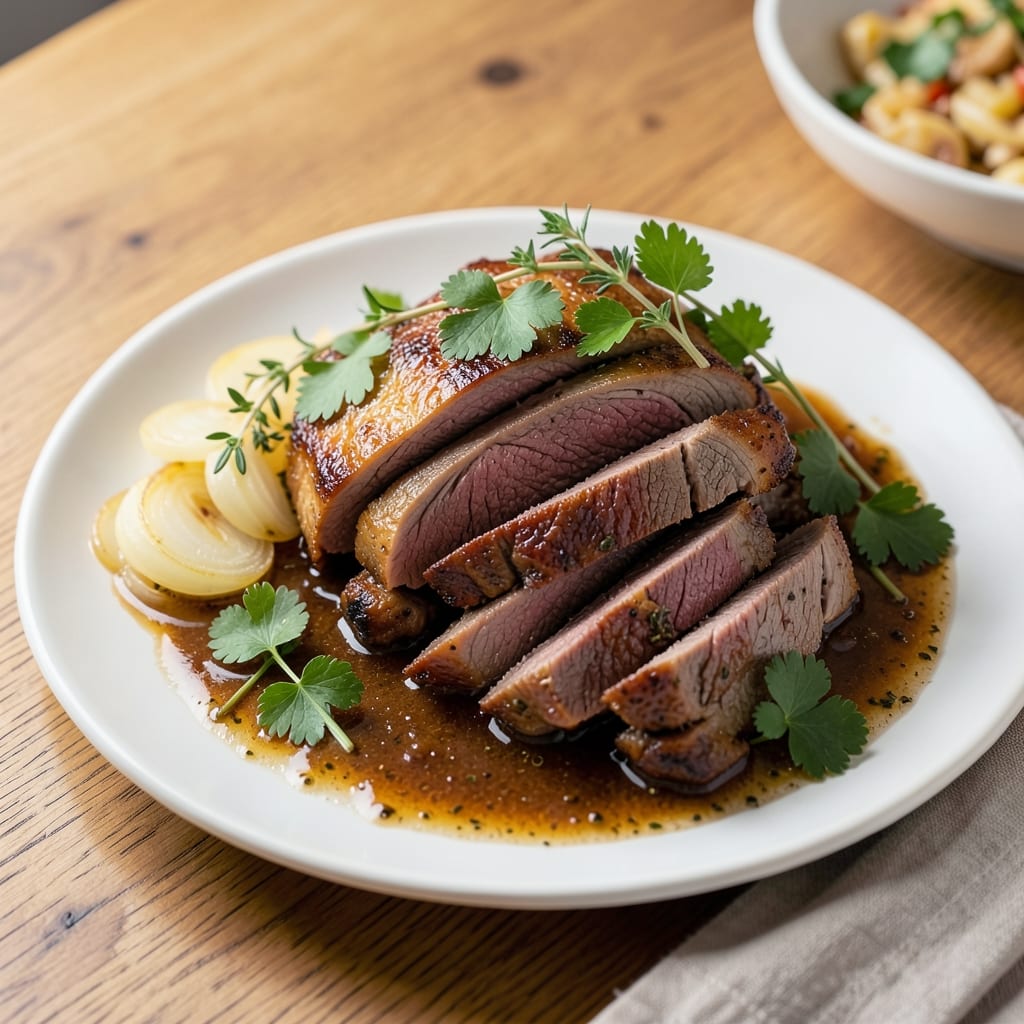
This Bavarian beef recipe transforms tough cuts into melt-in-your-mouth perfection through slow-simmered magic—where dark beer, caramelized onions, and aromatic herbs create a dish that feels like a Munich beer hall brought to your kitchen. The secret lies in patience: searing the beef first develops deep flavor, while hours of gentle simmering render it fork-tender. This isn't just comfort food; it's a celebration of German tradition with a technique that works in both a Dutch oven and an Instant Pot.
The beauty of this recipe is its balance of authenticity and approachability. Traditional methods like braising in beer and rendering onions until golden-brown build rich, complex flavors, while modern shortcuts (like using pre-made dumplings) keep it manageable for weeknight dinners. The result? A dish with crispy edges on the beef, a velvety gravy infused with malt and umami, and sides like semmelknödel or red cabbage that elevate every bite into a hearty, satisfying meal.
What makes this recipe truly special is how it transforms simple ingredients into something extraordinary. The beef becomes so tender it nearly falls apart, the onions caramelize into sweet, jammy perfection, and the beer-infused gravy ties everything together with a depth of flavor that's impossible to resist. It's the kind of dish that disappears quickly, leaving your table empty and your guests asking for seconds.
Whether you're serving this for a family dinner or a gathering with friends, the presentation matters just as much as the taste. Plate the beef with a generous spoonful of gravy, scatter fresh parsley for brightness, and serve with classic sides to complete the Bavarian experience. The aroma alone will have everyone gathering around the table, eager for their first bite.
Ingredients for bavarian beef
Dark lager, caramelized onions, and aromatic herbs transform tough beef into melt-in-your-mouth perfection.
| Ingredient | Amount | Notes |
|---|---|---|
| Chuck Roast 🥩 | 2 ½ lb | Well-marbled, cut into 1.5-inch cubes |
| Yellow Onions 🧅 | 3 whole | Thickly sliced, caramelized until jammy |
| Dark Lager Beer 🍺 | 2 cups | German-style, like Paulaner or Hofbräu |
| Beef Broth 🥄 | 1 ½ cups | Homemade or high-quality store-bought |
| Fresh Thyme 🌿 | 2 sprigs | Or 1 tsp dried thyme |
| Fresh Parsley 🌿 | ¼ cup | Chopped, for garnish and flavor |
| Garlic Cloves 🧄 | 4 cloves | Minced, for aromatic depth |
| Olive Oil 🫒 | 2 tbsp | Extra-virgin, for searing |
| Tomato Paste 🍅 | 2 tbsp | For umami richness |
| Bay Leaves 🌿 | 2 whole | For subtle herbal notes |
| All-Purpose Flour 🌾 | 2 tbsp | For thickening gravy |
| Salt 🧂 | 1 ½ tsp | Diamond Crystal preferred |
| Black Peppercorns 🌶️ | 1 tsp | Coarsely ground |
| Semmelknödel 🍞 | 4 whole | Store-bought or homemade |
The chuck roast is non-negotiable—its marbling ensures tender, flavorful meat. Look for cuts with visible fat between the muscles at Whole Foods or your local butcher; pre-cubed versions from Costco save time. For beer, German lagers like Paulaner or Hofbräu provide the ideal malt balance, though any dark lager (even Guinness in a pinch) works. Fresh thyme and parsley elevate the dish, but dried thyme at one-third the amount suffices if fresh isn't available. The onions are the secret weapon: caramelizing them until jammy takes patience, but the result is worth it—sweet, complex depth that anchors the dish.
No dark beer? Beef broth with 1 tbsp balsamic vinegar mimics the maltiness, though the flavor won’t be identical. Substitute red wine (1 cup) for a richer profile, but reduce the broth by 0.5 cup to balance acidity. For tomato paste, Trader Joe’s squeeze tubes are convenient and last months unopened. The semmelknödel can be swapped for potato dumplings or even mashed potatoes if needed—just ensure they’re sturdy enough to hold up to the gravy. If you’re short on time, pre-made dumplings from the freezer section work beautifully. The bay leaves and peppercorns are subtle but critical; toast the peppercorns in a dry pan for 30 seconds before adding to amplify their aroma.
This dish tastes even better the next day as flavors meld, so double the batch if feeding a crowd. Store leftovers in an airtight container in the fridge for up to 5 days or freeze for 3 months. For serving, reheat gently in the gravy—never microwave dry—to preserve texture. The gravy thickens as it cools, so add a splash of broth if it’s too stiff when reheating. Garnish with fresh parsley just before serving to brighten the rich, malty flavors. Presentation matters: plate the beef with a generous spoonful of gravy and dumplings, then scatter parsley like confetti for that Munich beer hall touch.
Why You'll Love This Recipe
- Beer-Braised Magic: That dark lager isn’t just a liquid—it deepens the beef into something dangerously tender with a malty, caramelized edge. Pair it with thyme, and you’ve got a flavor punch that feels fancy but costs next to nothing.
- Weeknight Workhorse: Between us, this is my go-to for game days, potlucks, or when I’m too tired to think. It feeds six but reheats like a dream, so I make double batches and freeze half. (Yes, even on a Tuesday night.)
- Budget-Friendly Feast: A chuck roast stretches across meals—sandwiches, tacos, or straight from the pot. I’ve turned leftovers into a hearty soup or shredded it for sloppy joes. Basically, it’s the ultimate way to stretch a few dollars without sacrificing taste.
Step-by-step instructions for Bavarian beef
Here's the method to achieve tender, beer-braised beef with caramelized onions and rich gravy.
Sear the Chuck Roast for Deep Flavor
Pat the 2.5 lb chuck roast dry with paper towels—this ensures maximum browning. Heat 2 tablespoons olive oil in a large Dutch oven over medium-high heat until shimmering. Add the beef and sear on all sides for 3-4 minutes per side until deeply browned and releasing easily from the pan. This step develops the Maillard reaction, creating complex flavors that will infuse the beer and onion mixture.
Remove the beef and set it aside. In the same Dutch oven, add 3 whole yellow onions sliced into thick rounds. Cook them over medium heat for 10-12 minutes, stirring occasionally, until they begin to soften and caramelize at the edges. This slow process transforms the onions into sweet, jammy pieces that form the base of your dish.
Build the Beer and Broth Base
Lower the heat to medium-low and add 2 tablespoons tomato paste, stirring to coat the onions. Cook for 1 minute until the paste darkens slightly. Pour in 2 cups dark lager beer and scrape up any browned bits from the bottom of the pot—these contain concentrated flavor. Add 1.5 cups beef broth, 2 sprigs fresh thyme, 2 whole bay leaves, 4 cloves minced garlic, 1.5 teaspoons salt, and 1 teaspoon black peppercorns. Stir well to combine.
Return the beef to the pot, submerging it completely in the liquid. Bring to a gentle simmer, then reduce heat to low so the liquid barely bubbles. Cover partially and let it cook for 2 hours, maintaining this gentle simmer. The beef should become fork-tender, and the liquid should reduce slightly, creating a rich, flavorful base.
Thicken the Gravy and Finish the Beef
After 2 hours, remove the beef and strain the cooking liquid through a fine-mesh sieve into a clean pot. Discard the solids. Return the strained liquid to the Dutch oven and stir in 2 tablespoons all-purpose flour to thicken the gravy. Cook over medium heat for 3-4 minutes, stirring constantly, until the gravy reaches your desired consistency—it should coat the back of a spoon but remain smooth.
Return the beef to the gravy and simmer for an additional 10 minutes to allow the flavors to meld. Meanwhile, prepare the 4 whole semmelknödel according to package instructions or your homemade recipe. They should be cooked al dente and ready to serve alongside the beef.
Serve with Caramelized Onions and Fresh Parsley
Transfer the beef to a warm serving platter, spooning the gravy generously over the top. Garnish with 0.25 cup chopped fresh parsley for brightness and color. Serve immediately with the semmelknödel on the side, allowing guests to spoon the rich gravy over their portions. The combination of tender beef, sweet caramelized onions, and malty beer gravy creates a hearty, satisfying Bavarian masterpiece.
For best results, let the beef rest for 5 minutes before serving to allow the juices to redistribute. This ensures each bite is moist and flavorful, with the perfect balance of beer, onion, and meaty richness.
Pro Tips For Making Bavarian Beef
- SEAR THE ROAST LONG: Chuck roast won’t brown fast—give it 10-12 minutes on high heat until it’s deep golden, not just pink. I used to rush this and ended up with bland, pale beef that tasted undercooked, even when it hit the right temp.
- SWEAT ONIONS LOW AND SLOW: Yellow onions for this dish need to caramelize, but don’t walk away—keep them on medium-low for 20+ minutes, stirring occasionally. After burning three batches, I finally realized: patience here means the beer sauce won’t taste like raw onion.
- USE FULL-FLAVORED BEER: Skip the light lager—this dish needs a dark, malty beer (like a bock or doppelbock) for depth. I was skeptical until I tried it: the richness balances the acidity and makes the sauce taste like it simmered for hours, not 2.
- SKIP THE BOILING BROTH: Add beef broth after the beer reduces and onions soften—boiling it first makes the sauce watery. My grandmother swore by this, and she was right: the broth should melt into the beer, not dilute it into a pale, thin liquid.
Storing and reheating this bavarian beef
Fridge Storage
Let your Bavarian beef cool completely before storing—this prevents condensation that can make dumplings soggy. Transfer the beef, gravy, and dumplings to airtight glass containers (I love Pyrex with snap-on lids) and refrigerate for up to 5 days. The flavors actually deepen overnight as the beer and spices meld together. Store the dumplings separately if you prefer them firmer when reheating. ❄️
Freezer Prep
For long-term storage, freeze portions in quart-sized freezer bags with 1-inch headspace to prevent expansion cracks. I recommend freezing the beef and gravy separately from the dumplings—they reheat better this way. Label with the date and freeze for up to 3 months. The beef stays tender when reheated properly, though texture may change slightly after freezing. 🥶
Reheating Gravy
Thaw overnight in the fridge before reheating. Pour the gravy into a saucepan and warm over medium-low heat for 8-10 minutes, stirring occasionally. If it thickens too much, add 1-2 tablespoons beef broth to restore creaminess. Never boil—just maintain a gentle simmer to preserve the malty beer flavors. 🔥
Reheating Beef
Once the gravy is warm, add the beef to the pan and heat through for 5-7 minutes on low. For extra tenderness, cover the pan for the last 3 minutes to steam the beef gently. The internal temperature should reach 165°F—use a meat thermometer to check. Keep the beef warm in the gravy until serving. 🌡️
Dumpling Revival
Reheat semmelknödel separately in a skillet with 1 tablespoon butter over medium heat for 4-5 minutes until golden and crispy. For microwave reheating, cover with a damp paper towel and heat in 30-second intervals until warmed through. Avoid soggy dumplings by never microwaving them dry. 🍞
Serving Warm
Plate the beef with a generous spoonful of gravy and dumplings on the side. Garnish with fresh parsley just before serving to brighten the rich flavors. The contrast between the crispy dumplings, tender beef, and velvety gravy makes every bite satisfying. Serve with a German lager to complete the Bavarian experience. 🍺
Nutrition facts
Frequently asked questions about Bavarian beef
Can I use a different cut of beef instead of chuck roast?
Yes, but chuck roast is ideal for its marbling and tenderness. You could substitute with brisket (cut into chunks) or round roast, but these require slightly longer cooking. Avoid lean cuts like sirloin—they won't become as tender. For best results, choose a cut with at least 1/4-inch fat cap to keep the beef moist during braising.
What if I don't have dark lager beer?
No problem! Use 1 cup beef broth + 1 tablespoon balsamic vinegar for a similar maltiness, or substitute with red wine (reduce broth by 0.5 cup). For a lighter flavor, try stout beer (like Guinness) or even chicken broth with 1 teaspoon soy sauce. The key is balancing liquid volume while maintaining depth of flavor.
How do I make the onions extra sweet and caramelized?
Patience is key! Cook the onions over medium-low heat for 20-25 minutes, stirring occasionally, until they're deep golden brown and jammy. Add a splash of beef broth (2 tbsp) halfway through to steam them gently. For extra sweetness, remove the outer layer of each onion first—it's more bitter. The longer they cook, the more concentrated their sugar becomes.
Can I make this in an Instant Pot?
Sear the beef in a skillet first, then transfer to the Instant Pot with all ingredients except flour. Cook on high pressure for 30 minutes, then quick-release. Strain the liquid, thicken with flour, and return the beef to the pot. For best texture, use the sauté function to caramelize onions separately before adding them to the pot.
Why does my gravy turn out too thin?
This usually happens if you didn't reduce the liquid enough during cooking or if the flour wasn't cooked properly. For thicker gravy, simmer the strained liquid uncovered for 5-10 extra minutes before adding flour. Cook the flour mixture longer (5 minutes instead of 3) until it reaches a paste-like consistency. If it's still too thin, mix 1 tbsp cornstarch with 1 tbsp cold water and stir it in at the end.