Main Courses
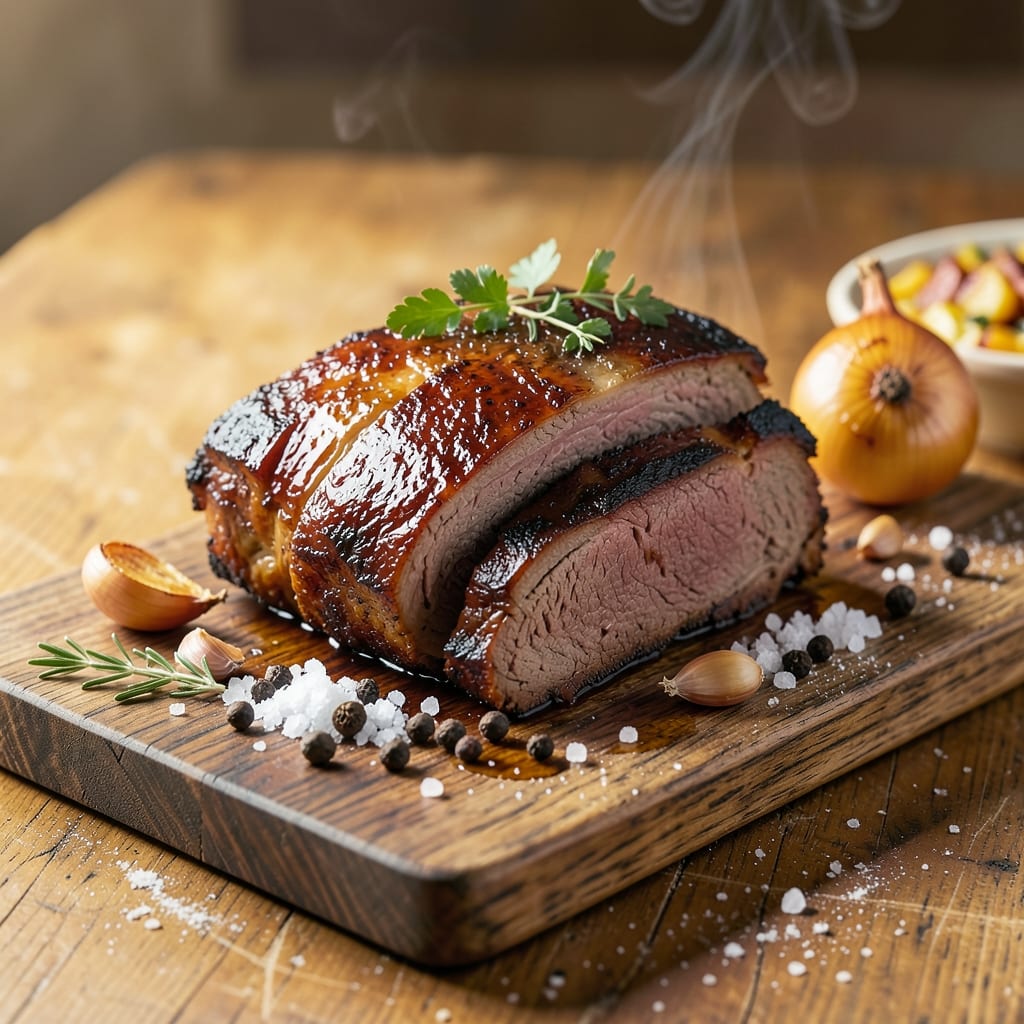
A Texas-style barbecue beef brisket recipe delivers melt-in-your-mouth tenderness with a deep, smoky crust that’s impossible to resist. 🔥 After years of experimenting with different rubs and smoking techniques, I’ve perfected this method that balances tradition with approachability—no fancy equipment required, just patience and the right wood.
The secret lies in the slow cook: a post-oak wood smoke that infuses the meat with rich, earthy notes while the dry rub creates that signature bark. Unlike quick grilling methods, this recipe demands time—12 to 16 hours—but the payoff is brisket so tender it practically falls apart. The key? A salt brine to keep it juicy and a two-stage smoking process to ensure even heat distribution.
By the time you pull it from the smoker, you’ll have a brisket with a crusty, caramelized exterior and buttery, stringy meat that’s worth every minute. The aroma alone will have your guests gathering, but the first bite—juicy, smoky, and packed with flavor—will make it unforgettable.
Serve it sliced against the grain with classic Texas sides like white bread, pickles, and coleslaw. This isn’t just a recipe; it’s a celebration of slow cooking done right. Let’s get started on your next smoked masterpiece.
Ingredients for barbecue beef brisket recipe texas style
Sixteen ingredients for Texas-style brisket that’ll have your neighbors begging for the recipe.
| Ingredient | Amount | Notes |
|---|---|---|
| Beef Brisket 🥩 | 8 lb | Packer cut, fat cap intact |
| Yellow Onion 🧅 | 1 whole | Large, sliced into wedges |
| Garlic Cloves 🧄 | 8 cloves | Peeled, smashed for rub |
| Post-Oak Wood Chips 🌳 | 4 cups | Unsoaked, chunky preferred |
| Coarse Kosher Salt 🧂 | 1 cup | Diamond Crystal preferred |
| Black Peppercorns 🌶️ | 2 tbsp | Freshly cracked, coarse grind |
| Smoked Paprika 🌶️ | 2 tbsp | High-quality, not sweet |
| Ground Cumin 🌿 | 1 tbsp | Toasted for depth |
| Granulated Garlic 🧄 | 1 tbsp | For even rub distribution |
| Brown Sugar 🍯 | 2 tbsp | Light or dark, packed |
| Apple Cider Vinegar 🍎 | ½ cup | For brine acidity |
| Yellow Mustard 🍯 | 2 tbsp | For bark development |
| Beef Tallow or Vegetable Oil 🫒 | ¼ cup | For fat rendering |
| Beef Stock 🍲 | 1 cup | Homemade preferred |
| Fresh Thyme Sprigs 🌿 | 4 whole | For smoker aroma |
The brisket cut is everything—look for a packer cut with a thick fat cap (at least 1/4-inch) to protect the meat during smoking. Local butchers or Costco usually have the best selection, but if you're buying online, Snake River Farms ships packer cuts nationwide. The fat cap renders down to baste the meat, so don't trim it. For the wood chips, Traeger or La Boîte bags work great, but if you're feeling adventurous, forage your own post oak—just make sure it's completely dry. The kosher salt should be Diamond Crystal (it's coarser and dissolves better), and if you can't find it, Morton Kosher is a decent backup. Toast your cumin seeds in a dry pan for 30 seconds before grinding to bring out their nutty flavor—trust me on this.
No post-oak wood chips? Hickory or pecan will work in a pinch, though they're more assertive in flavor. Running out of beef tallow? Vegetable shortening or bacon fat does the job (just don't tell the purists). The beef stock can be store-bought, but if you're making it from scratch, bone broth from roasted beef bones adds incredible depth. For the rub, if you don't have smoked paprika, mix 1 tbsp regular paprika with 1 tsp liquid smoke—it's not identical, but it gets you close. The apple cider vinegar is non-negotiable for the brine; white vinegar won't cut it. And if you're short on time, pre-mix your dry rub in a jar and store it for up to 6 months—it's a game-changer for last-minute smoking sessions.
This brisket is a two-day project, so plan ahead. The brine can sit in the fridge for up to 12 hours, but don't exceed that or the meat gets mushy. After smoking, let it rest for at least 1 hour before slicing—this is where the magic happens as the juices redistribute. Store leftovers in the fridge for 5 days or freeze for 3 months. I always slice mine against the grain into 1/4-inch thick slices and serve with pickles and white bread—the tang cuts through the richness perfectly. The bark? Save those scraps—they make killer sandwiches the next day.
Why You'll Love This Recipe
- Smoke in Minutes: I swear, the post-oak wood chips turn my backyard into a smoky pit with zero fuss—just toss them on the grill, let them catch, and you’ve got that signature Texas aroma in under 10 minutes. No fancy setup, just good old-fashioned fire and patience.
- That Crispy-Soft Magic: Between us, the coarse kosher salt crust on the outside and the tender, melt-in-your-mouth center? It’s the kind of texture that makes people pause mid-bite. The onions and garlic caramelize into a sticky, sweet glaze that ties everything together—no fancy rubs needed.
- Tailgate to Tuesday: Serve it sliced thick on buns for a crowd, shred it into tacos for a lazy night, or pile it on toast with pickles for a hangover cure. Honestly, I’ve fed football fans, date nights, and my kid’s soccer team with the same brisket—it’s the ultimate crowd-pleaser, no matter the occasion.
Step-by-step instructions for Texas-style smoked brisket
Here's how to nail that legendary Texas-style brisket with tender meat and a deep mahogany bark.
👨🍳 Step 1: Mix the Dry Rub and Prep the Brisket
In a large bowl, combine the 1 cup coarse kosher salt, 2 tbsp black peppercorns, 2 tbsp smoked paprika, 1 tbsp ground cumin, 1 tbsp granulated garlic, 2 tbsp brown sugar, and 4 whole fresh thyme sprigs. Crush the peppercorns and thyme sprigs with your hands to release their oils and aromatics. Mix everything thoroughly until the spices are evenly distributed and the salt crystals glisten.
Pat the 8 lb beef brisket completely dry with paper towels—this is non-negotiable for crispy bark. I press down firmly on all sides, especially the fat cap, to remove any moisture. Then generously coat the brisket with the rub, pressing it into every nook and crevice. Don't be shy—you want that flavor to penetrate deep. Wrap the brisket tightly in plastic wrap and refrigerate for at least 4 hours (overnight is even better). This dry-brining step ensures maximum tenderness and flavor infusion.
🔥 Step 2: Prepare the Smoker and Cook to the Stall
Soak the 4 cups post-oak wood chips in water for 30 minutes before using, then drain well. Set your smoker to 225°F using the soaked wood chips—post oak gives that classic Texas flavor profile. Place the brisket fat-side up on the smoker grates and close the lid. Here's the thing—resist the urge to peek. Every time you open the lid, you lose 15-20 minutes of cook time and disrupt the delicate smoke circulation.
Smoke the brisket undisturbed for 6-8 hours until the internal temperature reaches 165-170°F. You'll hit "the stall" around this point—the temperature plateaus as moisture evaporates. This is normal and expected. The bark should develop a deep mahogany color, and you'll see smoke rings forming just beneath the surface. If the bark isn't dark enough after 6 hours, you can increase the heat to 250°F for the last hour to accelerate browning.
🥘 Step 3: Wrap and Push Through to Probe-Tender
When the brisket hits the stall, it's time for the "Texas crutch"—wrap it tightly in butcher paper (not foil). I use about 2 layers of paper, sealing all edges completely. This technique maintains the bark while allowing moisture to escape gradually. Return the brisket to the smoker and continue cooking until the internal temperature reaches 203-205°F and a probe slides in like butter.
This final stage typically takes another 4-6 hours, but don't rush it. The meat should be fork-tender with no resistance. If the bark starts to look too dark, you can move the brisket to a cooler part of the smoker or reduce the heat slightly. The goal is that perfect balance of tender meat and crispy exterior.
⏰ Step 4: Rest and Slice for Maximum Juiciness
Remove the brisket from the smoker and transfer it to a cutting board. Tent loosely with foil and let it rest for at least 1 hour (2 hours is ideal). This resting period allows the juices to redistribute throughout the meat, ensuring every slice is moist and flavorful. During this time, the internal temperature will rise another 5-10°F—this is normal and desirable.
Once rested, locate the grain direction by looking for the muscle fibers. Using a sharp boning knife, slice the brisket against the grain into ¼-inch thick slices. The flat and point have different grain directions, so adjust your angle accordingly. Serve immediately while still warm, and watch as your guests marvel at the perfect balance of tender meat and that prized Texas bark.
Pro Tips For Making Barbecue Beef Brisket Recipe Texas Style
- SMOKE IT HOT THEN LOW: Start with the smoker at 225°F—yes, low and slow is king, but I learned the hard way that jumping straight to that temp means hours of wasted time waiting for the internal to climb. Crank it to 300°F for the first 30 minutes to get the bark locked in fast, then dial it back. The crust forms in minutes, not hours, and you’ll save yourself from staring at a thermometer for eternity.
- SALT THE BRISKET NIGHT BEFORE: This isn’t just "seasoning early"—it’s about breaking down those tough muscle fibers. Slather the brisket with 1 tablespoon of coarse kosher salt per pound, wrap it in plastic, and let it sit in the fridge overnight. I used to skip this, and my brisket always ended up chewy, no matter how long I smoked it. The salt does half the work before you even light the fire.
- DON’T CROWD THE SMOKER: I’ve watched people pile briskets in like sardines, thinking more meat = faster cook. Wrong. Leave at least 1 inch of space between cuts, and if you’re using a water pan, keep it small—just enough to add moisture without drowning the heat. Too much crowding means soggy bark and uneven cooking. Your brisket deserves room to breathe, just like you do after a long day.
- CHOP THE ONIONS BIG: No, I’m not talking dice—think thick slices, ¼-inch or larger. They’ll caramelize slower, adding sweetness and depth without burning. I used to chop them fine, and they’d turn to ash before the brisket was done. Toss them on the smoker in the last 2 hours, and let them mingle with the garlic cloves (peeled, but left whole) for that smoky, sweet crunch. Lazy? Sure. Effective? Absolutely.
Perfect pairings for this barbecue beef brisket recipe texas style
Classic Texas Sides
No Texas brisket is complete without white bread and pickles—the tangy crunch cuts through the richness perfectly. I like to serve thick-cut Texas toast (toasted in beef tallow) alongside dill pickles from the jar. For a heartier option, add creamy potato salad with a touch of mustard and paprika to tie into the smoky flavors. 🥖
Smoky Vegetable Sides
Roasted green beans with smoked paprika and garlic> mirror the brisket's seasoning. Toss 1 lb fresh green beans with 1 tbsp olive oil, 1 tsp smoked paprika, and ½ tsp cracked black pepper, then roast at 425°F for 15 minutes. For a smoky twist on coleslaw, shred 4 cups cabbage, toss with a dressing of ½ cup buttermilk, 2 tbsp apple cider vinegar, and 1 tbsp honey. The acidity balances the brisket beautifully.
Drink Pairings
A cold Texas-style beer like Shiner Bock or Lone Star complements the smoky flavors without overpowering. For non-alcoholic options, sweet tea with a splash of lemon is a Southern staple. If you prefer wine, a bold Zinfandel or Syrah stands up to the richness. I also love serving iced hibiscus tea—its tartness cleanses the palate between bites. 🍺
Sauce Options
Skip the sauce—Texas brisket is meant to shine on its own—but if you want to add moisture, a thin drizzle of beef broth or apple cider vinegar works. For a quick sauce, simmer ½ cup beef broth, 1 tbsp brown sugar, and 1 tsp smoked paprika for 5 minutes. A dollop of sour cream or whipped cream cheese adds a creamy contrast to the smoky meat. 🥄
Make-Ahead Sides
Prep sides the day before to streamline your cookout. The coleslaw and potato salad both keep well in the fridge for 2 days. For the pickles, simply slice 2 cucumbers, mix with 1 cup vinegar, 1 tbsp sugar, and 1 tsp salt, then refrigerate overnight. Toast the Texas toast fresh—it’s best served warm and crispy. This way, you can focus on the brisket without stressing about sides. ⏰
Nutrition facts
Frequently asked questions
What's the difference between Texas-style brisket and other barbecue briskets?
Texas-style brisket is all about the post-oak wood smoke and that signature crusty bark. Unlike Eastern NC's vinegar-based sauces or Kansas City's sweet glaze, Texas brisket is served dry with just a sprinkle of coarse salt. The key techniques are the two-stage cook (smoke to stall, then wrap) and slicing against the grain for that signature stringy texture.
Can I use a regular oven instead of a smoker?
Yes, but you'll need to improvise! Preheat your oven to 225°F and place a water pan on the bottom rack for moisture. Use a meat thermometer to monitor temperature, and add soaked wood chips (hickory works) to a foil packet on the grill rack. Rotate the brisket every 2 hours for even cooking. Expect 14-18 hours total time. The bark won't be as dark, but the meat will still be tender.
Why does my brisket turn out tough?
Most tough brisket comes from one of three mistakes: not enough time (it needs to reach 203°F), not slicing against the grain, or skipping the rest. The stall is normal—don't rush it! Also, if your smoker temperature fluctuates above 250°F, the meat can dry out. Keep it steady at 225°F until the stall, then wrap and cook slowly to 203°F.
How do I store leftover Texas-style brisket?
Store leftovers in an airtight container in the fridge for up to 5 days or freeze for 3 months. For best texture, reheat in a 300°F oven until warmed through (about 30 minutes). To revive the bark, broil for 2-3 minutes at the end. Never microwave—it turns the meat rubbery. The best use for leftovers? Brisket sandwiches with pickles and white bread!
What's the deal with the 'Texas crutch' wrapping?
The \"Texas crutch\" refers to wrapping the brisket in butcher paper (not foil) when it hits the stall. This keeps the bark while allowing moisture to escape gradually. The paper lets heat and smoke penetrate while preventing the bark from becoming soggy. Start wrapping when the internal temp hits 165-170°F, then cook to 203°F. Pro tip: Spritz with apple cider vinegar before wrapping for extra tenderness.