
Main Courses
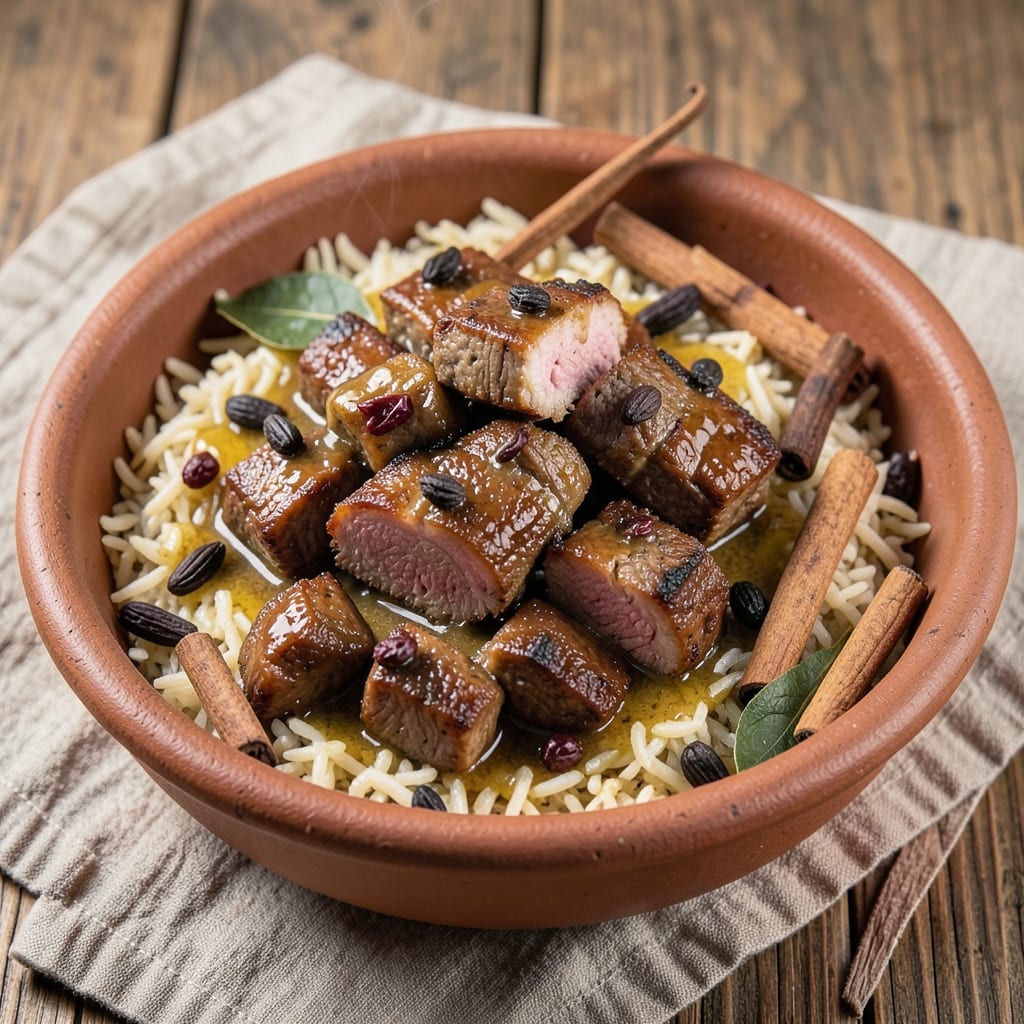
This Bangladeshi beef tehari recipe delivers the rich, aromatic essence of home-cooked Bangladeshi cuisine in one deeply satisfying dish. 🔥 The secret lies in slow-simmering tender beef with a carefully balanced blend of whole spices—cardamom, cinnamon, and cloves—that infuse the meat with complex, warming flavors over hours of gentle cooking. What sets this apart is the traditional method of cooking the beef with rice, creating a fragrant, one-pot meal where each ingredient enhances the other.
The recipe begins with layering whole spices in hot oil to release their essential aromatics before adding the beef, which cooks until fork-tender in a fragrant broth. The rice is then added and simmered until perfectly cooked, absorbing the rich flavors of the beef and spices. This method ensures every bite is infused with the deep, savory essence that makes tehari so beloved in Bangladesh.
What you'll achieve is a dish that's both hearty and elegant—a perfect centerpiece for family gatherings or special occasions. The beef remains tender and flavorful, while the rice absorbs the aromatic broth, creating a harmonious balance of textures and tastes. Serve it with a cooling raita or fresh vegetables to complement the richness.
This recipe captures the soul of Bangladeshi home cooking, where patience and attention to detail transform simple ingredients into something extraordinary. The result is a dish that's deeply comforting, richly spiced, and impossible to resist. Let's get started on creating this classic.
Ingredients for bangladeshi beef tehari
Whole spices, tender beef, and fragrant rice create this deeply satisfying Bangladeshi classic.
| Ingredient | Amount | Notes |
|---|---|---|
| Beef Chuck Roast 🥩 | 2 lb | Bone-in preferred for flavor |
| Basmati Rice 🍚 | 1 ½ cups | Uncooked, long-grain preferred |
| Whole Black Cardamom Pods 🌿 | 6 pieces | Lightly crushed for aroma |
| Cinnamon Sticks 🌿 | 2 pieces | 2-inch lengths for infusion |
| Whole Cloves 🌿 | 6 pieces | Lightly pounded for release |
| Bay Leaves 🌿 | 2 whole | Dried, standard grocery store |
| Ginger Root 🧅 | 1 inch | Fresh, peeled and sliced |
| Garlic Cloves 🧄 | 6 cloves | Peeled, lightly crushed |
| Medium Tomatoes 🍅 | 2 whole | Ripe, diced for consistency |
| Yellow Onion 🧅 | 1 whole | Medium, chopped finely |
| Ghee or Vegetable Oil 🫒 | ½ cup | High smoke point preferred |
| Water 💧 | 4 cups | Room temperature preferred |
| Salt 🧂 | 1 ½ tsp | Diamond Crystal preferred |
| Ground Black Pepper 🌶️ | ½ tsp | Freshly ground preferred |
| Fresh Coriander Leaves 🌿 | ¼ cup | Chopped for garnish |
The spices are the soul of this dish. Whole cardamom pods, cinnamon sticks, and cloves from Penzeys Spices or your local Indian market deliver the most authentic flavor—avoid pre-ground powders. The beef should be chuck roast with good marbling; Costco or Whole Foods carry excellent cuts. Fresh ginger and garlic are non-negotiable here—their brightness cuts through the richness. For tomatoes, San Marzano canned works in a pinch, but fresh diced tomatoes provide superior texture and depth. The basmati rice should be long-grain and uncooked; Lotus Foods or Tilda brands are excellent choices.
No whole cardamom? Substitute with 1 teaspoon ground cardamom, but the flavor won't be as layered. Running short on cloves? Allspice berries at half the amount offer a similar warmth. The ghee can be replaced with vegetable oil or butter, though ghee's nutty depth is ideal. For tomatoes, tomato paste at half the amount works if you're in a hurry. The yellow onion should be sweet and medium-sized—avoid red onions, which can make the dish bitter. If you're using pre-minced garlic, rinse it first to remove excess moisture that can make the dish watery.
Store the cooked tehari in an airtight container in the refrigerator for up to 4 days, though it tastes even better the next day as flavors meld. For longer storage, freeze portions for up to 3 months. The rice-to-beef ratio is precise—don't adjust it unless serving more people, as the rice absorbs the rich broth. Garnish with fresh coriander just before serving to maintain its vibrant color and bright flavor. This dish reheats beautifully—simmer gently on low heat with a splash of water to restore moisture.
Why You'll Love This Recipe
- One-Pot Magic: I swear by this recipe because it’s one pot—no chopping, no fuss. Just brown the beef, toss in the spices (cardamom, cinnamon, cloves), add water, and let it simmer. The rice cooks right in the broth, so you’re left with tender beef and fragrant grains without washing a single extra dish.
- Spice Bomb Delight: That slow-cooked beef? It melts in your mouth, but the real star is the aromatic broth. The whole spices—cardamom, cinnamon, cloves—infuse the meat with warmth, while the basmati rice soaks up every last bit of flavor. It’s rich, but not heavy, and somehow always hits the spot.
- Weeknight Hero: Between us, this is my go-to when I need to feed the family without stress. The beef stays juicy even reheated, so it’s perfect for meal prep—just portion it out and warm it up. Honestly, I’ve served it at dinner parties, potlucks, and lazy Sundays, and no one’s ever questioned why it’s on the menu.
- Budget-Friendly Feast: A chuck roast stretches further than you’d think, and the spices add depth without costing a fortune. I’ll be real: I’ve made this for under $10 per serving, and it still feels like a restaurant dish. The leftovers? Even better the next day—if there are any, because it disappears fast.
Step-by-step instructions for Bangladeshi beef tehari
Master this slow-simmered classic with rich spice layers and tender beef every time.
🍳 Step 1: Sear and Build the Spice Base
Heat the 0.5 cup ghee or vegetable oil in a heavy-bottomed pot over medium-high heat until shimmering. Add the 2 lb beef chuck roast, bone-side down, and sear for 8-10 minutes until deeply browned on all sides. This step develops the deep, caramelized flavors that define tehari.
Remove the beef and set aside. In the same pot, add the 1 whole yellow onion (chopped finely) and cook for 5 minutes until softened and golden. Add the 1 inch ginger root (sliced) and 6 cloves garlic cloves (lightly crushed), cooking for 2 minutes until fragrant. Here's where the magic happens: add the 6 pieces whole black cardamom pods, 2 pieces cinnamon sticks, 6 pieces whole cloves, and 2 whole bay leaves, stirring for 30 seconds to release their aromatic oils.
🥘 Step 2: Simmer the Spiced Beef and Tomatoes
Return the beef to the pot along with the 2 whole medium tomatoes (diced) and 4 cups water. Bring to a gentle boil, then reduce heat to low and cover partially. Simmer for 2 hours, skimming any foam that rises to the surface. This slow cooking breaks down the connective tissue, creating melt-in-your-mouth tenderness.
After 1 hour, check the liquid level and add ½ cup water if needed to prevent drying. The beef should be fork-tender when pierced, with the sauce reducing to a rich, thick consistency. If the beef isn't tender enough after 2 hours, continue simmering for another 30 minutes—patience is key here.
👨🍳 Step 3: Season and Prepare the Rice
Once the beef is tender, remove it from the pot and strain the cooking liquid through a fine-mesh sieve to remove whole spices. Return the strained liquid to the pot and add the 1.5 tsp salt and 0.5 tsp ground black pepper. Taste and adjust seasoning—tehari should be richly spiced but balanced, not overpowering.
In a separate pot, rinse the 1.5 cups basmati rice under cold water until the water runs clear. Combine the rice with 3 cups water and a pinch of salt in a pot. Bring to a boil, then reduce heat to low, cover, and simmer for 15 minutes until the rice is tender and the liquid is absorbed. Fluff with a fork and keep warm.
🔪 Step 4: Finish and Garnish
Slice the beef against the grain into ¼-inch thick pieces and return it to the strained sauce. Simmer for an additional 5 minutes to allow the beef to absorb the flavors. The sauce should coat the beef beautifully, creating a glossy, aromatic finish.
To serve, arrange the 1.5 cups basmati rice on a platter and top with the beef and sauce. Garnish with the 0.25 cup fresh coriander leaves (chopped) for a pop of freshness. Serve immediately with additional coriander leaves sprinkled on top—this dish tastes best fresh from the pot, where the spices are at their peak.
Pro Tips For Making Bangladeshi Beef Tehari
- Sear the Beef First: Bangla tehari isn’t just about slow cooking—it’s about layering flavors starting with a deep, dark crust. Hit the beef chuck with high heat in batches until it’s browning hard in spots (about 5-7 minutes per side), then pull it out. That caramelized crust carries the aromatic spices straight through the meat—no shortcut here, even if you’re tempted to rush.
- Toast Spices Over Medium: Whole spices like cardamom and cloves need to dance, not burn. Heat them in oil over medium-low until they’re fragrant but not blackened (about 30 seconds). I learned this the hard way—burnt spices taste bitter and overpower the dish. Keep the heat steady and watch like a hawk.
- Use a Heavy Pot: Tehari’s magic happens in the slow simmer, and a thin pot won’t hold heat like you need. A Dutch oven or heavy-bottomed pot keeps the temperature even, preventing hot spots that can scorch the beef or turn the rice mushy. Trust me, your future self will notice the difference when the meat falls apart tender.
- Salt the Beef Twice: First, salt the beef chuck generously before searing—it penetrates deeper. Then, add another pinch of salt when the spices hit the pot. This two-step method ensures the meat stays juicy and the flavors balance perfectly. I skip this sometimes, and the dish feels flat by comparison.
Essential equipment for great bangladeshi beef tehari
Heavy-Bottomed Pot
This dish requires a heavy-bottomed Dutch oven or cast iron pot—I swear by my Lodge 5.5-quart Dutch oven—to distribute heat evenly during the long simmer. The thick base prevents hot spots that can burn your spices or scorch the tomatoes. If you don’t have one, a stainless steel stockpot works, but monitor heat more carefully to avoid sticking. 🔥
Fine-Mesh Sieve
After simmering, you’ll need to strain the cooking liquid to remove whole spices. A fine-mesh sieve (like the OXO Good Grips) ensures no gritty bits remain, giving your sauce a silky texture. I’ve tried cheap strainers, but they let spices slip through—this is one tool where quality matters. Pro tip: Line it with a clean kitchen towel for even finer filtration.
Meat Thermometer
Beef tehari demands patience, but a meat thermometer (I use the Thermoworks Smoke) helps you avoid overcooking. The beef should reach 195–205°F internal temperature for perfect tenderness. Without one, you’re guessing—this is where many home cooks end up with tough meat. Insert it into the thickest part of the roast to get an accurate reading.
Wooden Spoon
A wooden spoon (like Oxo’s Good Grips) is essential for stirring the spices without scratching your pot. Metal spoons can react with the ghee or oil, altering flavors, and they’re less gentle on your pot’s nonstick surface. Use it to gently stir the onions, ginger, and garlic to develop their aromatics without breaking them down too quickly.
Sharp Chef’s Knife
For this recipe, precision matters—especially when dicing tomatoes and slicing ginger. A sharp chef’s knife (I recommend Wüsthof’s 8-inch) ensures even cuts, which cook uniformly. Dull knives crush ingredients, leading to uneven textures and flavors. Keep it honed with a Whetstone or sharpener for consistent results every time.
Fine-Mesh Ladle
When skimming foam from the simmering beef, a fine-mesh ladle (like OXO’s Good Grips) gives you better control than a slotted spoon. It lets you remove impurities without losing too much of the precious cooking liquid. This step is crucial—skipping it can make your sauce cloudy and less flavorful. Keep one handy for the entire cooking process.
Nutrition facts
Frequently asked questions
Why does beef tehari require such a long cooking time?
Slow simmering for 2 hours is essential to break down the tough beef connective tissue, creating melt-in-your-mouth tenderness. The whole spices—cardamom, cinnamon, and cloves—need time to infuse their aromatic oils into both the beef and broth, developing that rich, complex flavor profile that defines authentic Bangladeshi tehari.
Can I substitute bone-in beef with boneless cuts?
Yes, but boneless cuts like chuck roast (without bone) or even short ribs work well. The bone adds extra flavor, but the marinade and spices will still create a delicious dish. For best results, choose cuts with good marbling to ensure tenderness. If using short ribs, reduce cooking time by 30 minutes since they cook faster.
How do I prevent the rice from becoming mushy?
Rinse the 1.5 cups basmati rice thoroughly until the water runs clear to remove excess starch. Use a separate pot for cooking the rice with 3 cups water and a pinch of salt. Simmer on low heat for exactly 15 minutes—don’t peek or lift the lid! The rice should be tender but still slightly firm in the center when done.
What’s the best way to reheat leftovers?
Gently reheat on low heat with a splash of water to restore moisture. Avoid microwaving, as it can make the beef dry. For best texture, simmer for 10-15 minutes until heated through. The flavors actually improve the next day as the spices meld further! Store leftovers in an airtight container for up to 4 days.
Can I make tehari in an Instant Pot?
Yes! Sear the beef first, then add all ingredients (except rice) and cook on High Pressure for 45 minutes. Release pressure naturally, then add rice and cook for 10 minutes on High Pressure. The Instant Pot speeds up cooking but may slightly alter the sauce’s depth. For authenticity, stick to stovetop simmering.